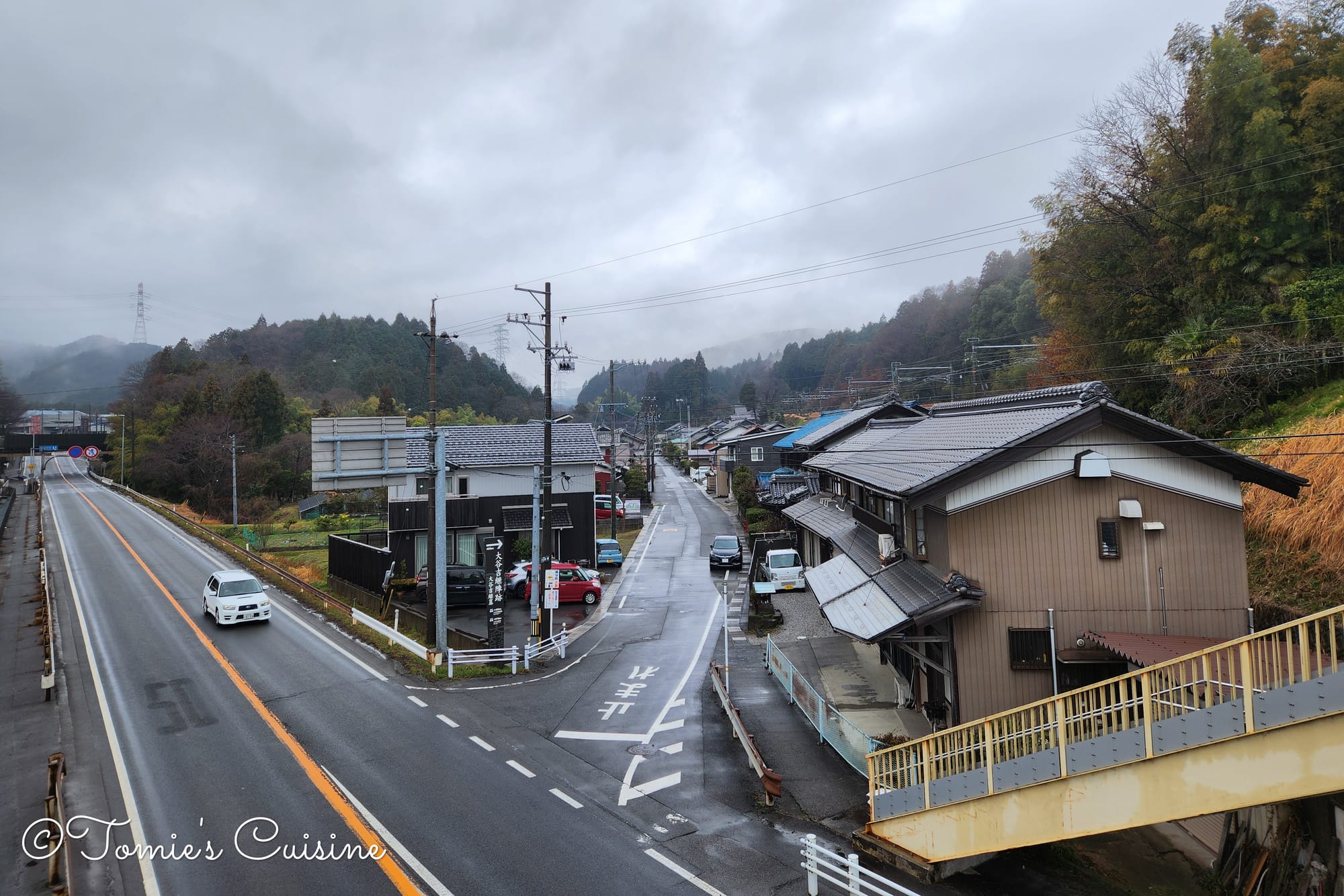
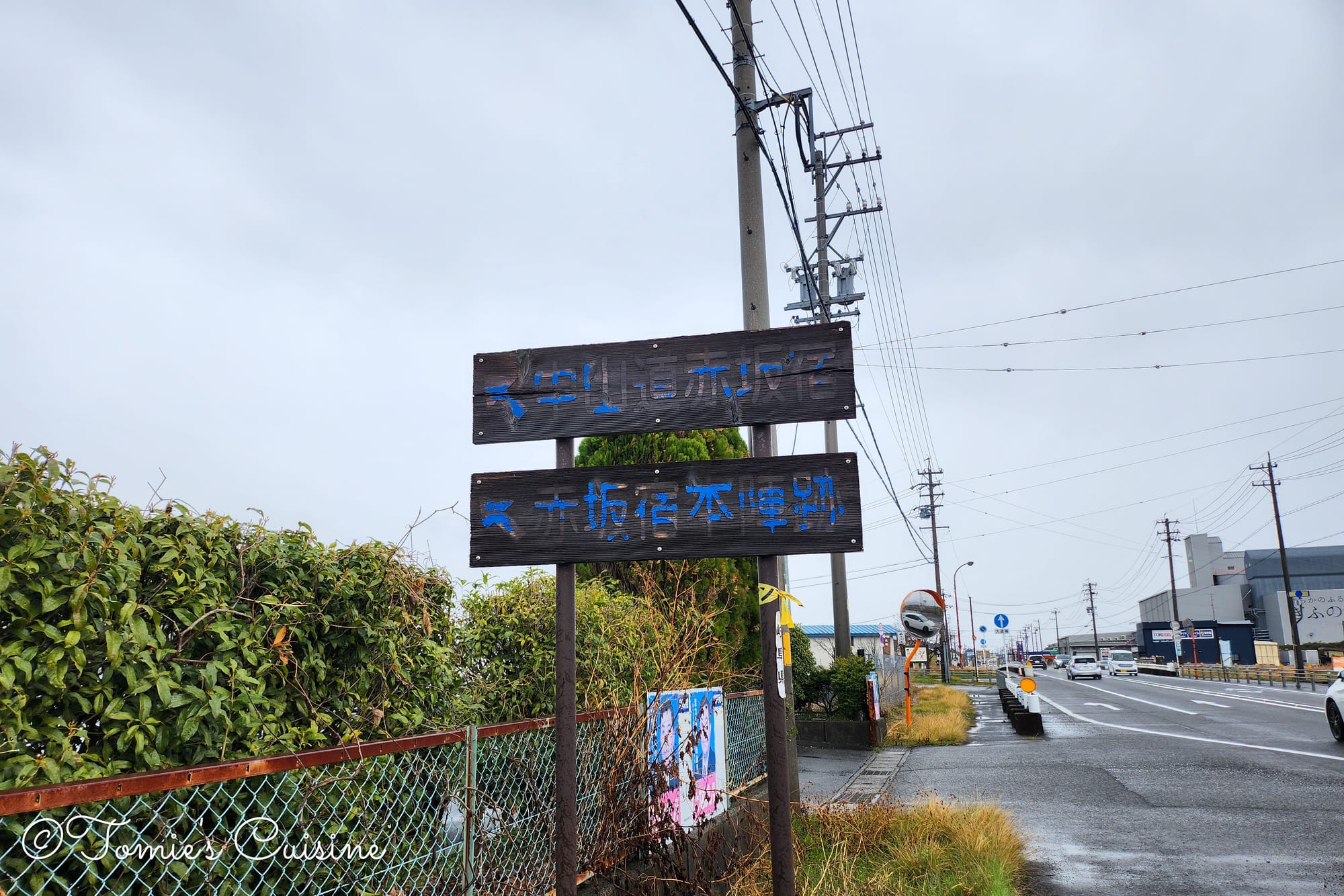
Nakasendo day 4/19: Kashiwabara to Akasaka in Gifu prefecture
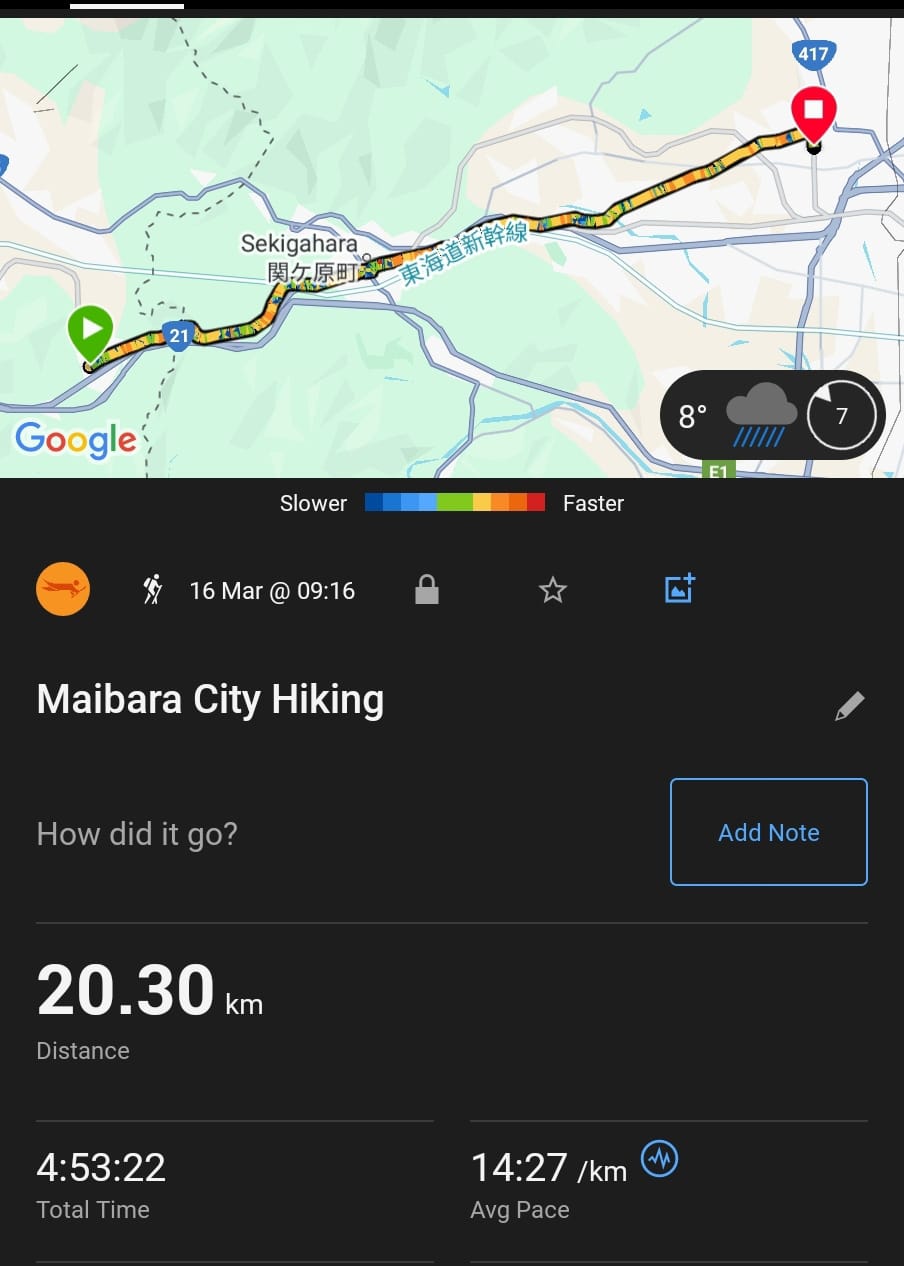
Day 4 on the Nakasendo takes us from Shiga to Gifu prefecture! Explore the "Village of Bedtime Stories," the historic Battle of Sekigahara, and the "Carriage-Turning Slope." From rainy-day sushi to local sweets, join us as we walk 21km through legendary post towns and ancient Japanese folklore.
As an Amazon Associate we earn from qualifying purchases.
Trip Overview
The Nakasendo stations we'll visit on day 4 are Kashiwabara, Imasu, Sekigahara, Tarui and Akasaka. We are crossing the prefectures from Shiga to Gifu! To view our trip breakdown, please refer to our introduction post here.
And get access to our offline GPX tracks that you can use on your own devices, and much more!
No spam. Unsubscribe anytime.
9:10 am Leaving Meguruya in Kashiwabara
We had a quiet night and slept well. All the laundry was dry by morning, and we had the bread we'd bought at the supermarket the day before for breakfast.
Since the distance we walk on day 4 is about 10km less than on days 2 and 3, we could stay in bed a little bit longer and have a more relaxed morning.
We thanked the innkeeper and headed to explore Kashiwabara post town.
It was raining, but manageable.
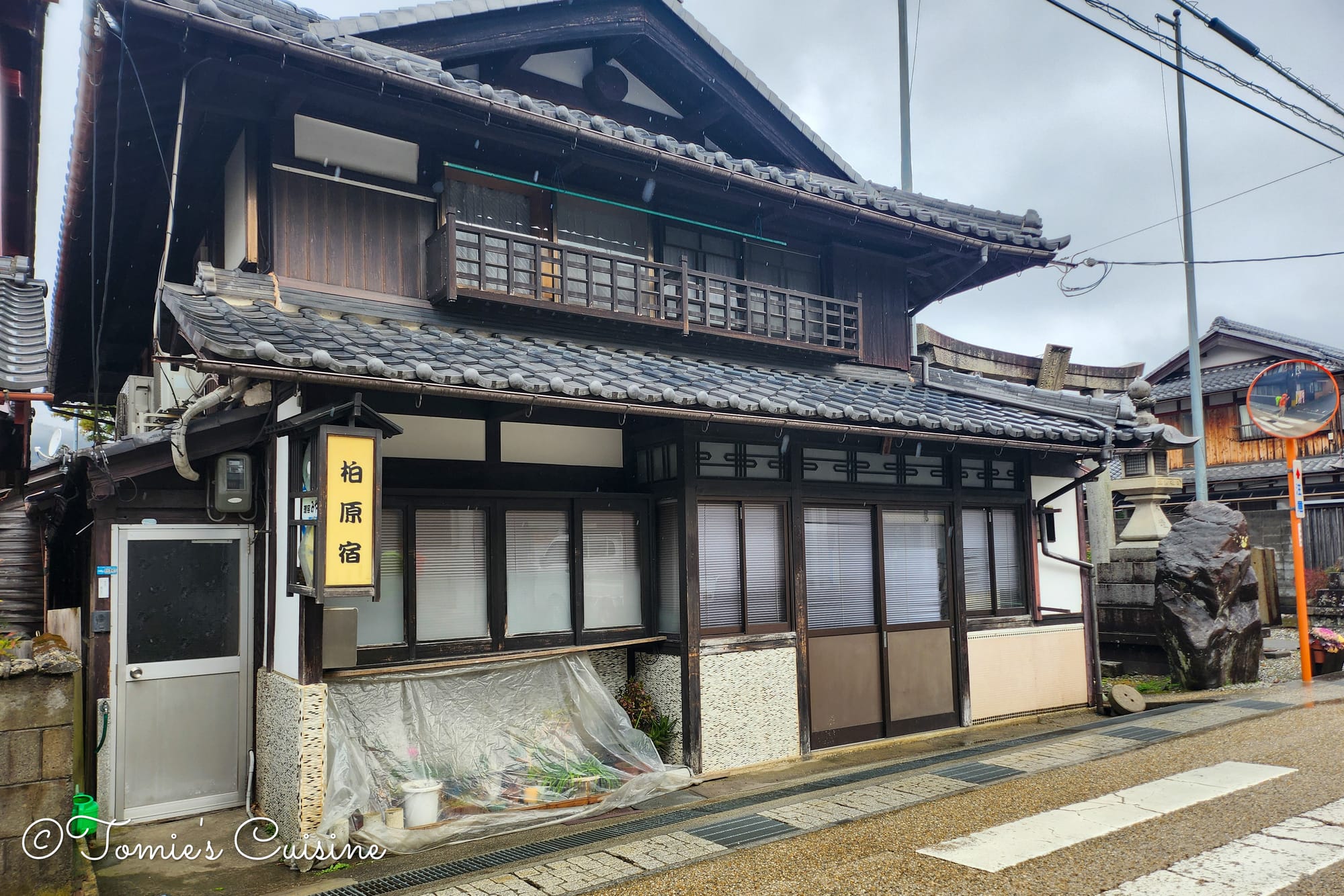
Kashiwabara post town 柏原宿
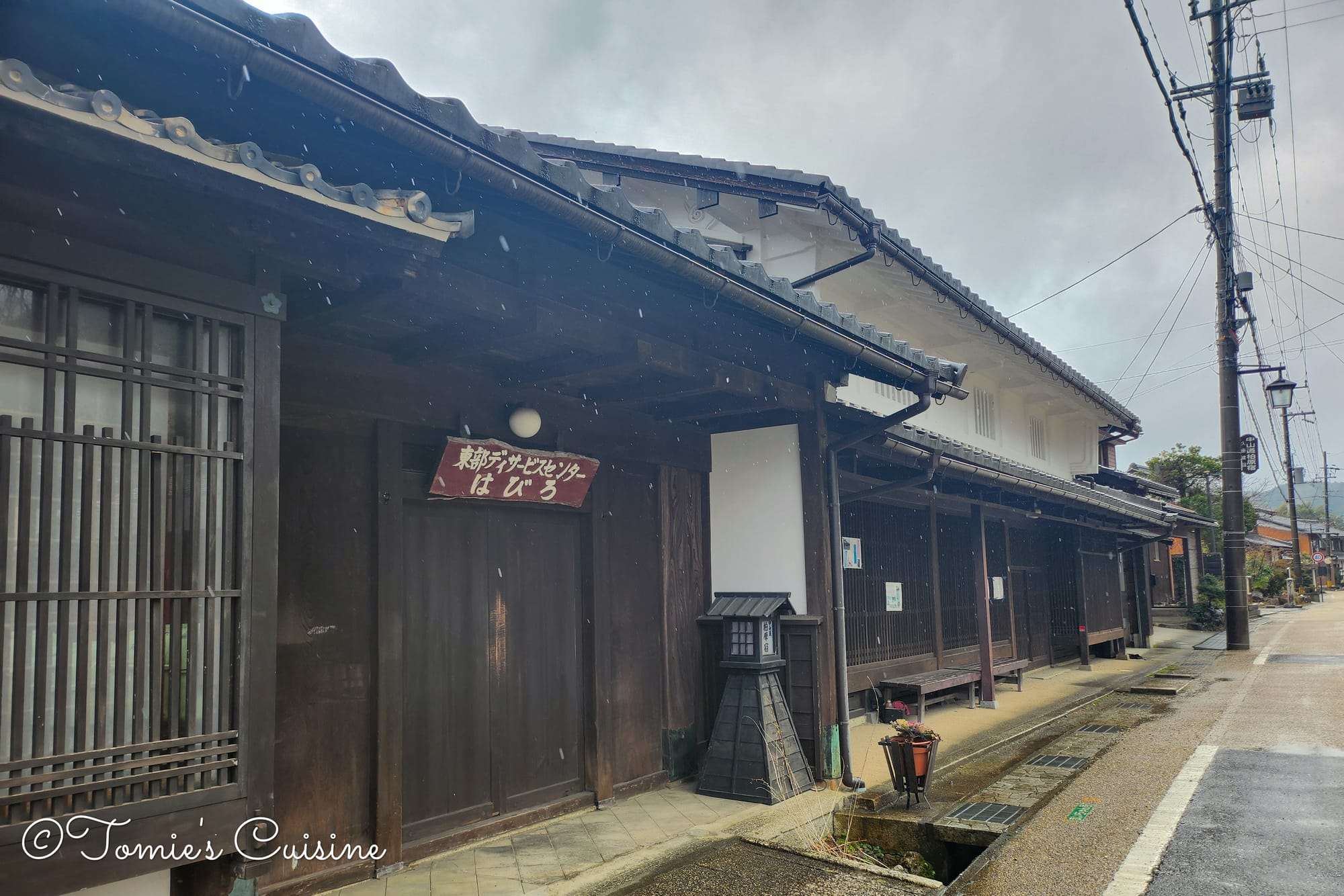
Since we were already in the Kashiwabara post town, we started exploring straight away! Our impression of the post town is that there are quite a few well-kept old buildings.
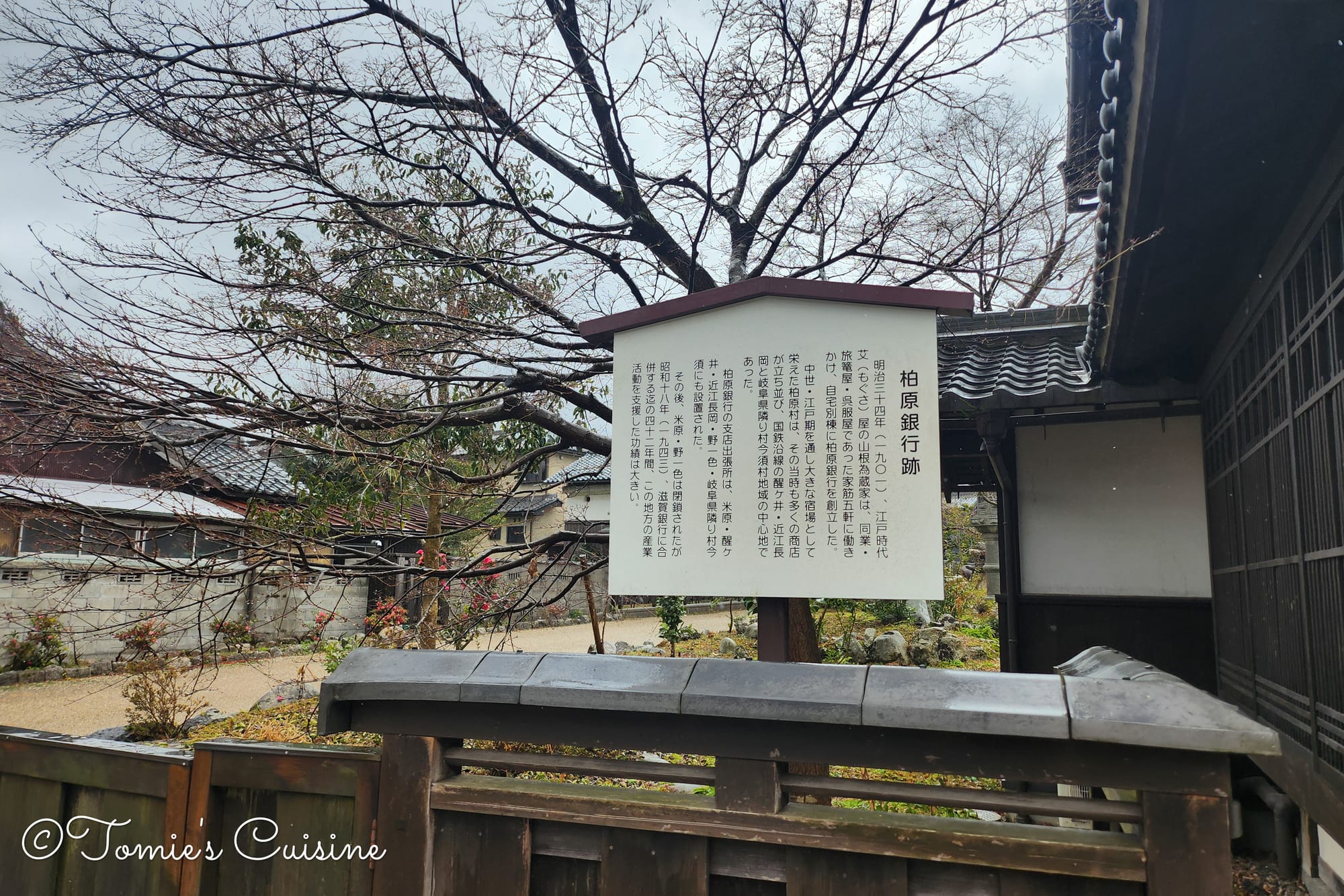
The old bank building is now a nursing agency in Kashiwabara.
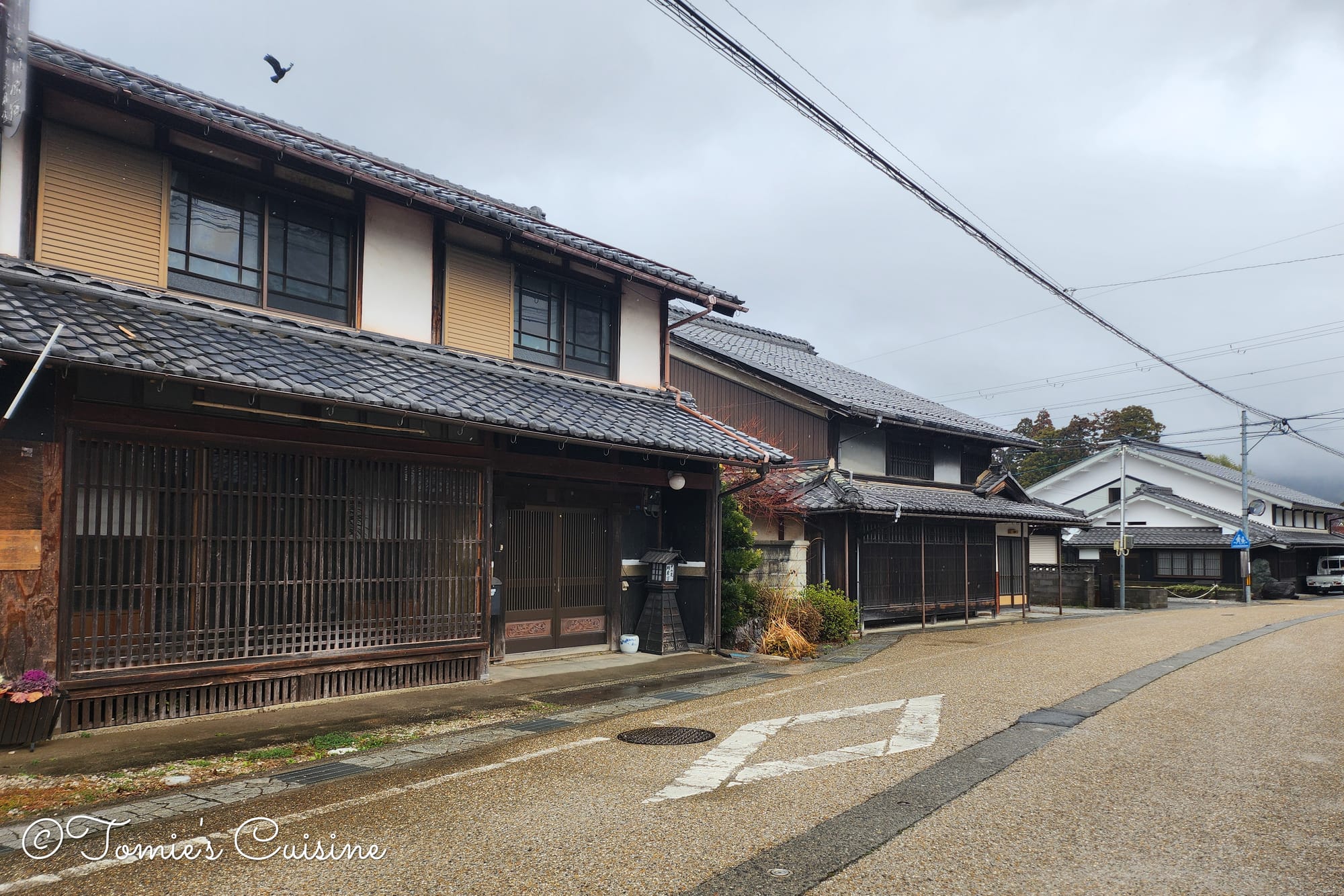
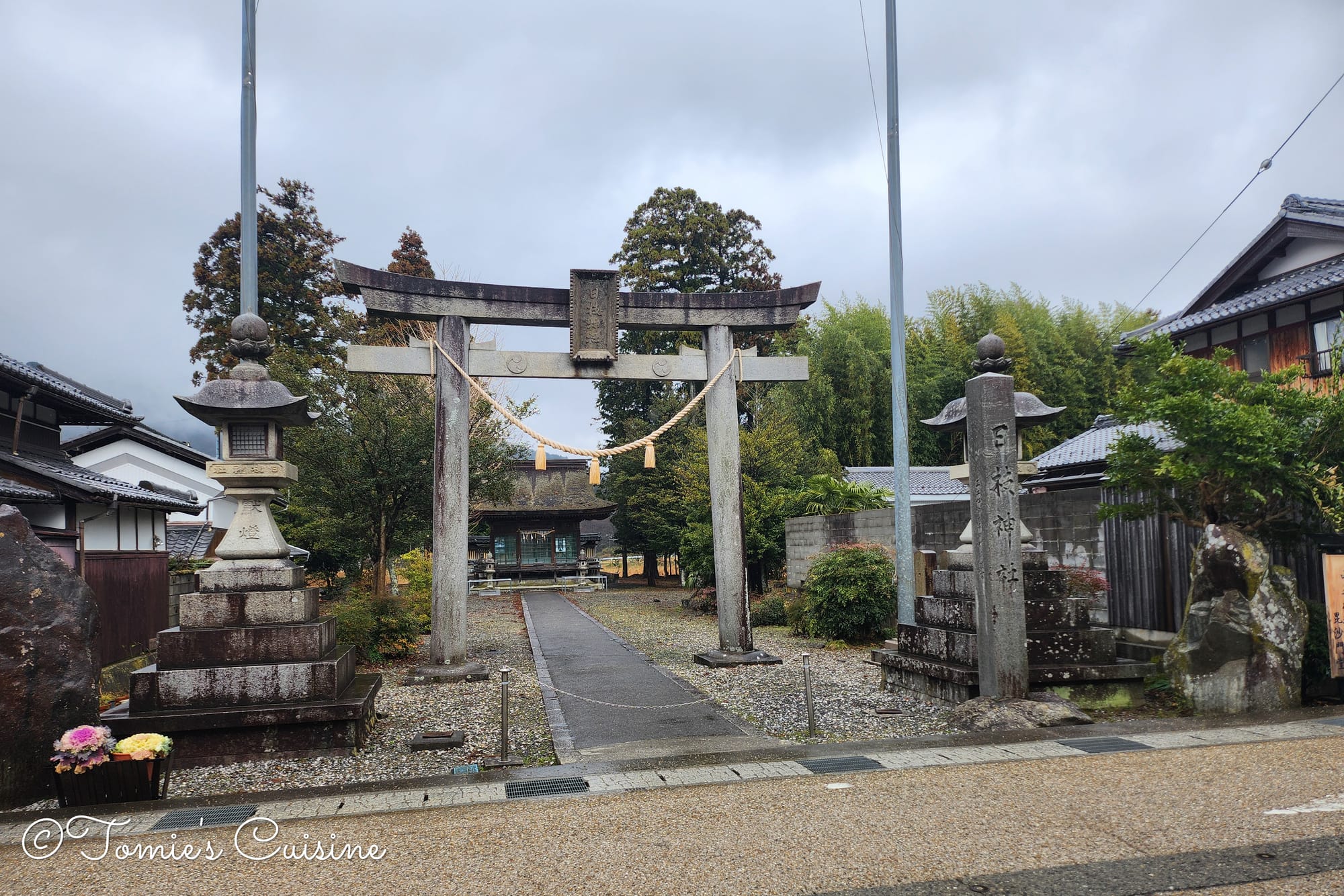
Beautiful old houses and a shrine in Kashiwabara.
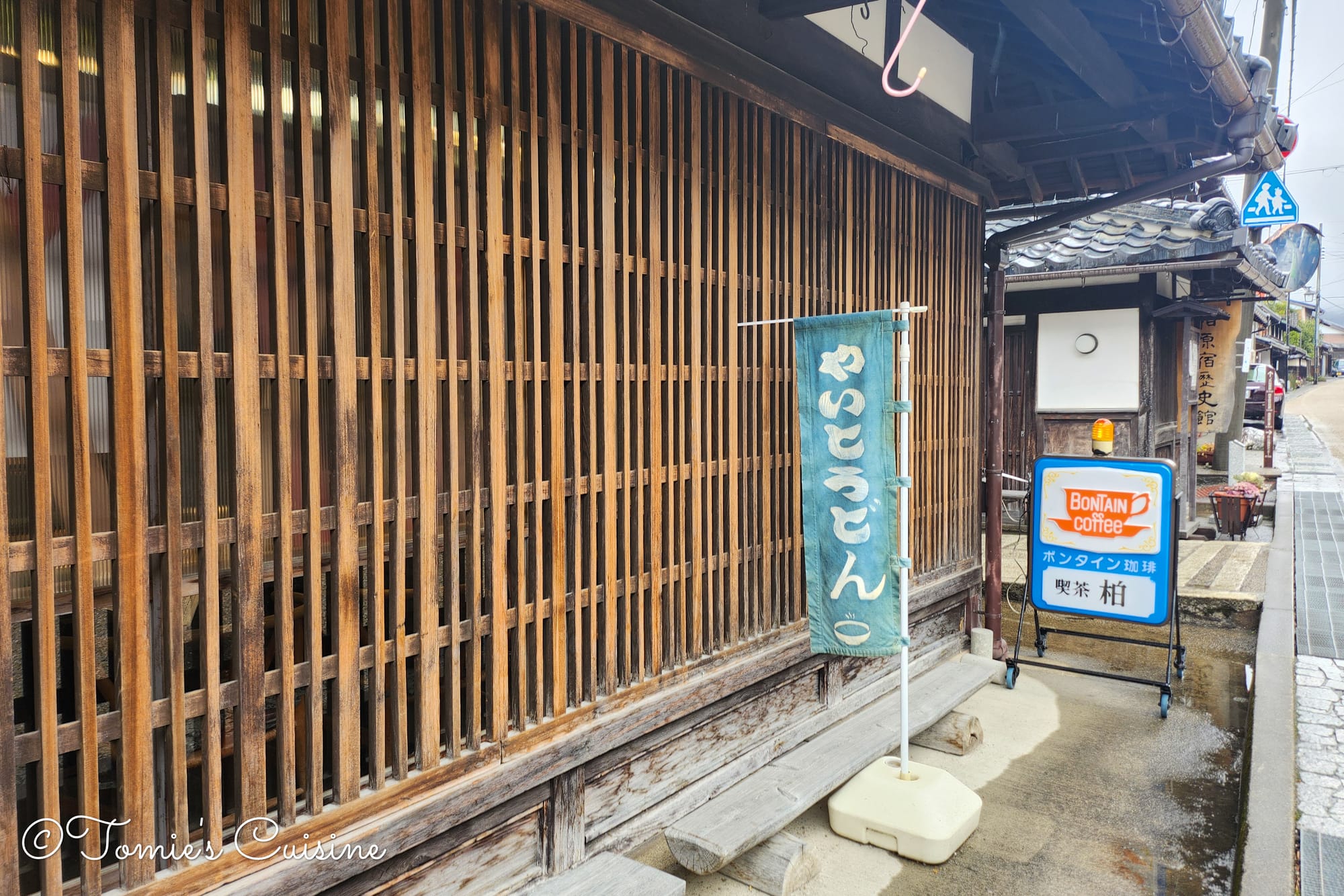
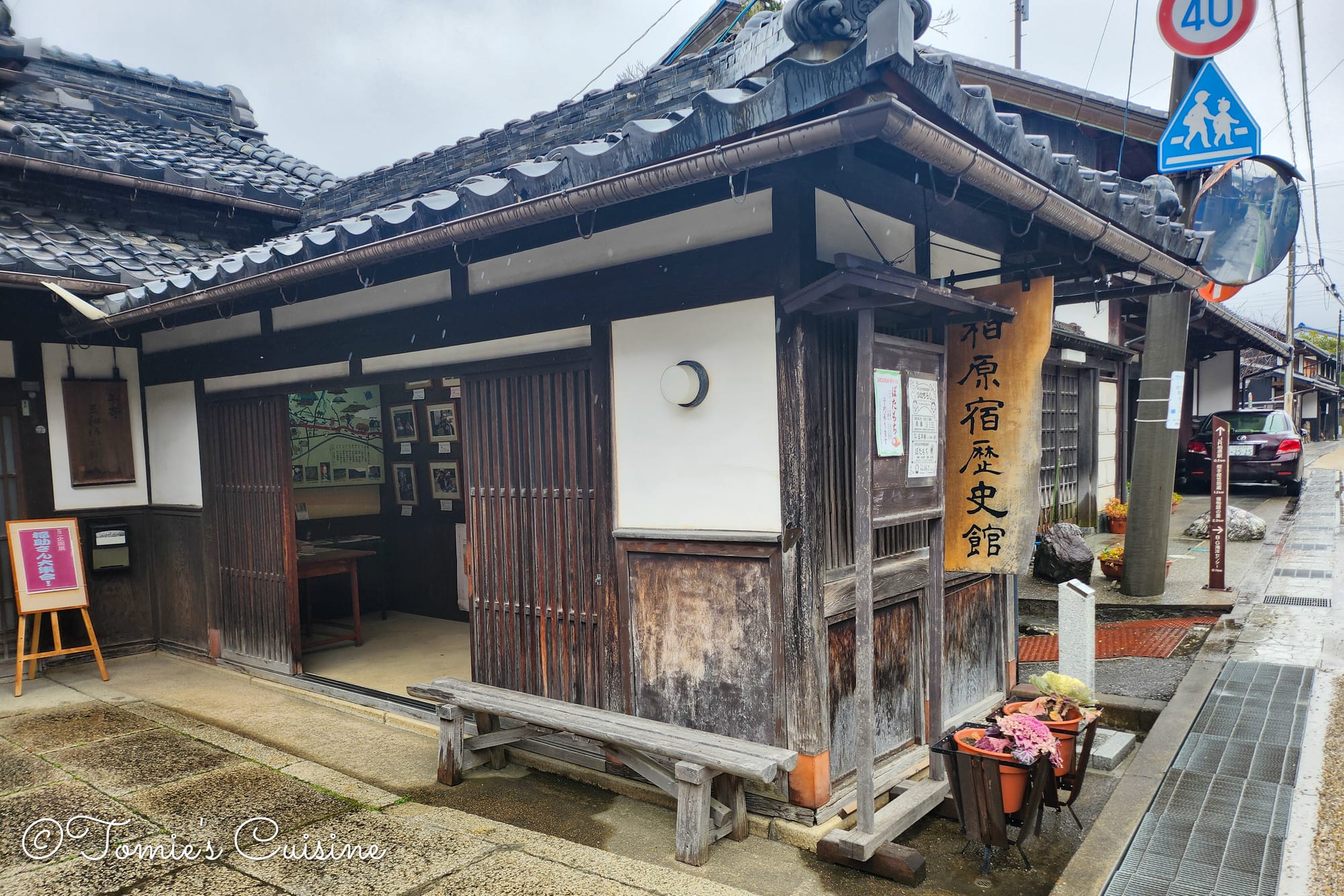
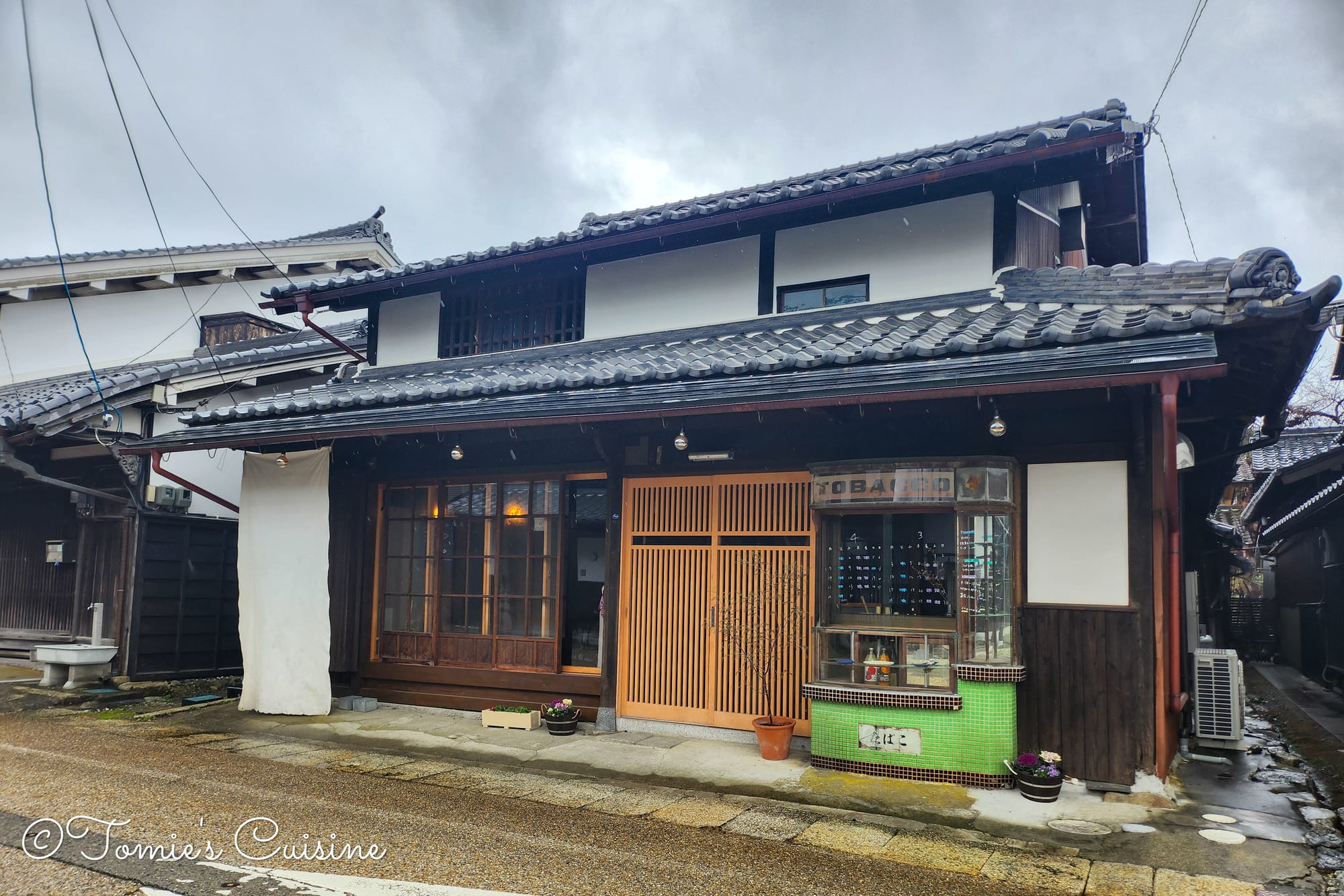
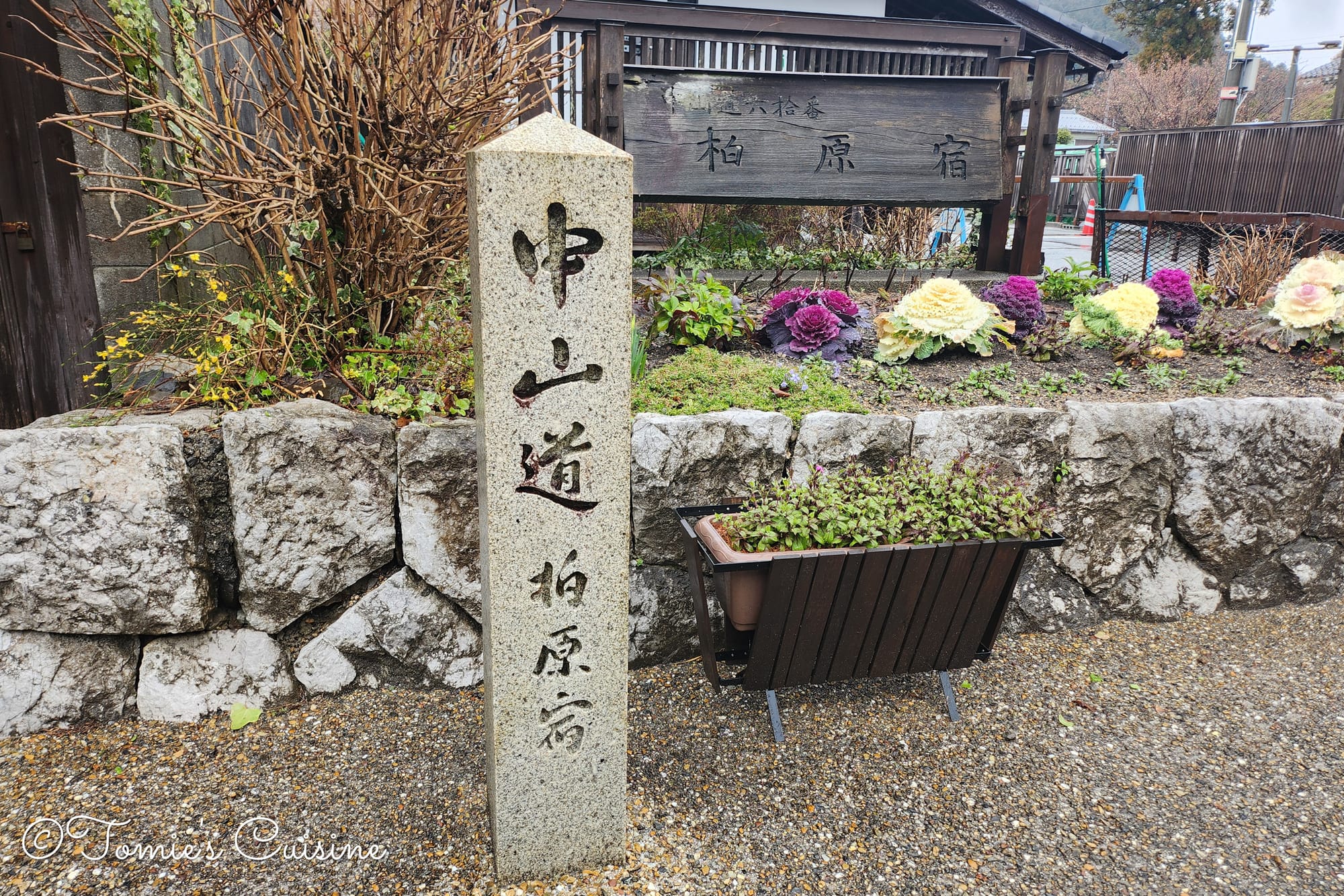
Kashiwabara post town history museum.A vegan restaurant with a retro tobacco shop.Kashiwabara post town sign.
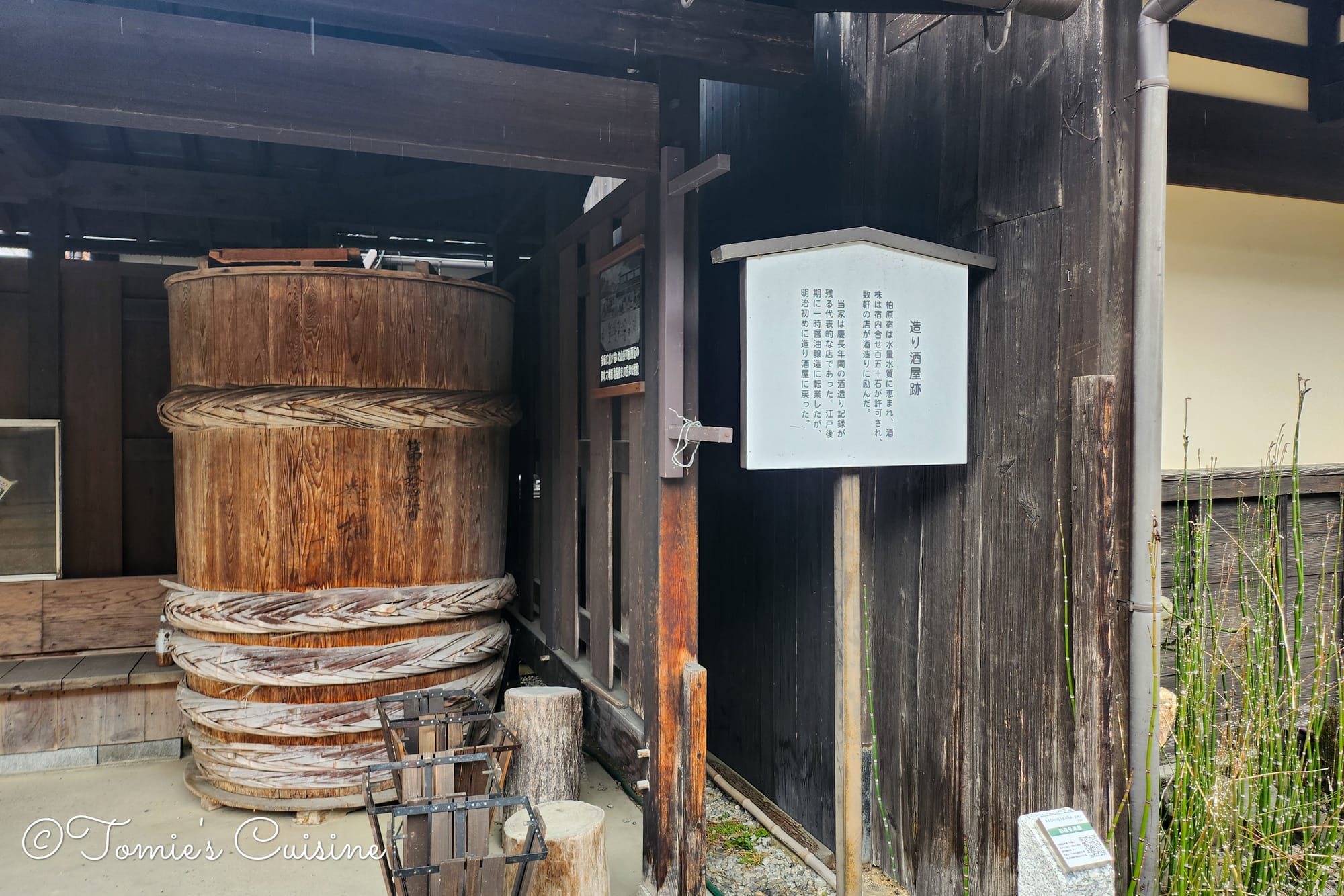
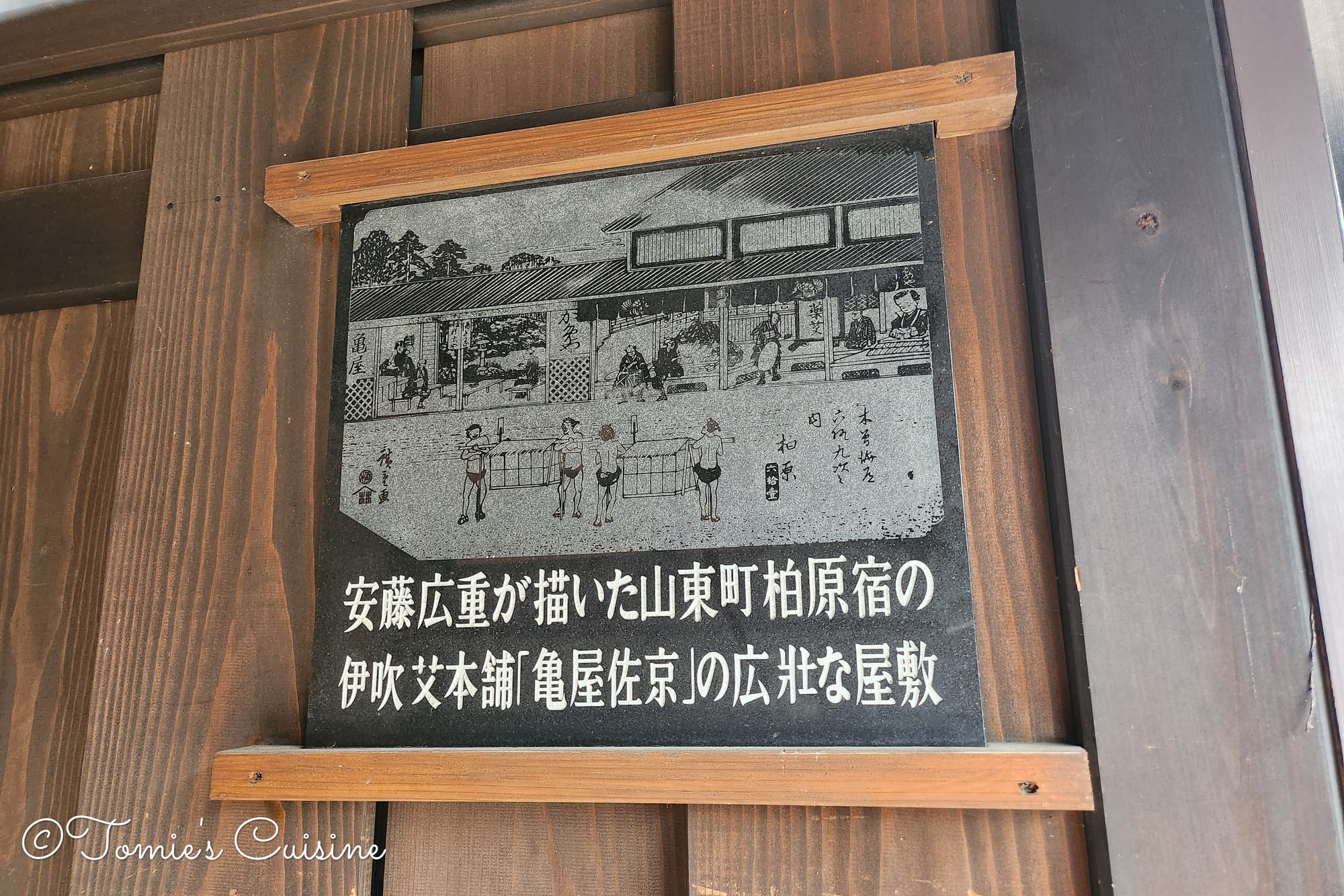
An old sake brewing barrel and the drawing of the building of Kameya Sakyo (the Mogusa seller) by Hiroshige.
Kashiwabara was once famous for producing “Mogusa” (Moxa). Mogusa, made from the herb mugwort, is used in moxibustion (traditional Chinese medicine). There has been a shop selling mogusa since 1661, but it wasn’t open, so we missed it. (We were looking at the big barrel of sake production instead!) Many more shops were selling this, but now there is only one in Kashiwabara.
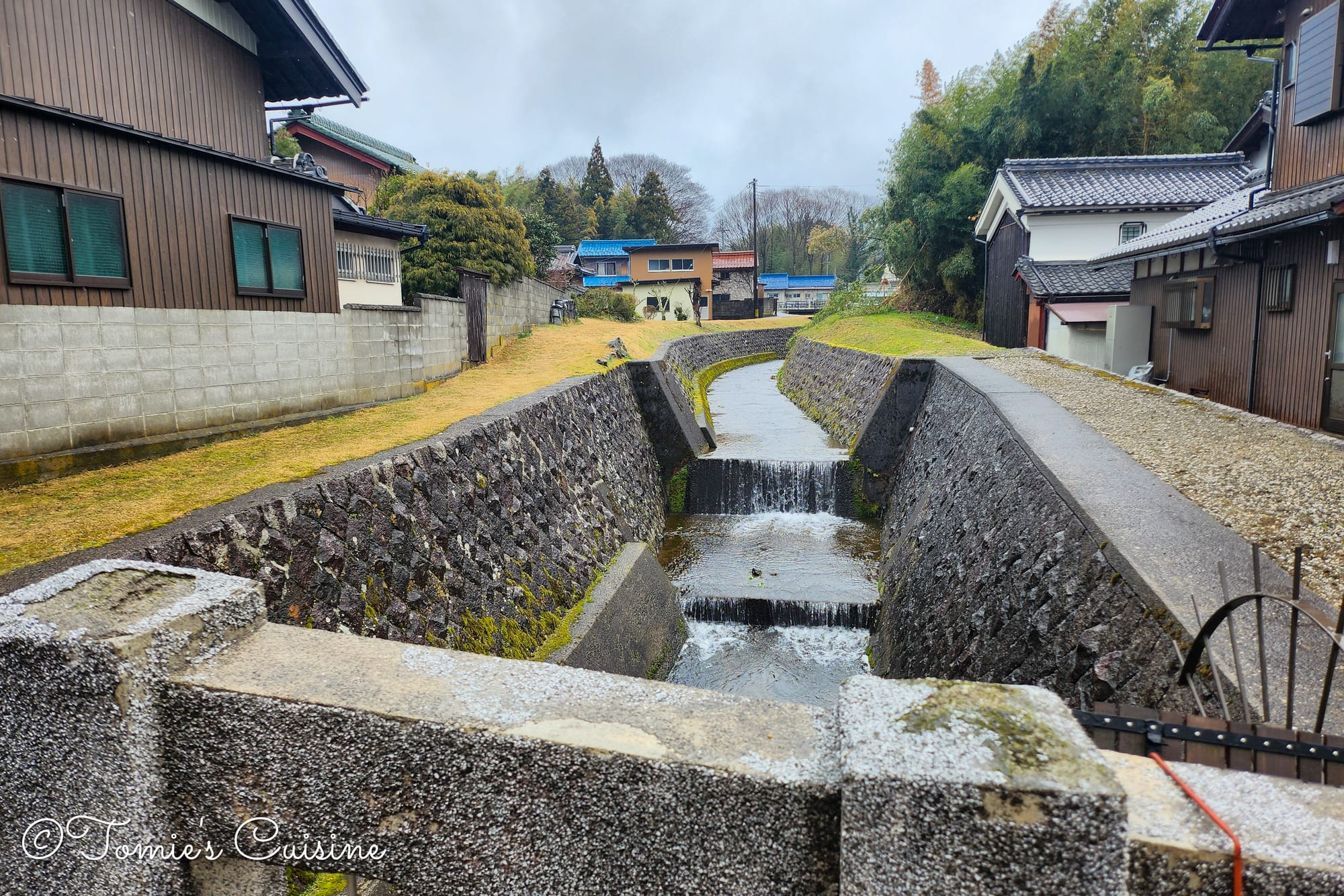
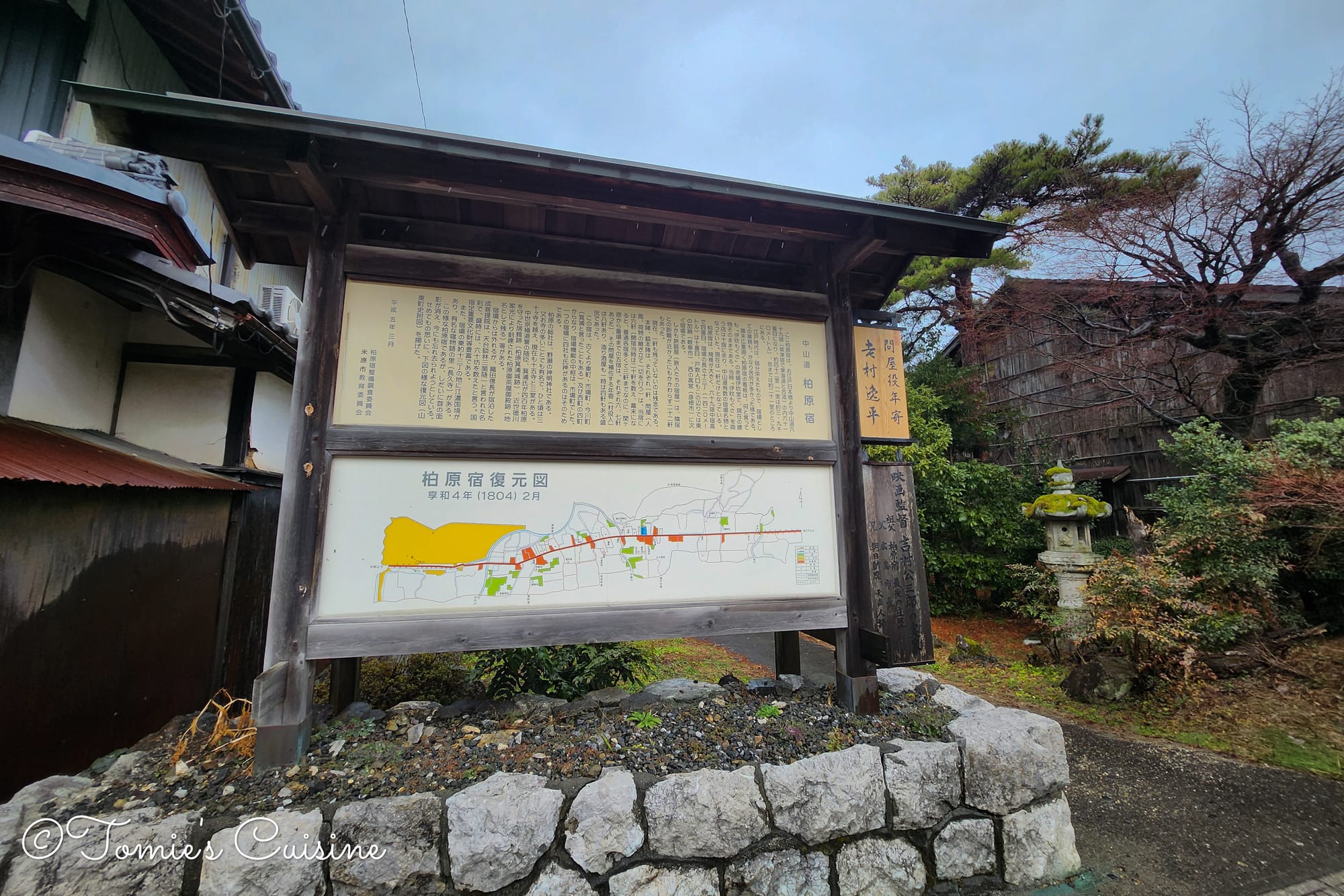
A small river and the explanation board of Kashiwabara post town.
9:50 am Crossing between two prefectures!
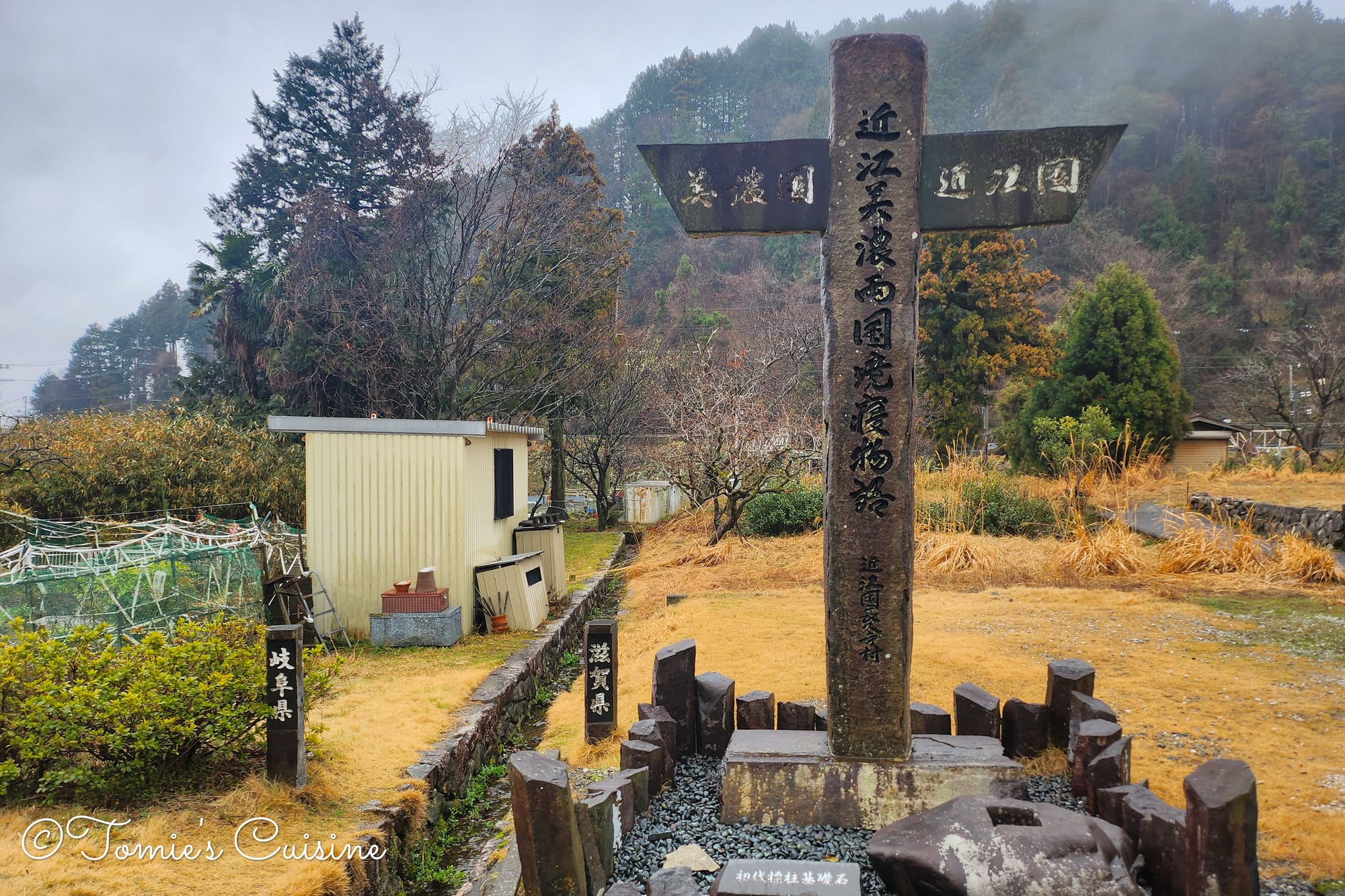
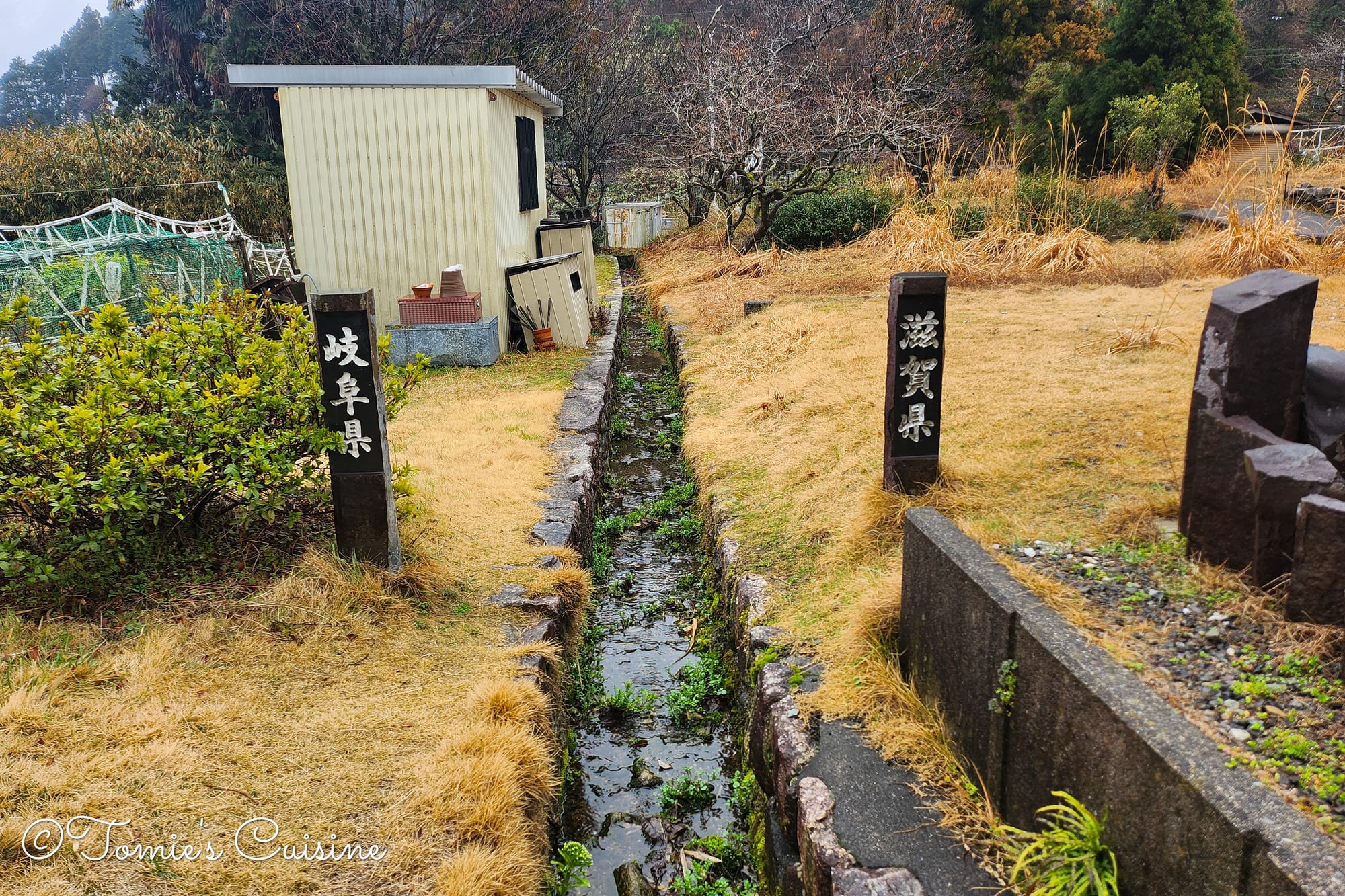
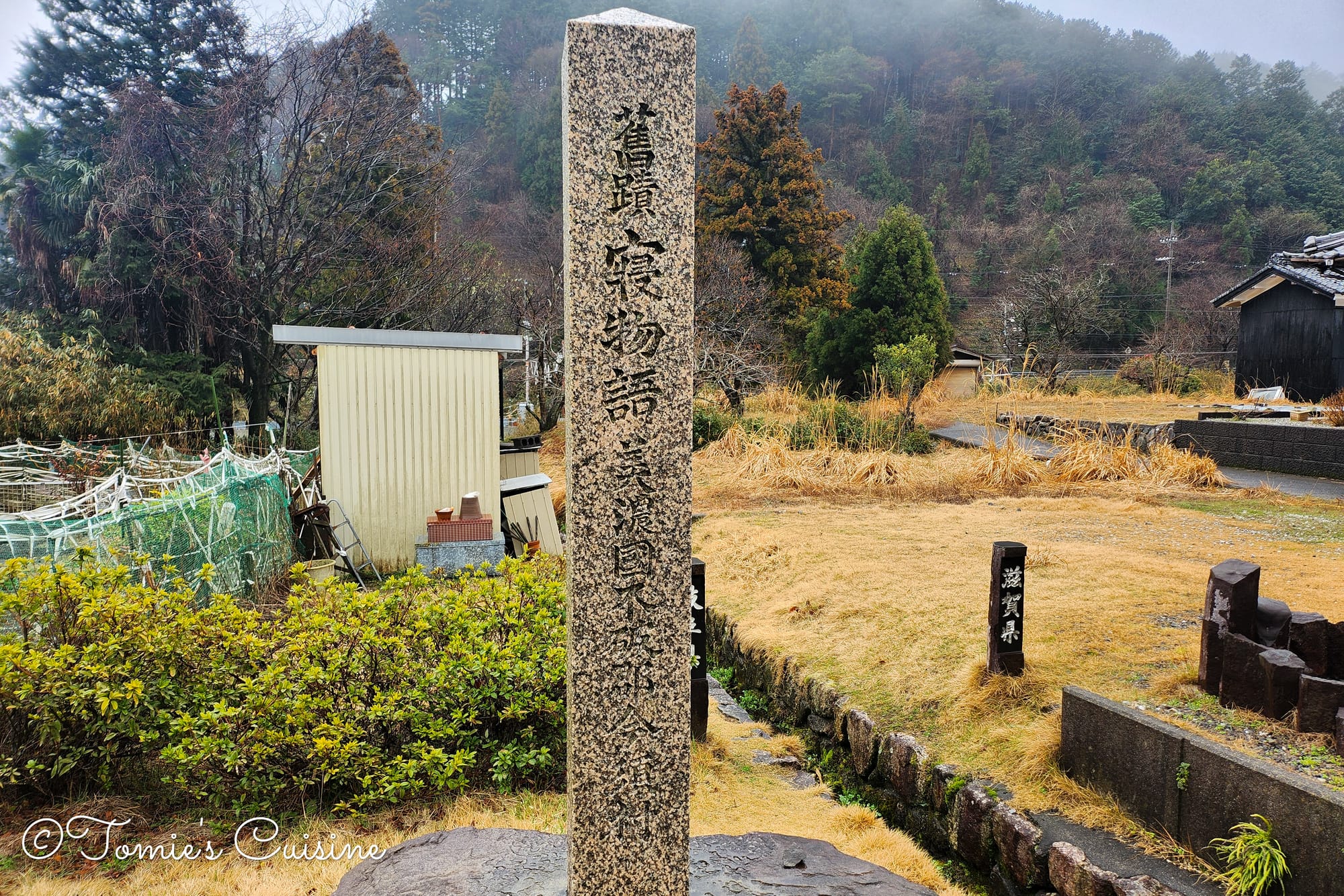
The border statue between Omi (Shiga prefecture) and Mino (Gifu prefecture).The small water pass is the border between Shiga and Gifu.
Here we are, the border between Shiga prefecture and Gifu prefecture on Nakasendo!
After Yoshitsune lost his battle, he fled from Kyoto to Iwate prefecture. So Shizuka followed him shortly after to find him. On her way, she stayed at an inn in the Chokyuji area, on the Shiga side of the border. Unbeknownst to her, Genzo, one of Yoshitsune’s retainers, was staying at an inn directly across the path on the Gifu side. Because the inns were so close together, she overheard him and asked for help reaching her love.
In the old days, travellers staying at these border inns could literally talk to each other across the prefecture line from their beds—hence the "bedtime stories". Standing there today, it’s easy to imagine voices drifting across that small gap in the rain.
This romantic story was popular among the guests staying in inns along the border. It used to be recounted like a “bedtime story”, it’s called “Ne-monogatari”.
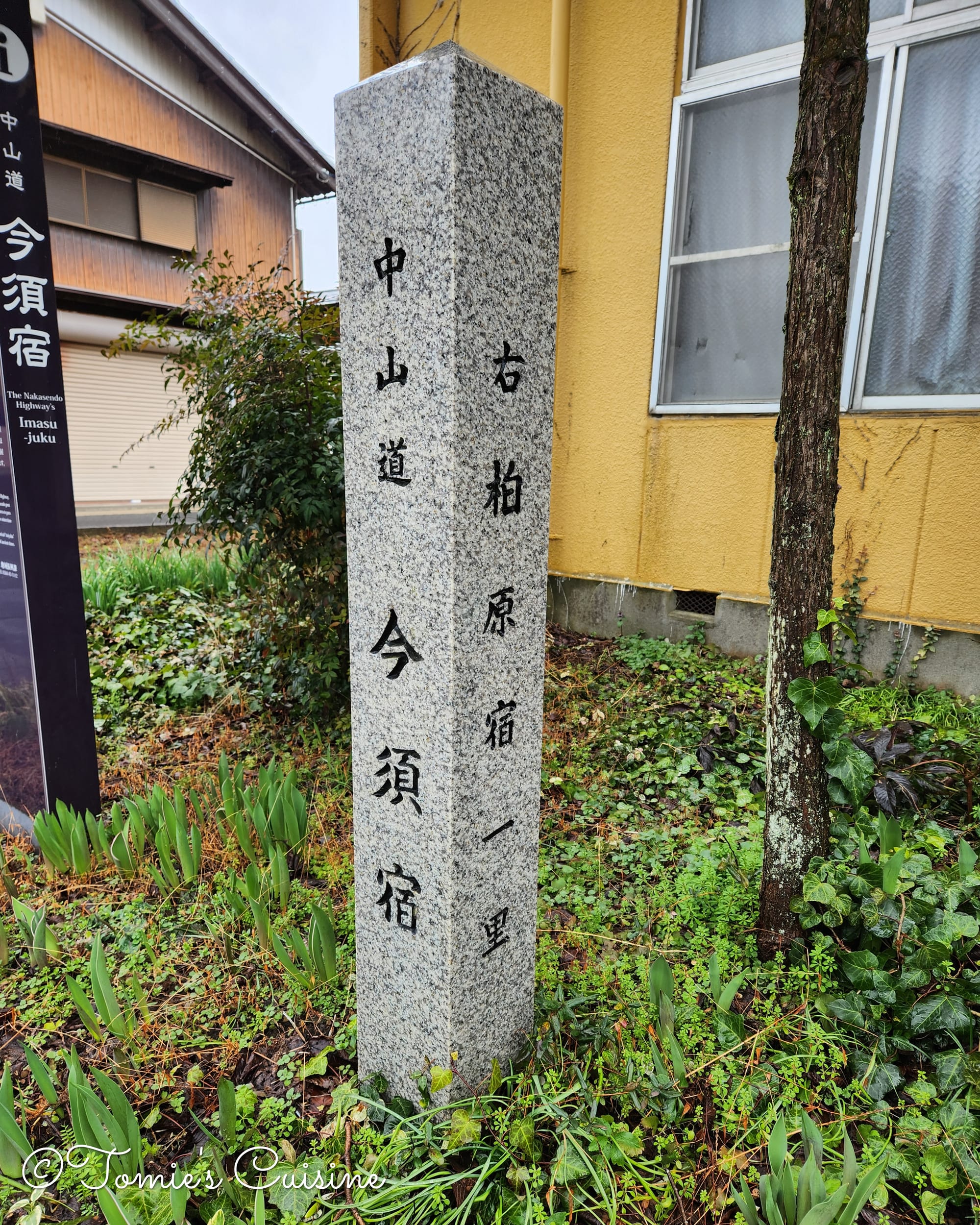
9:58 am Arriving at Imasu post town 今須宿
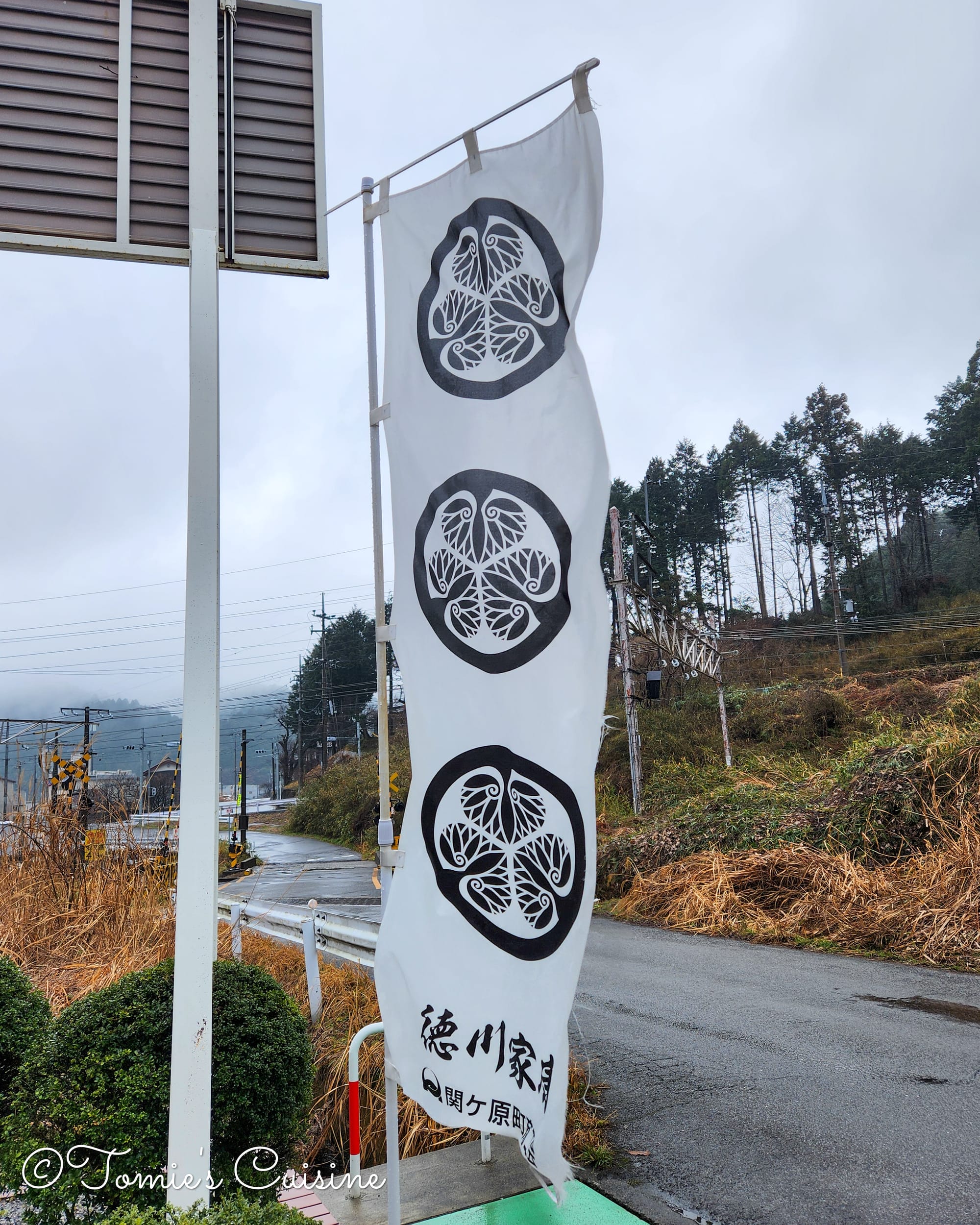
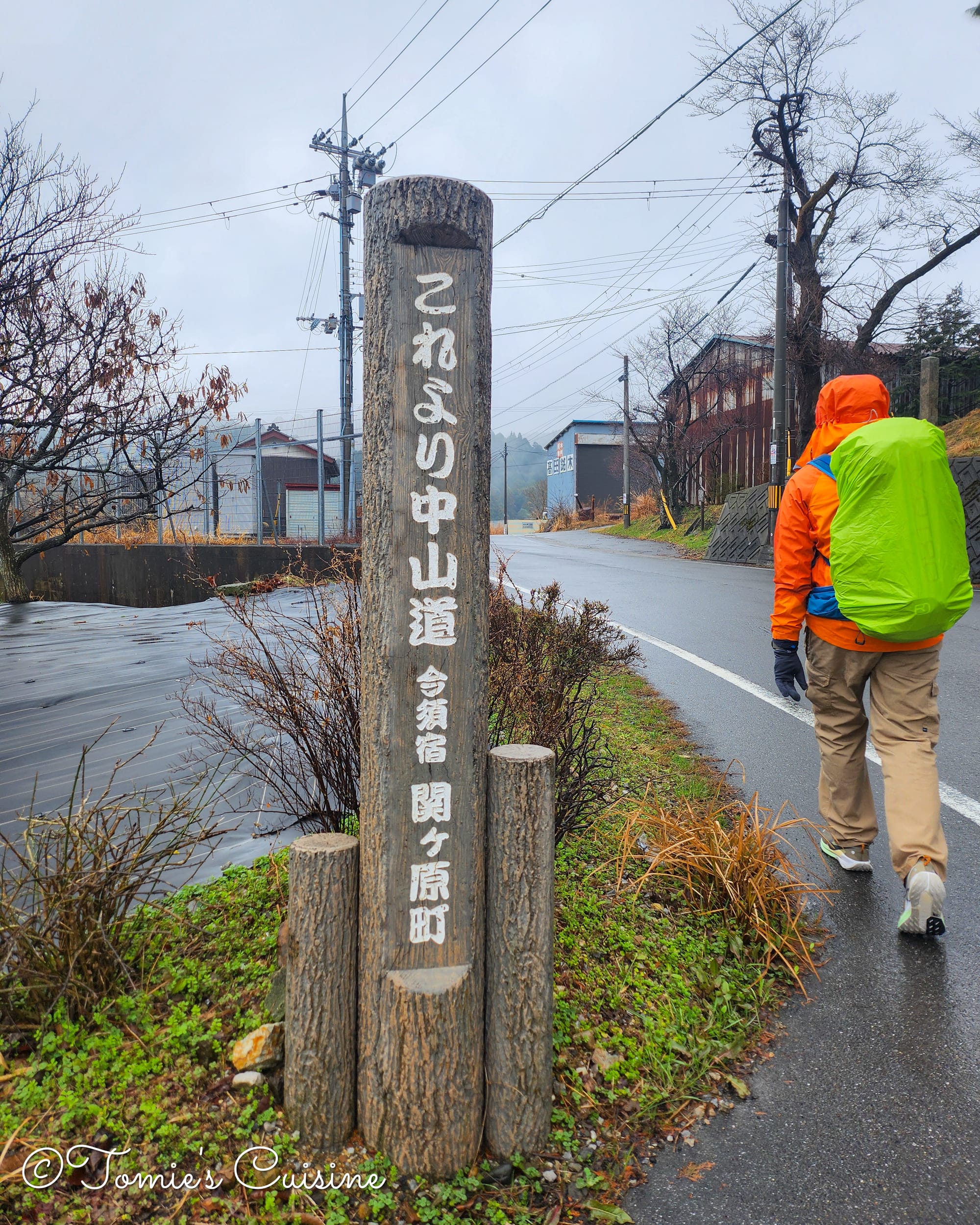
The flag with the family crest of Tokugawa (left), and the Nakasendo Imasu post town sign (right).
10:50 Entering the site of the Great Battle, the Battle of Sekigahara
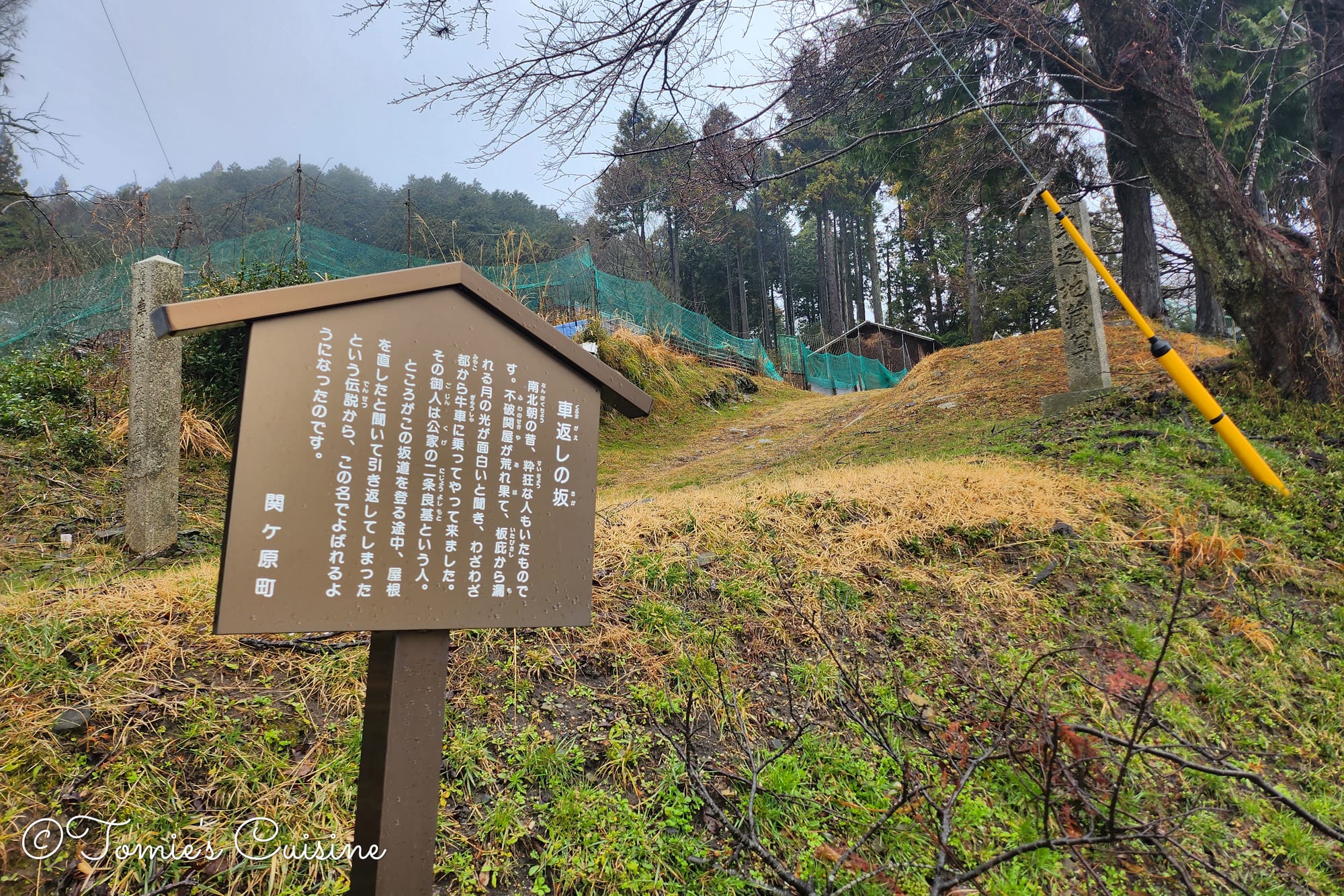
Kuruma gaeshi no saka 車返しの坂
This board recounts the funny story about this Kuruma-gaeshi slope.
Kuruma (車): Car, carriage
Gaeshi or Kaeshi (返し): Return or send back
Saka (坂): Slope
When I first saw the name of the slope, I assumed it was related to its steepness. It’s quite difficult for carriages to ascend, often causing travellers to turn back. However, there’s a more intriguing story behind it.
During the Nanboku-cho period (1337-1392), a nobleman and poet named Nijo Yoshimoto (1320-1388) learned that the Fuwa checkpoint had fallen into disrepair, but the moonlight filtering through the canopy was apparently charming. He decided to make the journey from Kyoto to see it for himself. To give you some context, the journey took us just over three days from Kyoto, but the roads back then were nothing like today, making travel much more arduous.
When the building's owner heard that Yoshimoto was coming, he hurried to make repairs so it would not appear broken down. While Yoshimoto was ascending the slope in his carriage, he learned of these repairs and became so disappointed that he immediately decided to turn back to Kyoto.
This story is why the slope is called “Kuruma gaeshi no saka” (車返しの坂), which translates to “carriage-turning slope.”
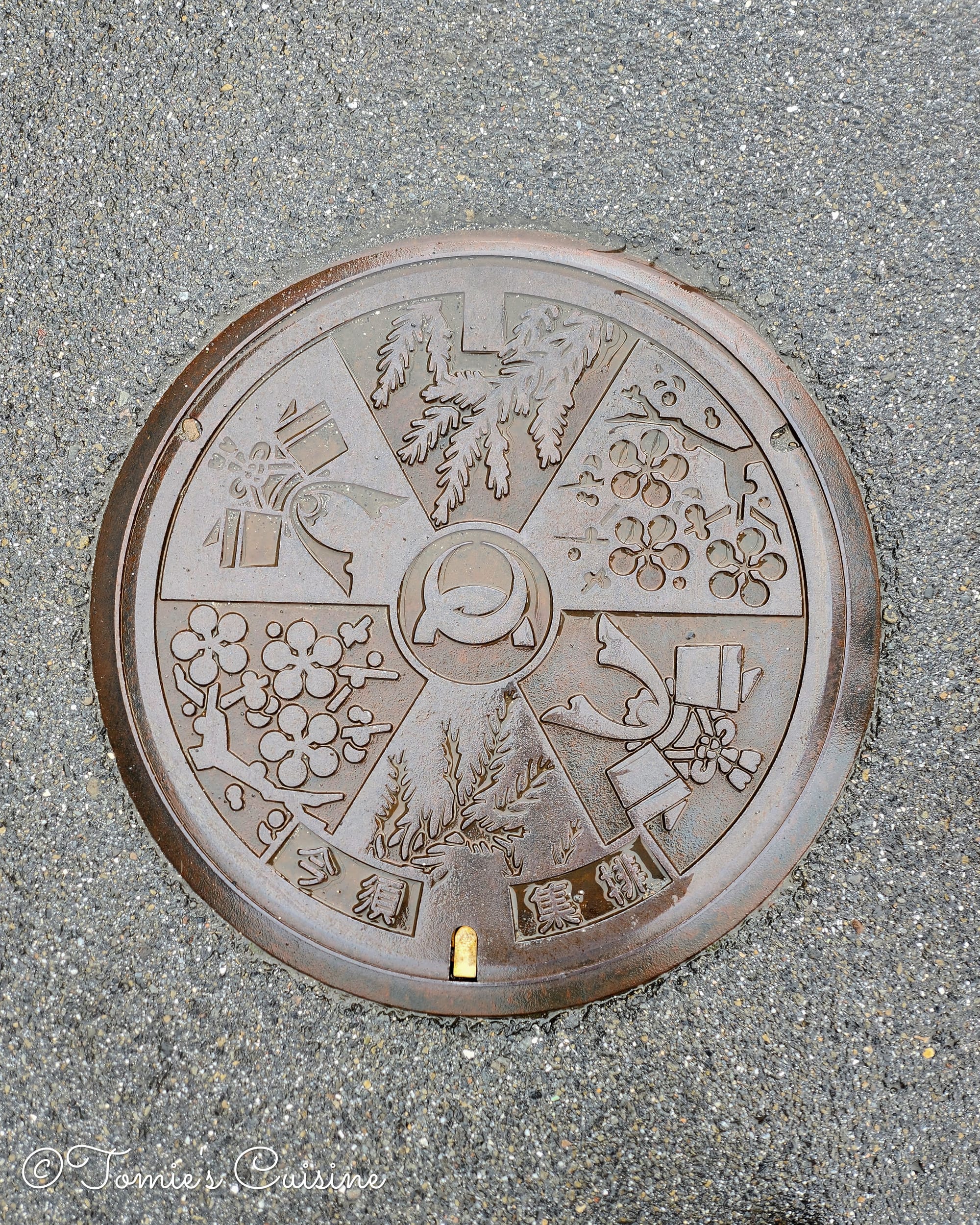
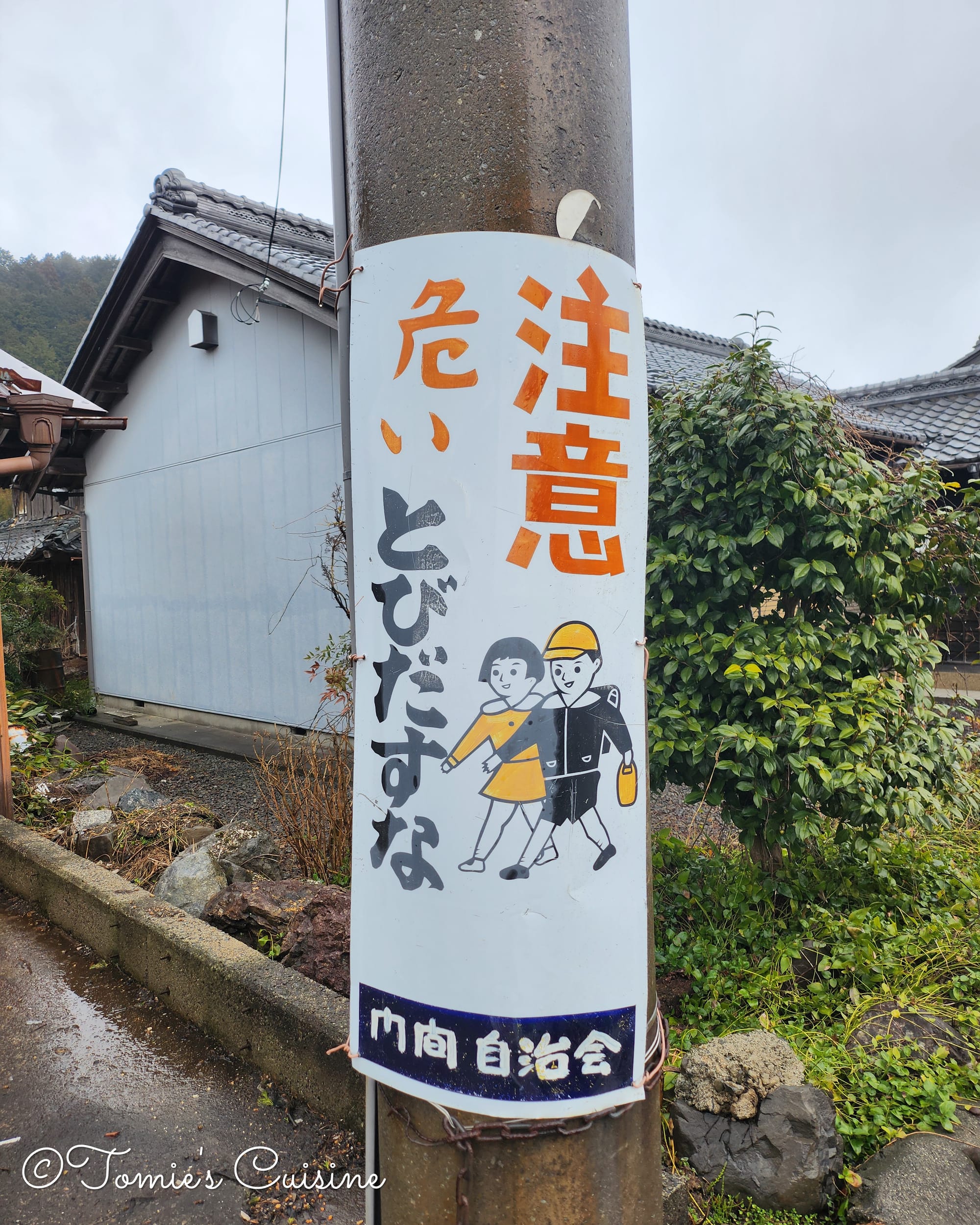
The local maintenance hole design with the shogun helmet (left) and my favourite retro warning sign on a telegraph pole (right).
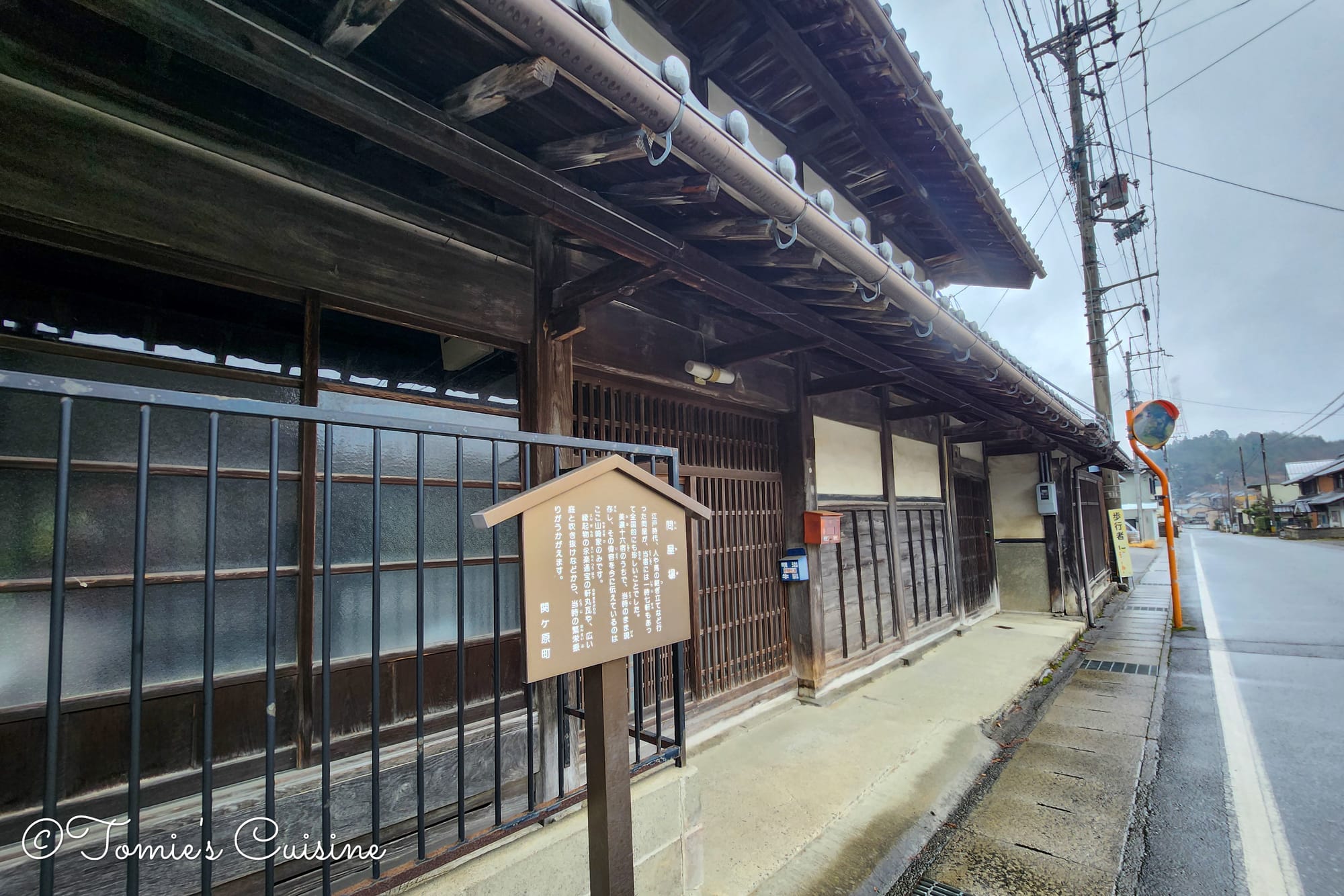
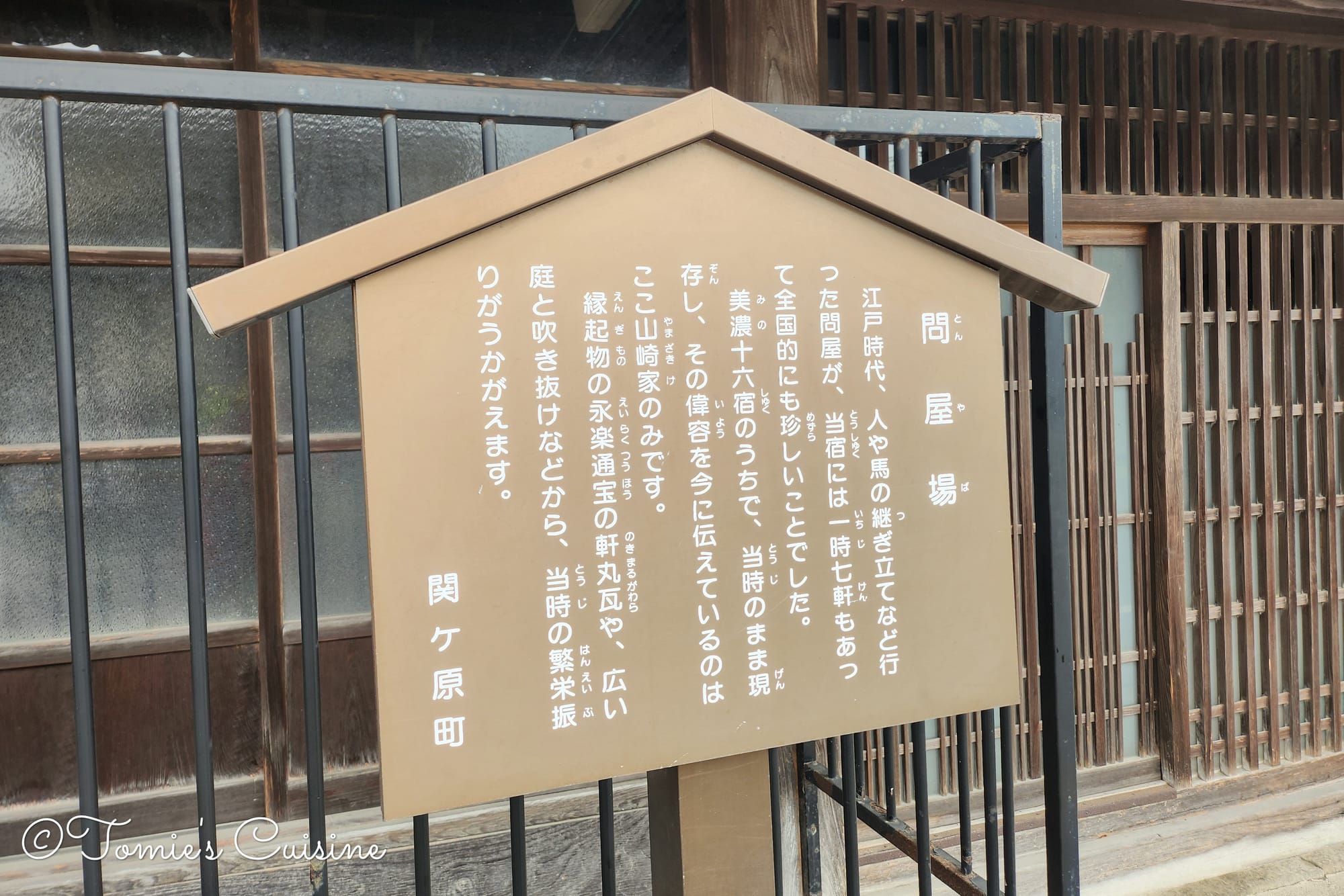
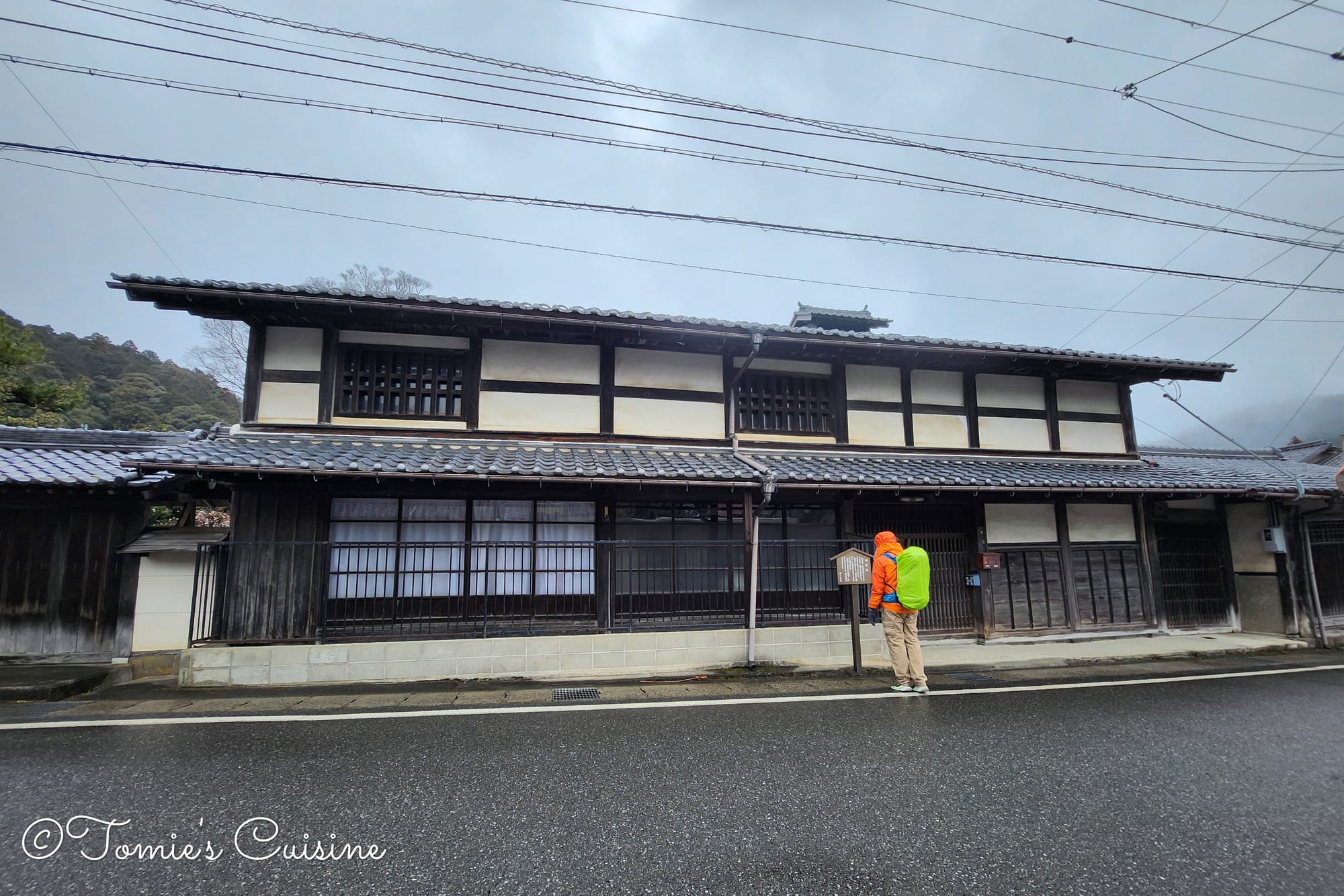
The original old wholesaler building is the only one remaining among 16 post towns in the Mino area.
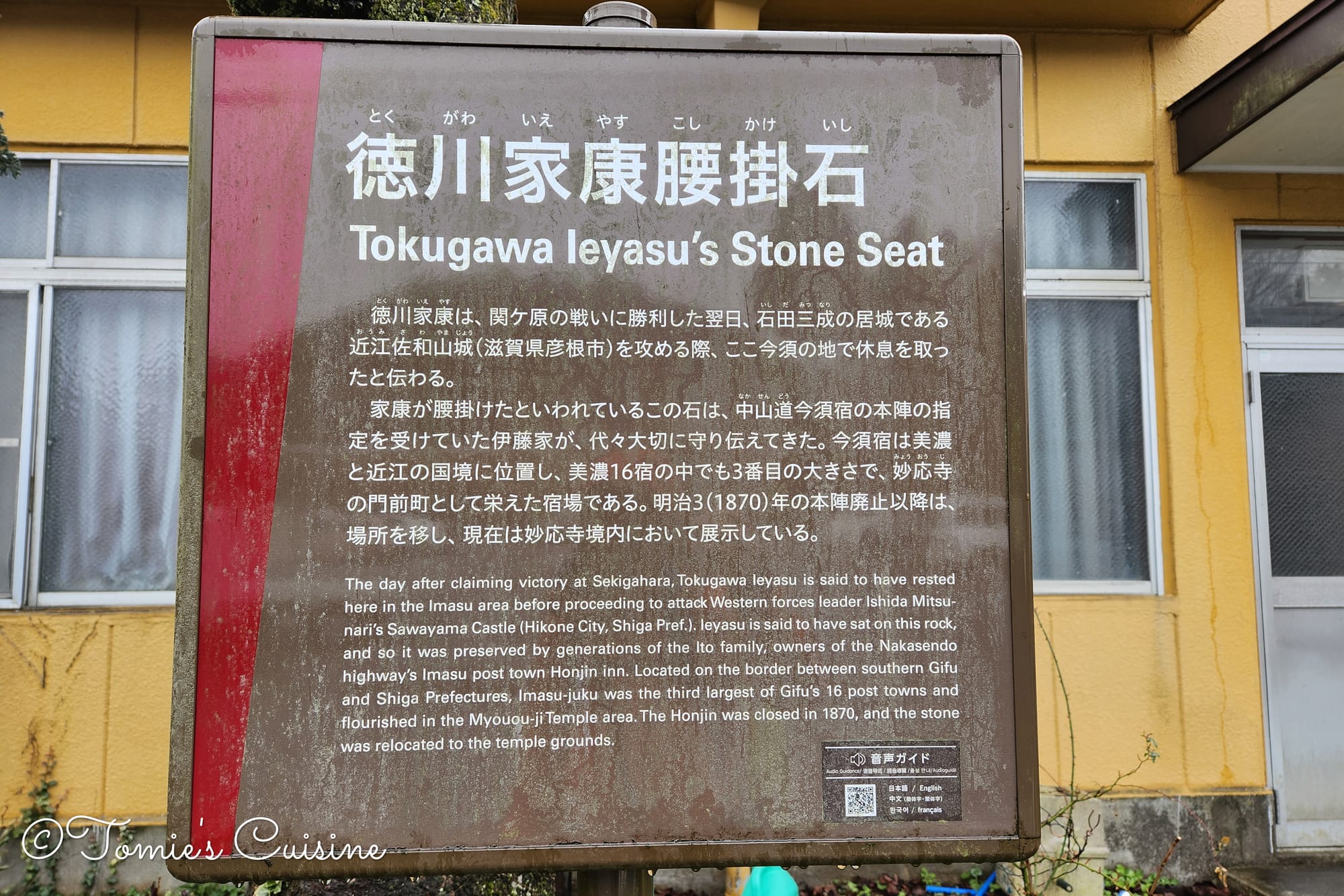
There is a famous stone seat where the shogun Tokugawa Ieyasu sat after the battle of Sekigahara, but it's at the nearby shrine, so we couldn't see it.
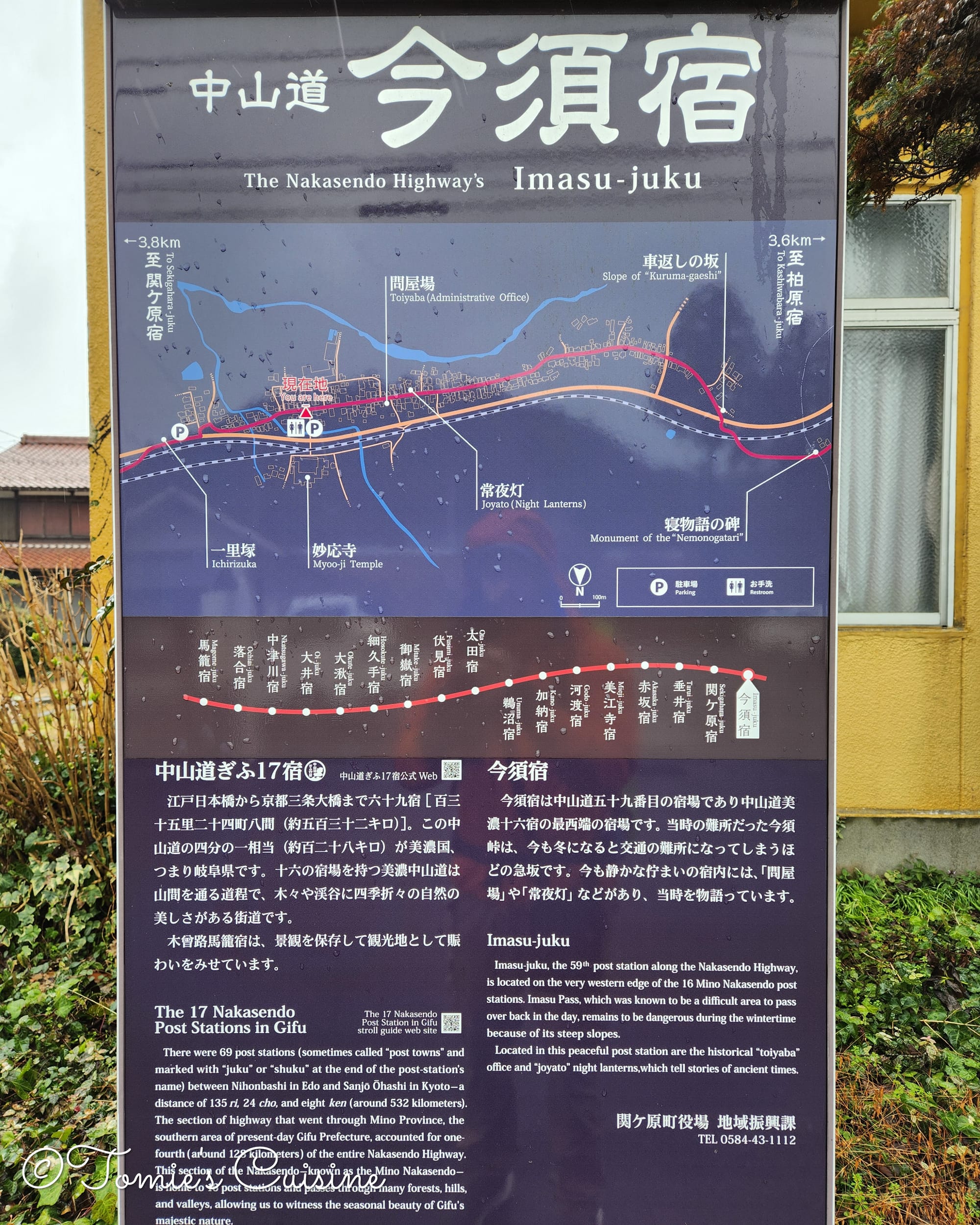
Imasu post town is on the western side of Sekigahara town. It is famous as the place where the shogun Tokugawa Ieyasu stopped to rest after winning the Battle of Sekigahara. This area was also part of the battlefield. But since we’re arriving at Sekigahara, let’s explain this famous battle in the post-town section below.
The post town signs at the honjin ruin.
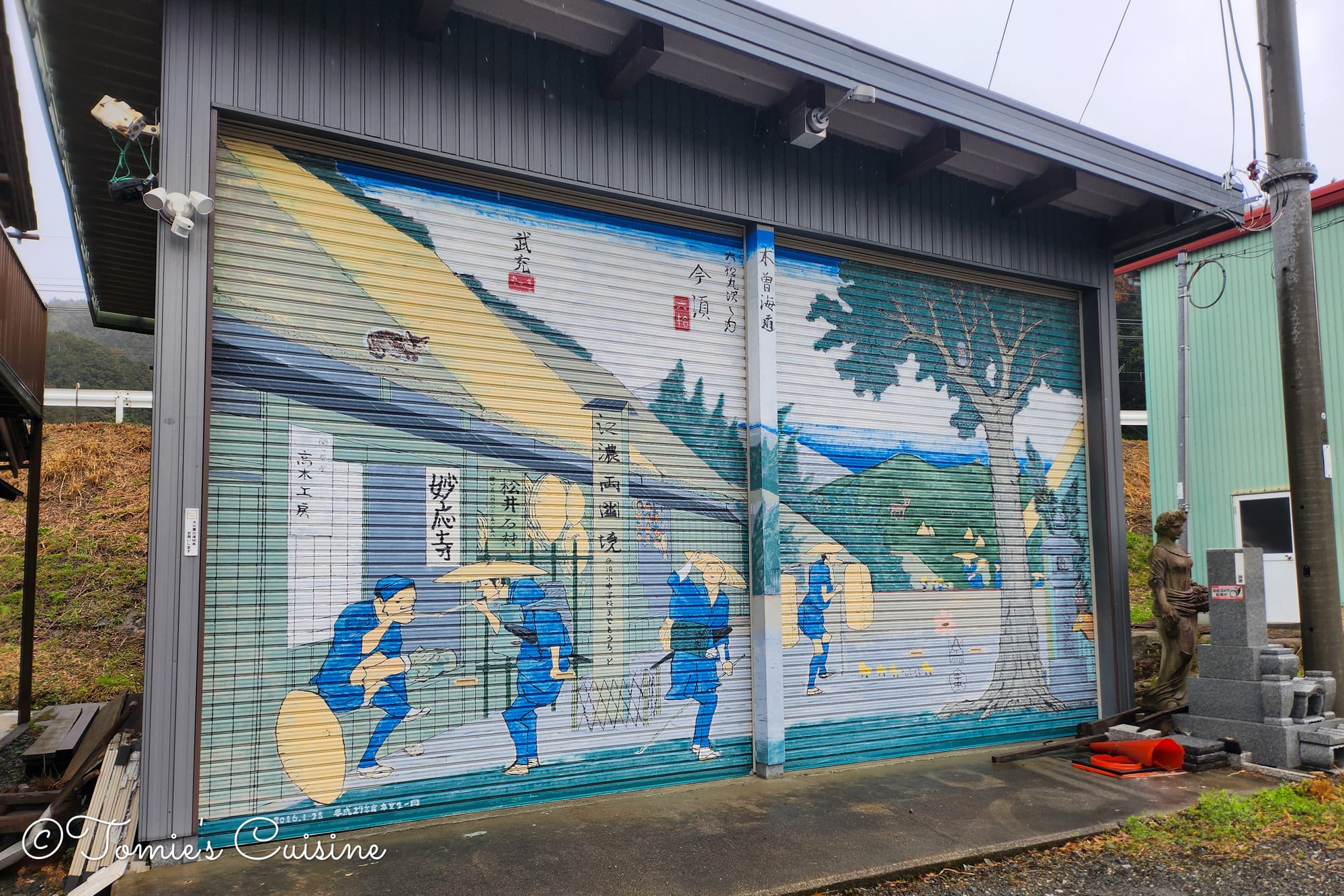
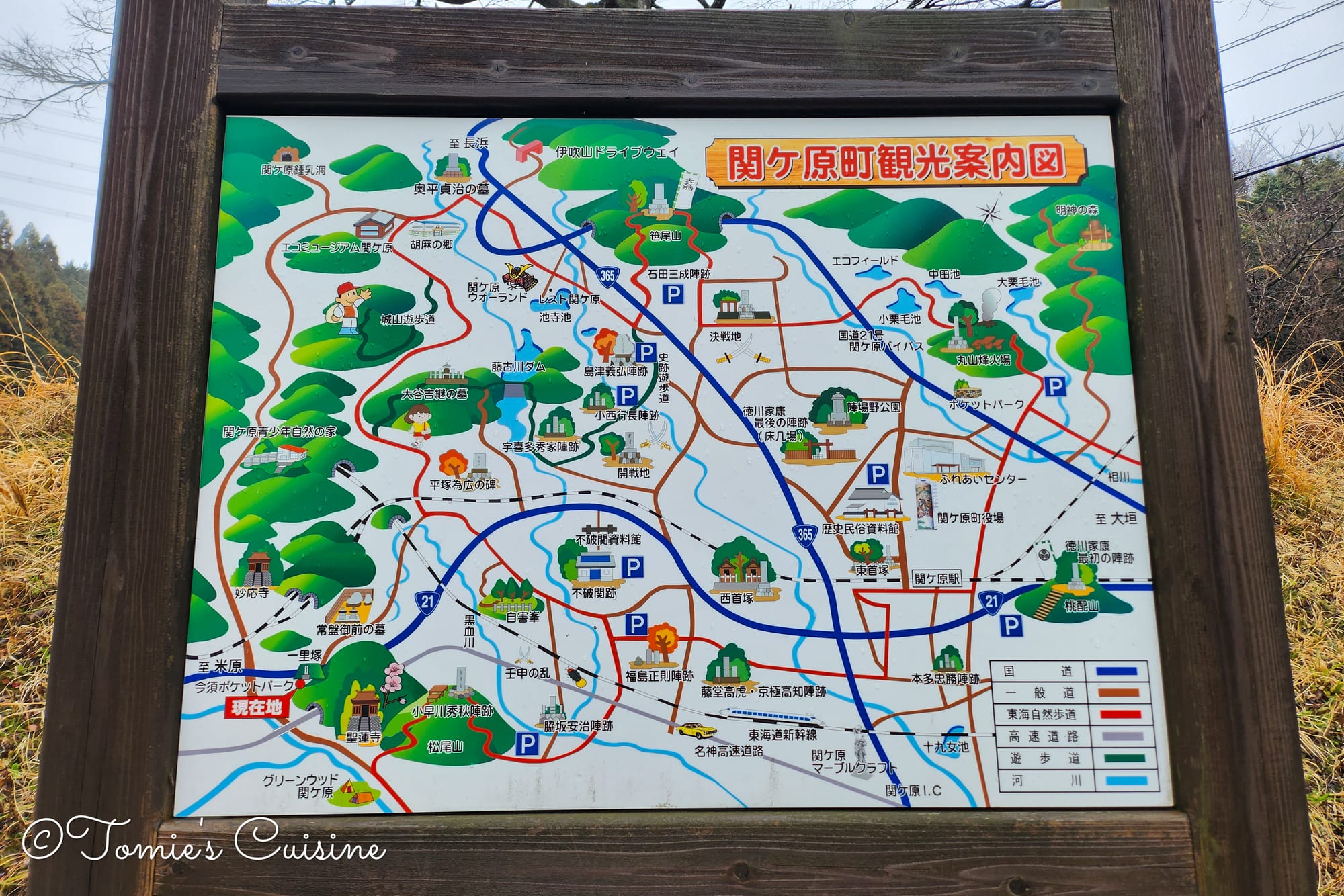
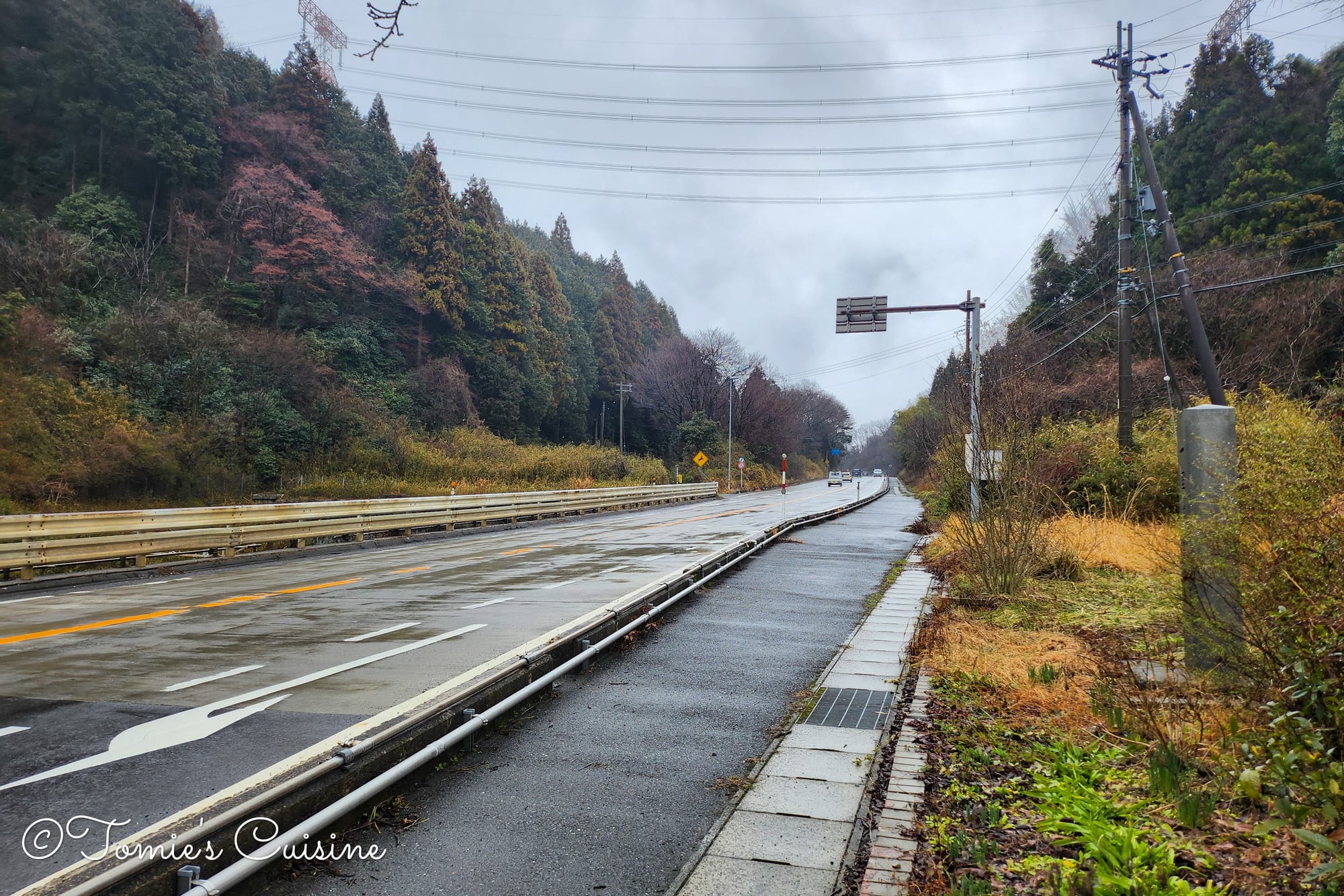
The old ukiyo-e design garage door (left), the Sekigahara sightseeing map (middle), and the big road we had to cross to reach the Imasu mountain pass (right).
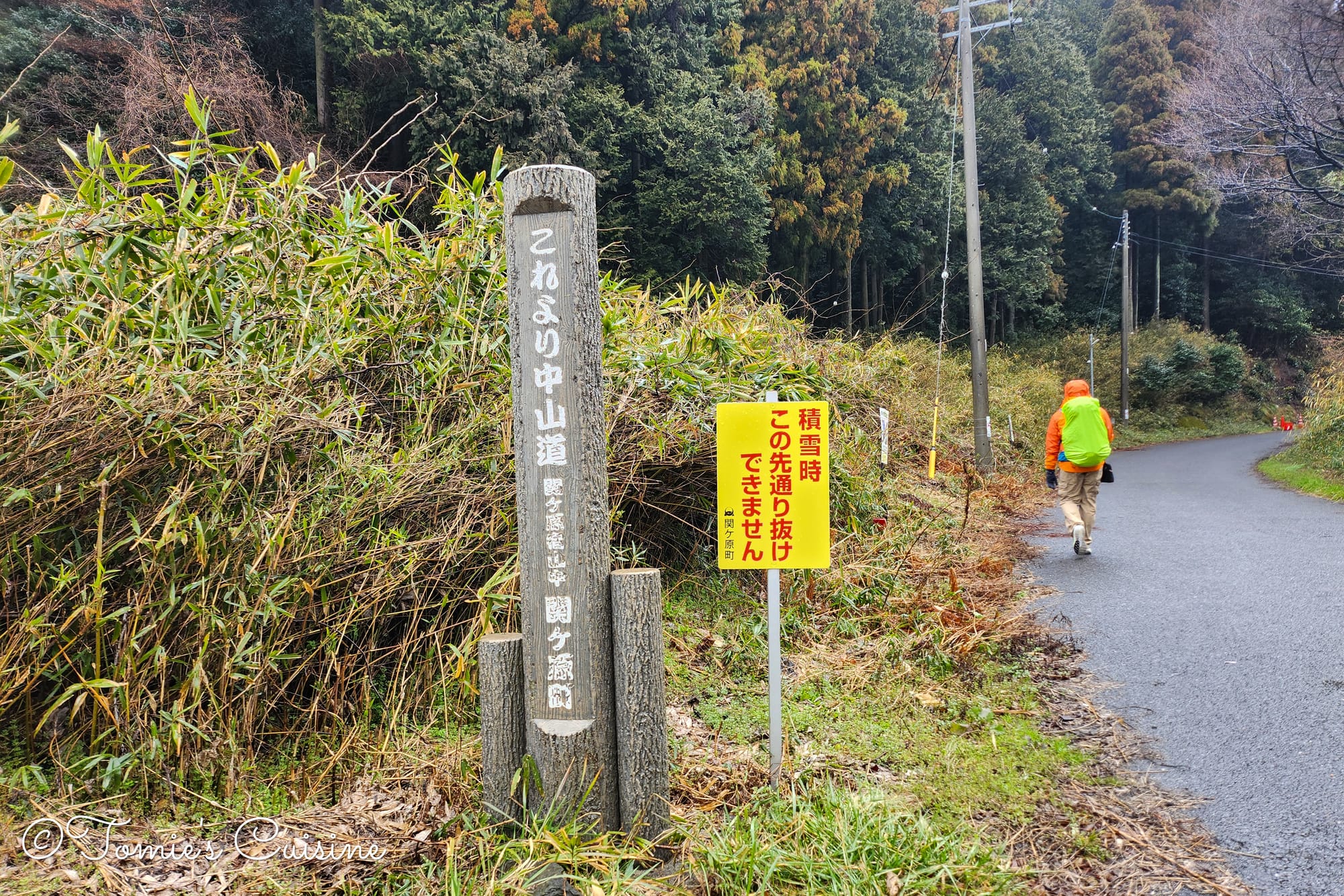
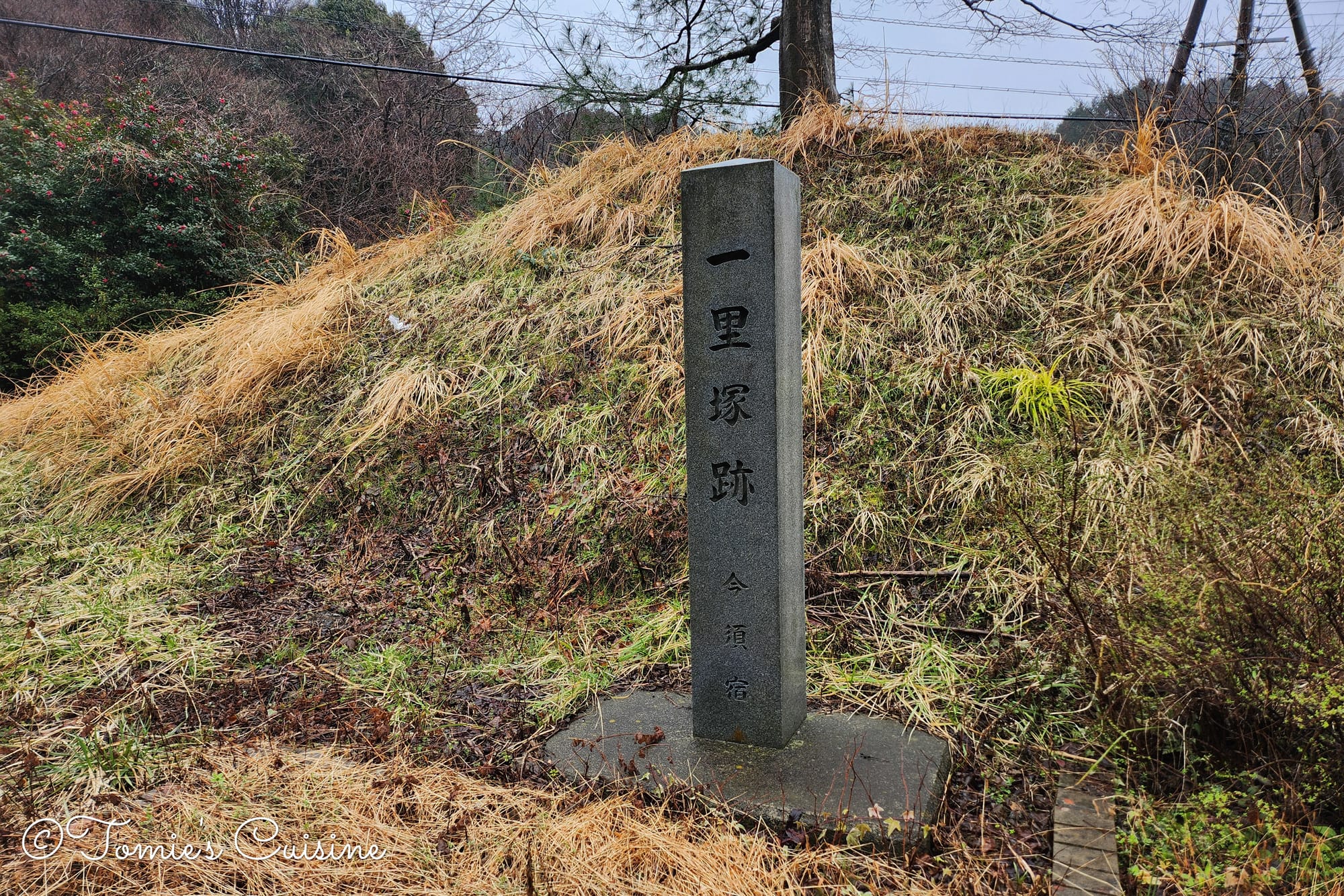
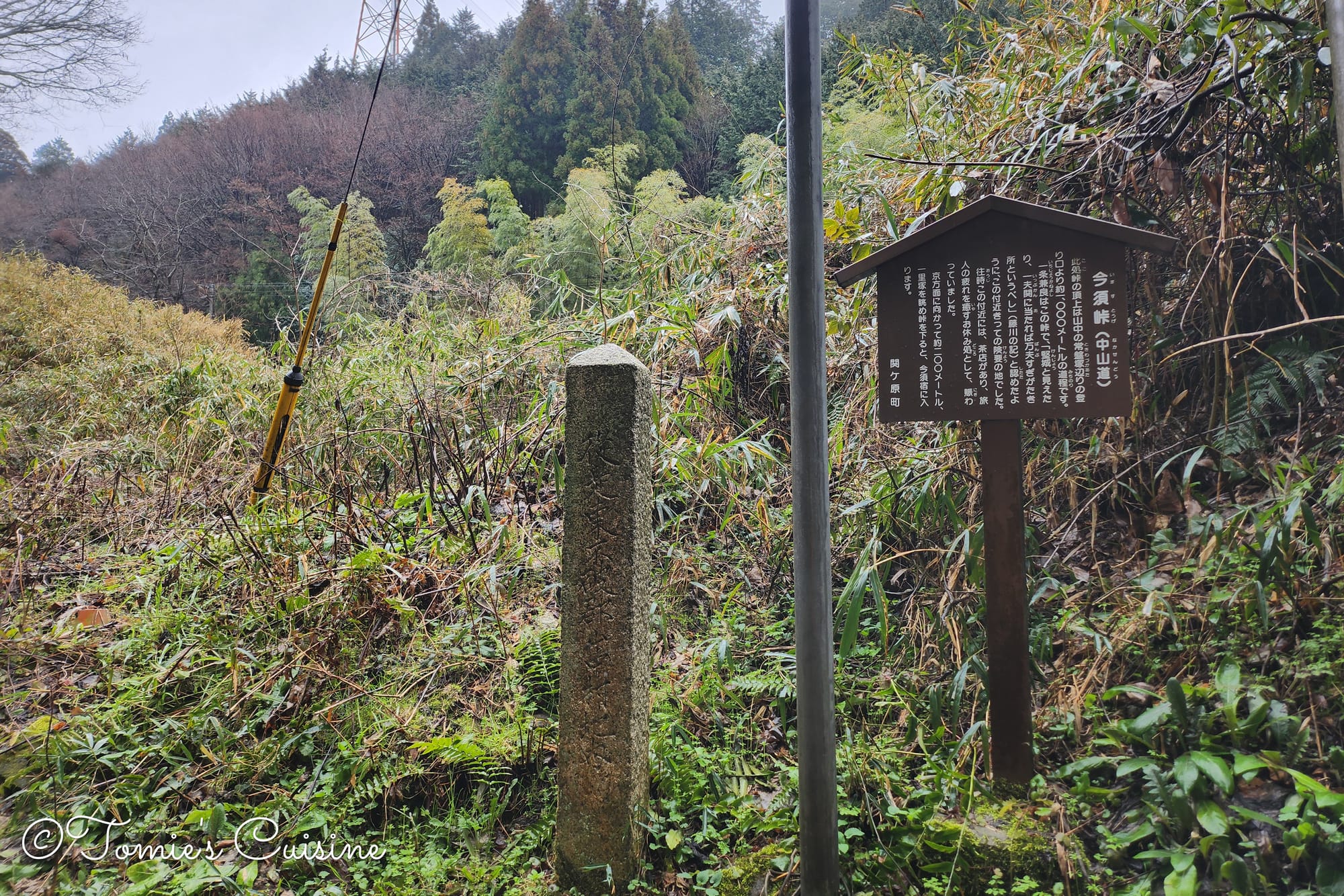
The sign of Nakasendo Yamanaka (left), Ichirizuka (milestone) on the Imasu mountain pass (middle) and the sign of Imasu mountain pass (right).
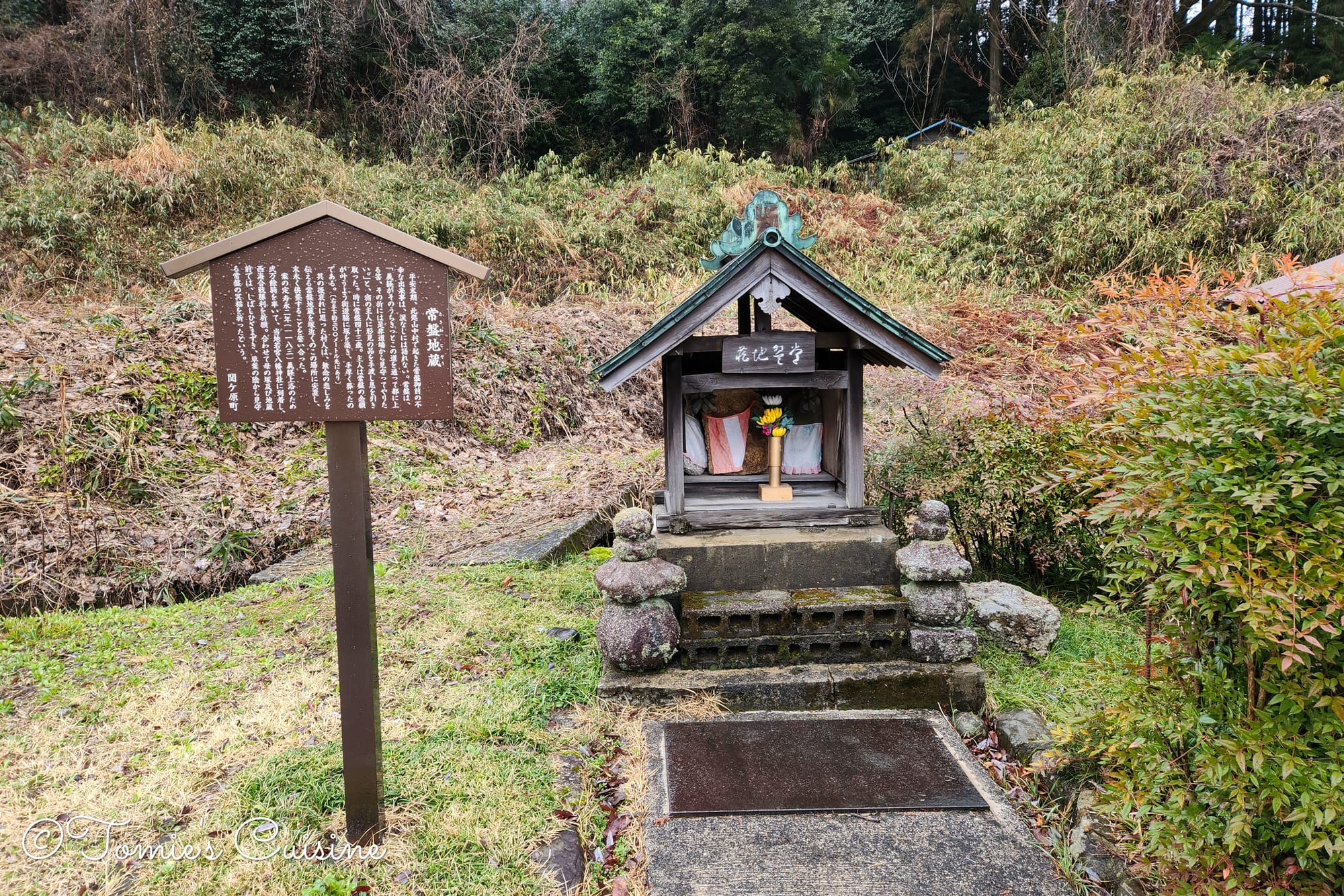
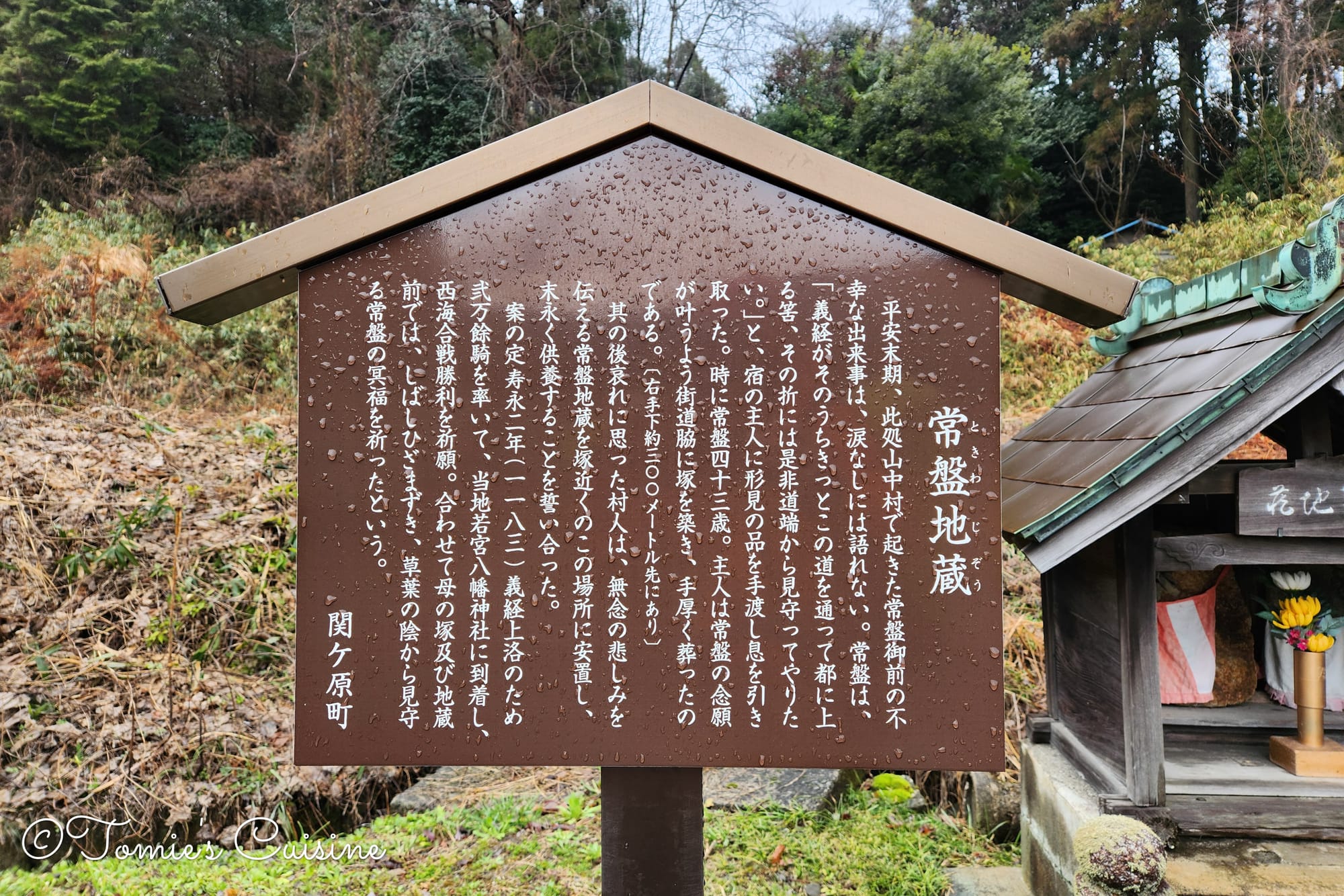
The Tokiwa Jizo statue was built by villagers near the grave mound of Tokiwa Gozen (Minamoto no Yoshitsune's mother). Tokiwa Gozen was expecting and waiting to watch over Yoshitsune passing by to go to Kyoto. In the end, she passed away before seeing him.
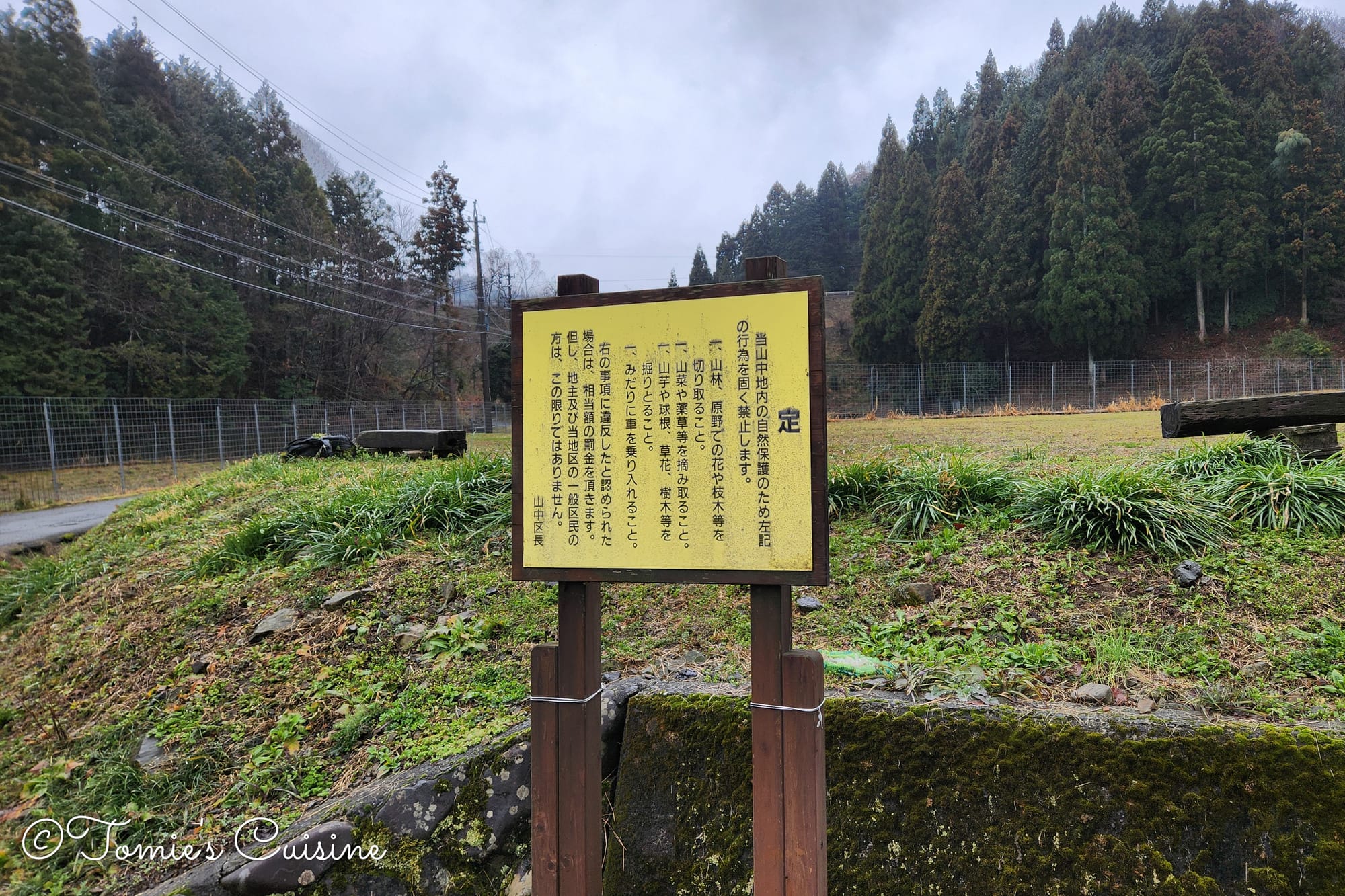
The local rules for nature conservation. 1: Do not cut the flowers and branches in the mountain and the field. 2: Do not pick mountain vegetables and medical herbs. 3: Do not dig up and take the potatoes, bulbs, grass, flowers, and trees. 4: Do not come in indiscriminately by car.
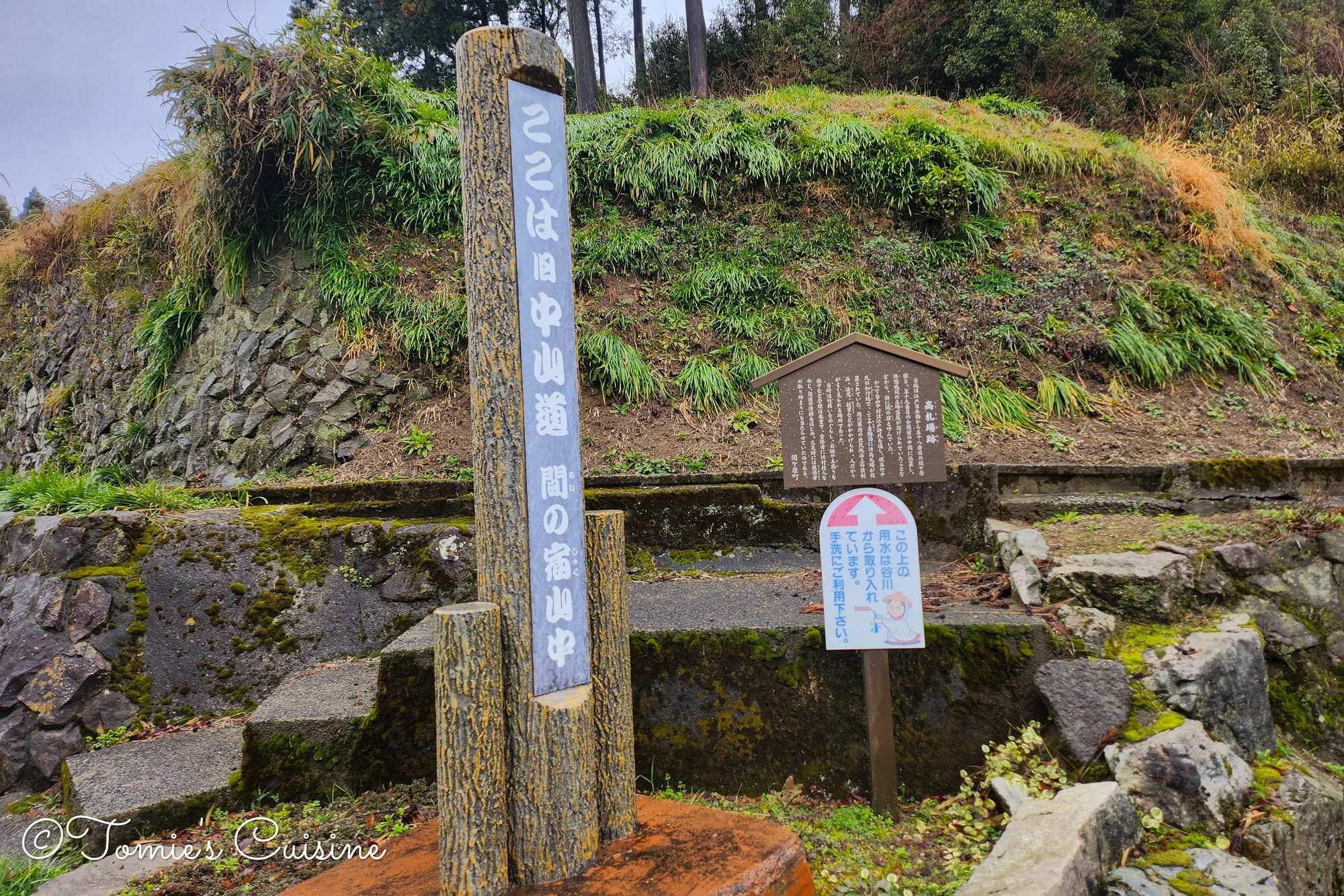
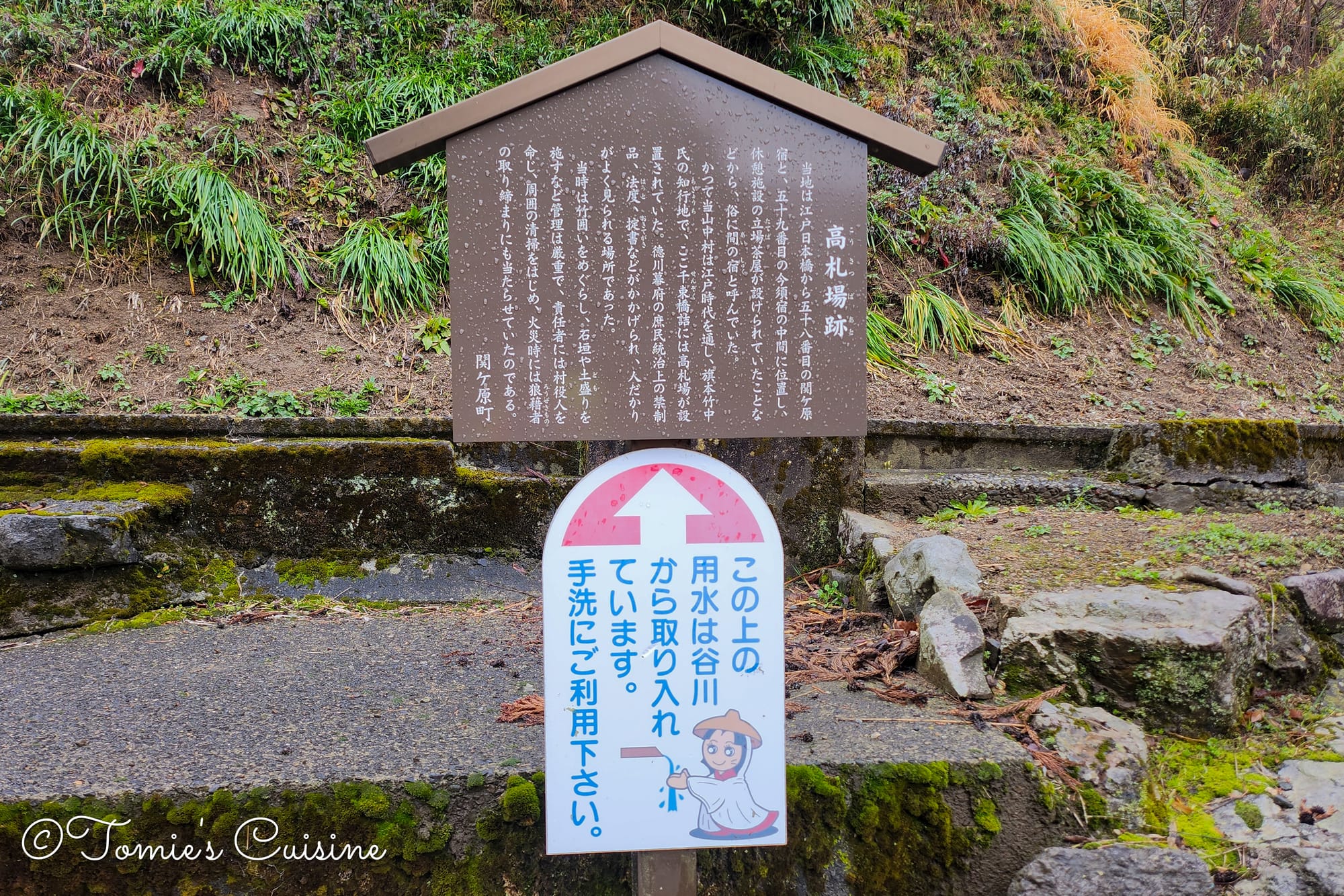
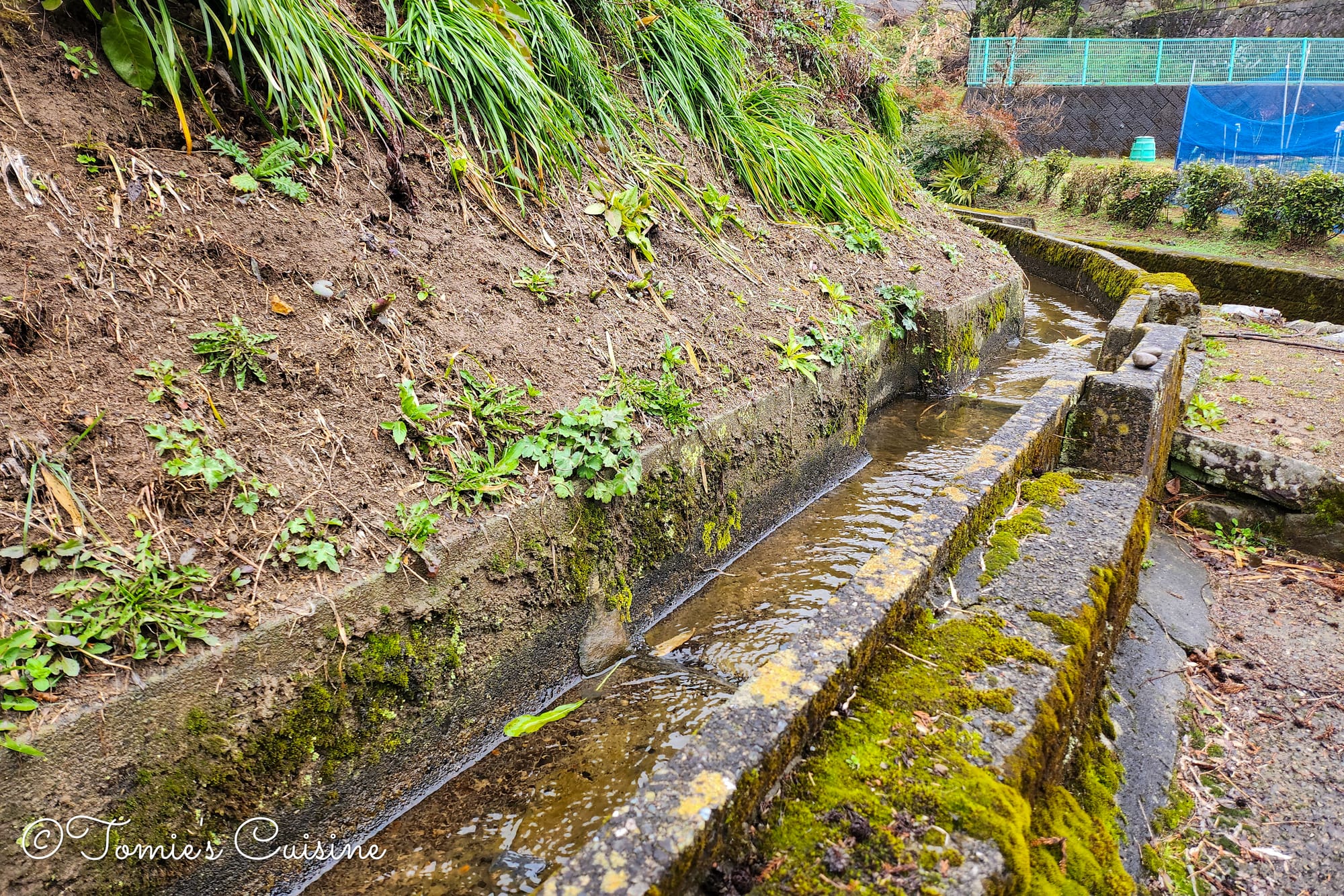
The sign of Nakasendo Yamanaka between post towns (left). They used to have Kosatsuba here, and now we have a small waterway that you can wash your hands (middle and right).
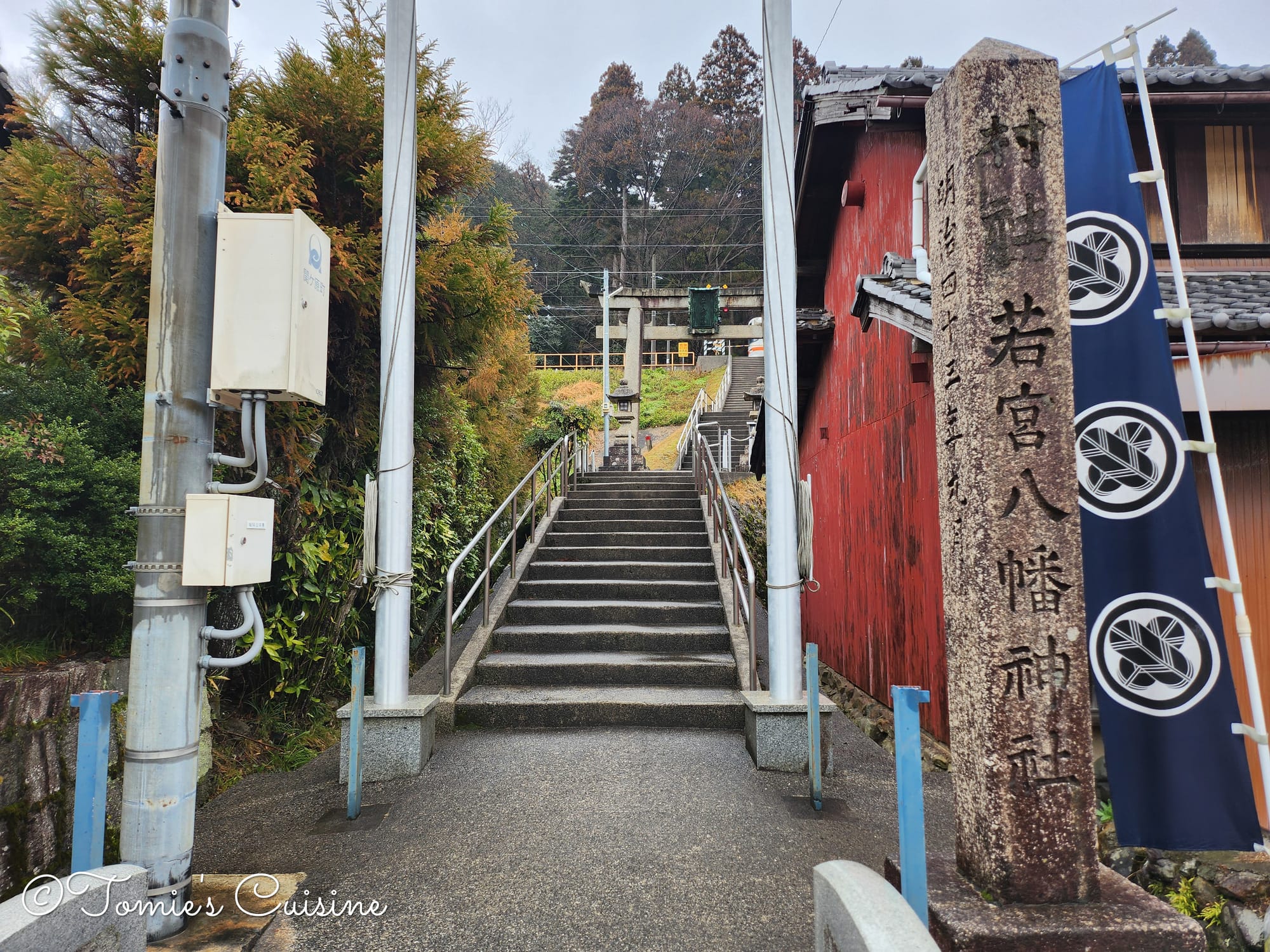
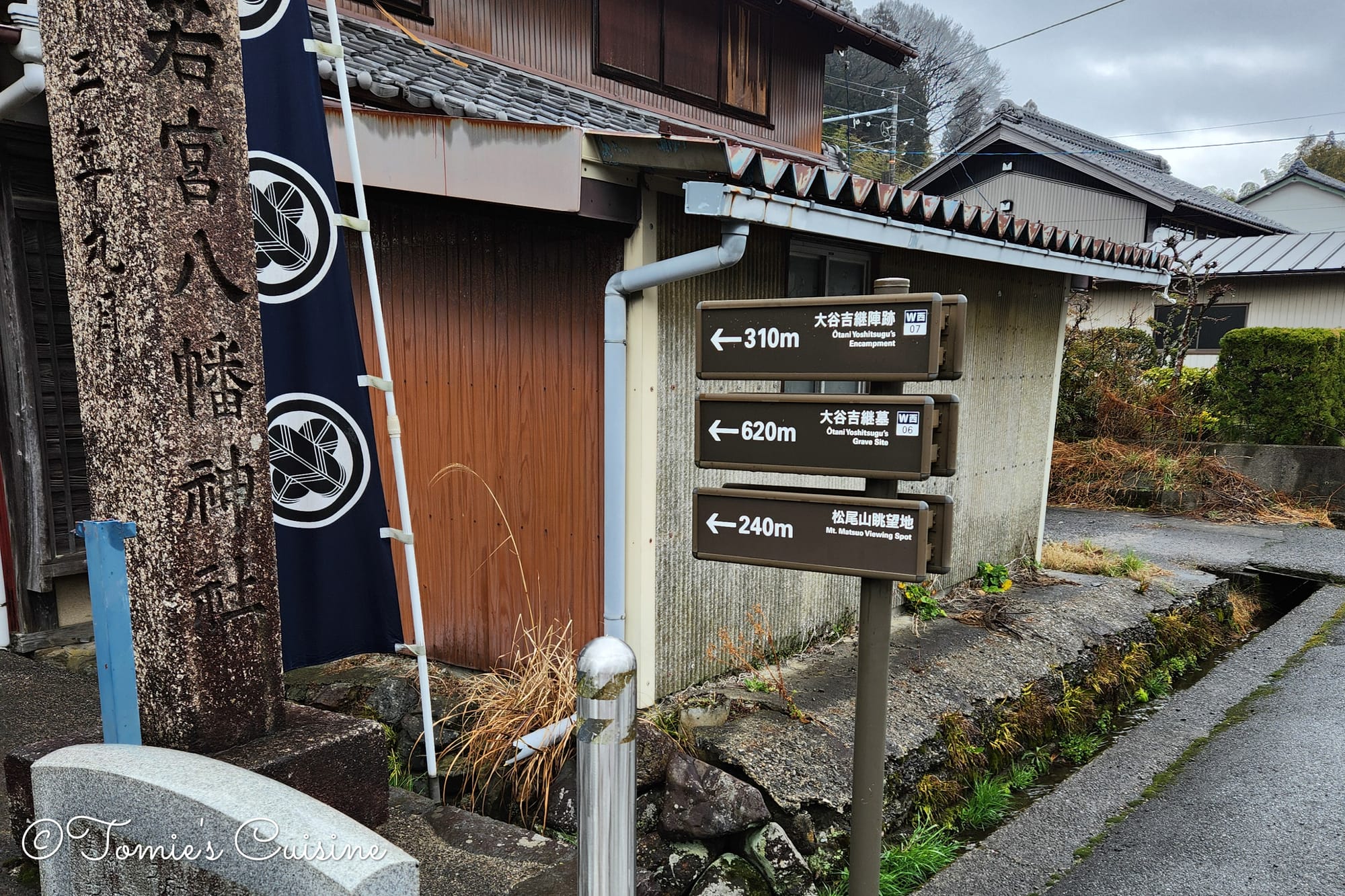
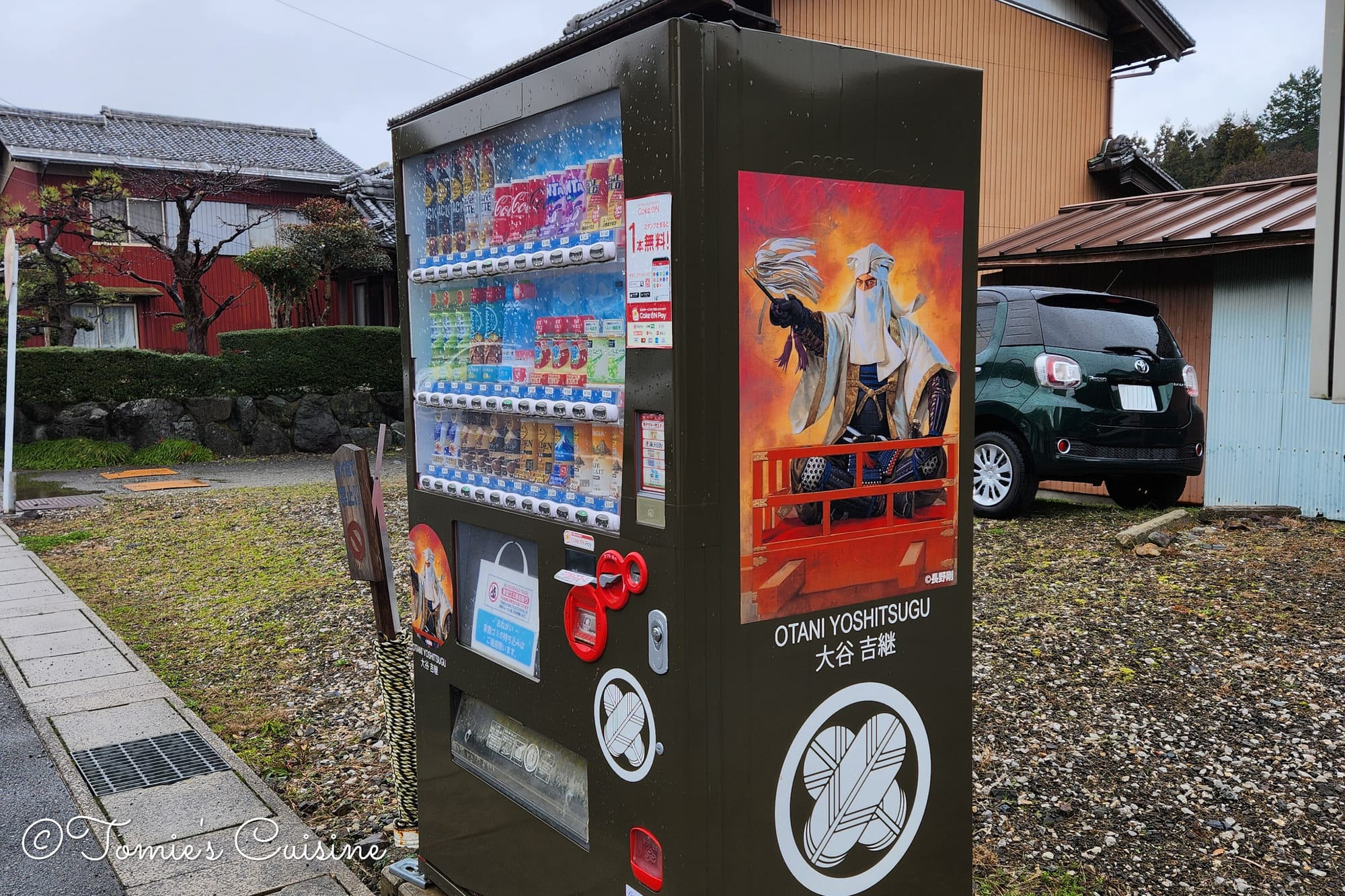
Wakamiya Hachiman Shrine is known as the site of Otani Yoshitsugu's encampment. When you go up towards the shrine, you will also see his grave and the encampment ruin. The vending machine nearby has Yoshitsugu's portrait.
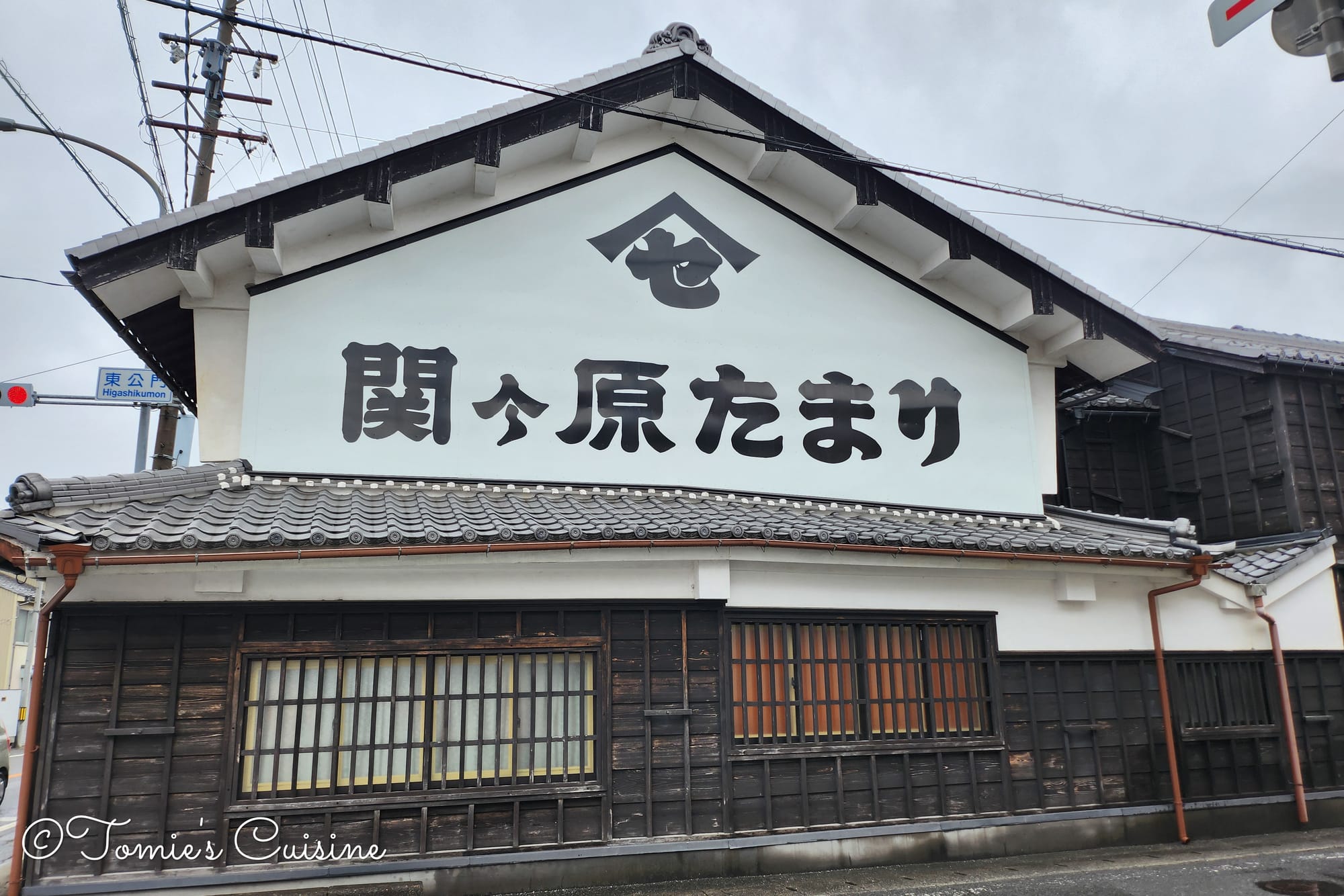
Sekigahara post town 関ヶ原宿
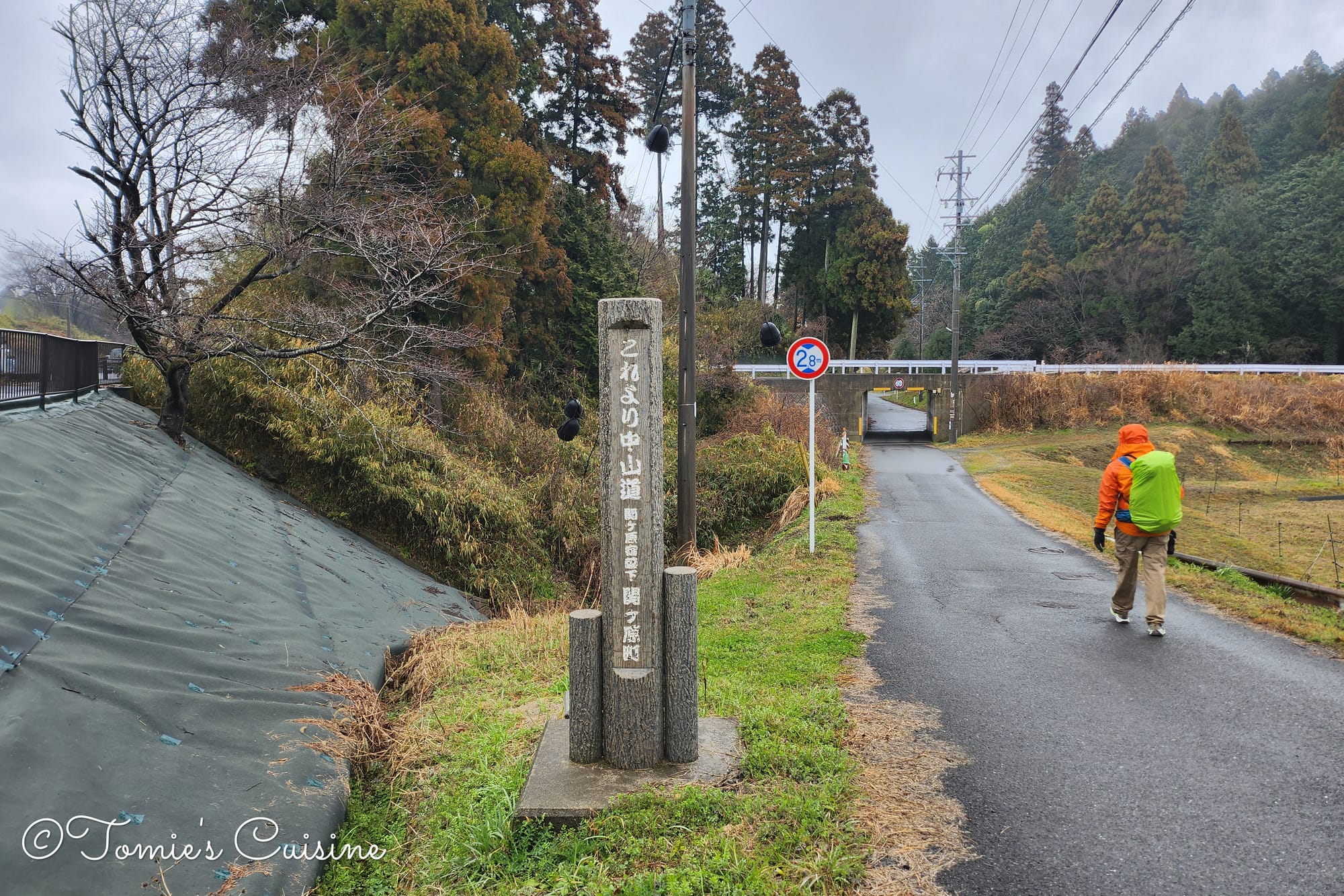
This sign reads "From here, Nakasendo Sekigahara post town Toge area Sekigahara town".
As we approached Sekigahara, the atmosphere changed. Even if you aren't a massive history enthusiast (I’ve personally always found it a bit too brutal), it’s impossible not to feel the weight of what happened here in the year 1600.
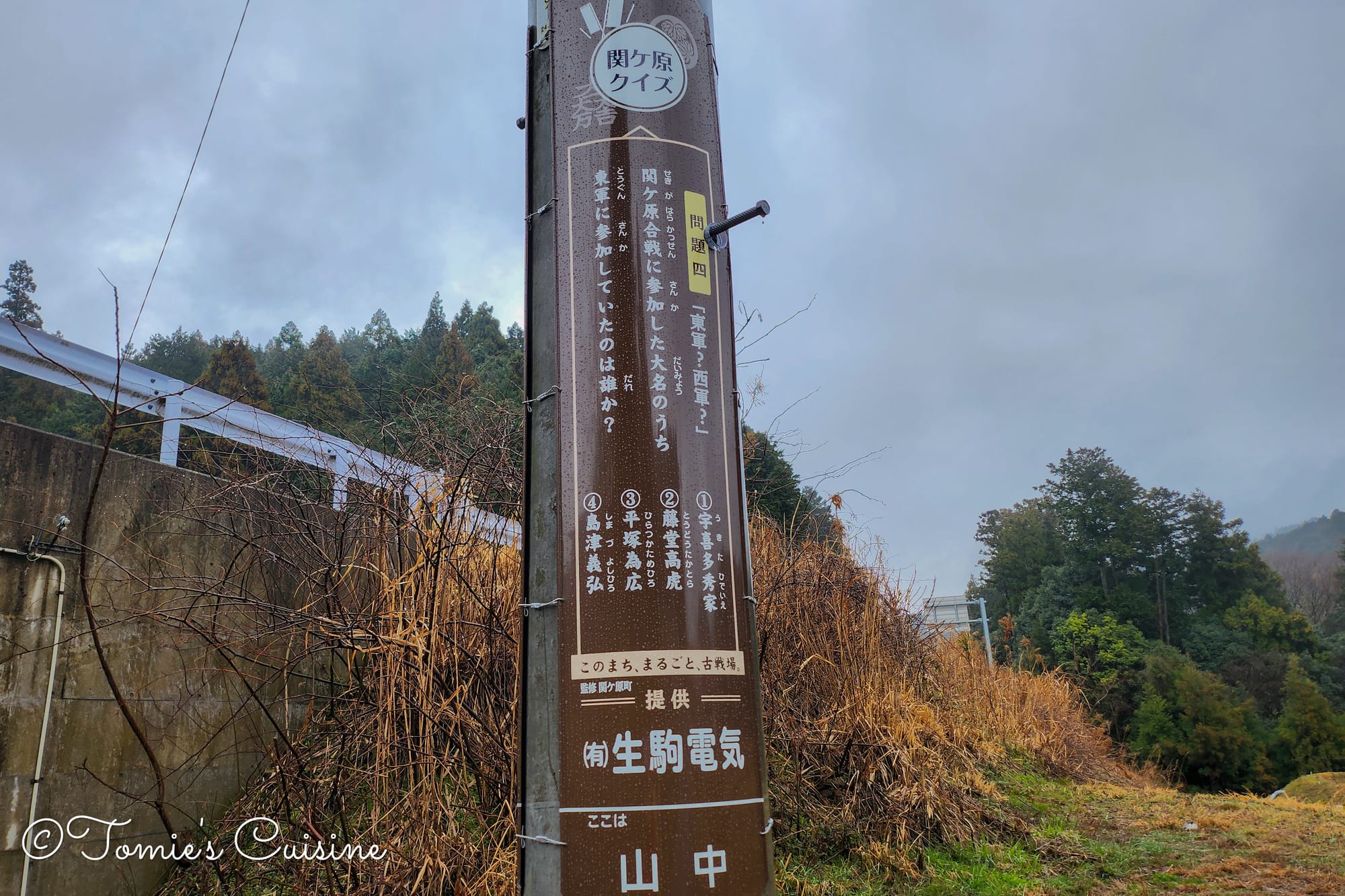
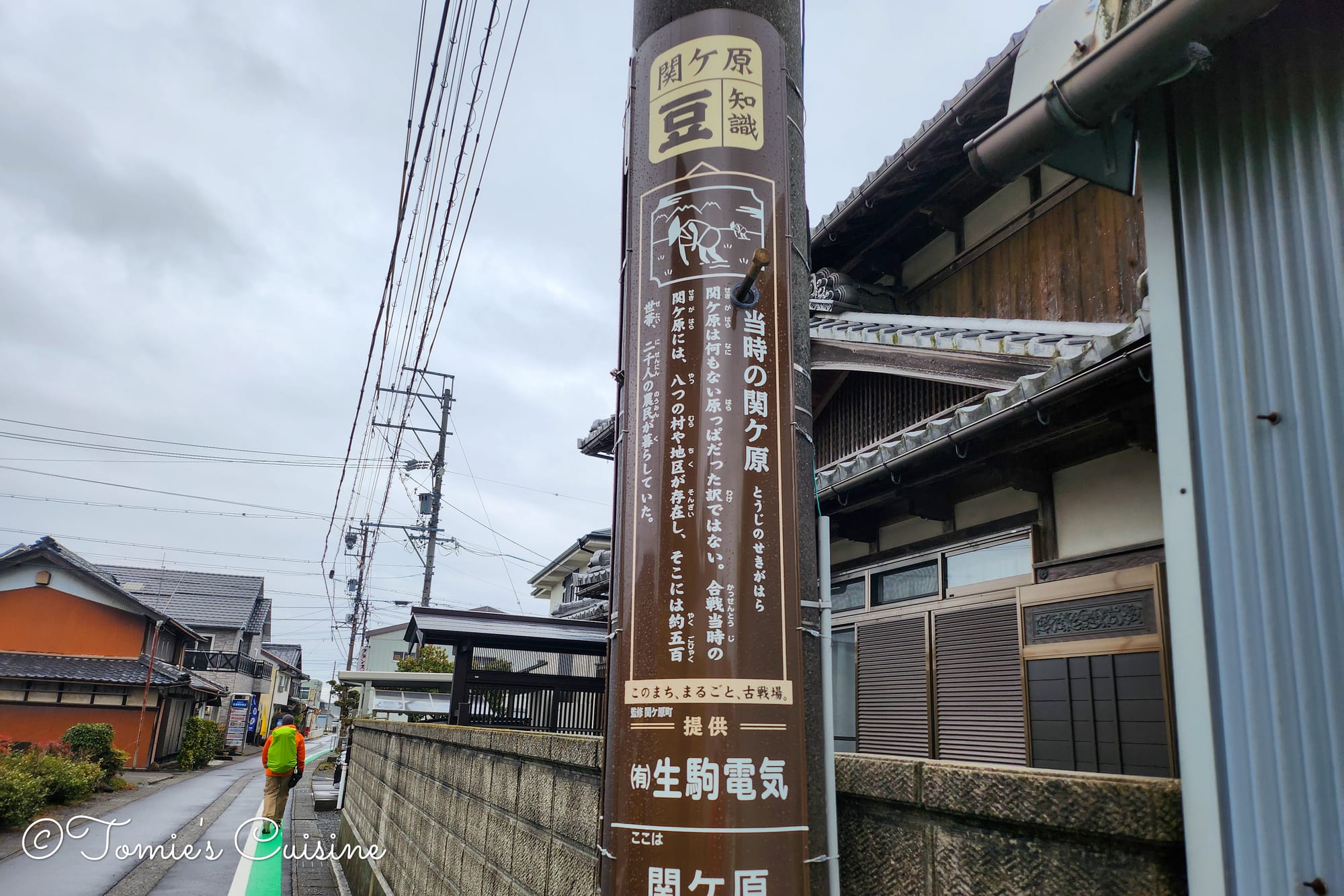
We saw a few quizzes and historical facts about Sekigahara on the telegraph pole. Very interesting!
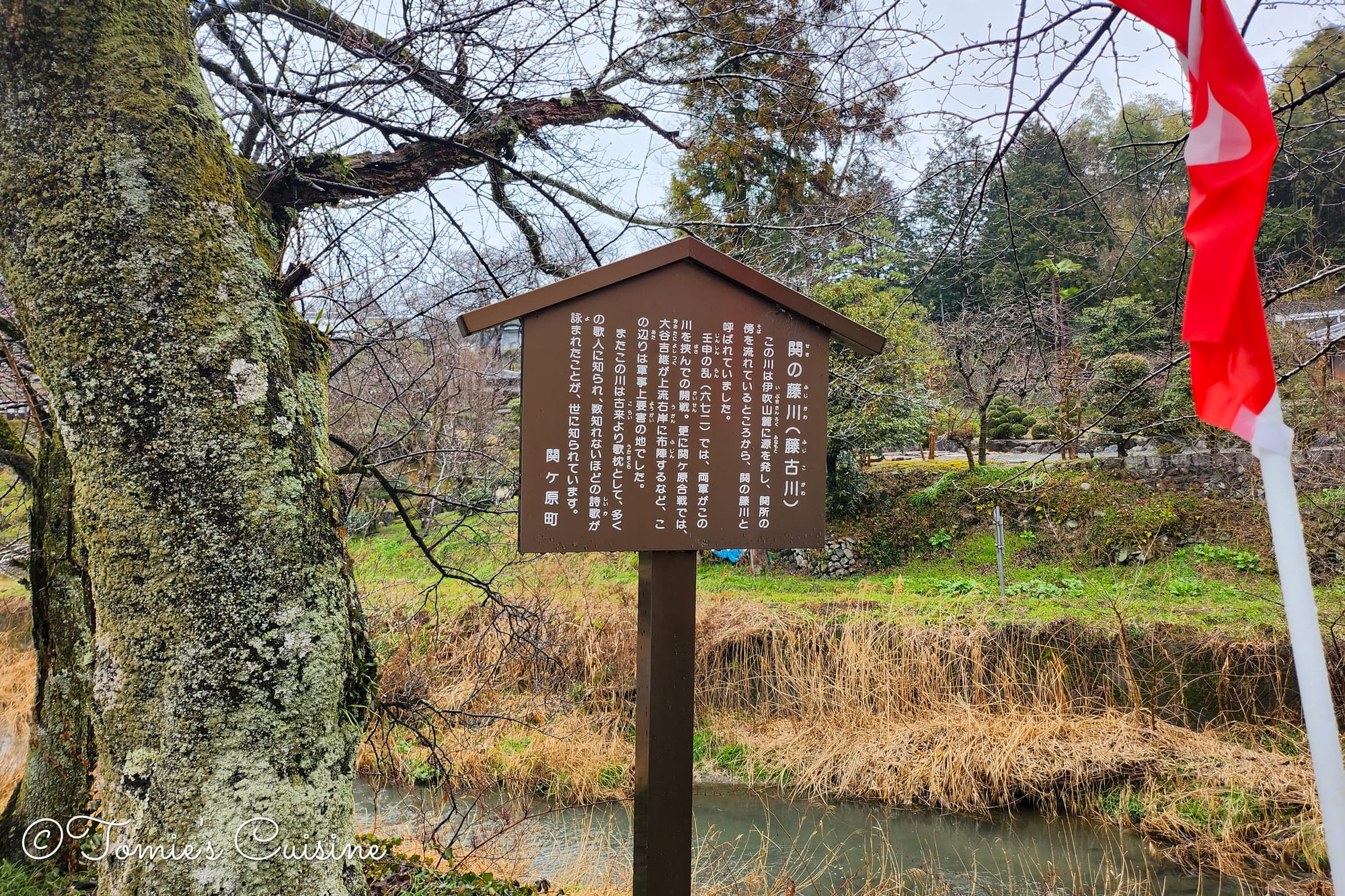
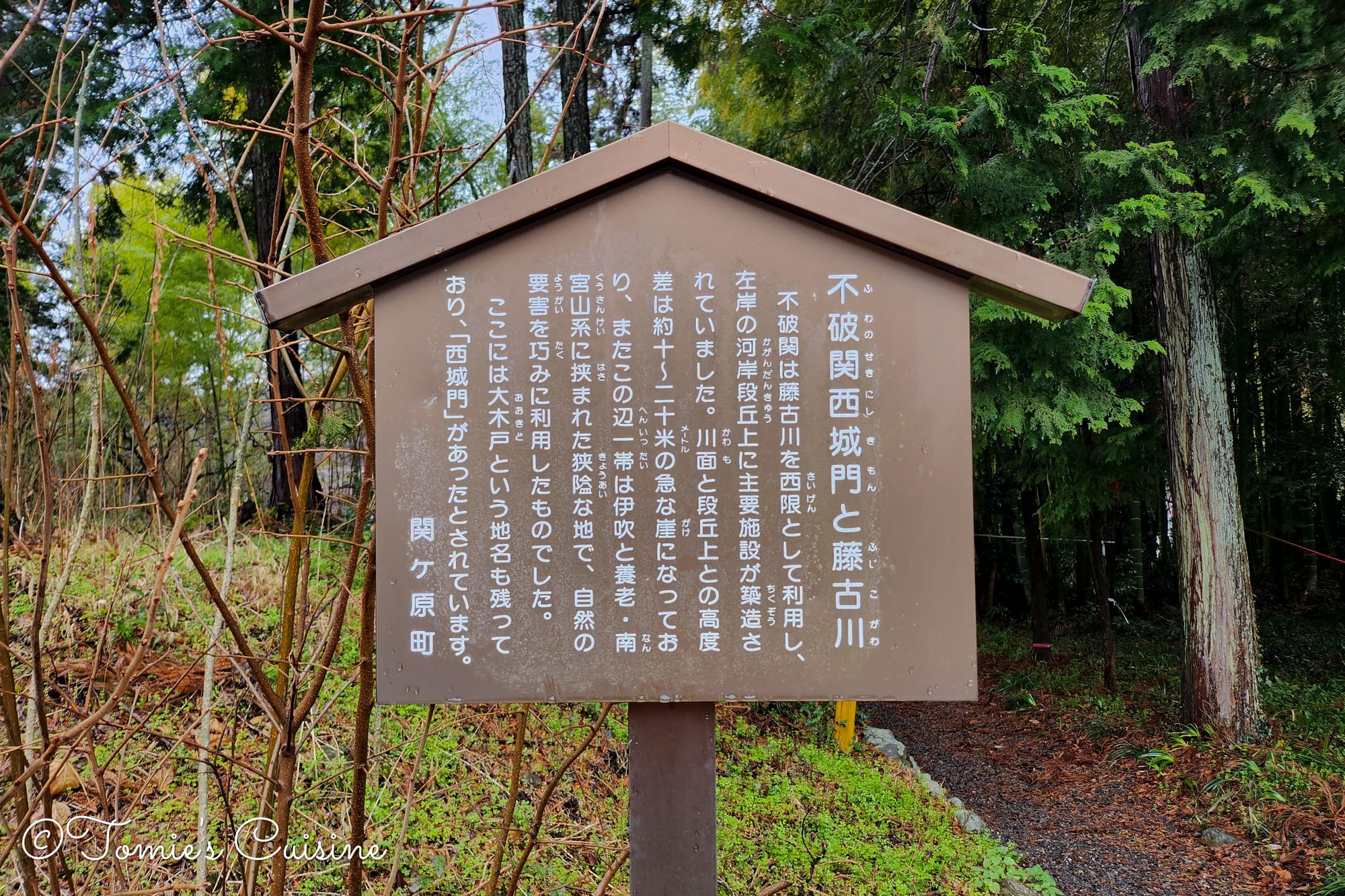
There are many historical sites with these explanation boards.
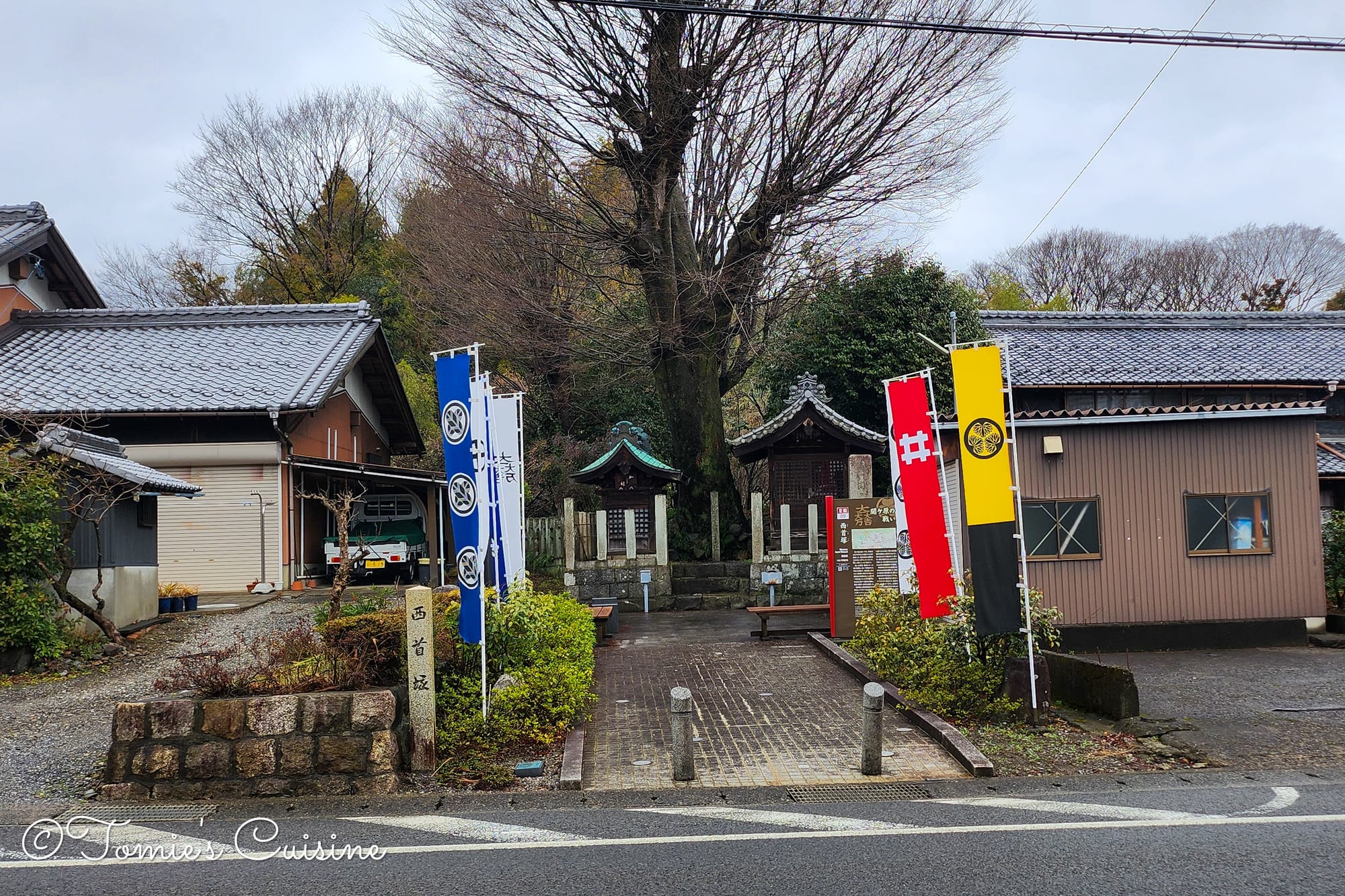
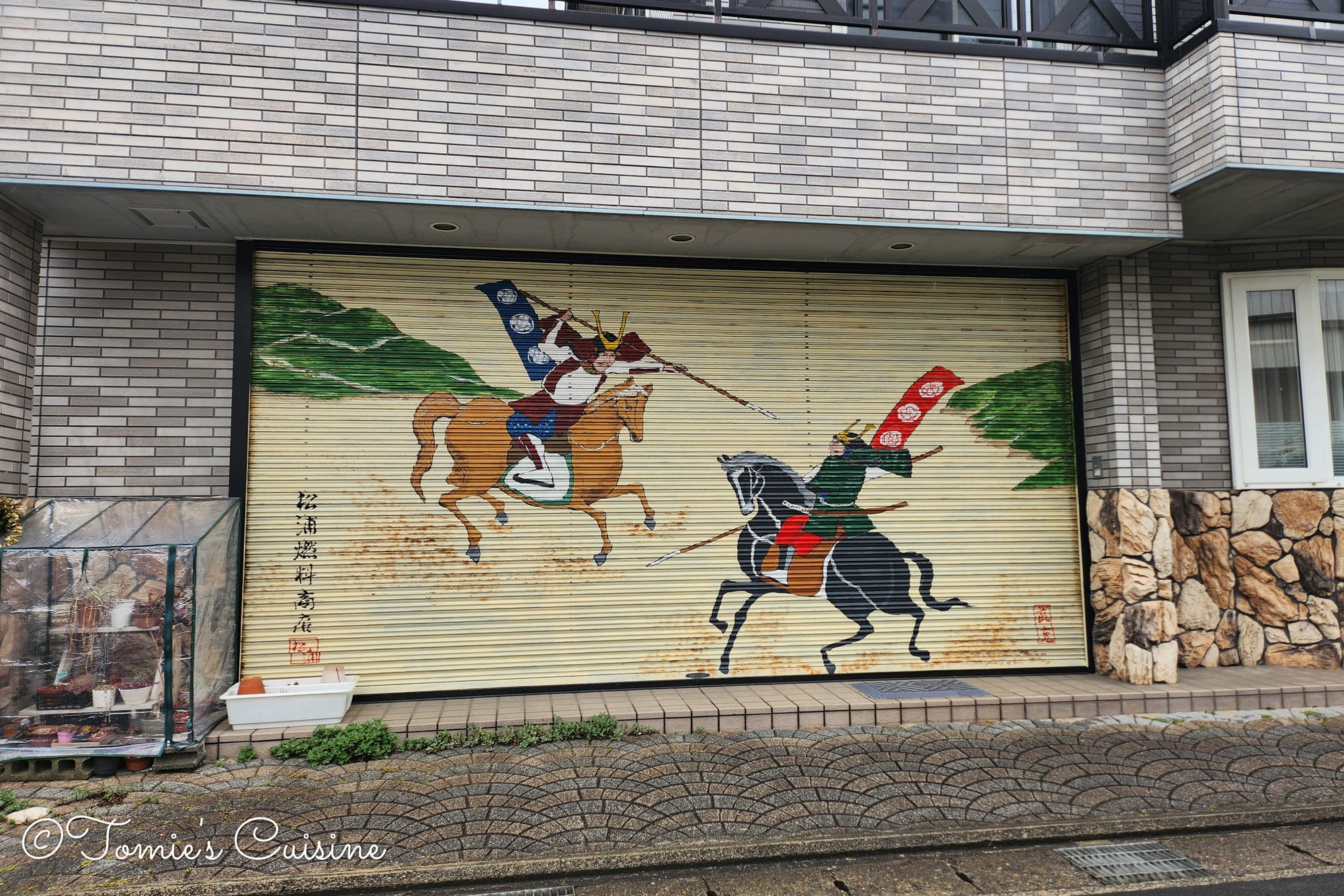
We also saw the colourful flags of different samurai families related to the Battle of Sekigahara (left) and the well-designed garage shutter. (right)
The Battle of Sekigahara was fought between Tokugawa Ieyasu and Ishida Mitsunari, and Tokugawa emerged victorious. The Battle of Sekigahara is also known as the "decisive battle" (天下分け目の戦い) because it ended years of conflict and ushered in the Edo Shogunate in 1603.
We started seeing battle-related signs as early as Imasu post town, but once we hit the centre of Sekigahara, the village was filled with maps, drawings, and crests marking where the different samurai clans fought.
While the town is a paradise for history lovers with its many museums and historic sites, we had a different goal for the day: keeping our pace through the rain. We’ve promised ourselves we'll come back another day to properly wander through the museums and explore the deeper history of the fields we just walked across
11:24 am Lunch break at a local sushi restaurant
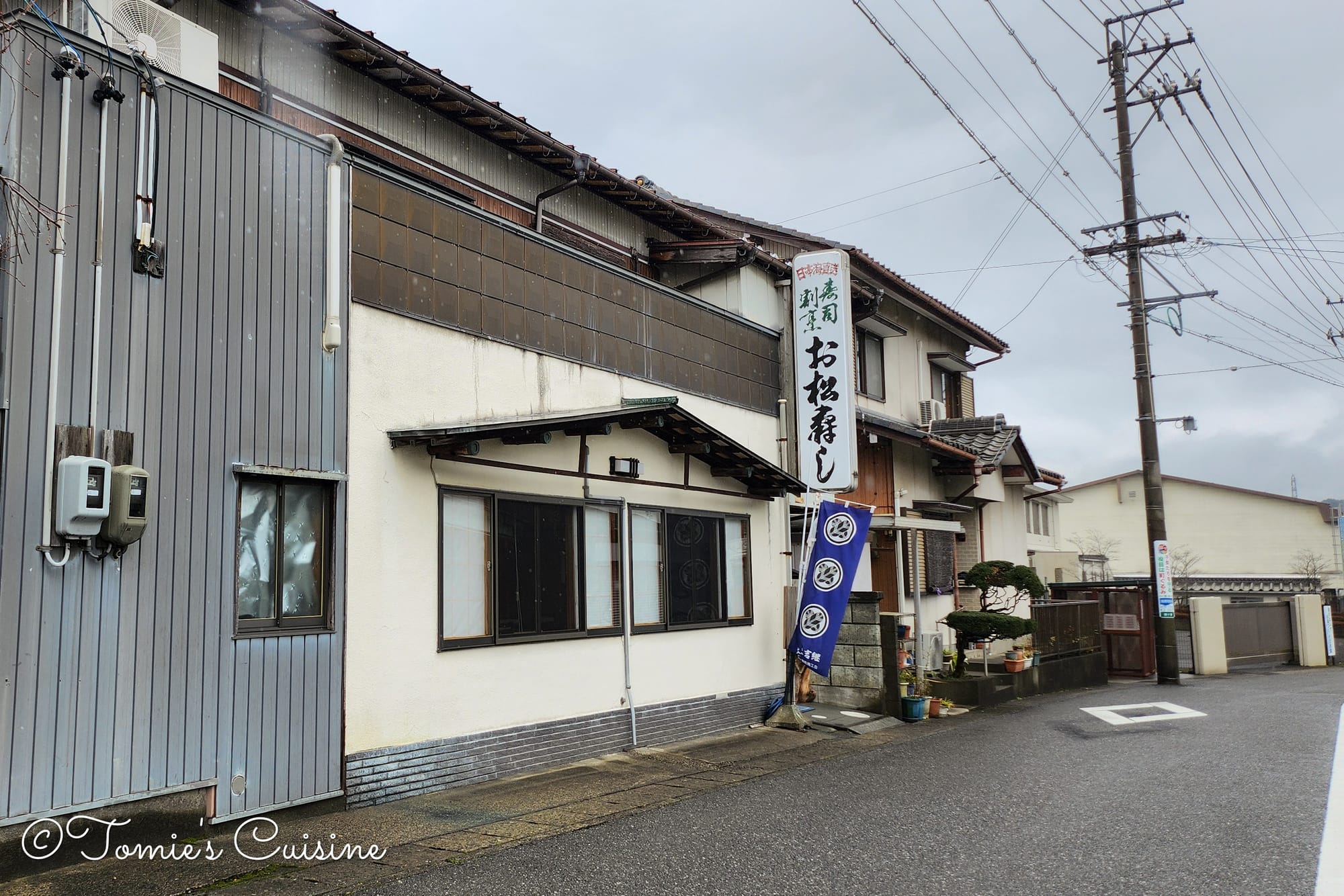
Omatsu zushi in Sekigahara, Gifu prefecture.
The restaurant is called “Omatsu-zushi (お松寿司)” in Sekigahara. The restaurant opens at 11:30, so we waited until then. Luckily, the rain eased while we waited under the cover of a building in front of the restaurant.
Oops, we have to take off our shoes to step onto the tatami. But no worries, we've prepared for this moment!
The lady who runs the restaurant offered us a tatami table, where we had to take off our shoes, but our shoes and socks were already wet. It was great that we kept our clean and dry socks somewhere easily accessible. It was a pretty cold day, and they saw us coming in, our jackets and backpacks dripping. The lady brought a heater closer to us. It was so sweet!
We wore these waterproof socks and had 2 pairs to get us through rainy days on this trip.
Beautiful and reasonably priced sushi
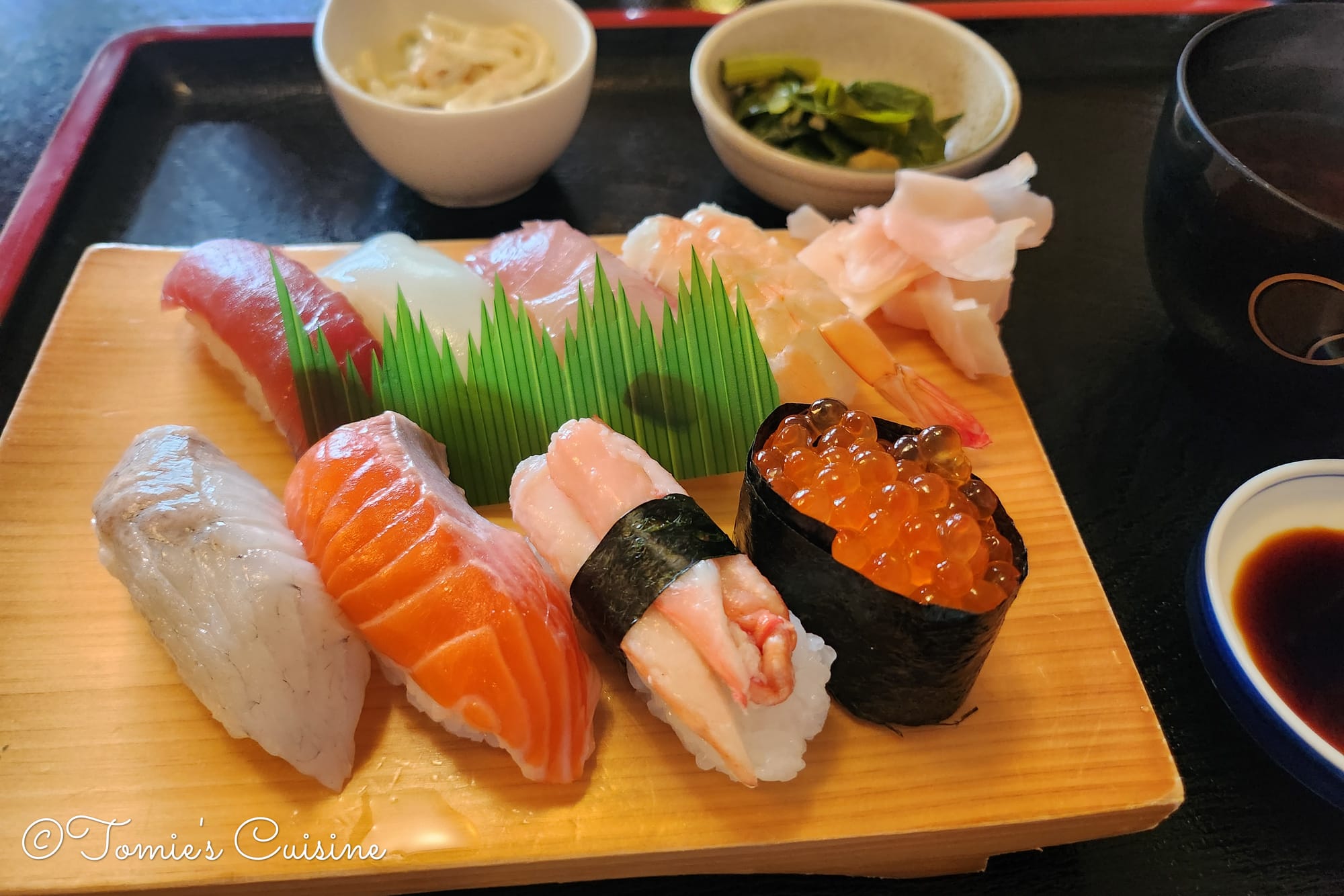
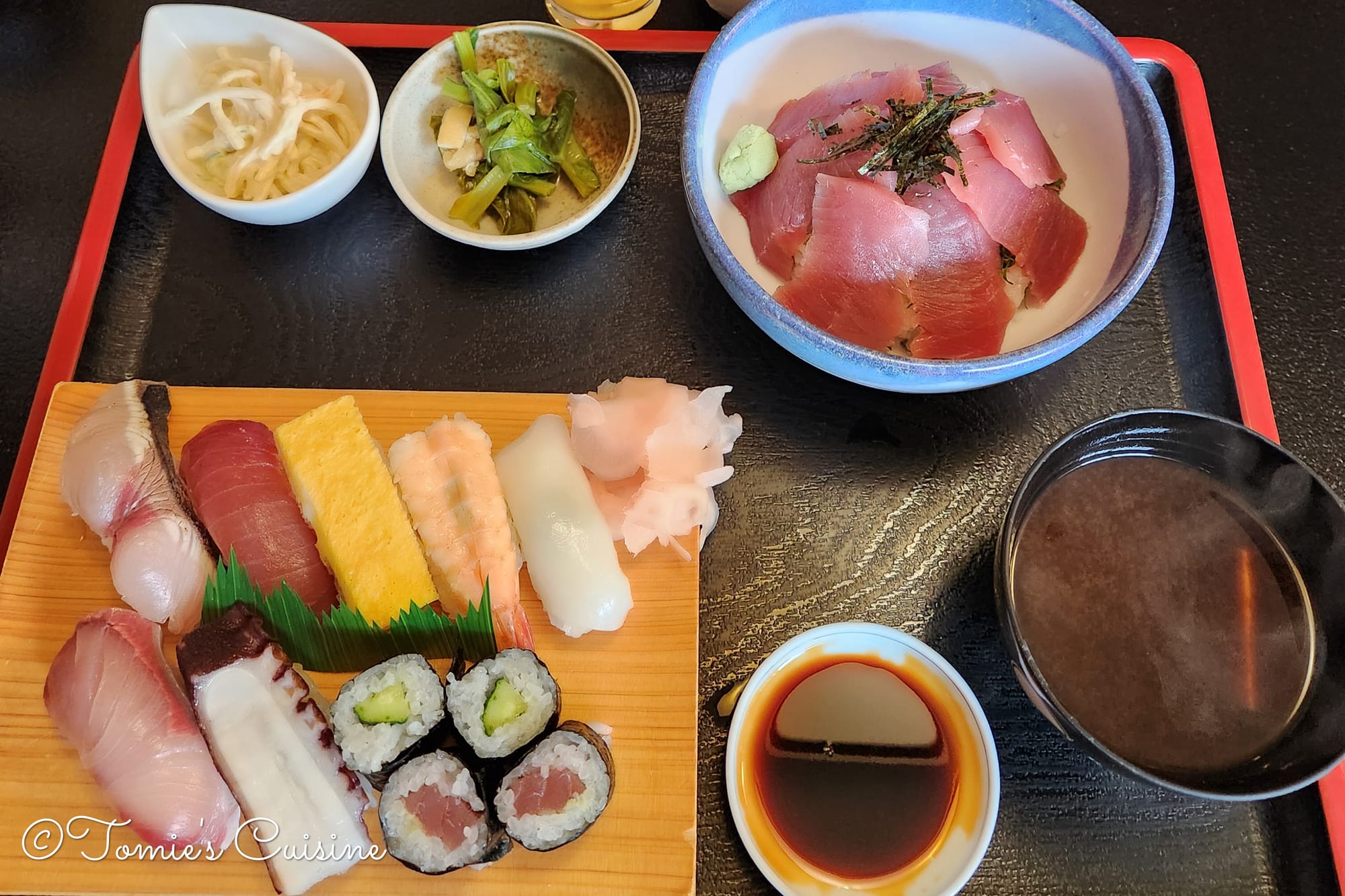
Reasonably-priced and delicious sushi lunch meal at Omatsu zushi.
We ordered non-alcoholic beer, two sushi assortments, and Tekka don (鉄火丼), a bowl of tuna sashimi on sushi rice. The delicious sushi and their warm welcome made us refreshed.
12:50 pm We had to stop for the Ichigo Daifuku!
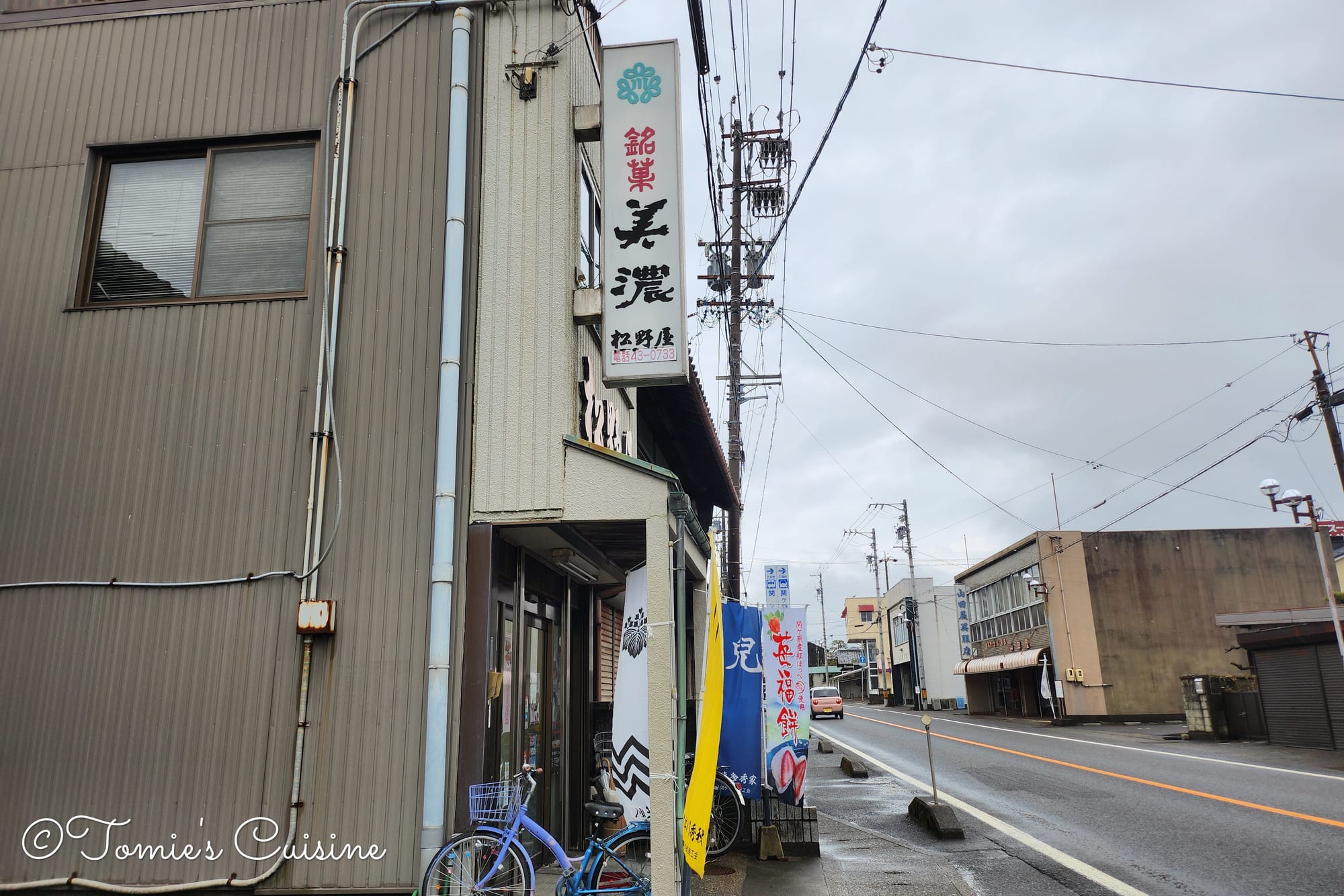
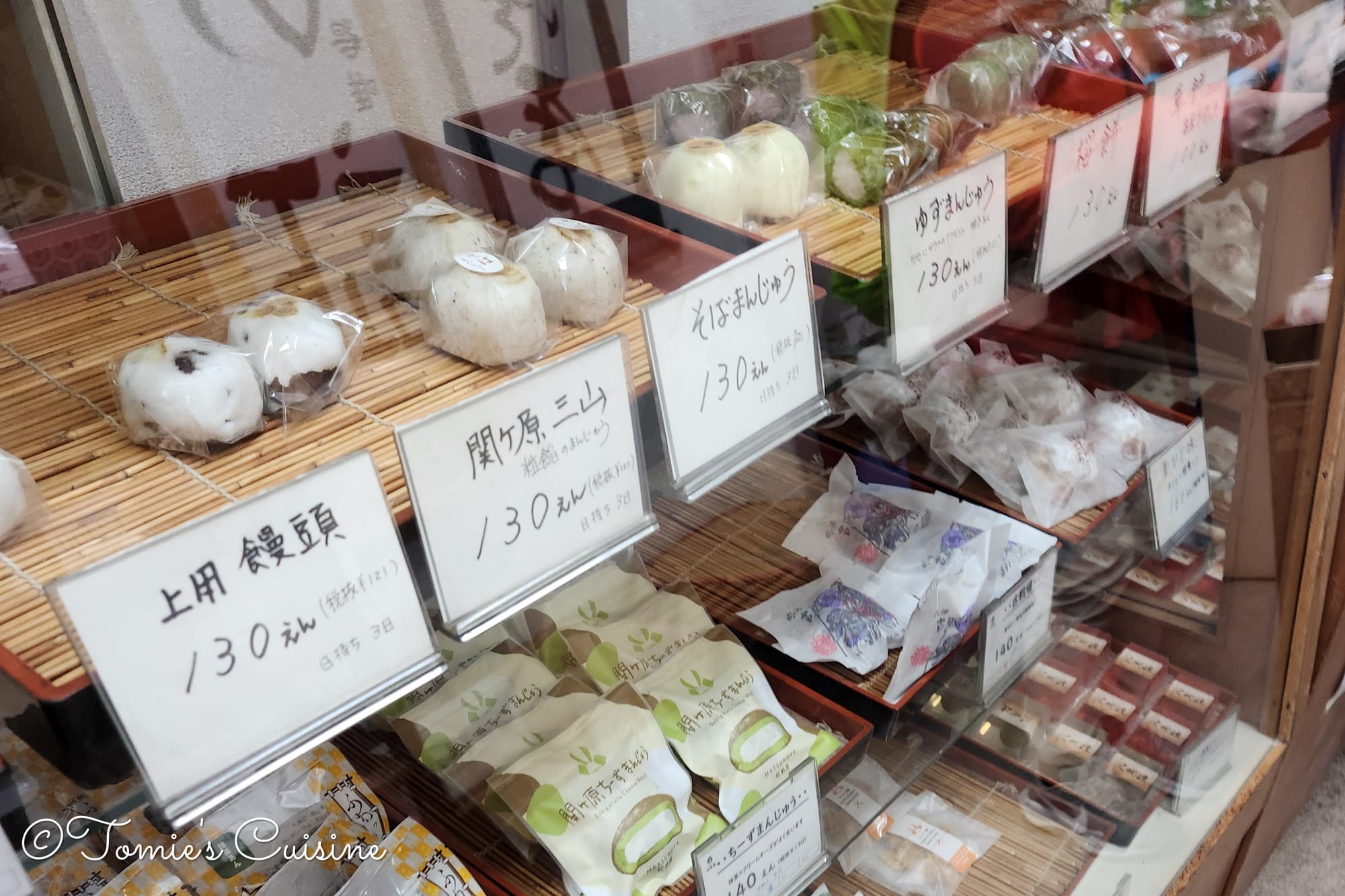
Matsuno-ya, the sweets shop in Sekigahara, Gifu prefecture.
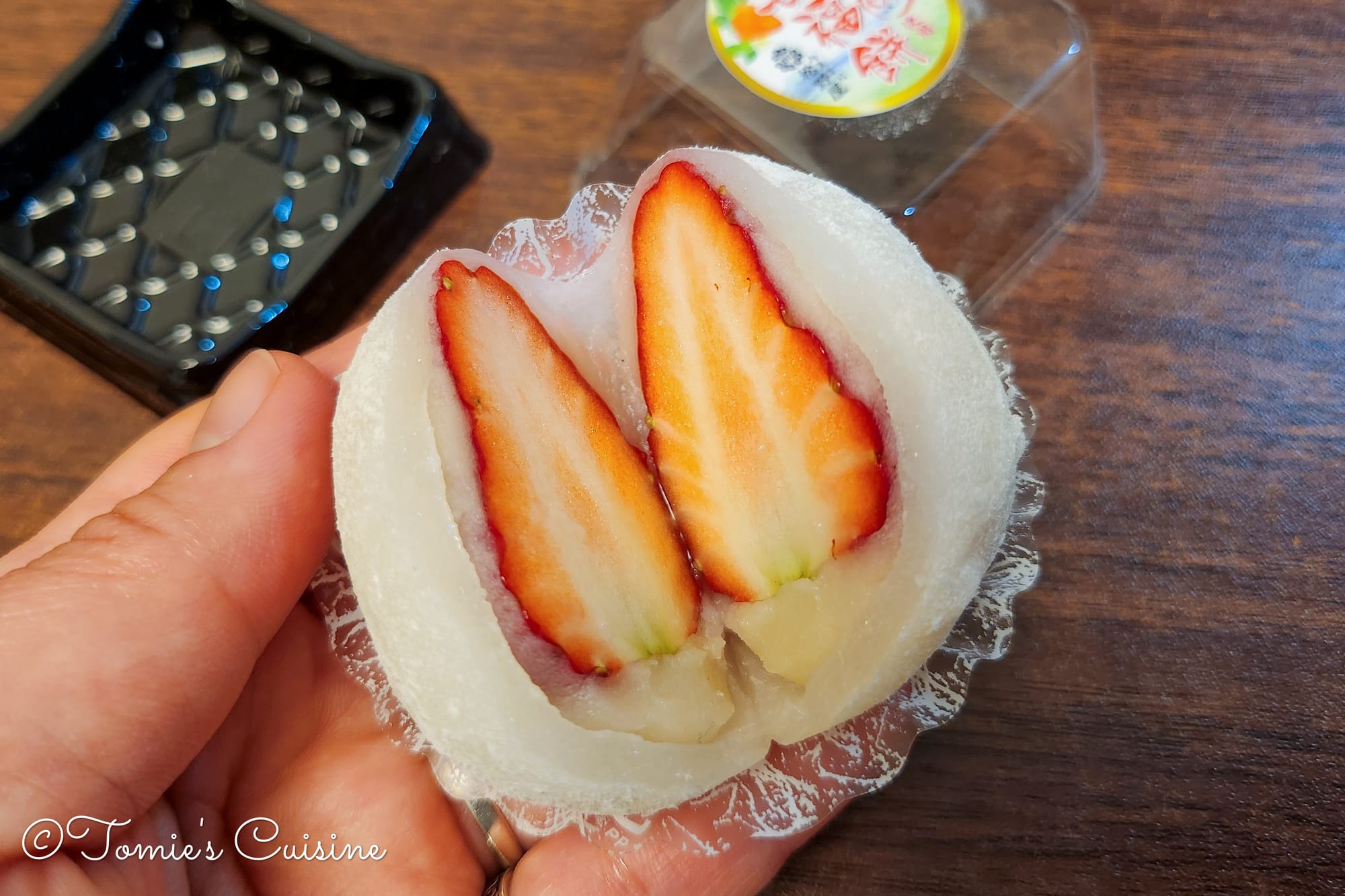
I didn’t know about the strawberries from Sekigahara. The sweets shop in Sekigahara is called “Matsunoya (松野屋)”. They had a sign outside reading “Ichigo daifuku made with the strawberry from Sekigahara,” so we went to find out what it was. There were many more tempting sweets in the shop, but we just went for the daifuku. I hope that one day we go back and have a good look. We had it in the hotel that night, and it was delicious!
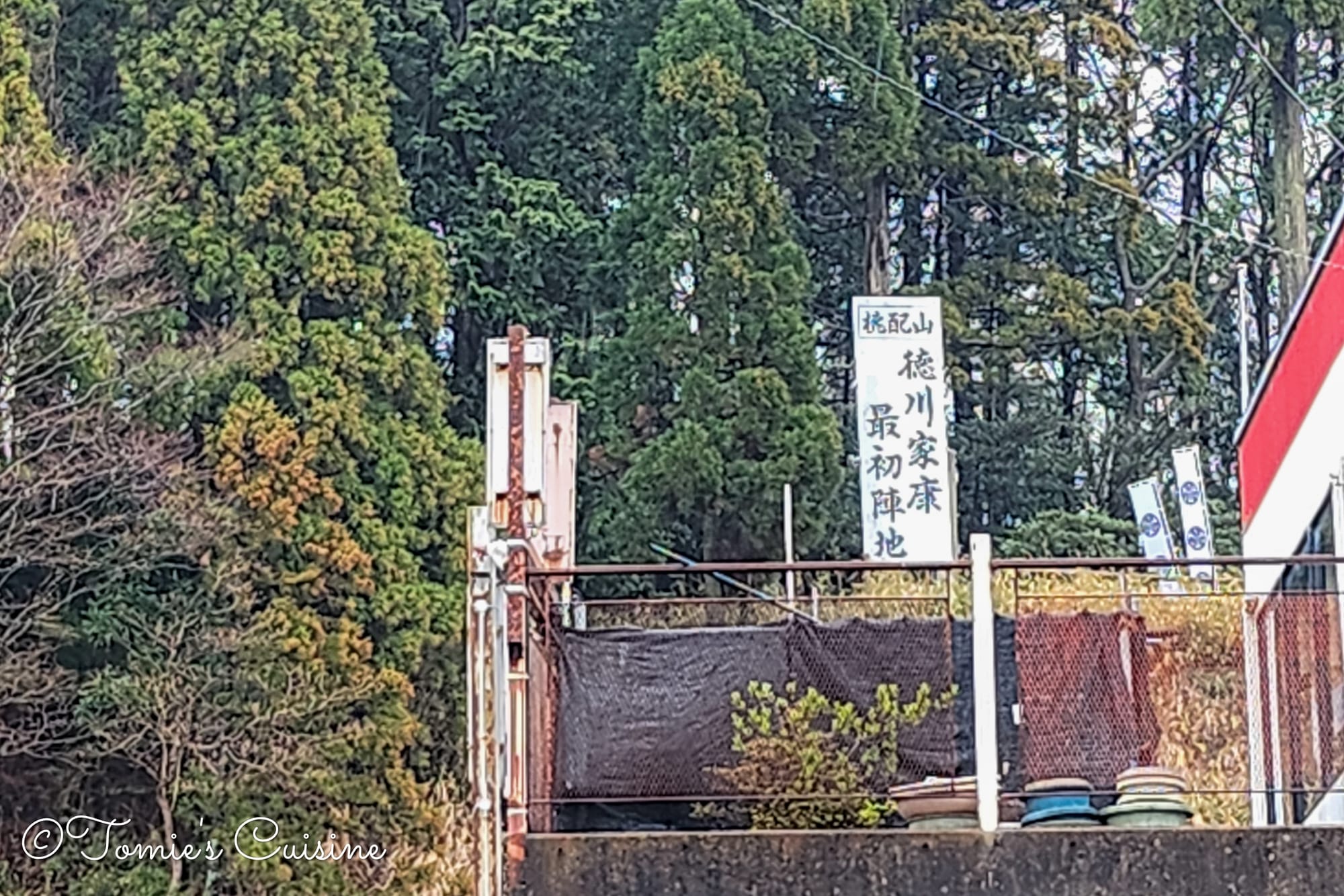
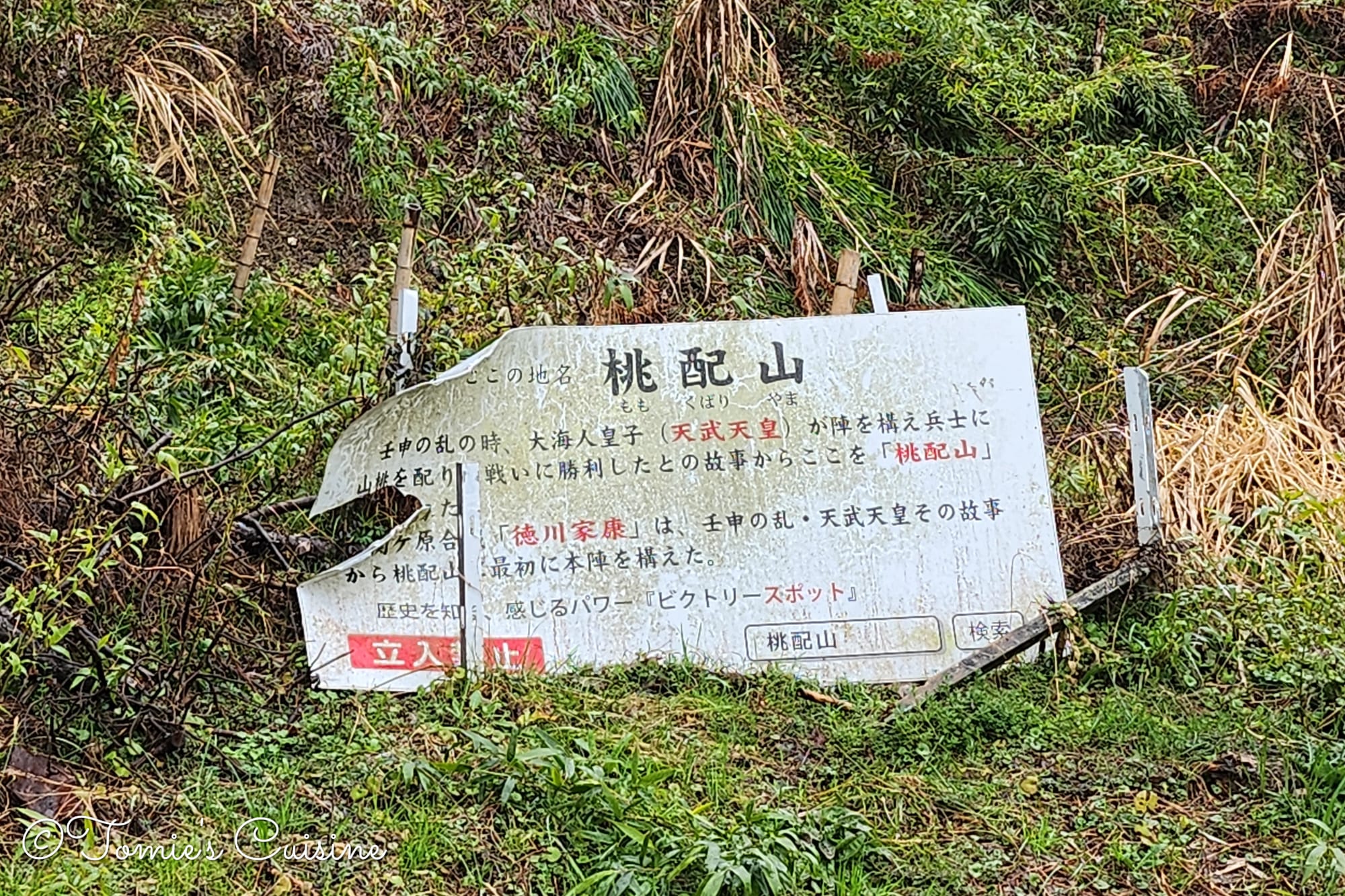
Momokubari Mountain was the first encampment place of Tokugawa Ieyasu during the Battle of Sekigahara. The name came from a historical legend: in 672, during the Jinshin War, Prince Oama (Emperor Tenmu) gave away (配る: Kubaru) peaches (桃: Momo) to soldiers at this mountain, and the soldiers won the battle.
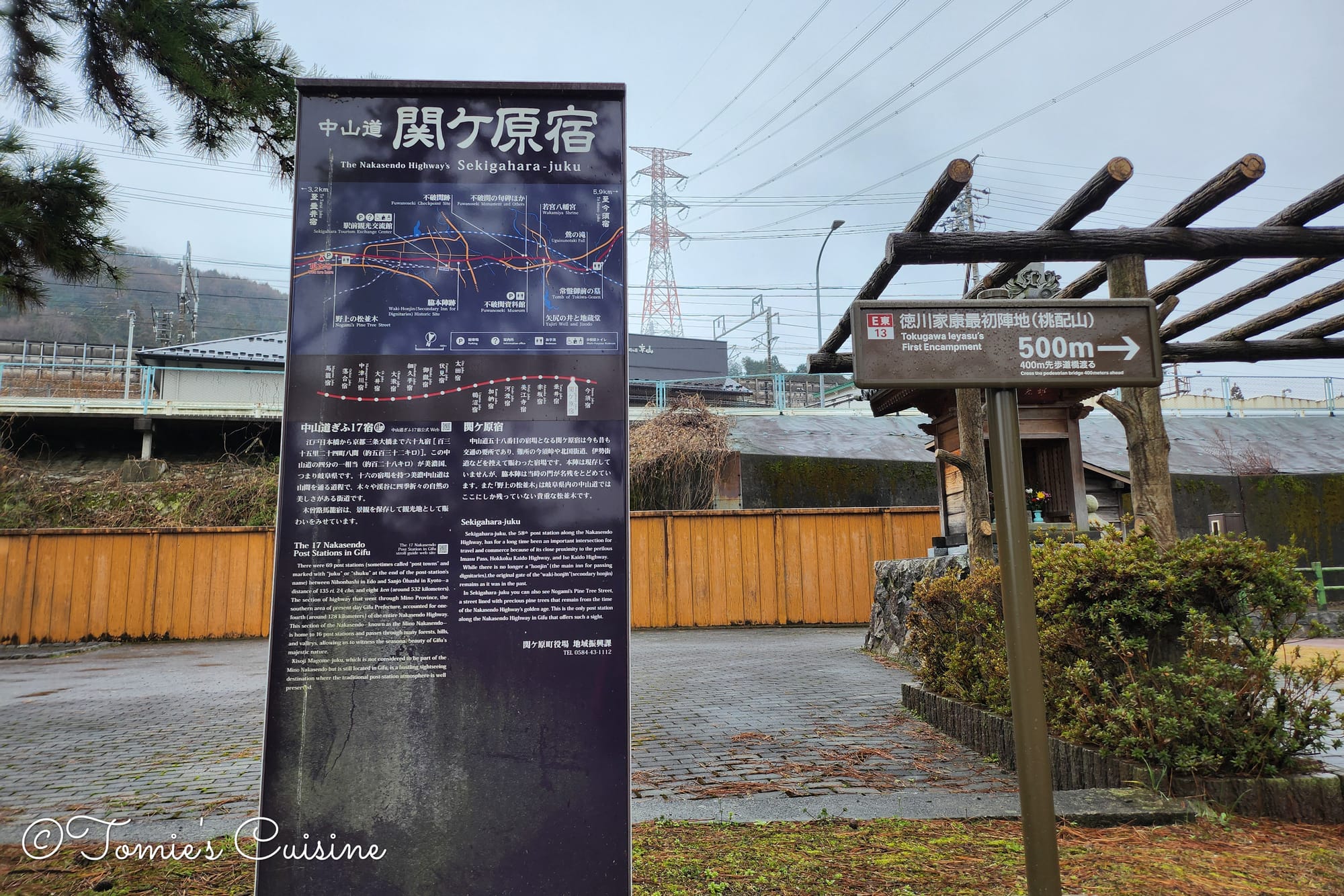
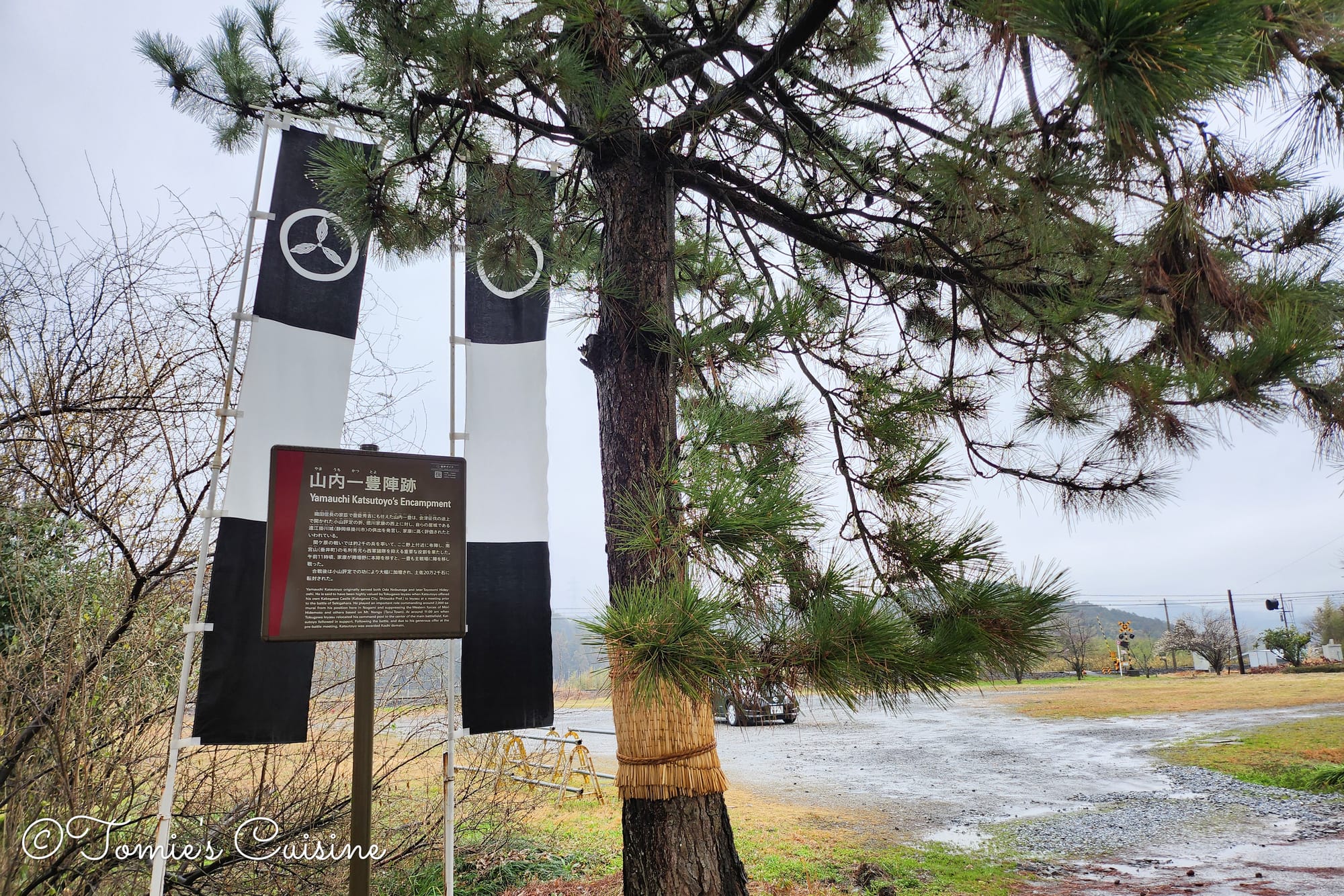
Sekigahara post town explanation board (left), and Yamauchi Kazutoyo's encampment place (right).
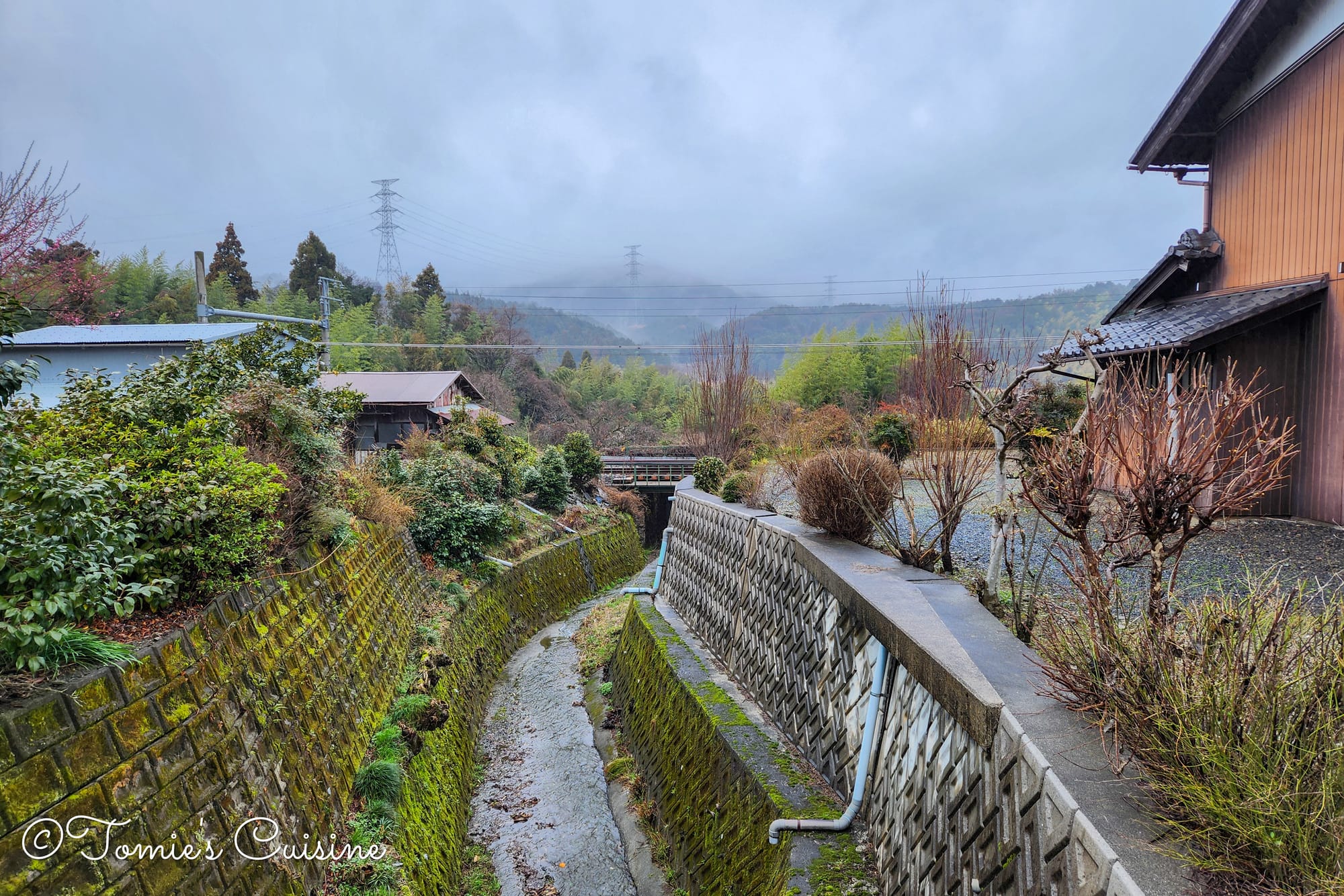
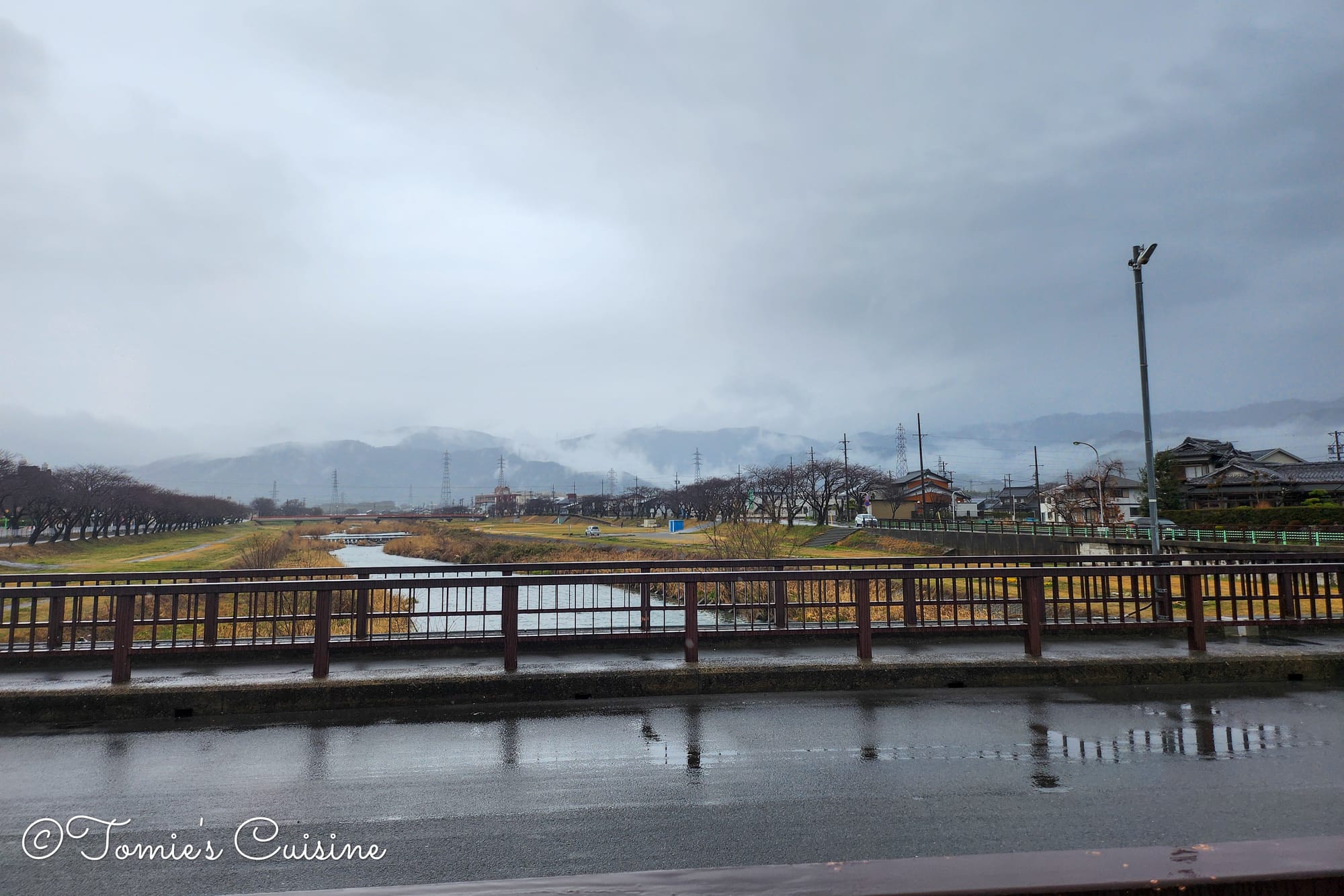
The view of a small river, train track and the mountains in the clouds.
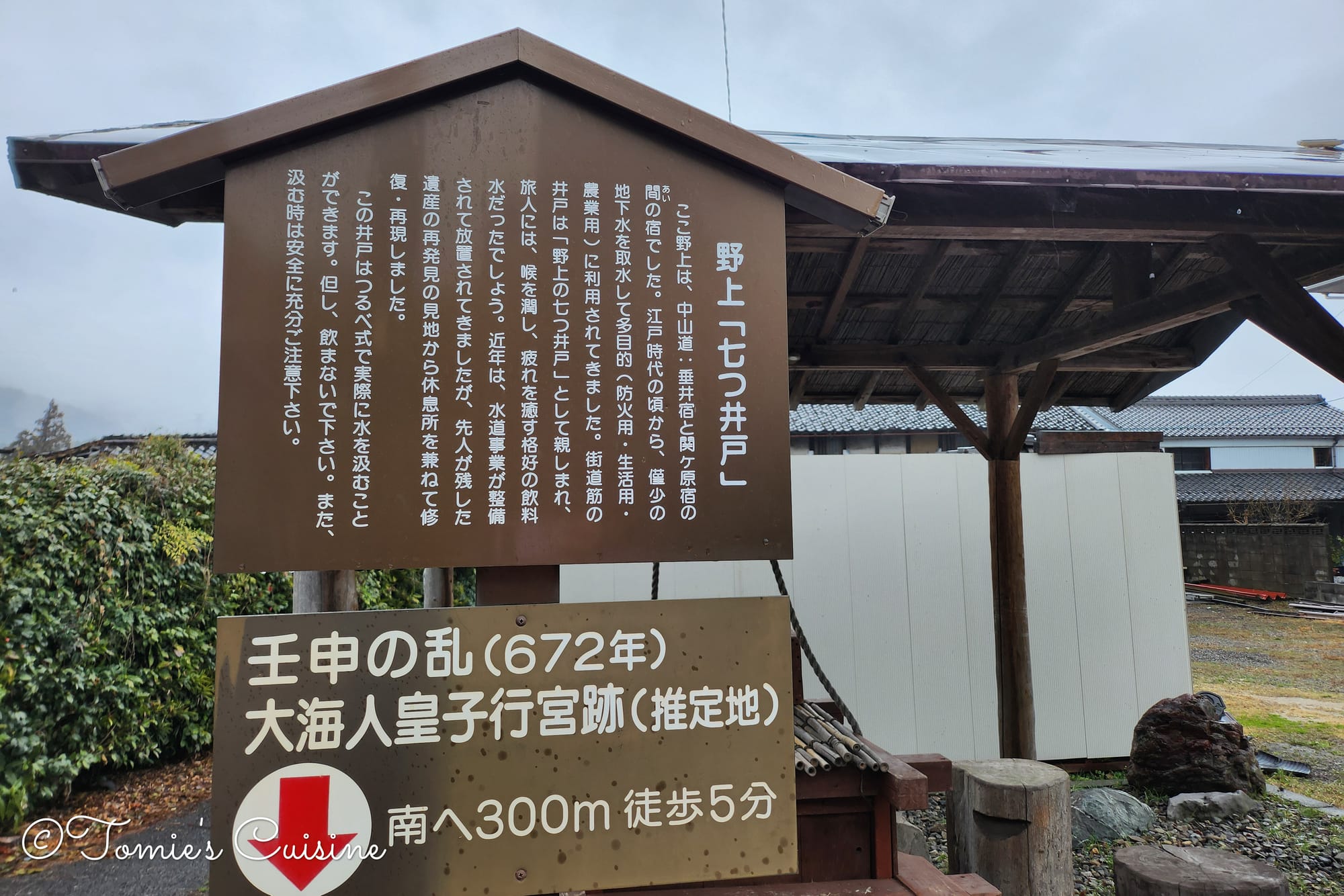
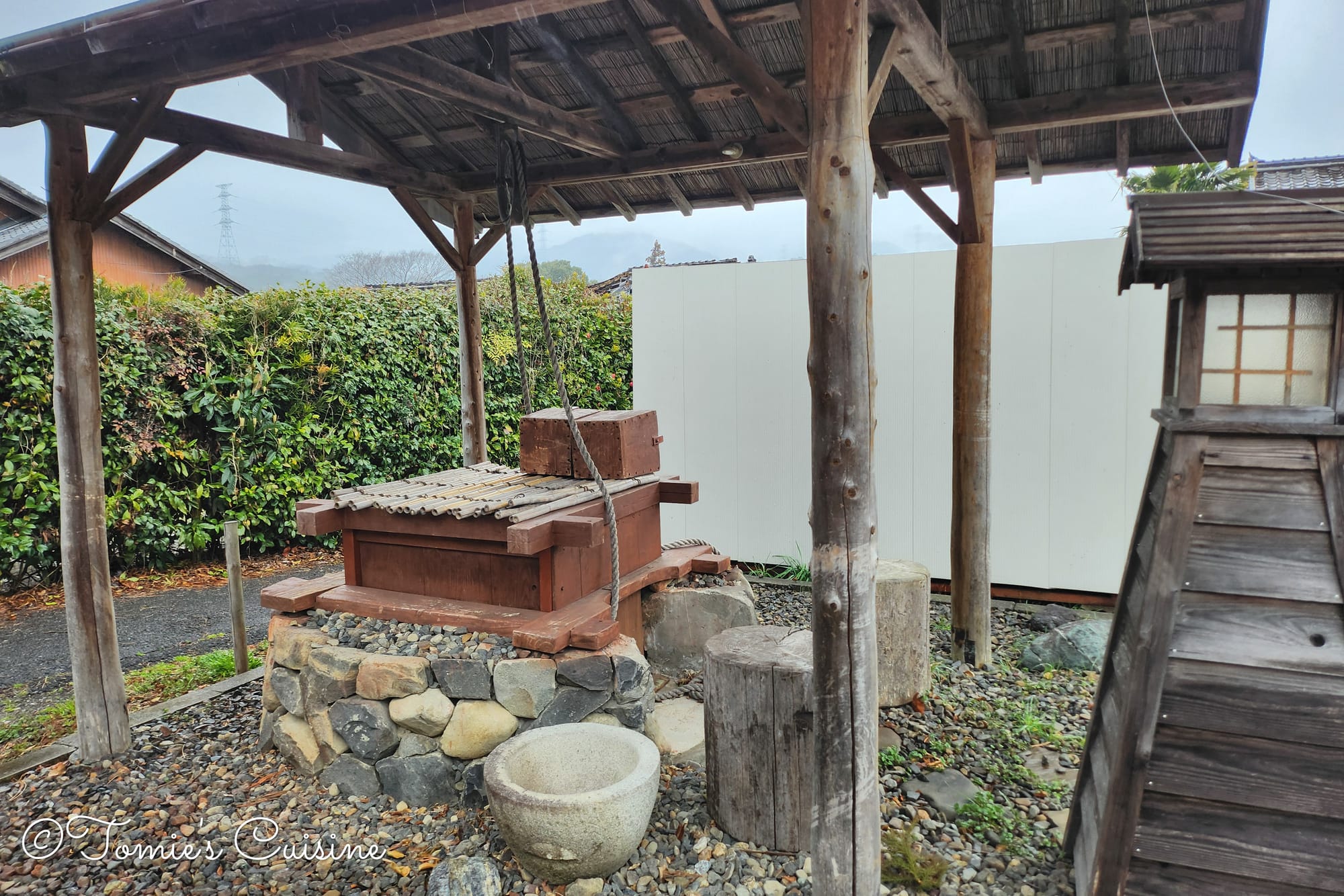
Nanatsu Ido in Nogami (野上の七つ井戸), an old well that used to quench travellers' thirst. We can still use the well, but the water isn't drinkable.
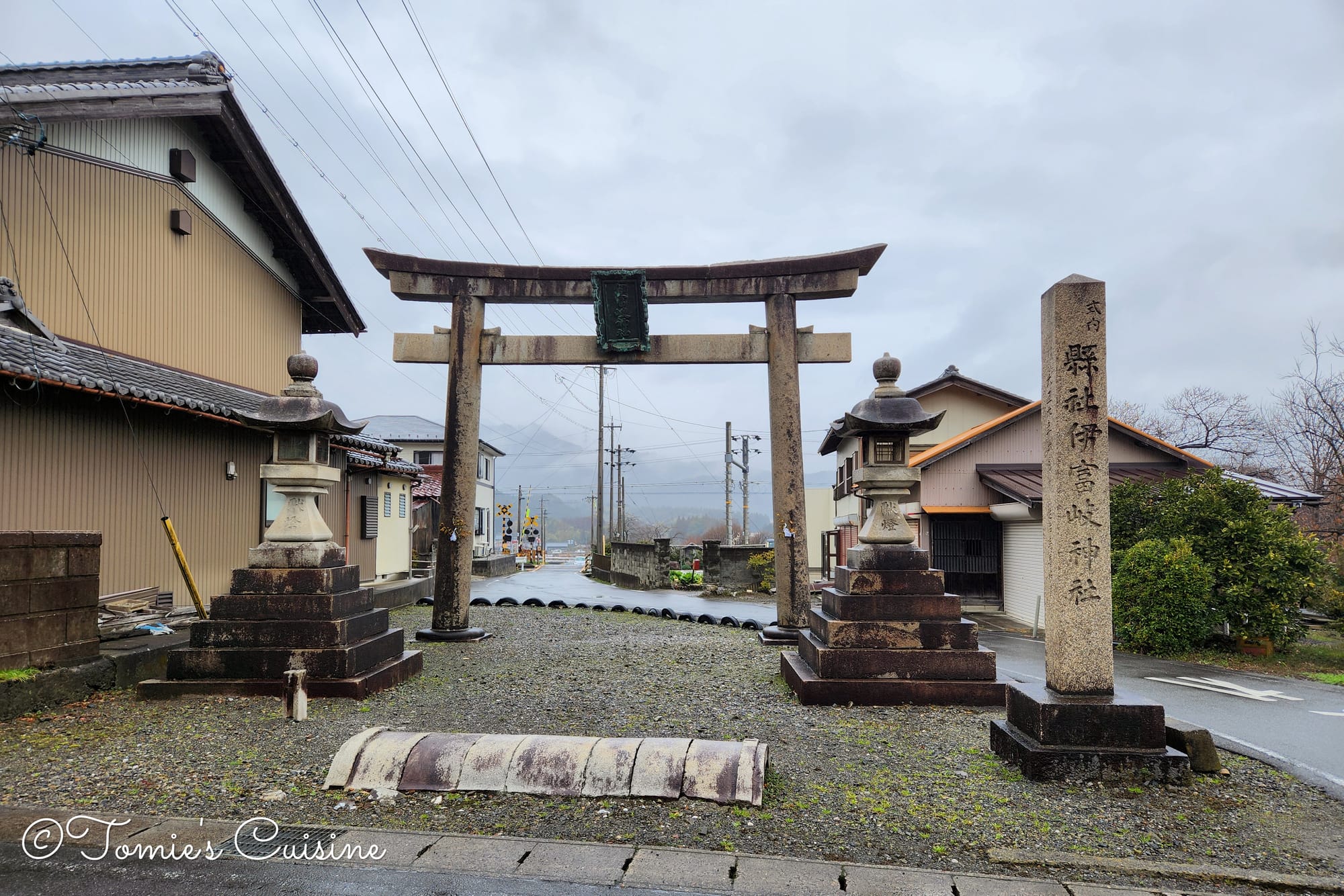
Torii gate of Ibuki shrine in Tarui.
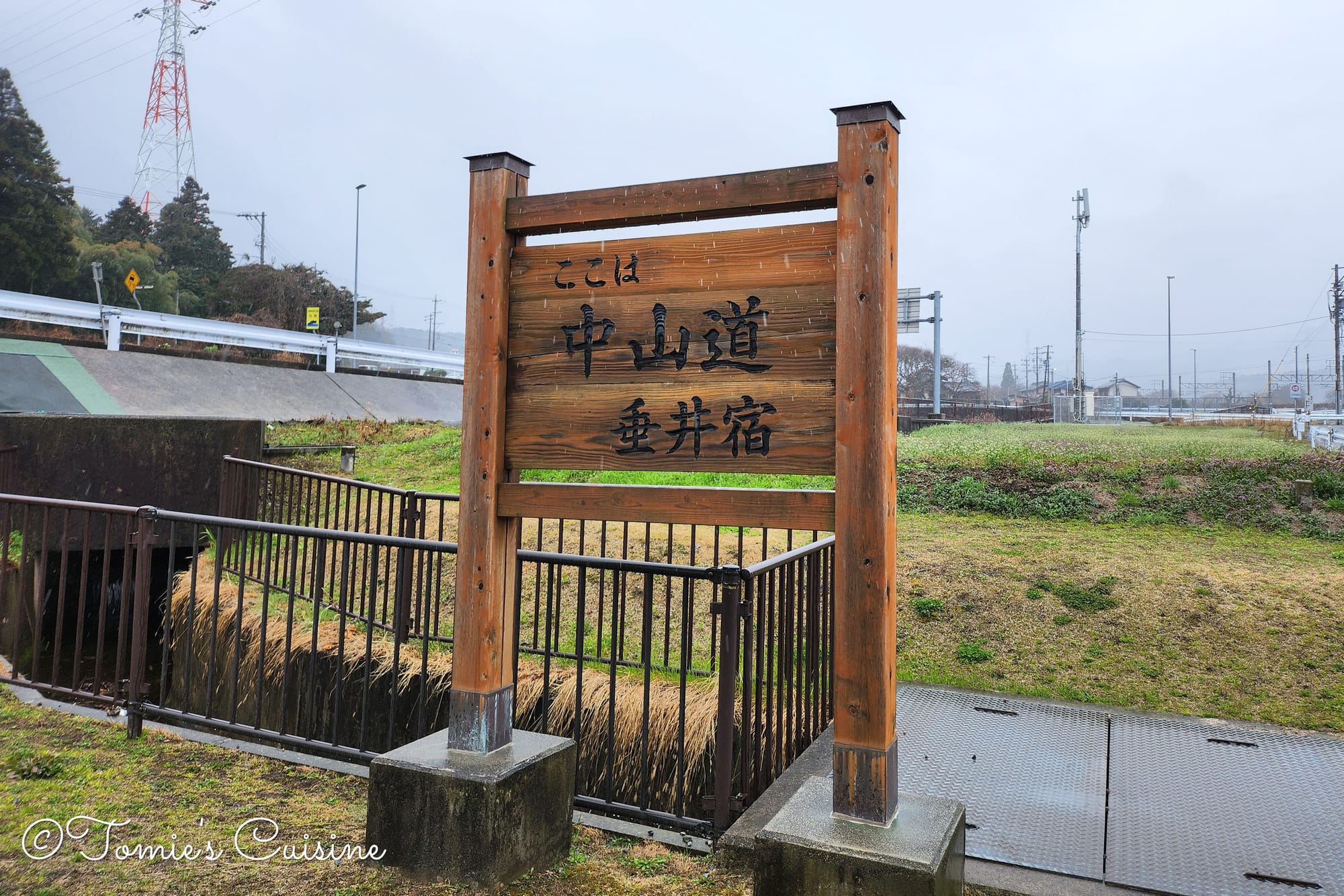
1:40 pm Tarui post town 垂井宿
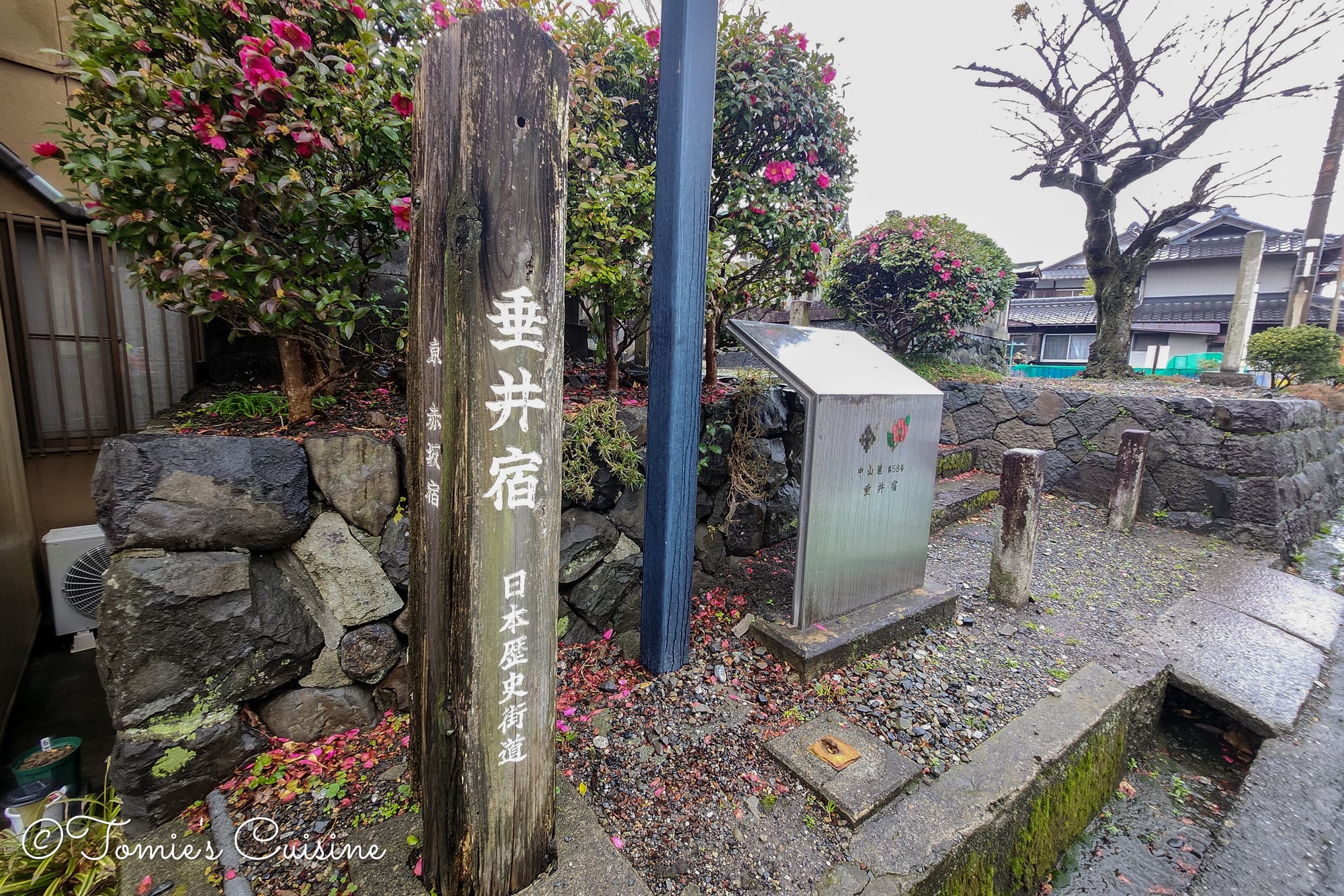
Nakasendo Tarui post town sign.
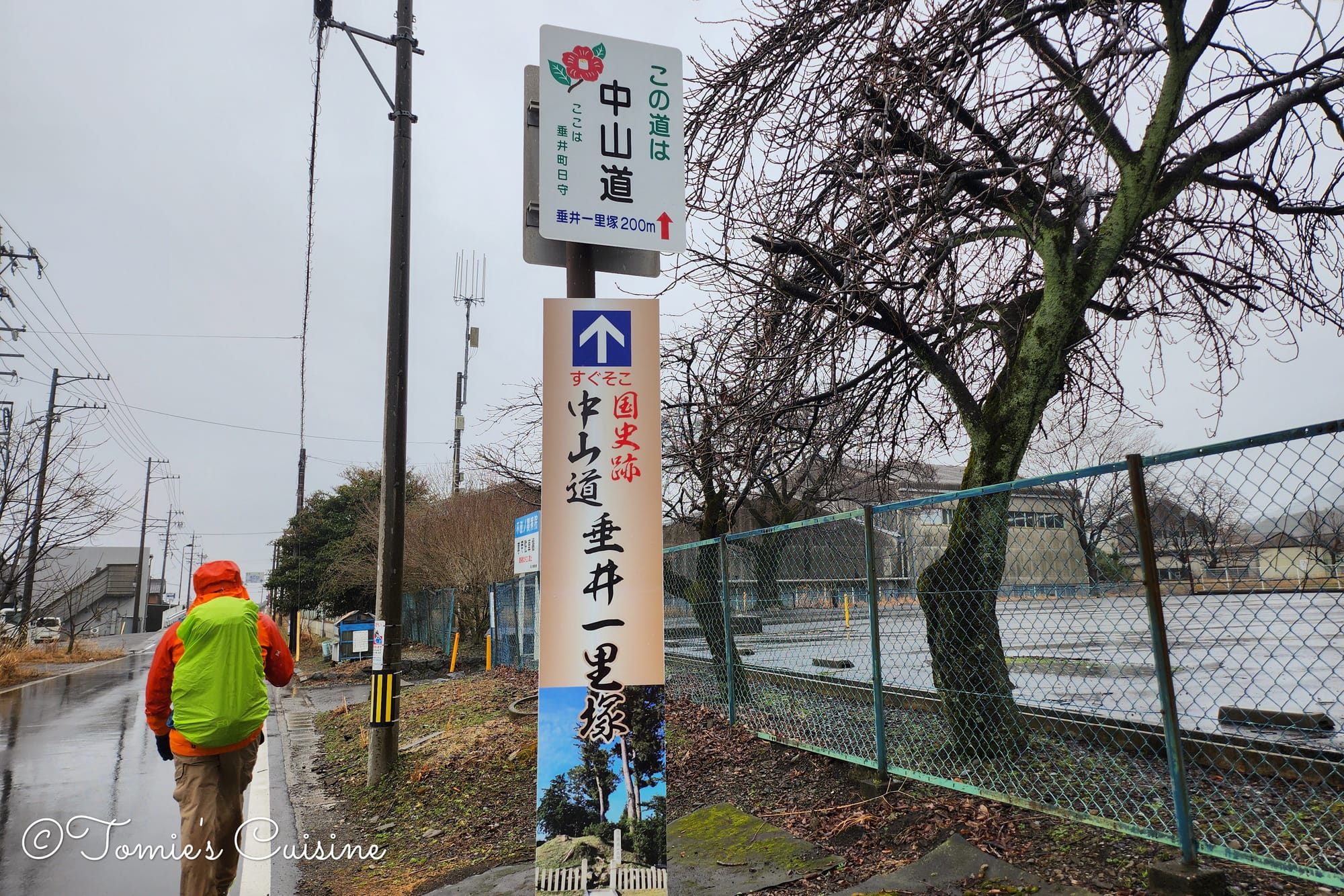
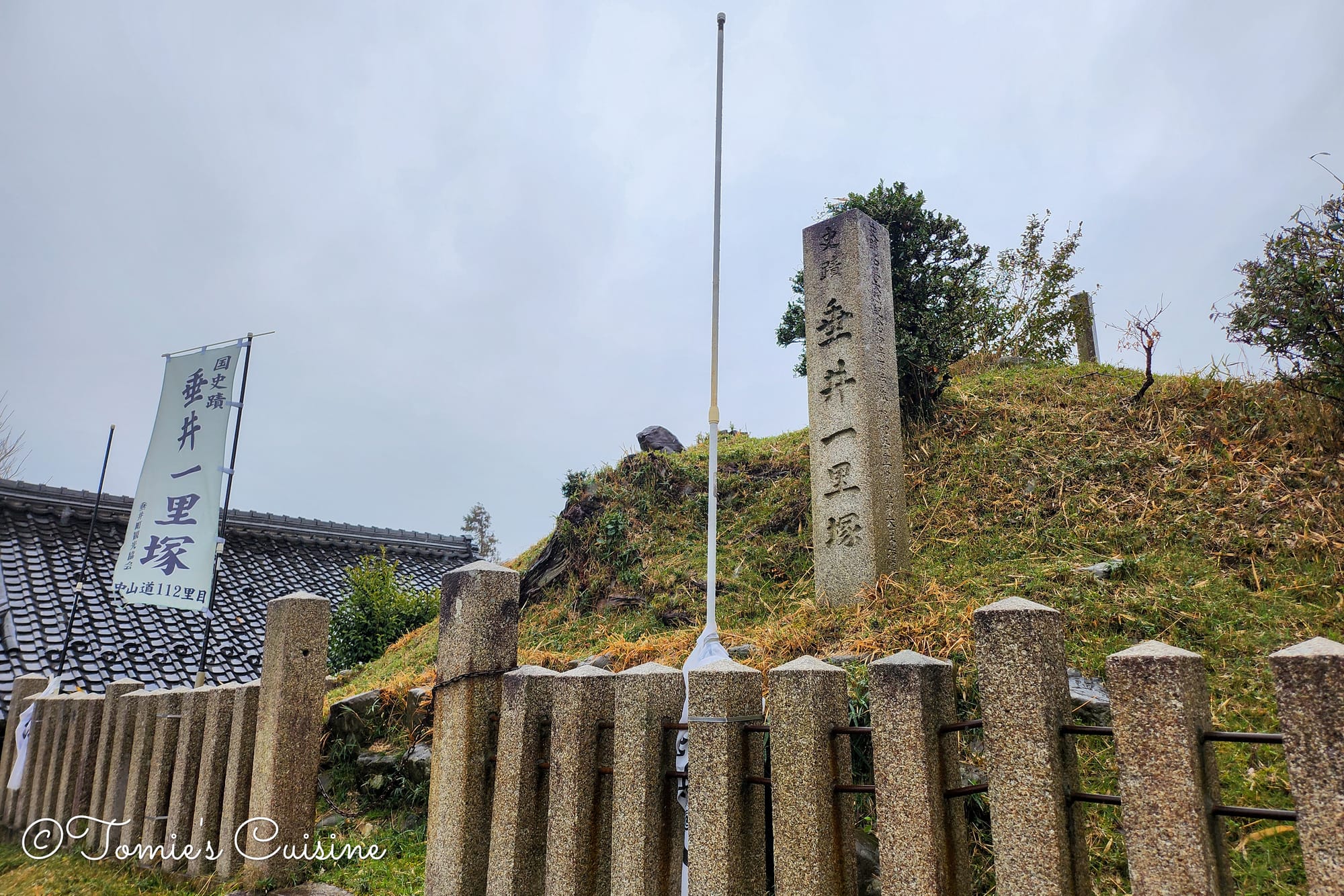
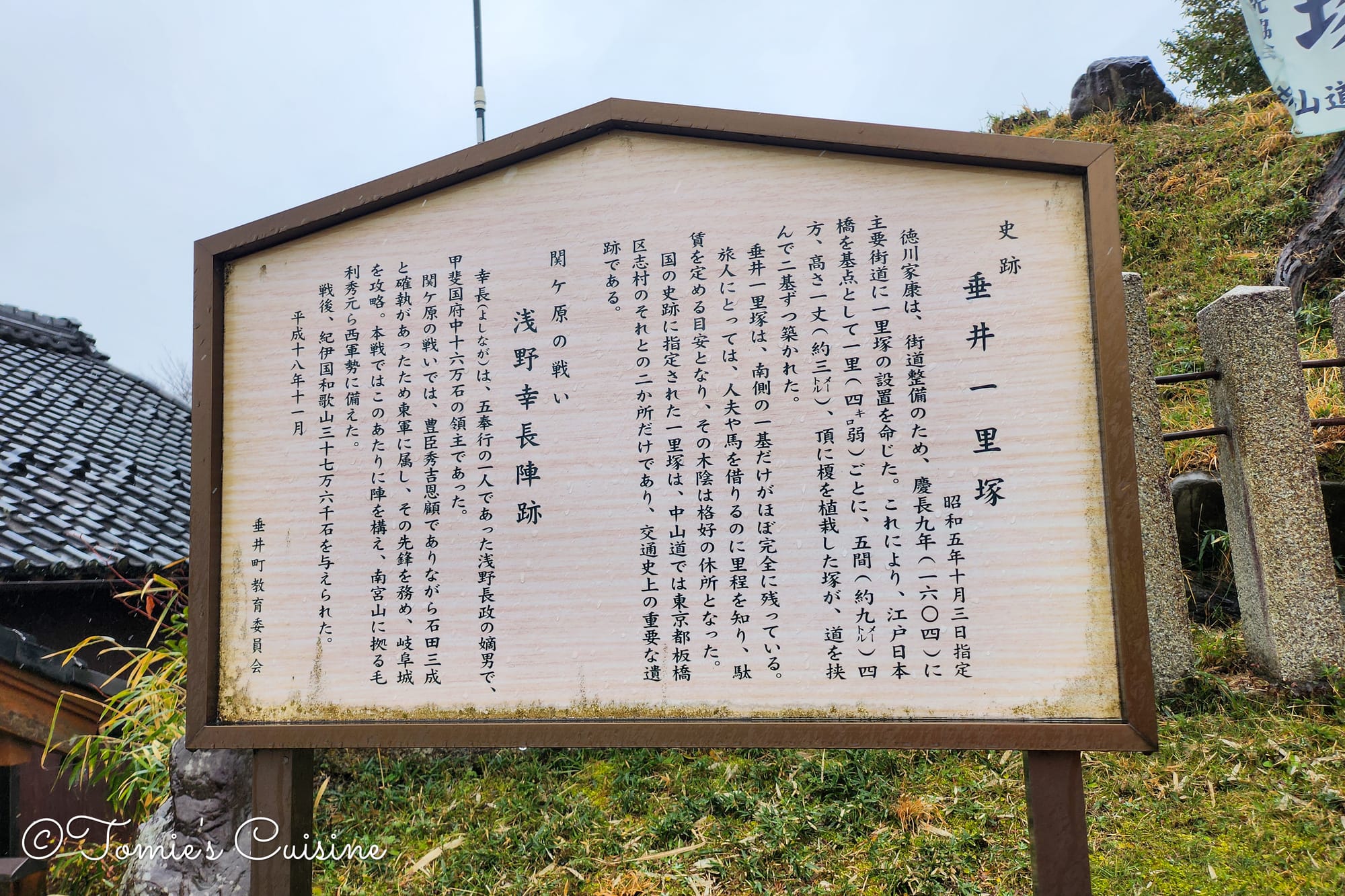
Tarui Ichirizuka (milestone): This Ichirizuka is one of only two registered as a national historic site. (The other one is in Itabashi, Tokyo.)
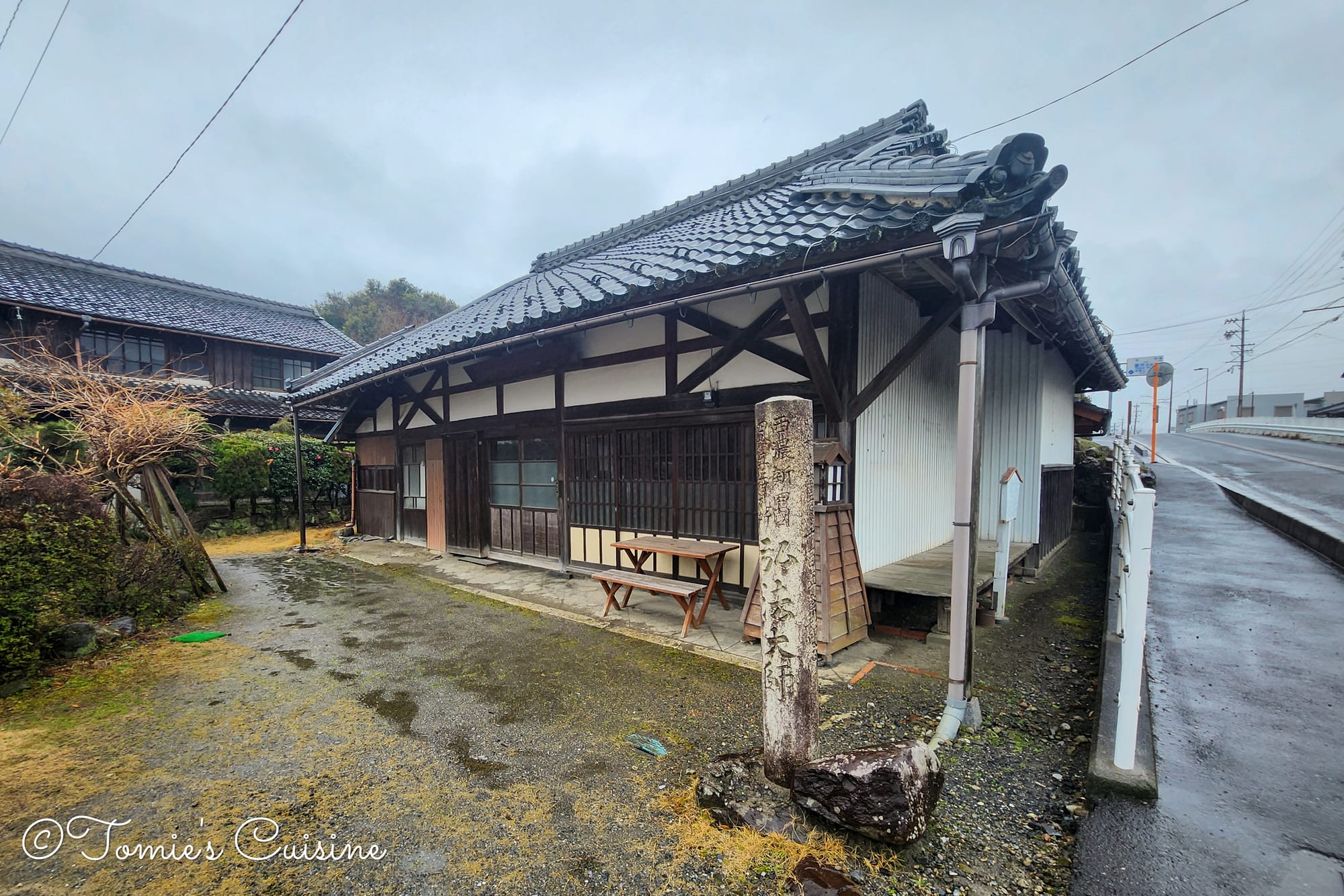
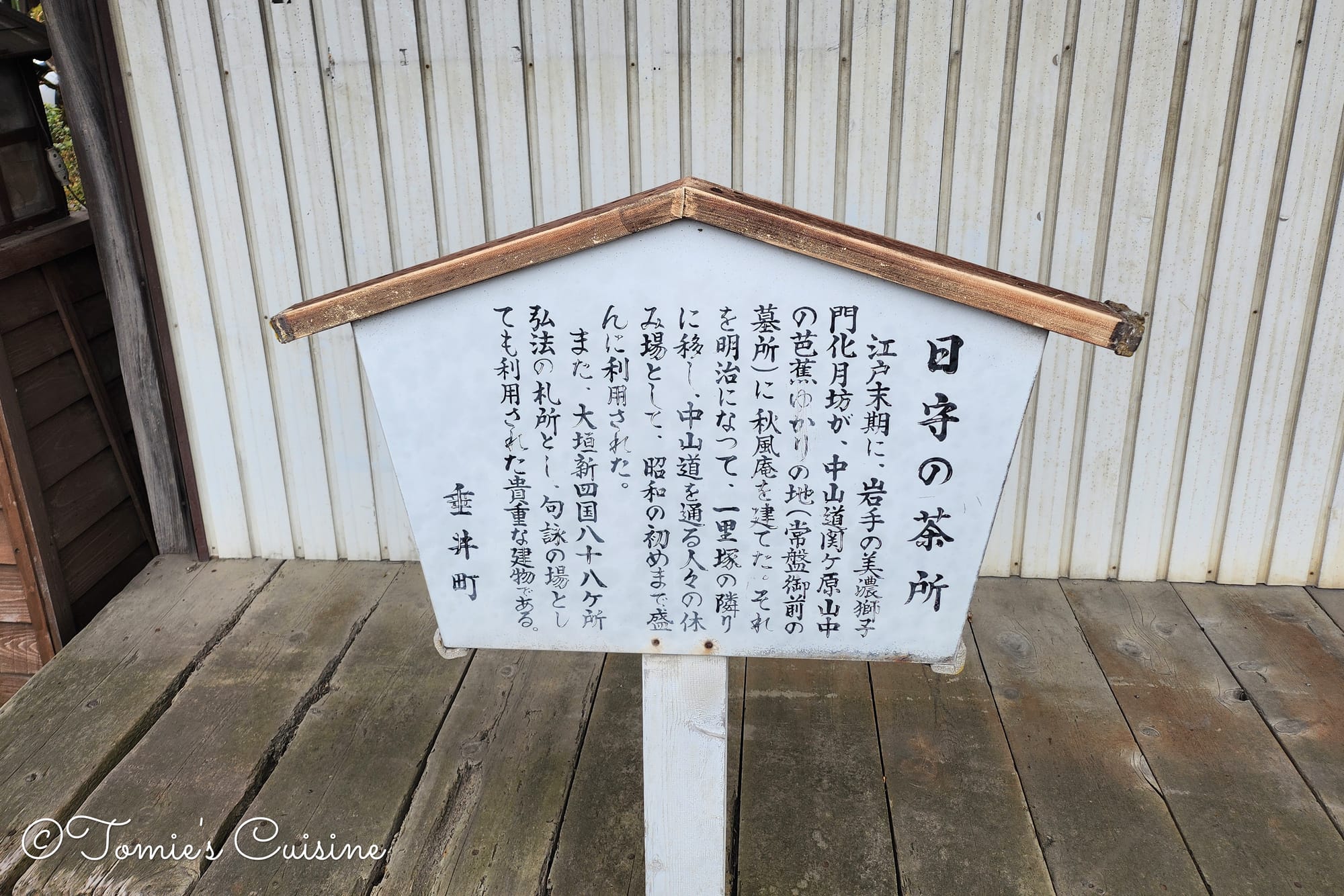
Nichimori no Chajo (日守の茶所): This tea house was built during the Meiji period and remained in use until the beginning of the Showa period.
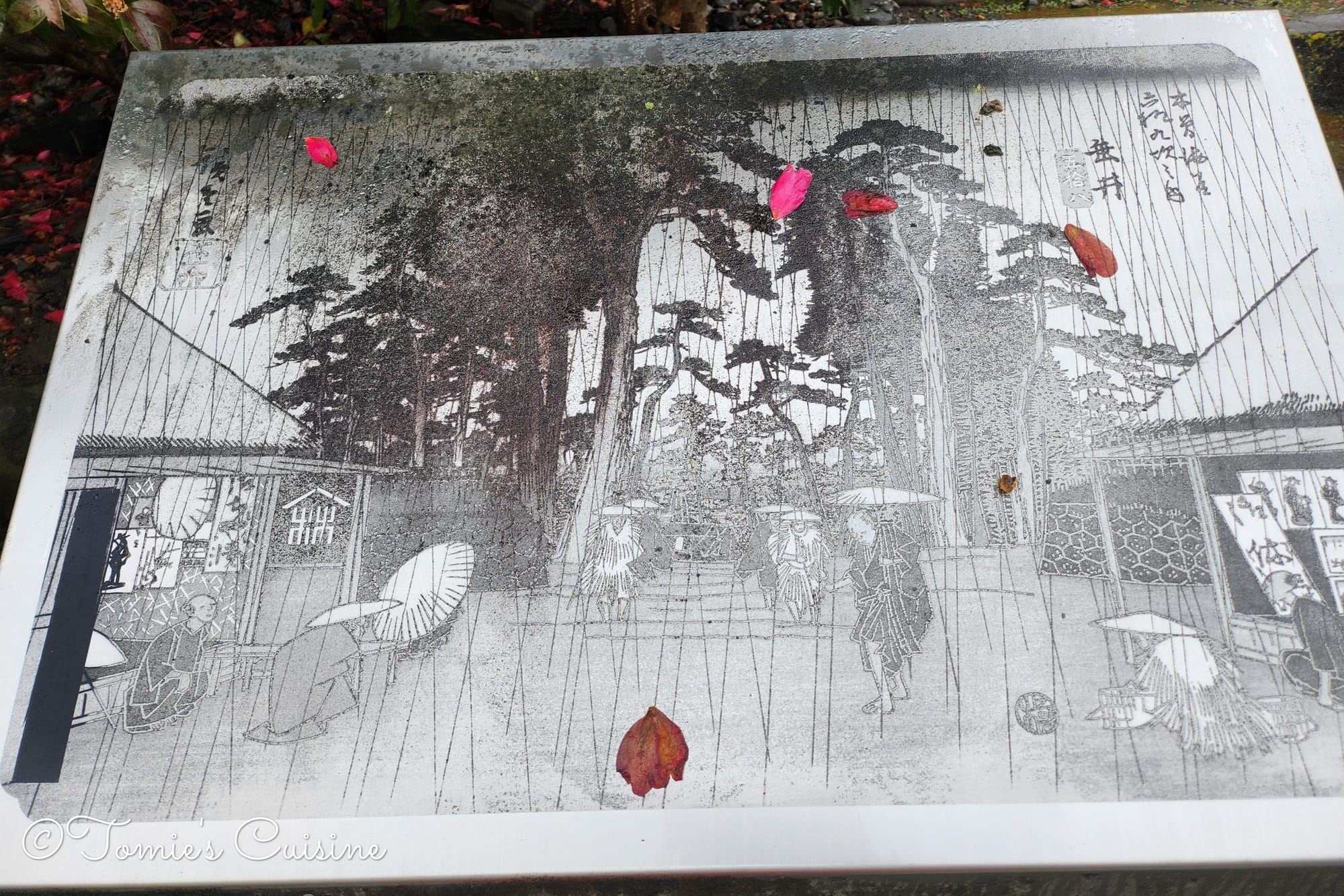
Tarui post town sign with the Ukiyo-e created by Utagawa Hiroshige.
The secret of the signboard
The old shop signboards are in different Japanese writing systems. Interesting!
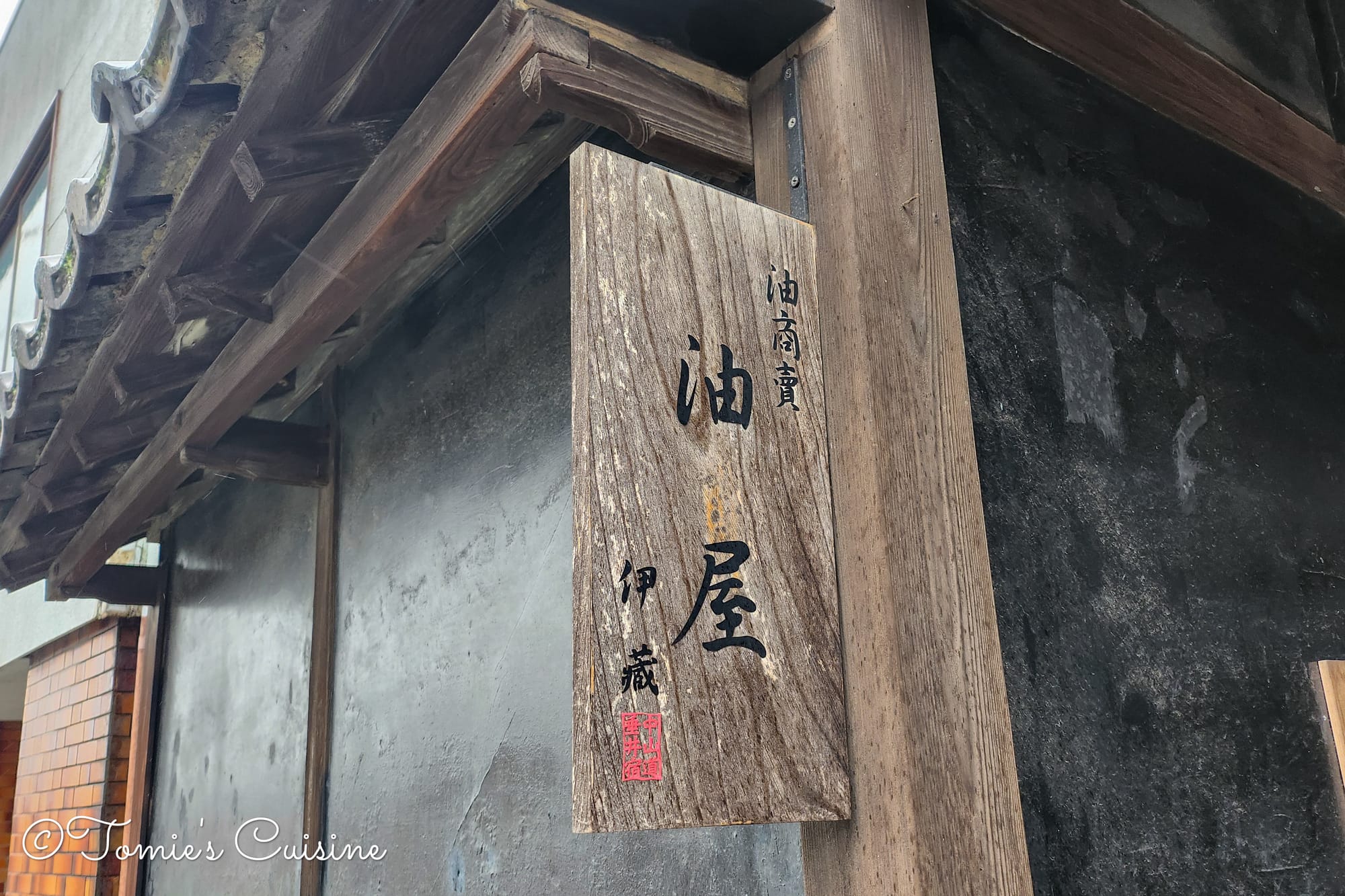
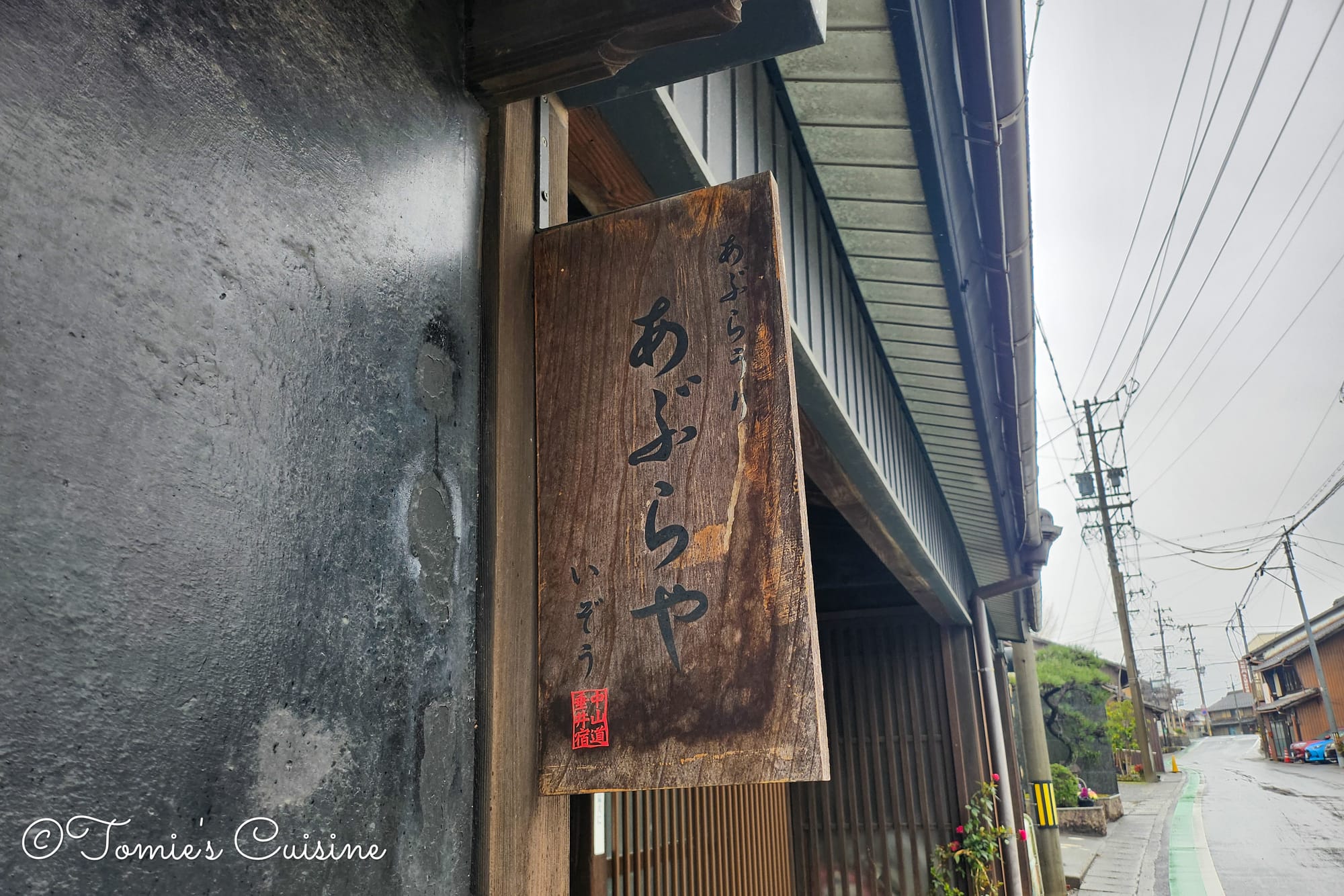
When you are walking on Nakasendo, you will see those old (style) signboards that show the business the place used to run. Then, if you look more closely, you will notice that one side is written in Kanji and the other in Hiragana. So, when coming from Kyoto, you see the Kanji side, and when coming from Tokyo, you see the Hiragana side. We saw a few of them in Tarui post town. That was our first time seeing those signs after watching it on YouTube.
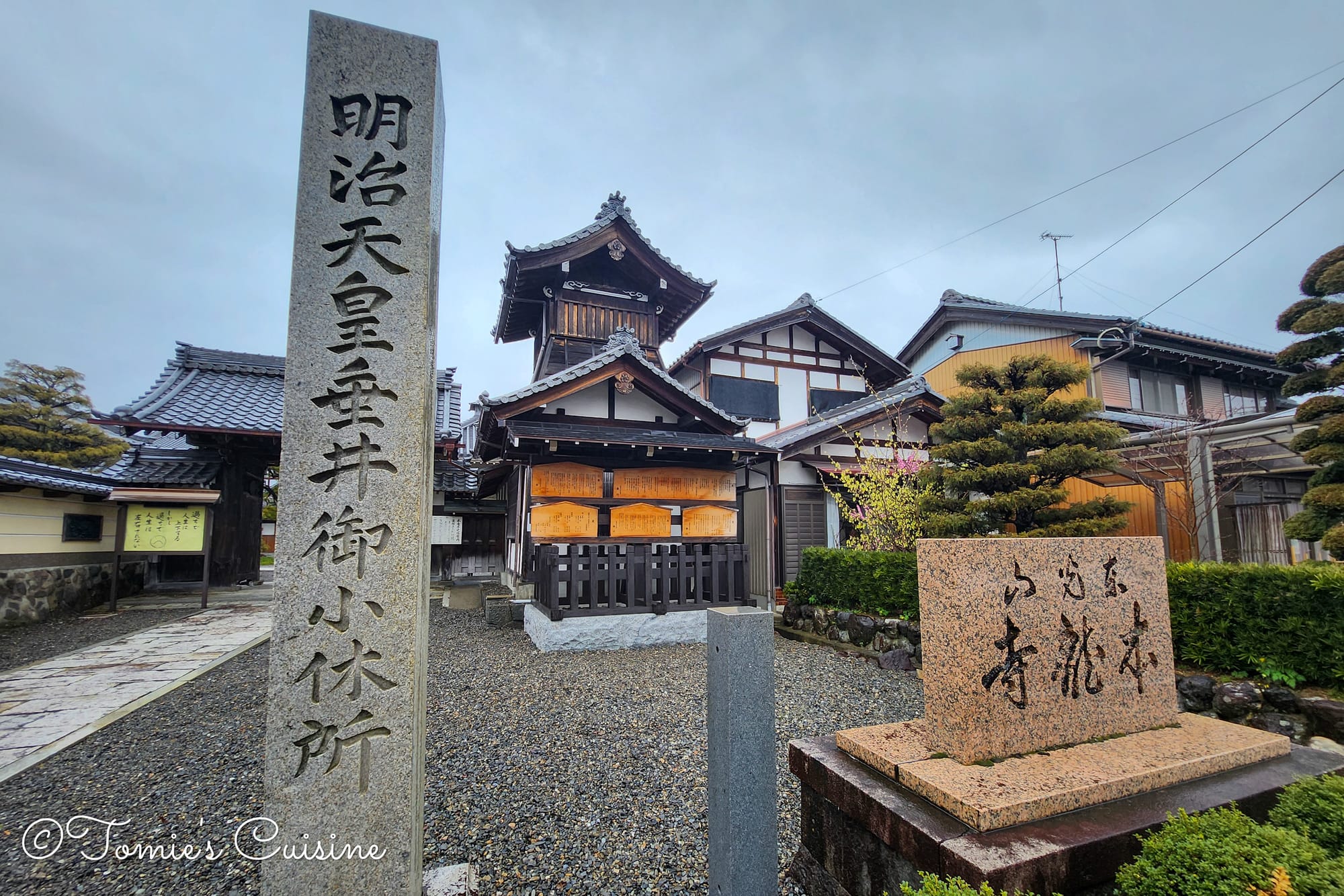
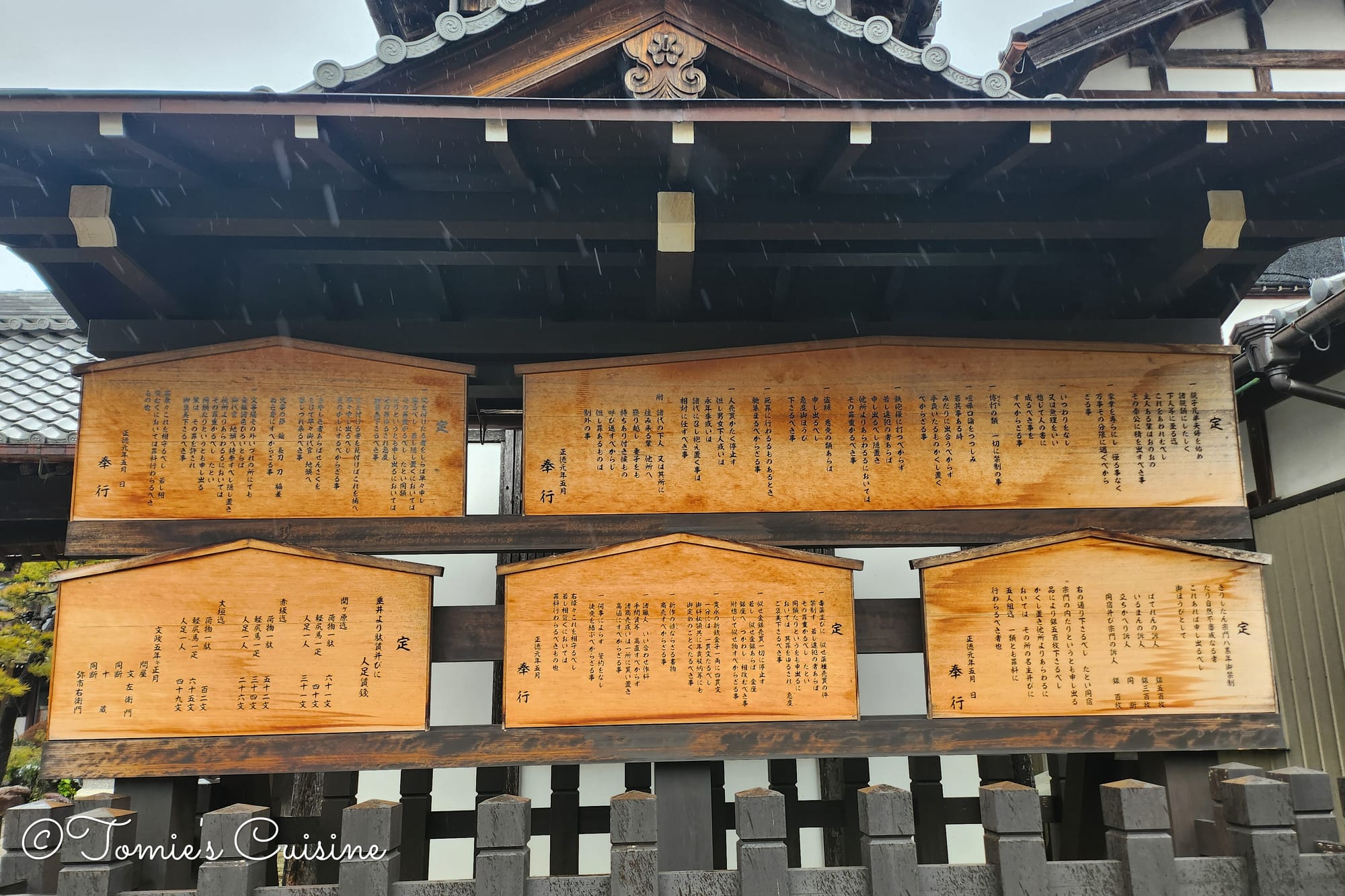
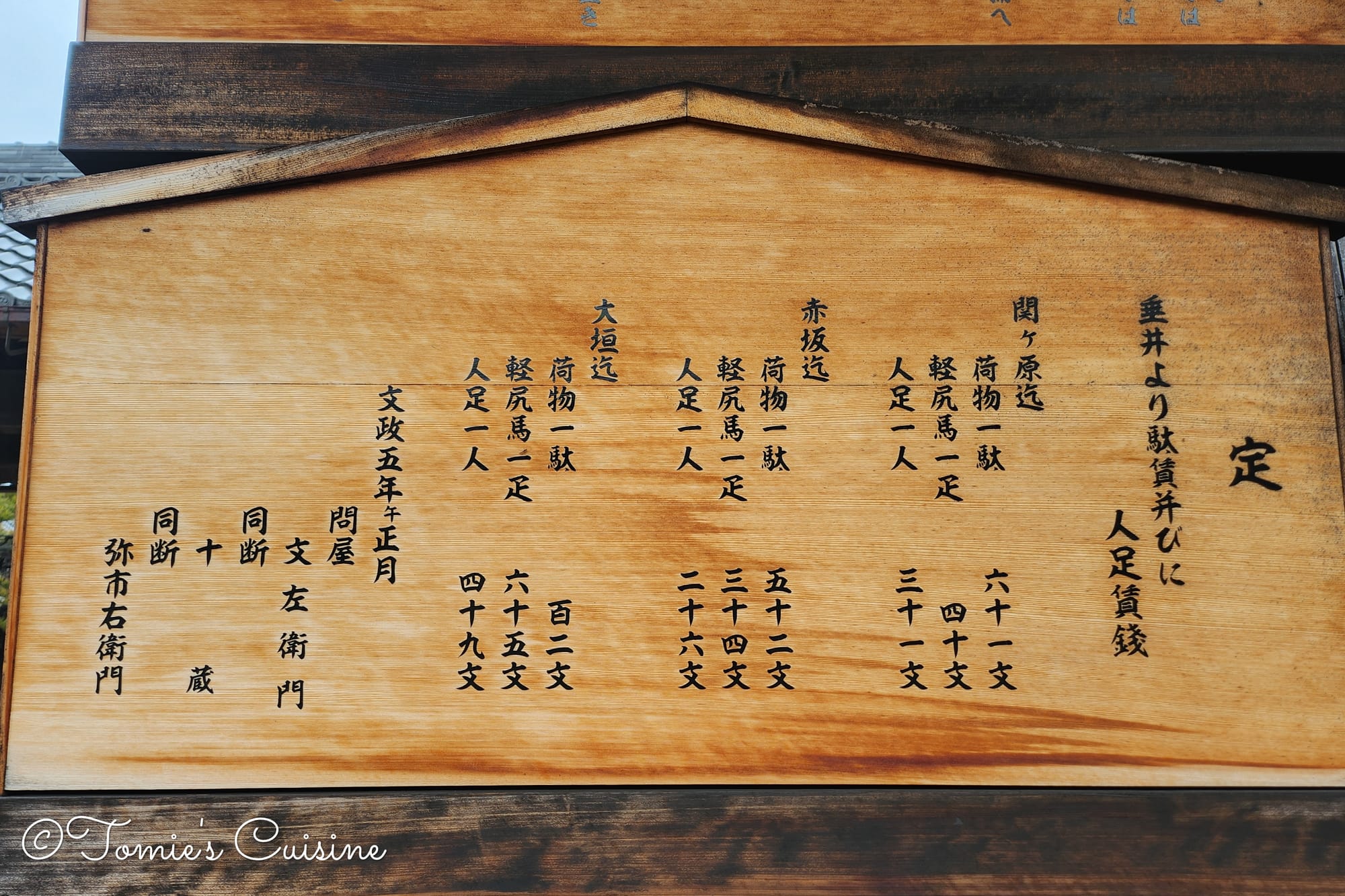
Honryuji temple in Tarui post town is also known as the place where the Meiji emperor stayed during his imperial tour around Japan. There was also the Kosatsuba, and we can see how it was written during the Edo period. The photo on the right shows the pricing for hiring people or horses to carry luggage.
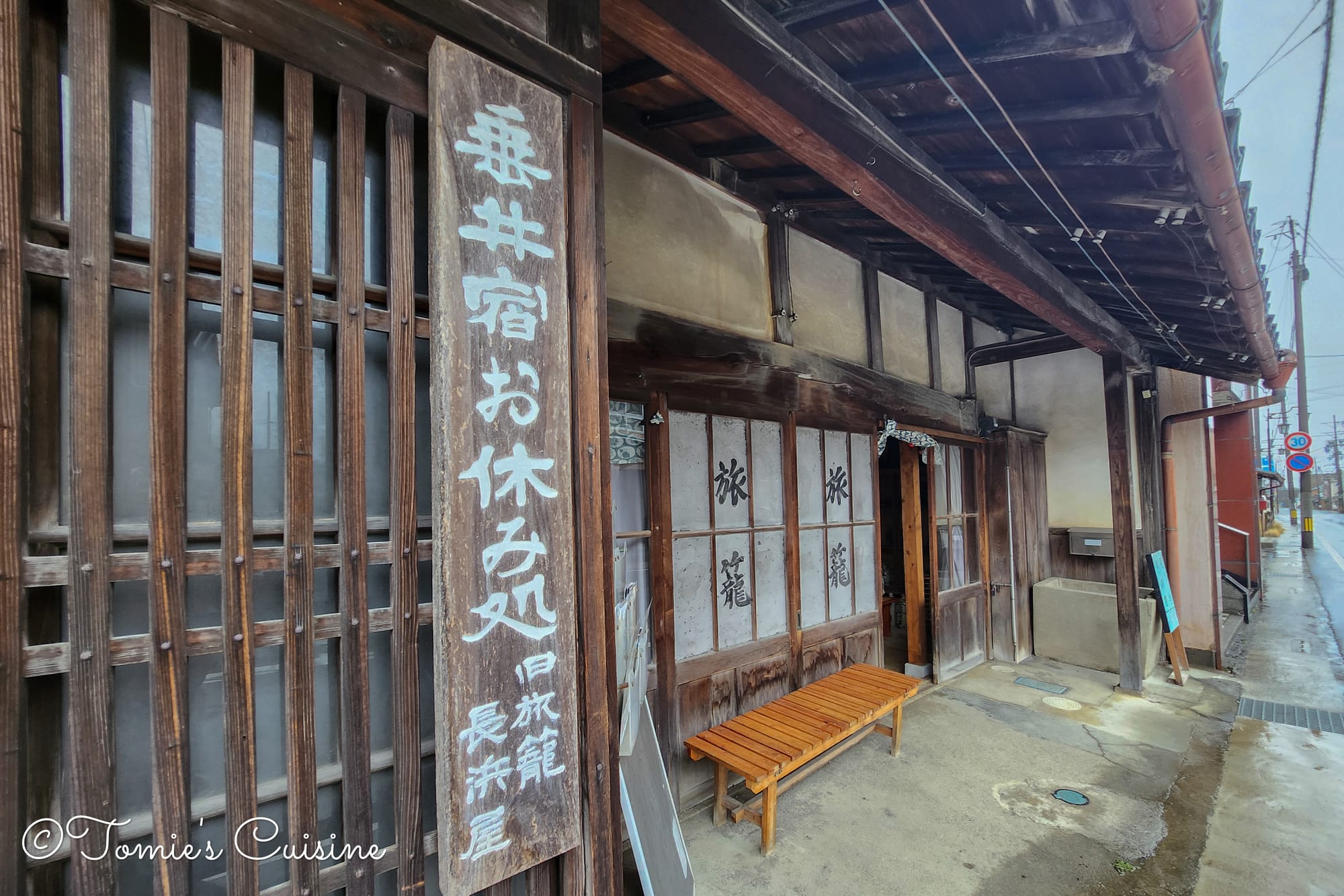
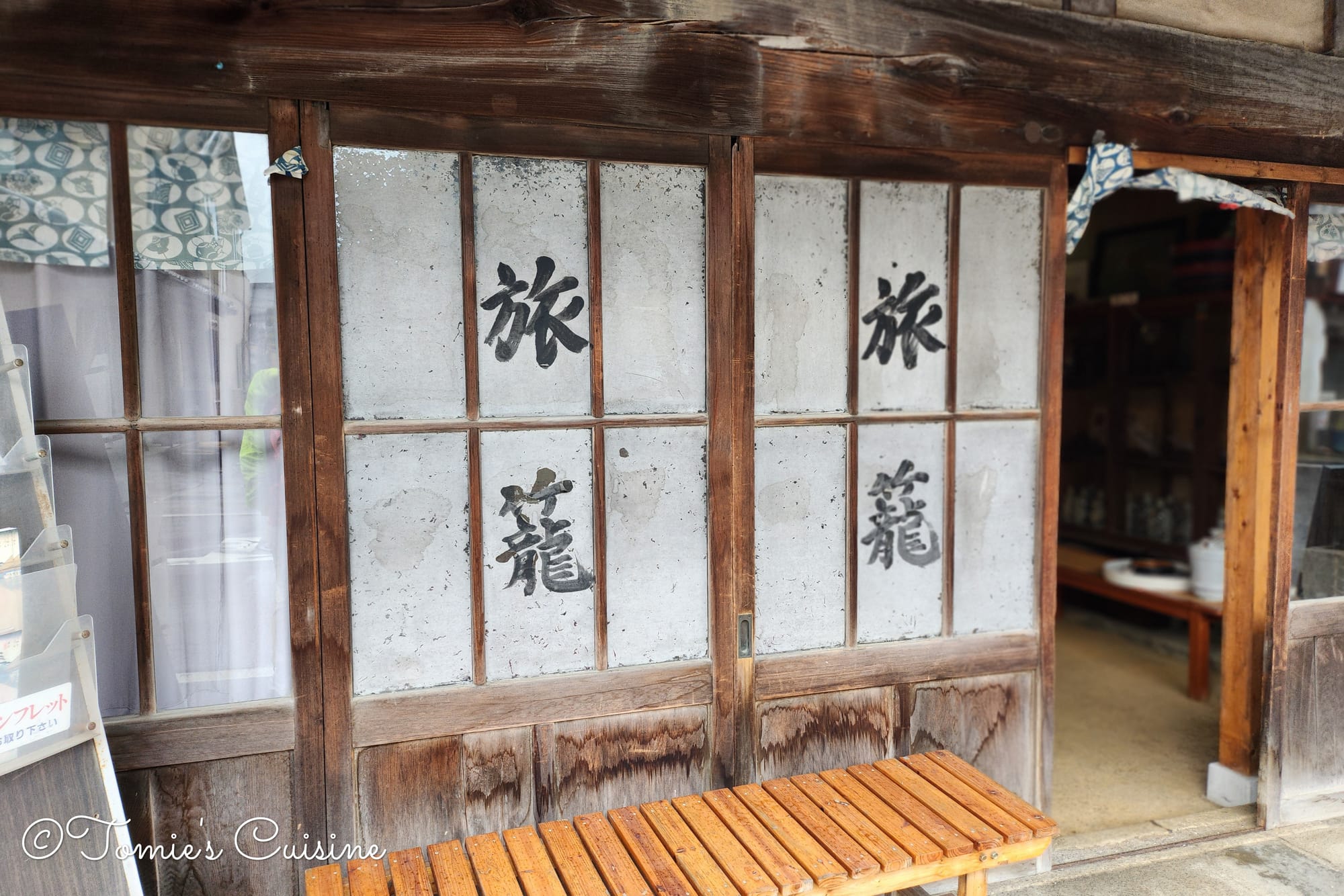
Tarui Oyasumi Dokoro, the old Inn called Nagahama-ya, was an inn; now it's a place for travellers to take a break. They kept the building beautifully, and we can see how it looked back in the Edo period. We didn't go in, but there are some historical items inside to see, so we will go back next time.
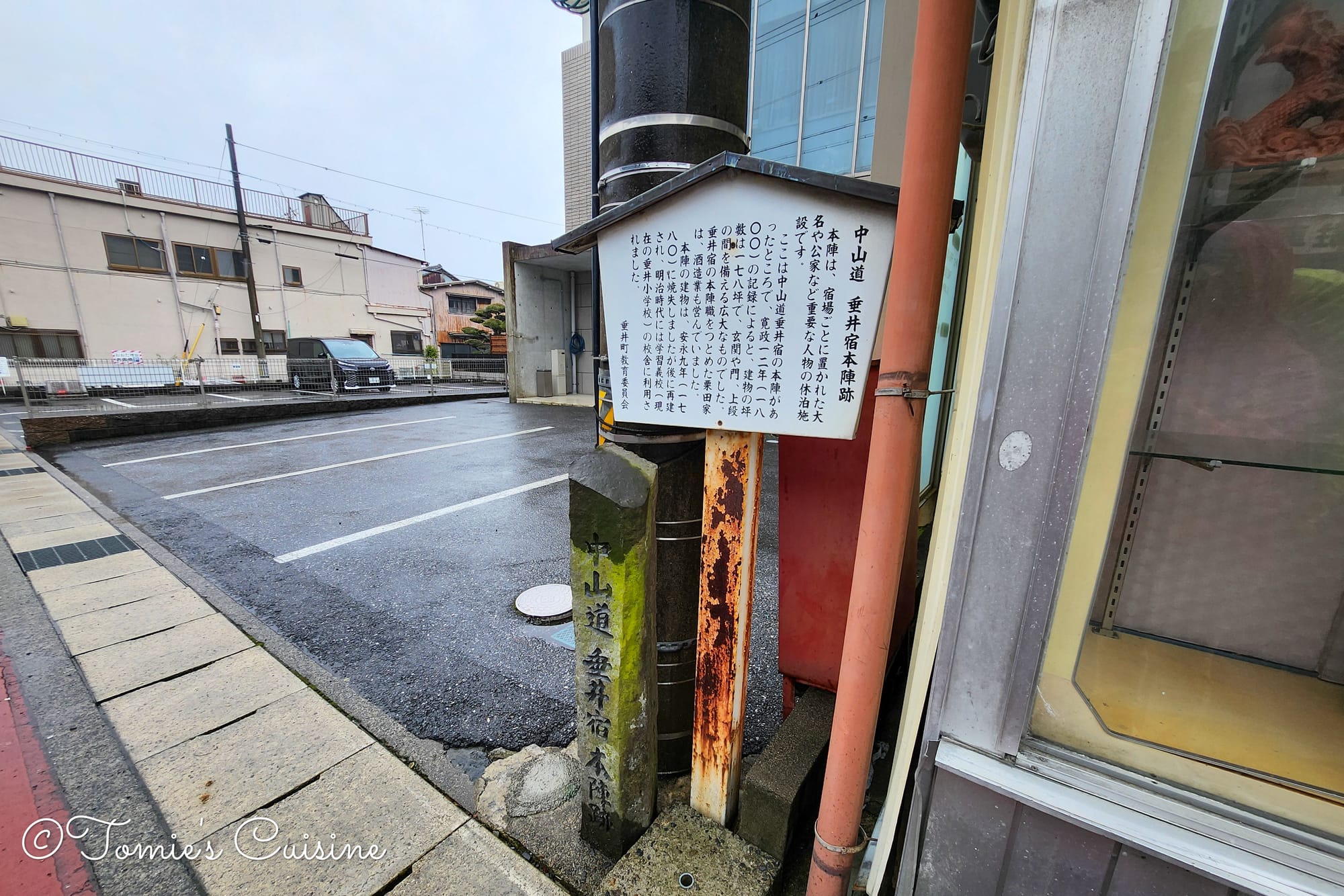
The Tarui post town honjin ruin is now a dental clinic.
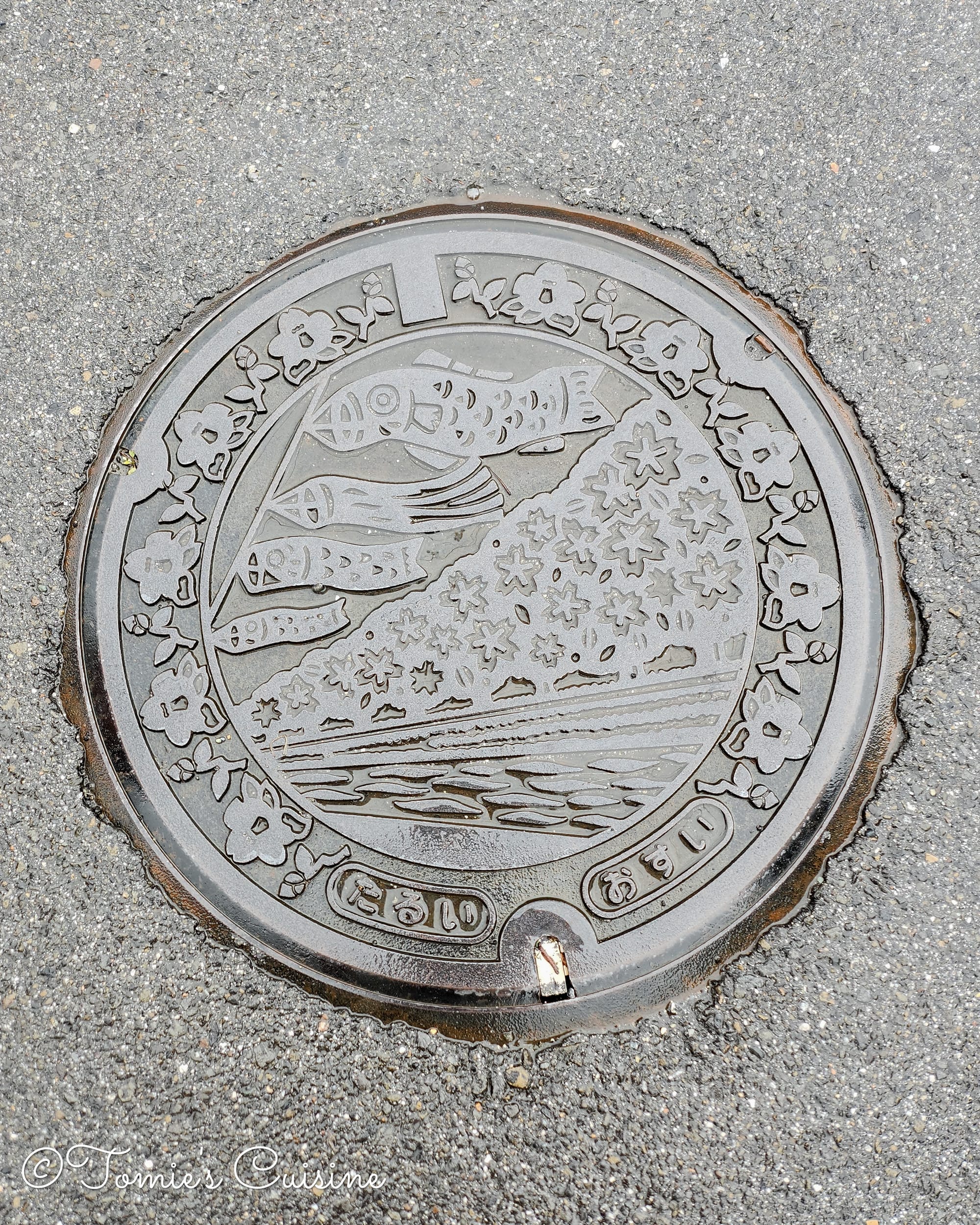
Every year, from the end of March to the beginning of May, about 350Koi-nobori are hung across the Aikawa river to wish for children's good health. Most of the Koi-nobori are donated by families whose children are all grown up. We could see the view from the nearby utility hole.
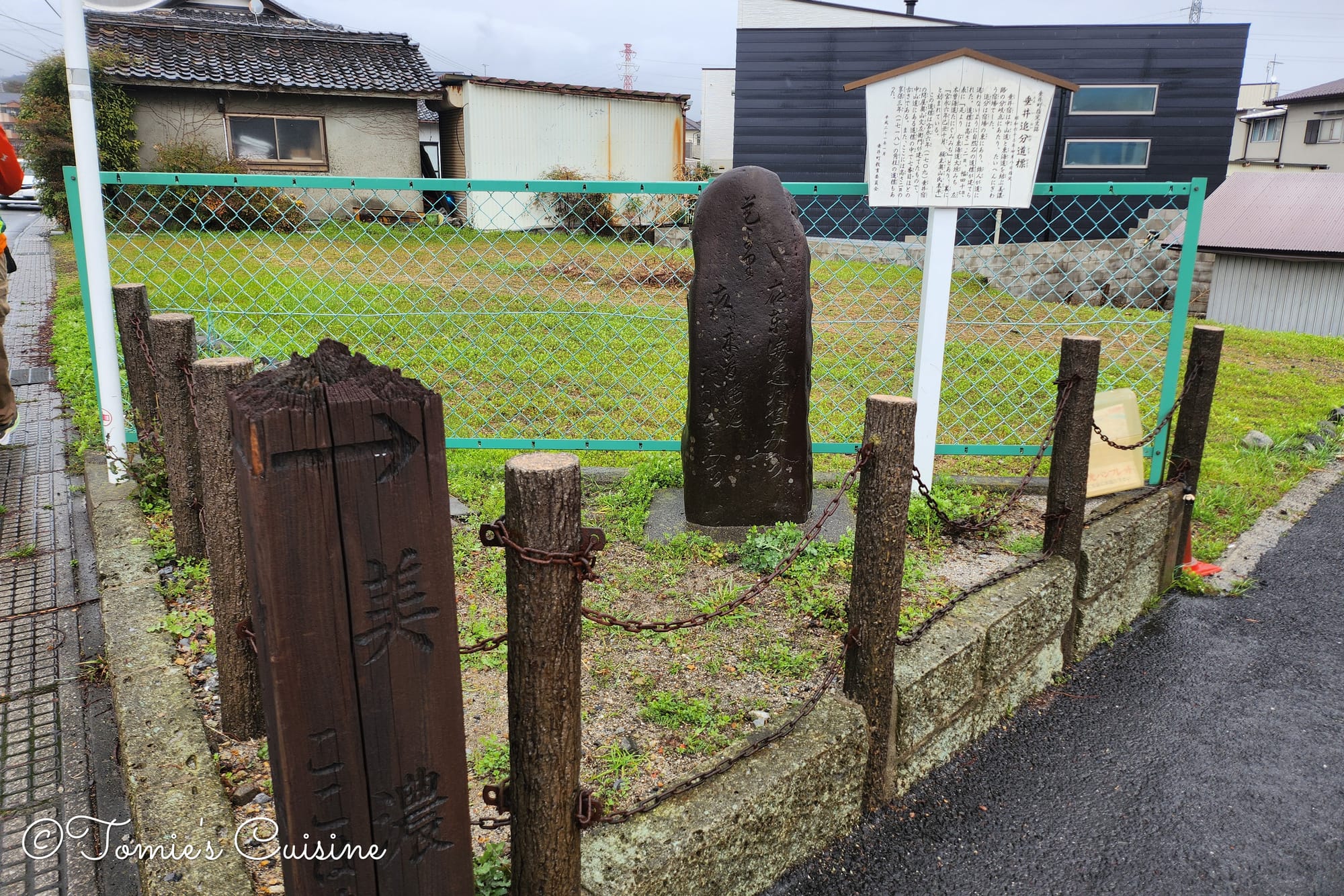
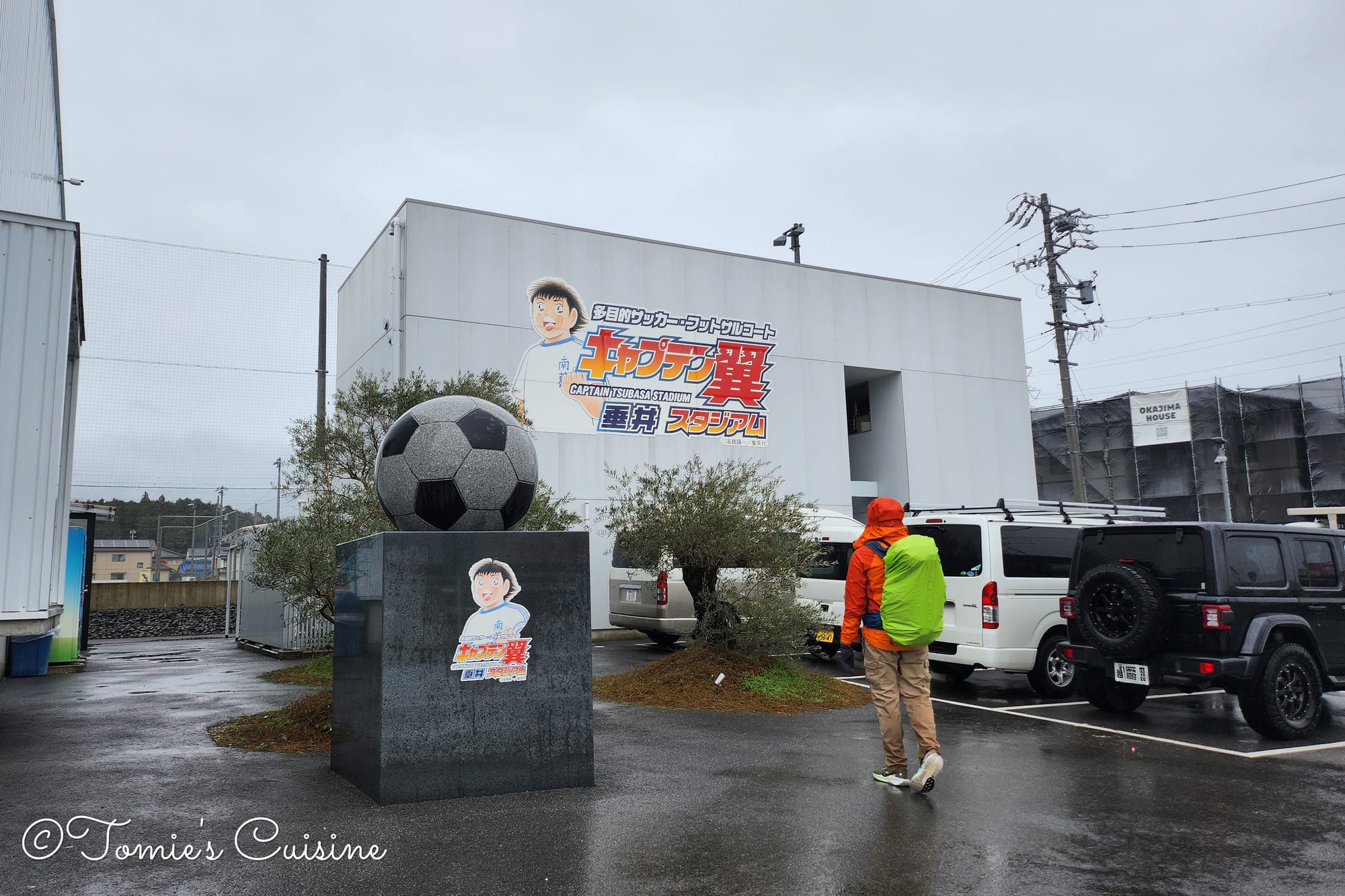
Tarui's old junction road sign.Tarui Captain Tsubasa stadium.
2:51 pm Taking a small break at a convenience store
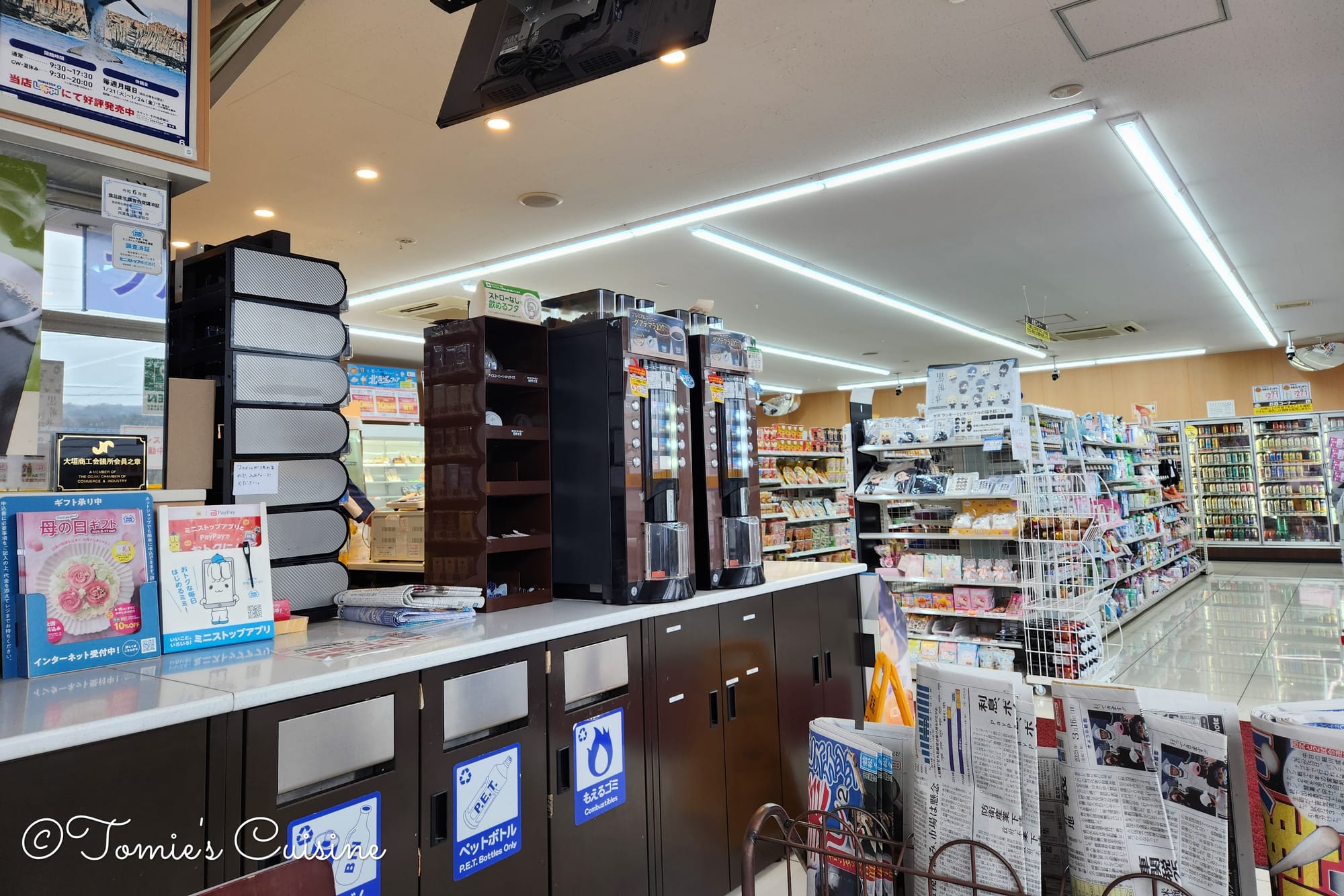
Inside the convenience store.
Since it was raining and cold, we decided to stop at a convenience store called “Mini Stop”. We bought coffee and a small sweet to go with it. It was literally a “mini (short) stop”, but it helped a lot.
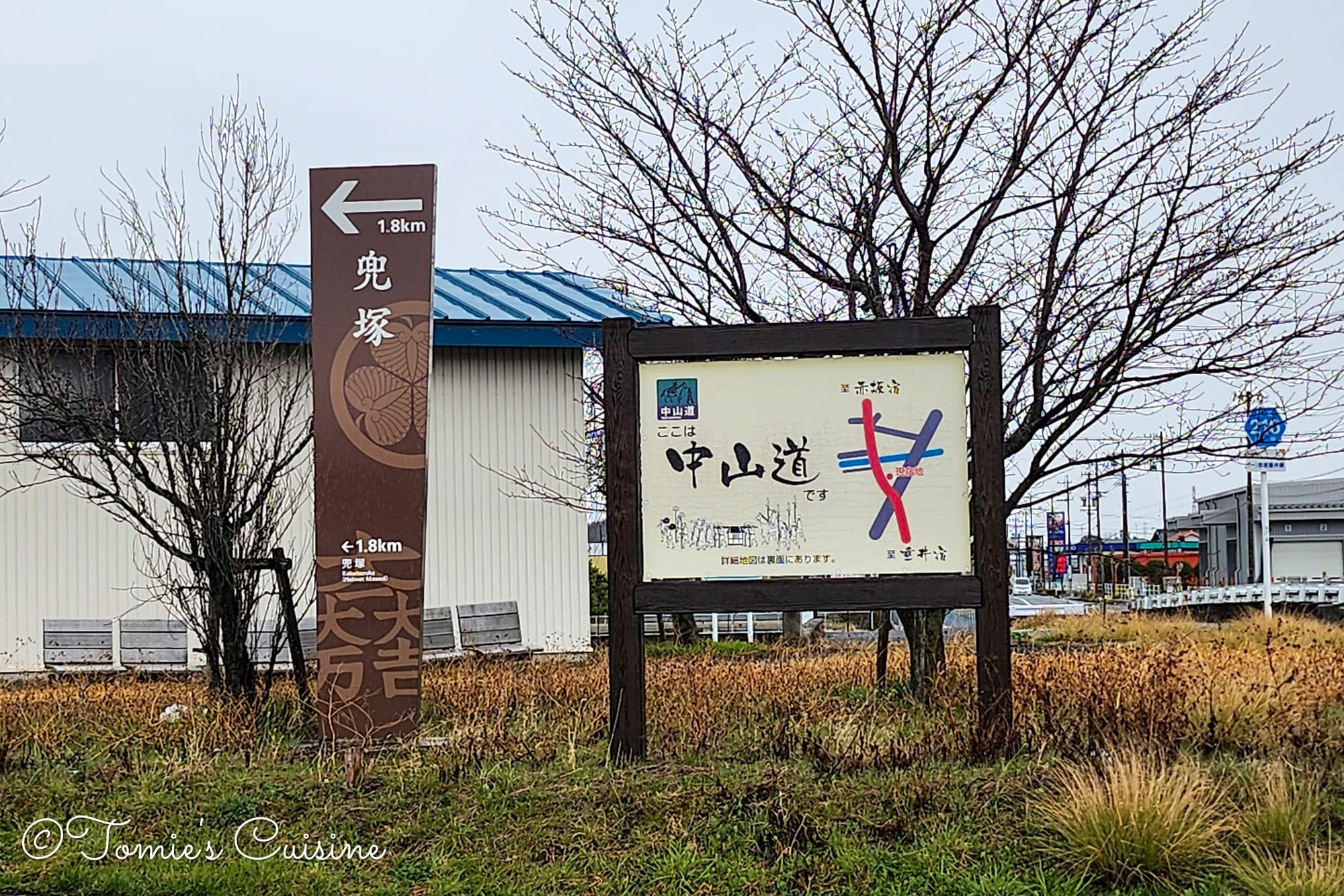
The sign showing the direction to Akasaka post town (left), and the Nakasendo sign and Kabuto-zuka direction sign (right).
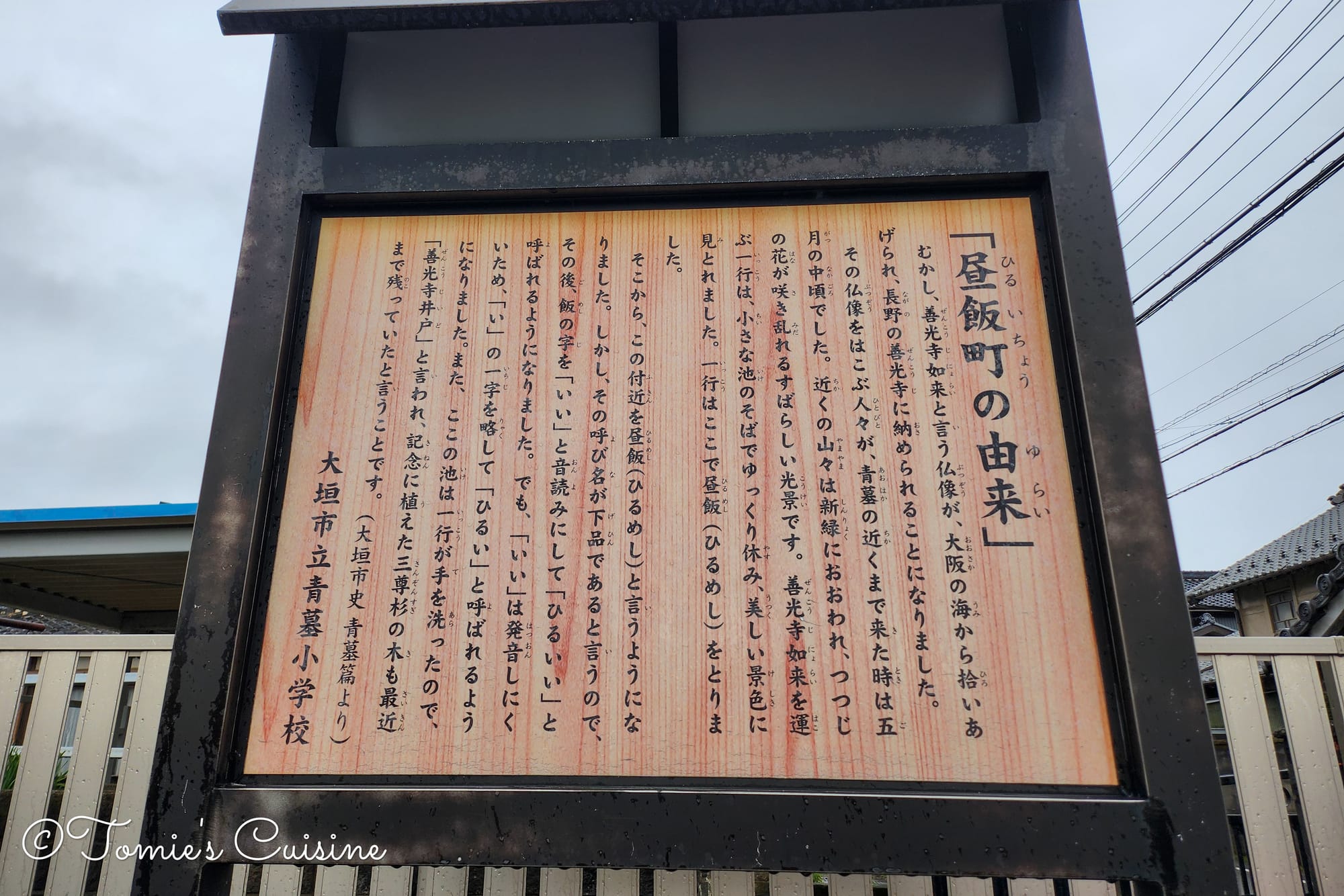
An explanation board about Hirui town at the entrance of Nyoraiji temple.
The kanji of “Hirui” is also readable as “hirumeshi”, which means “lunch meal”. Isn’t it an interesting name? Of course, there is a story behind it.
A Buddha statue was recovered from the sea in Osaka Prefecture, and people decided to offer it to Zenkoji Temple in Nagano Prefecture. On the way to the temple, people stopped by the pond for lunch and enjoyed the beautiful May mountain view. Since then, people started calling this place “Hirumeshi (昼飯)”. However, people found that “Hirumeshi” sounded a little crude, so they changed to “Hiruii”, then “Hirui”.
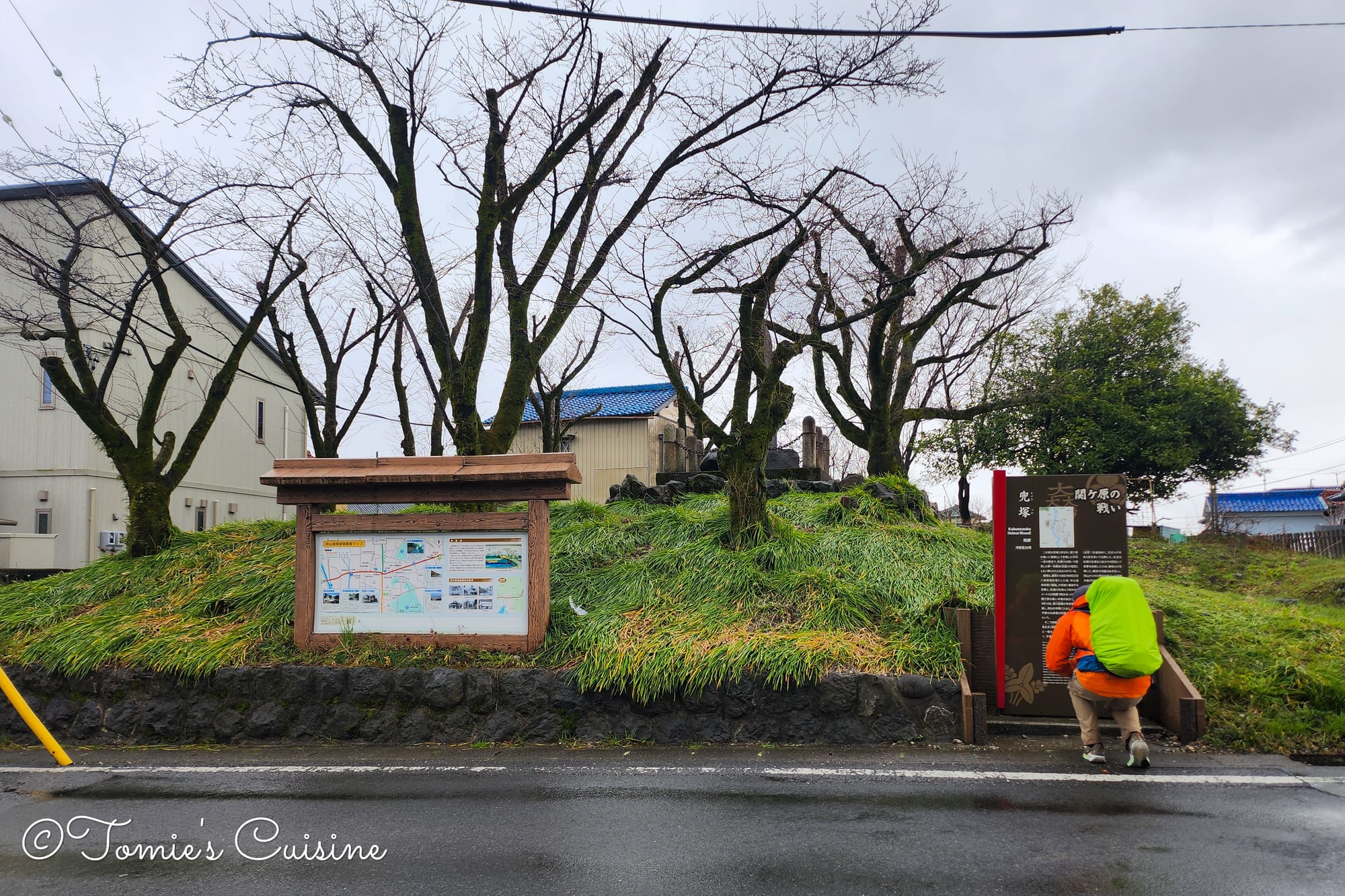
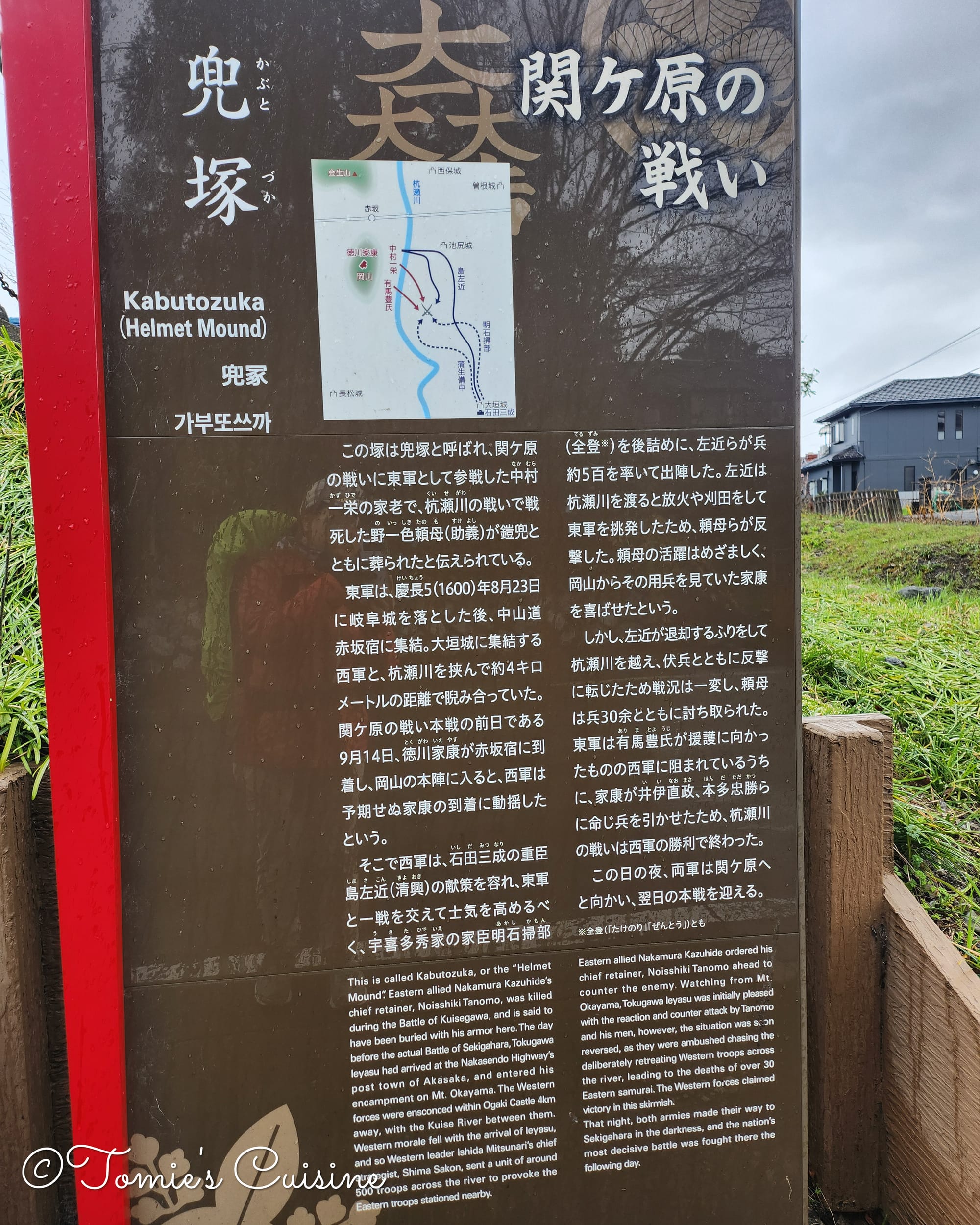
Kabutozuka (Helmet Mound) in Akasaka post town.
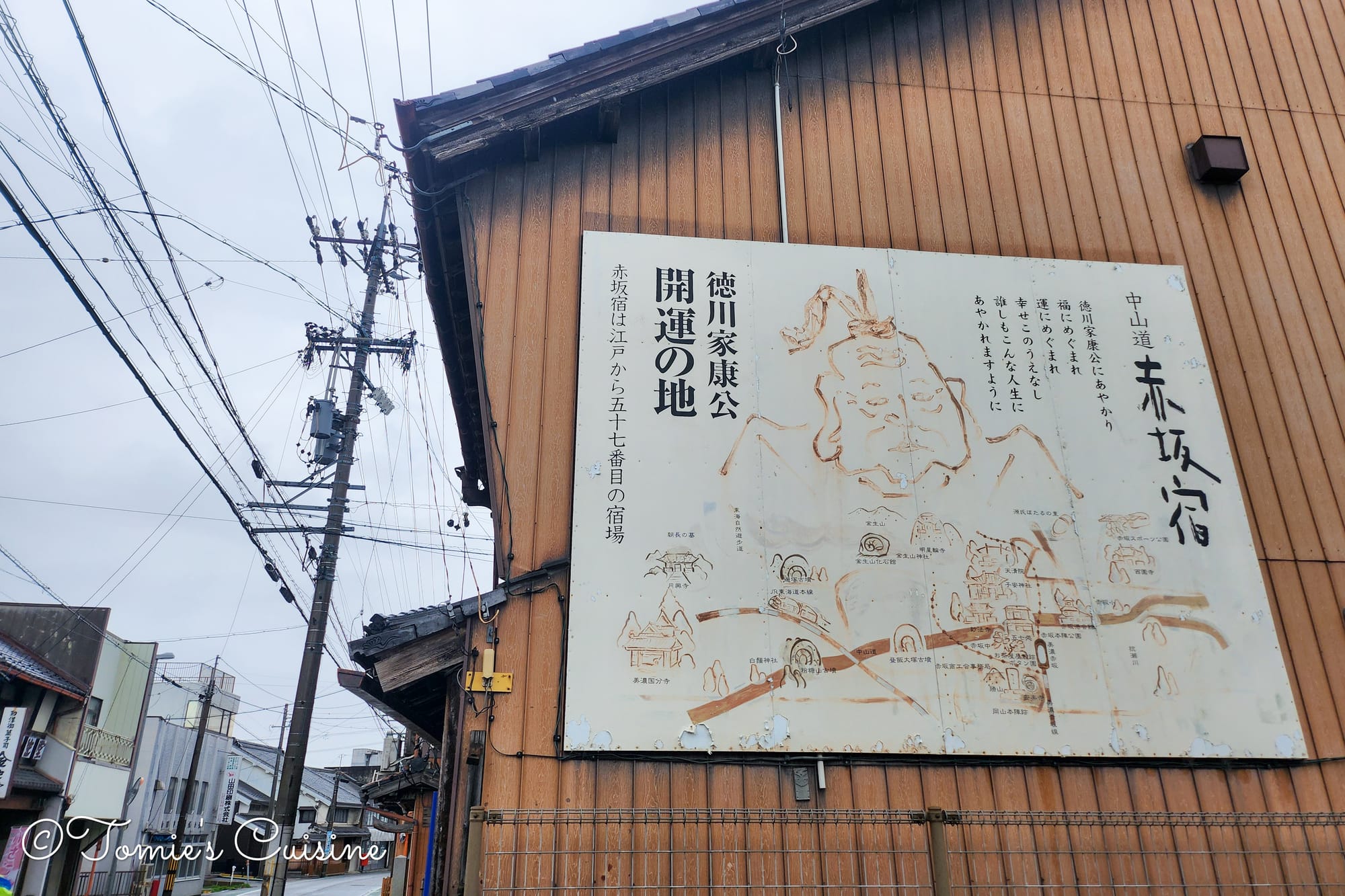
3:41 pm Arriving at Akasaka post town 赤坂宿
Here we are, the last post town of the day!
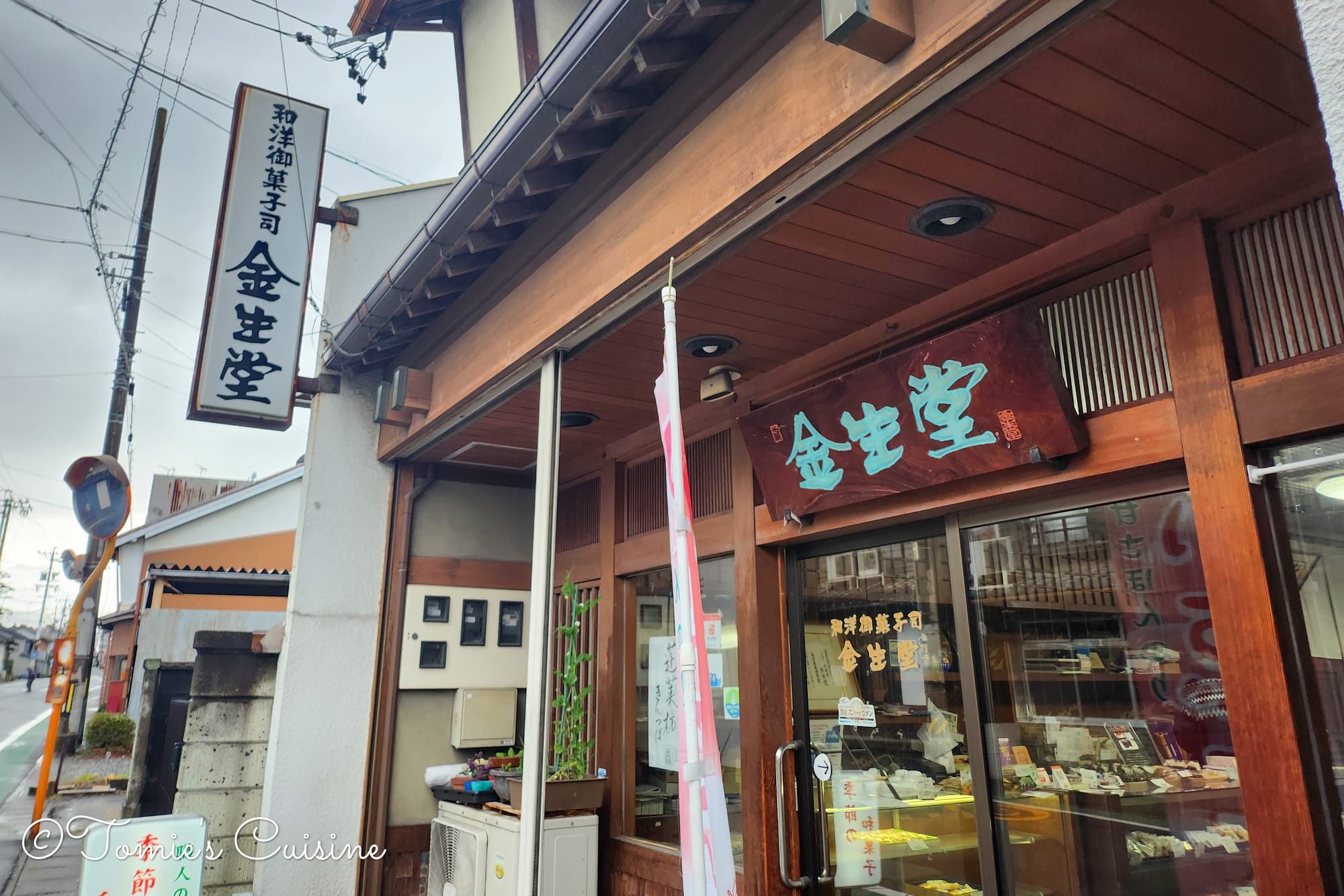
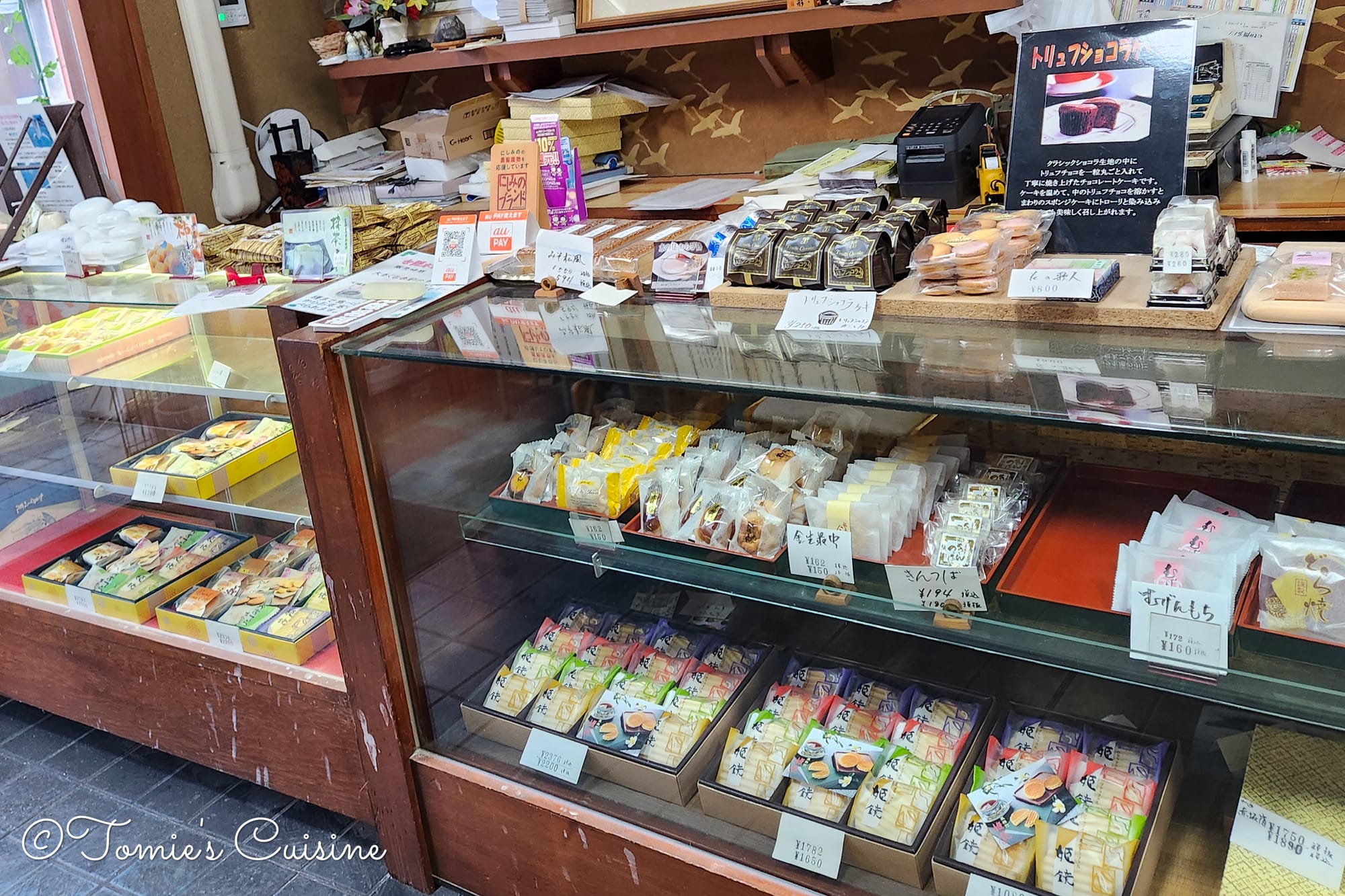
3:48 pm We found a sweets shop in the middle of Akasaka post town
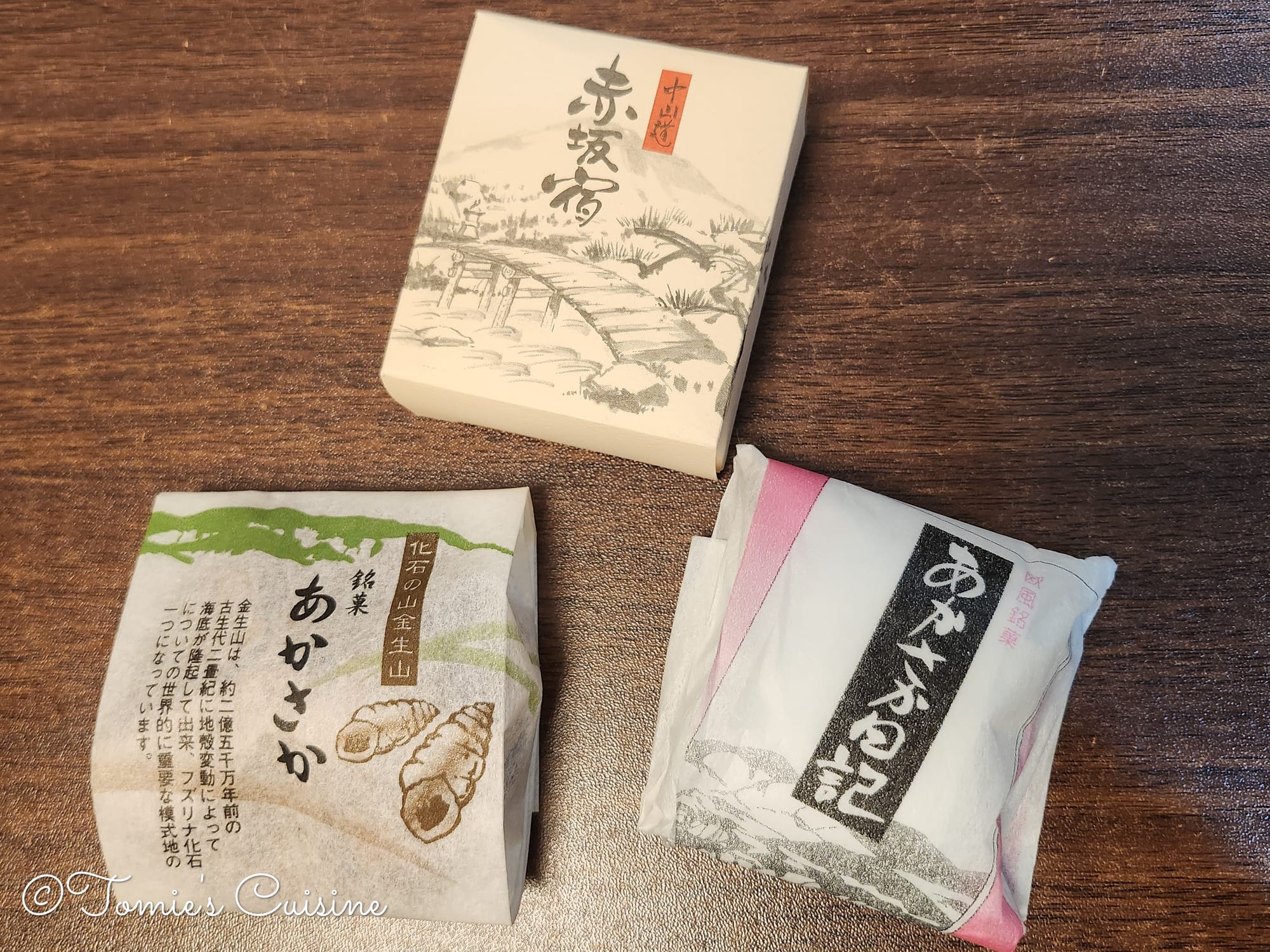
Before heading to our hotel, we found a local sweets shop on the Nakasendo, so we had to make a brief stop. The shop is called “Kinseido (金生堂)” in Akasaka post town, Gifu Prefecture. The inside of the shop has a vintage vibe, and the shop owner kindly showed us what they have. We bought three different sweets labelled “Akasaka.”
Taking a local train to go to the hotel
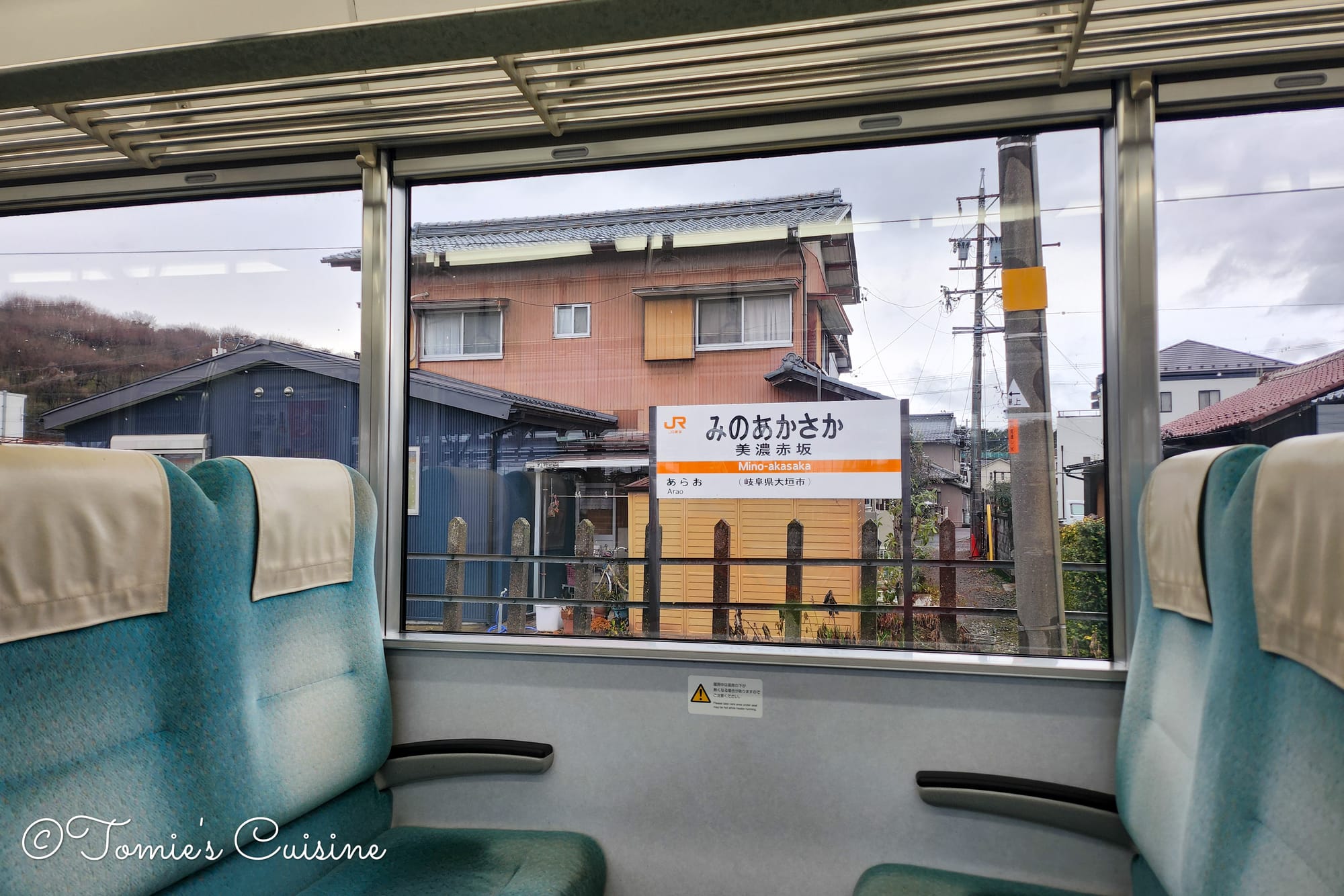
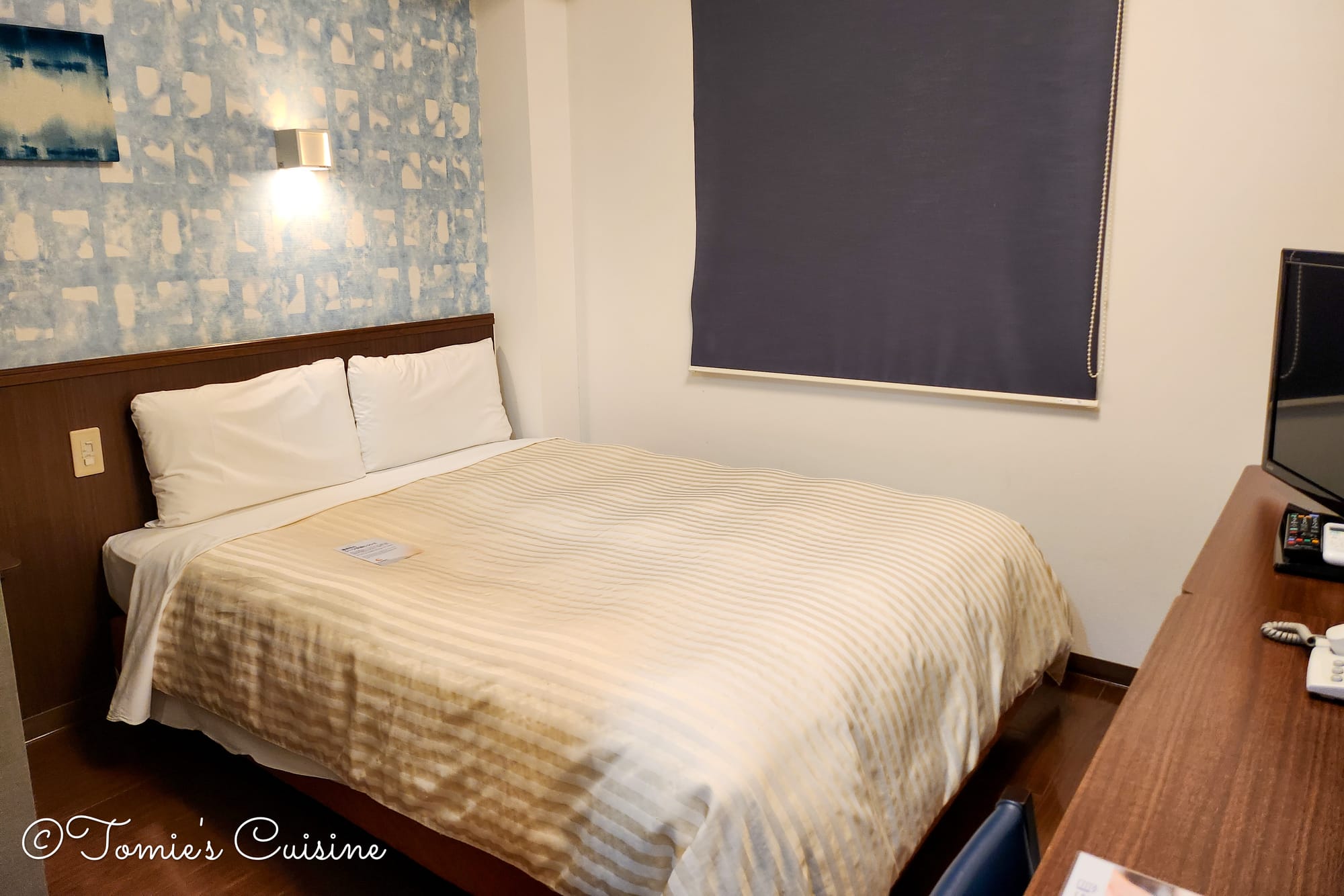
We decided to stay at Comfort Inn Ogaki. It’s not on the Nakasendo route, but we can take a short train from Mino Akasaka Station, just outside Akasaka, to Ogaki Station. The Mino Akasaka to Ogaki station route only takes 7 minutes and costs 190 yen. This way, it was still cheaper and more convenient for us.
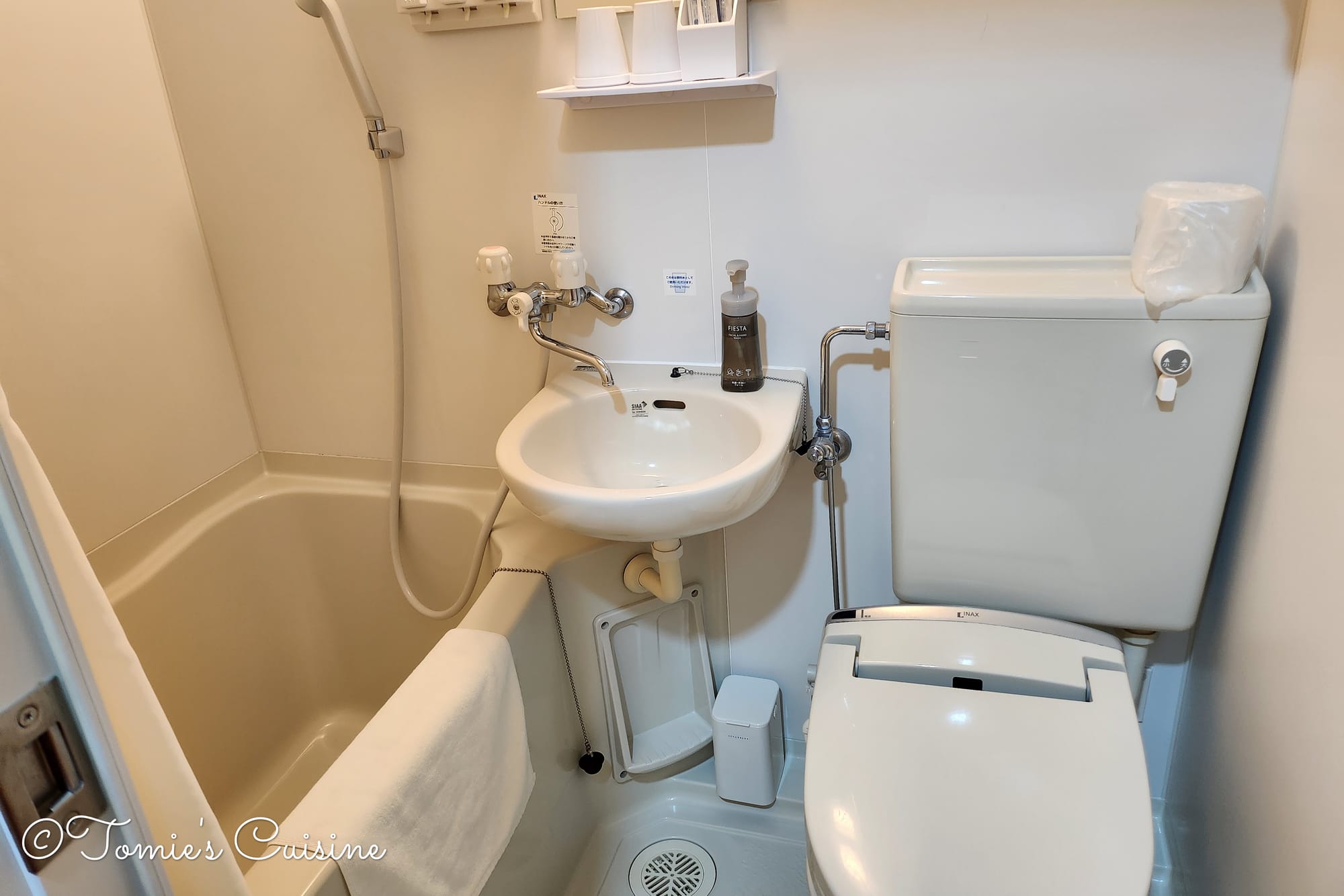
The hotel is only 3 minutes away on foot, and there is a shopping mall in front of it, which was very helpful for grocery shopping or dinner at the restaurant.
Once we arrived at the hotel room, we brewed some tea and enjoyed the sweets we'd bought on the way.
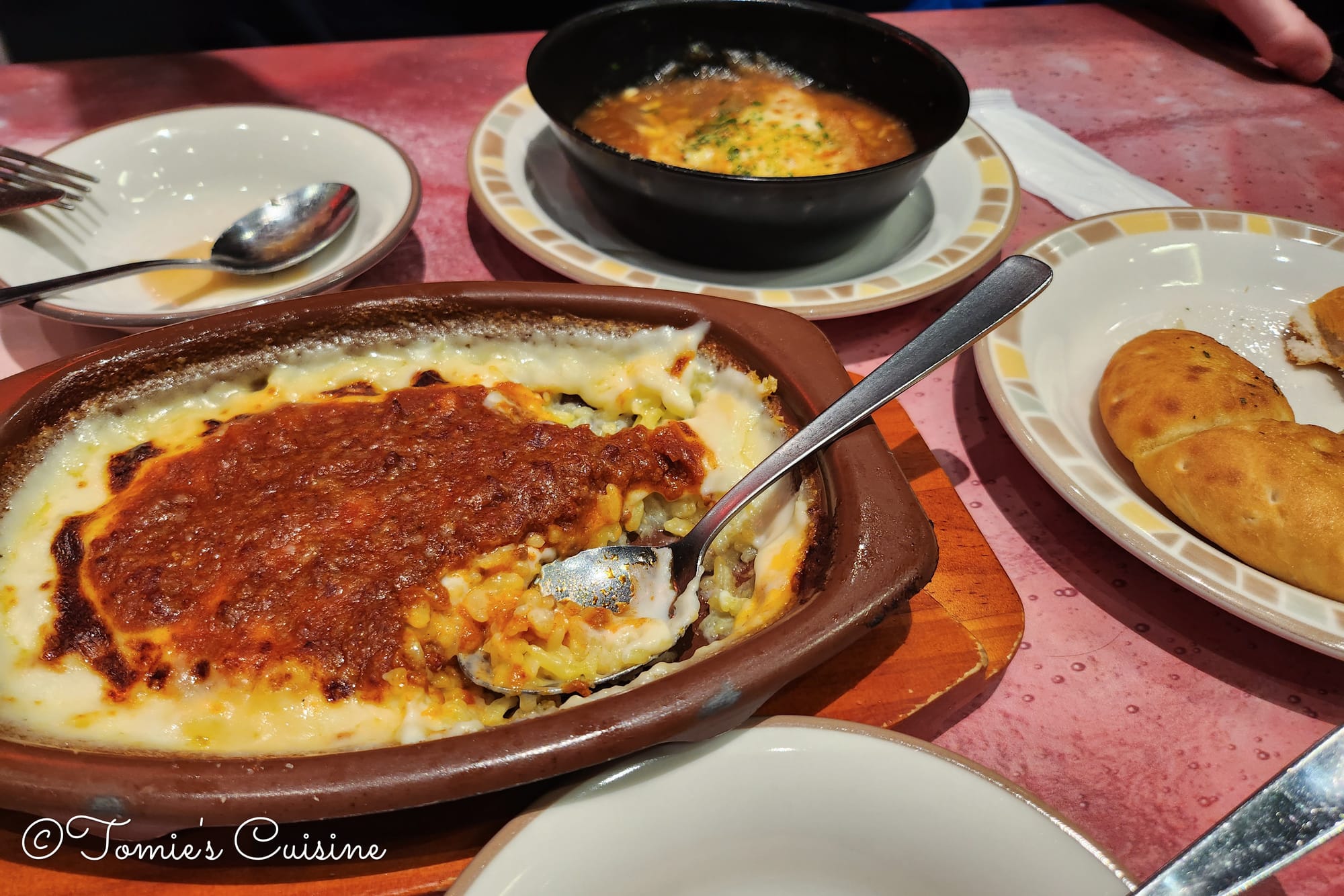
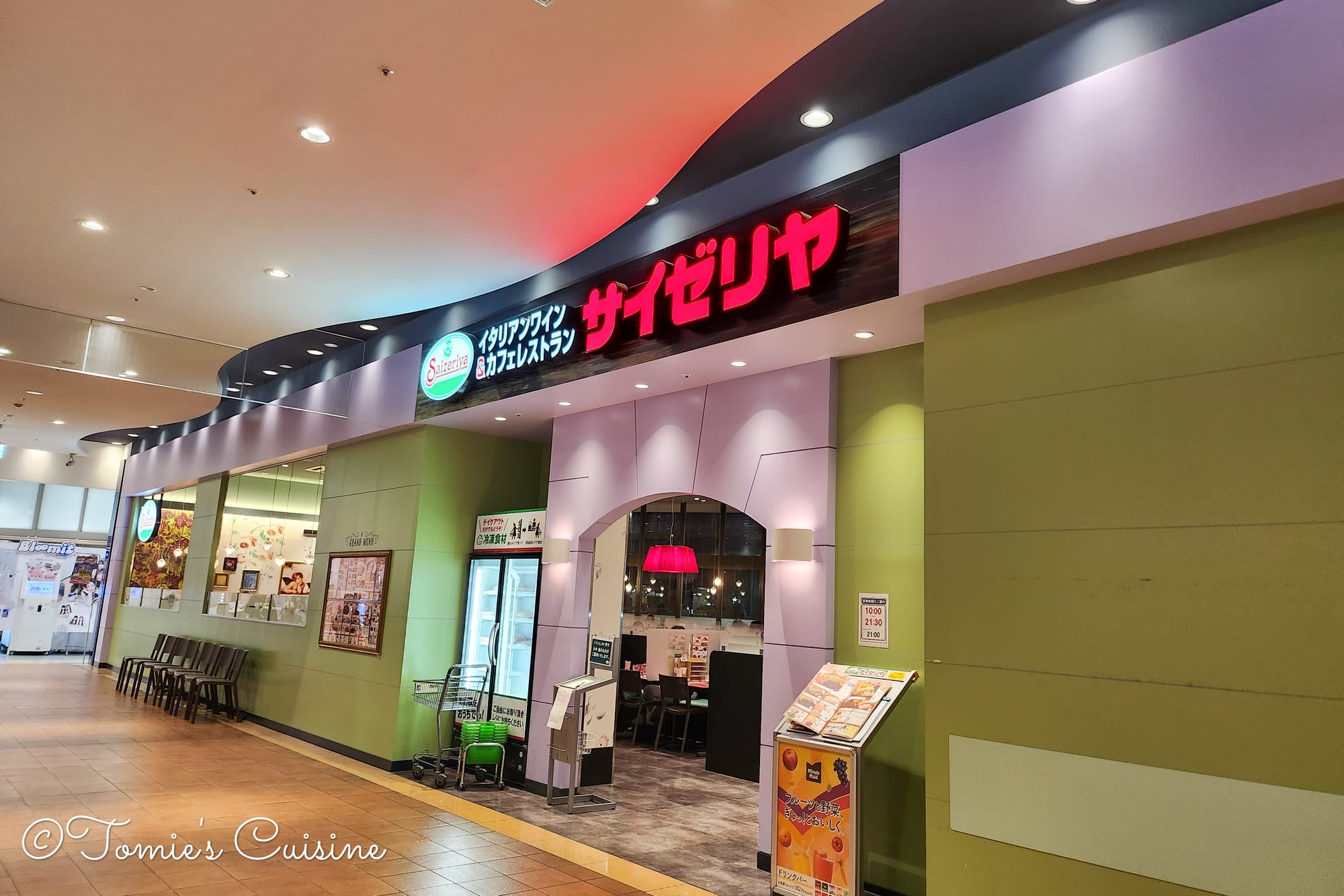
Incredibly reasonably priced "Italian" family restaurant: Saizeriya. I used to go there frequently when I was in high school.
After we rested a little, we went grocery shopping and then to a family restaurant called Saizeriya, because I hadn’t been there in ages and my husband had never been. We had a very reasonable dinner and headed back to the hotel.
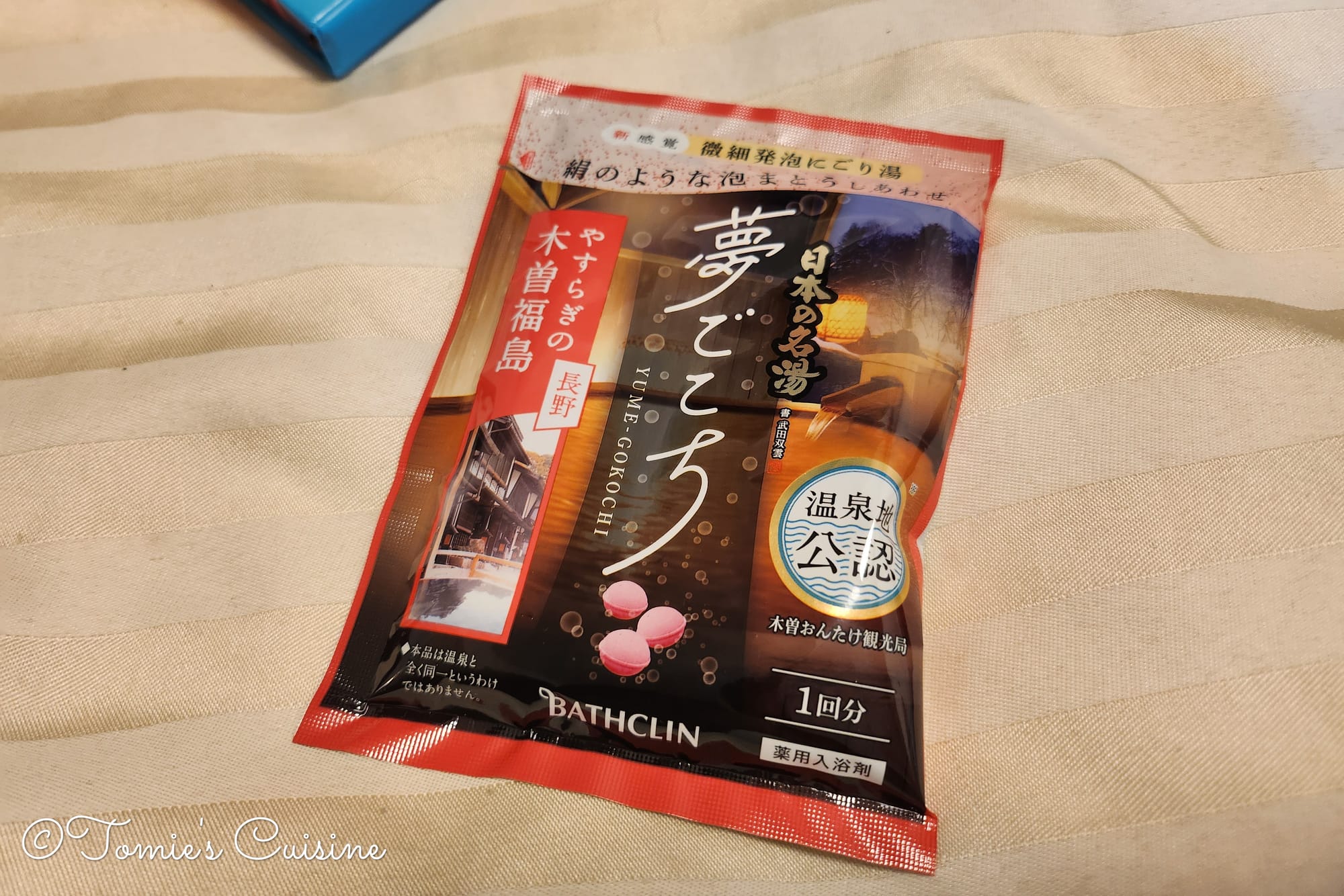
A bath salt we purchased at the nearby supermarket.
Day 5 starts in Akasaka and heads to Kano. Again, we'll return by train from Gifu Station to Ogaki, so we will carry whatever we need for the day and leave the rest in the hotel room. The distance is short as well (only about 22km).
Subscribe to Tomie's Cuisine
And get access to our offline GPX tracks that you can use on your own devices, and much more!
No spam. Unsubscribe anytime.
Even if you can’t spend as much time as we did, there are train stations near each post town accessible from Kyoto by changing lines, and it’s not complicated. So, if you can go there to explore, we highly recommend it! You can use our offline track available to our subscribers, so you know exactly where to go.
To ensure you don't miss any part of this Nakasendo adventure report, subscribe to our free newsletter today! If you have any questions or would like to see early photos of Nakasendo, feel free to visit ourInstagram, Pinterest, or Facebook page. We’re happy to answer any inquiries!
This post is for subscribers only
Sign up now to read the post and get access to the full library of posts for subscribers only.