Making soya milk to create tofu takes about 2 hours, plus soaking time. Once you have soya milk, it’s easy to make delicious homemade tofu that can also be enjoyed as a drink or used in cooking!
But first, you need to know about soya milk and okara.
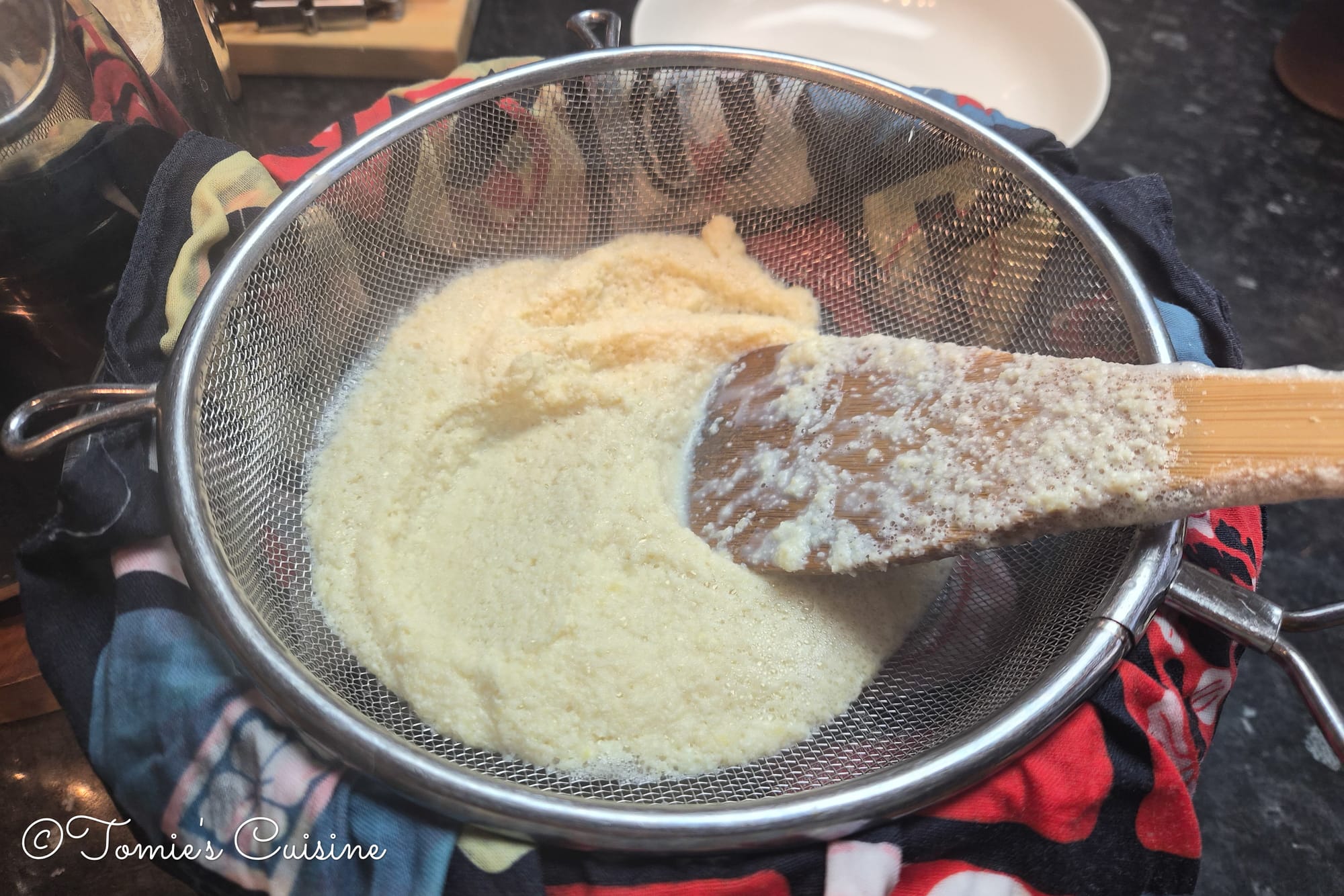
We will make soya milk in this article, but do you know what “okara” is? Okara is a Japanese word meaning the soya pulp that you will get during the soya milk production. You will see later in the recipe how we produce okara when making soya milk.
Okara is known as a superfood!
Whatever you do, don’t throw it away until you read this. Okara is rich in fibre, protein, vitamins, minerals and antioxidants!
You will get quite a bit of okara from this recipe, so I put it into a glass jar or another freezer-friendly container and freeze it. Put your defrosted okara in the fridge at the back and use it within 3 days.
Exciting okara recipes are coming soon!
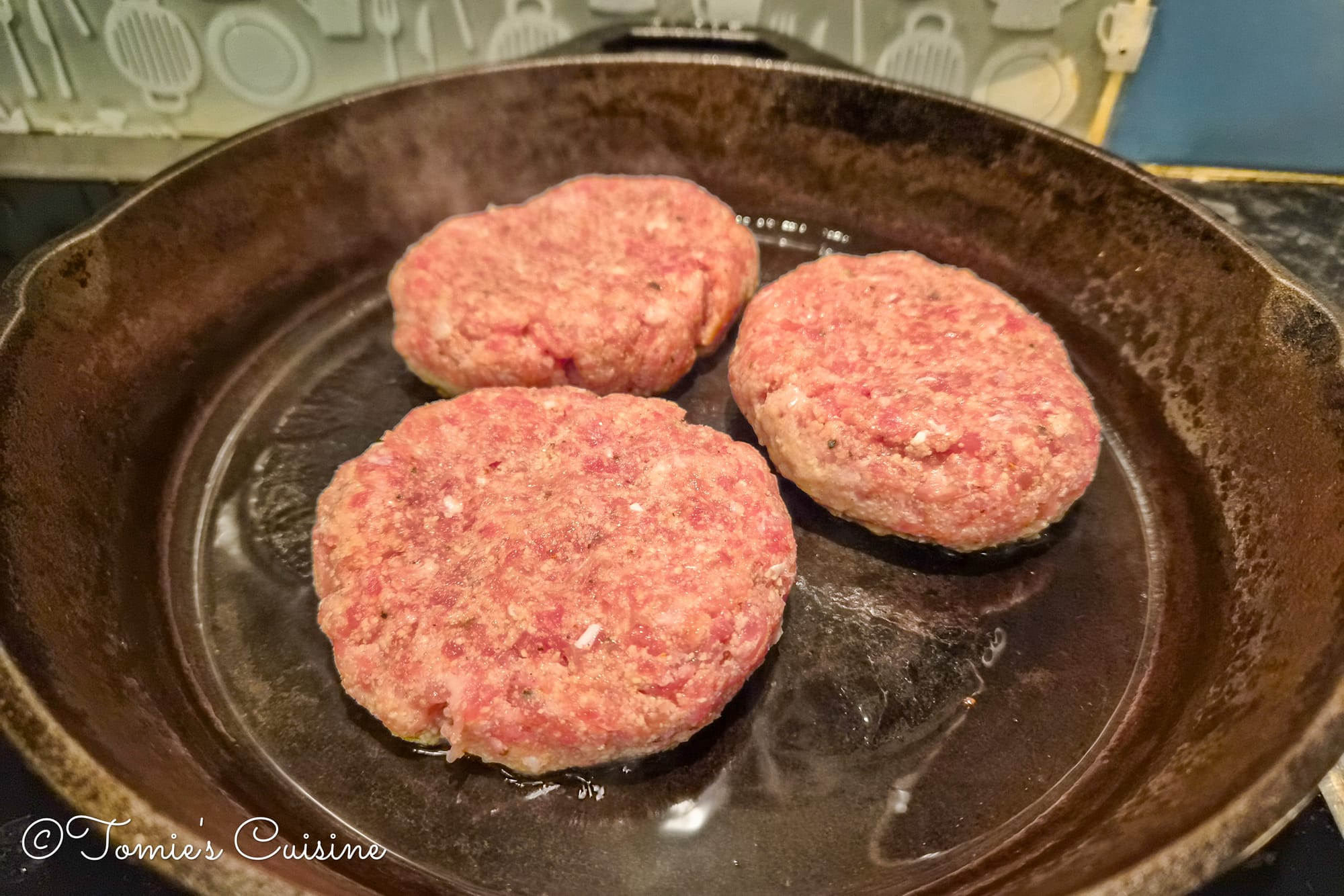
We have been using okara in various dishes, including:
- Okara biscuits
- Simmered okara with vegetables and hijiki seaweed
- Okara meatballs
Incorporating okara into our meals is beneficial, especially since my husband is conscious of our daily protein intake. These dishes are not only healthy but also delicious, so stay tuned for the recipes!
Soya milk recipe
Ingredients
Makes about 1.3 litres of soya milk and 500g of okara
- 300g soya beans (Soak in plenty of water for at least 24 hours, especially in winter)
- 1.5 litres of water
With this recipe, you will get 1.3 litres of thick and rich soya milk. If you want to make it lighter for drinking purposes, add another 500ml to 1 litre of water.
Tip for soaking soya beans to make rich soya milk
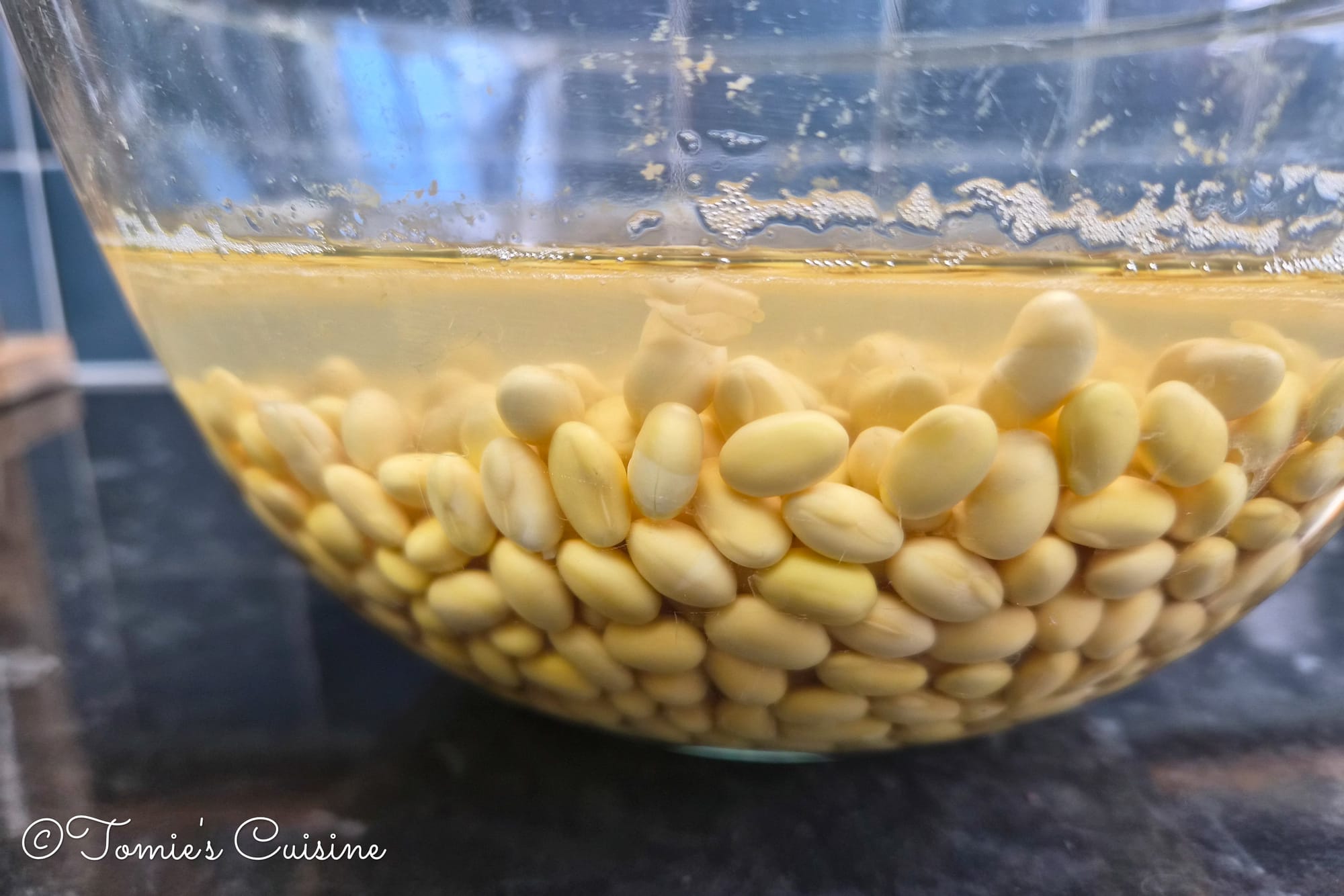
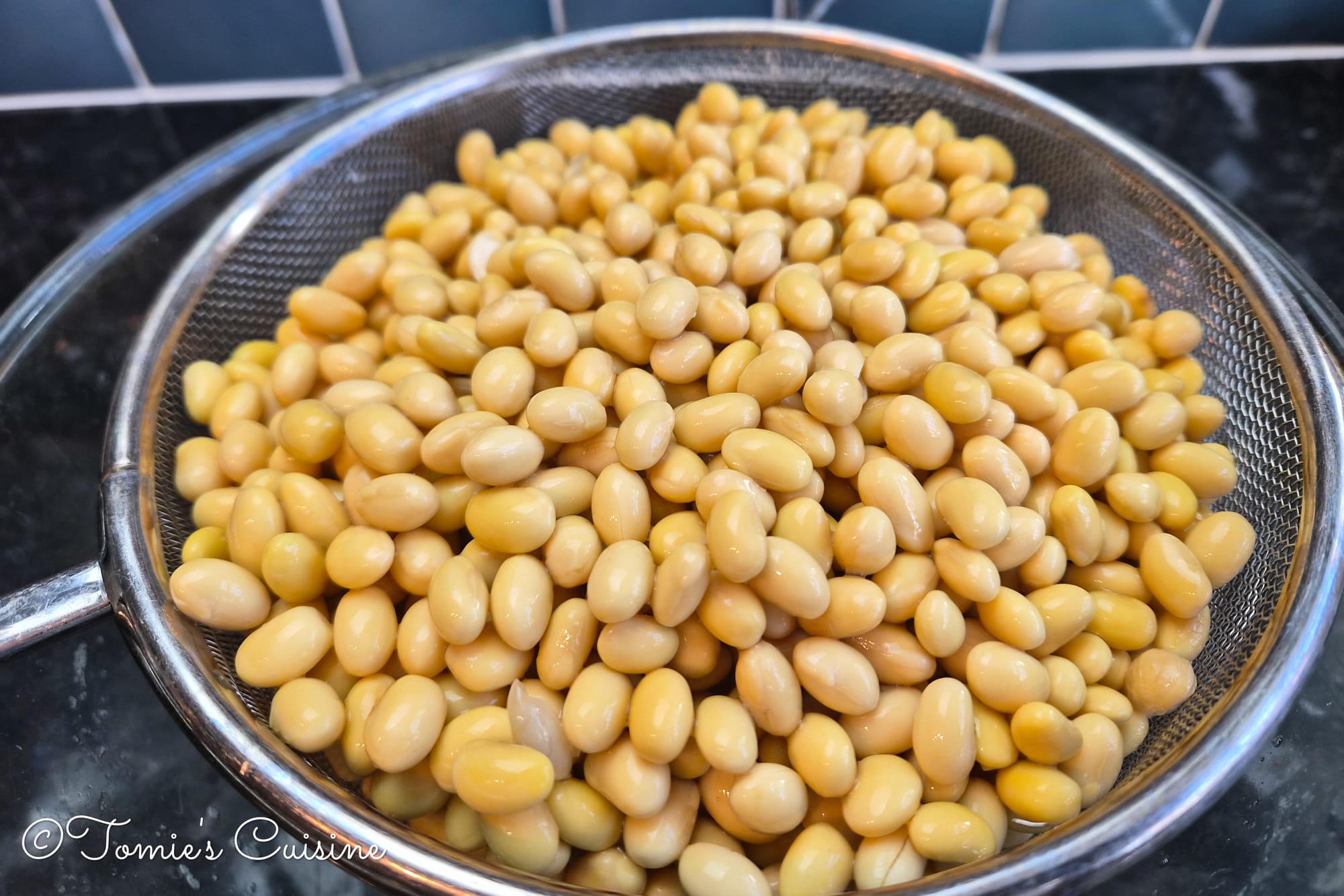
I’ve found that soaking soya beans overnight (8 to 10 hours) isn’t always sufficient, especially at cooler room temperatures. After trying it a few times, I noticed that the soya milk was lighter when I soaked the beans for just 8 to 10 hours rather than 24. Since then, I always soak them for either 24 hours or slightly less.
Soaking for a full 24 hours also makes it easier to keep track of the time. For example, if you want to start making soya milk at 9 AM on Saturday, you can begin soaking the beans at 9 AM on Friday. On hot days, it’s best to keep the beans refrigerated.
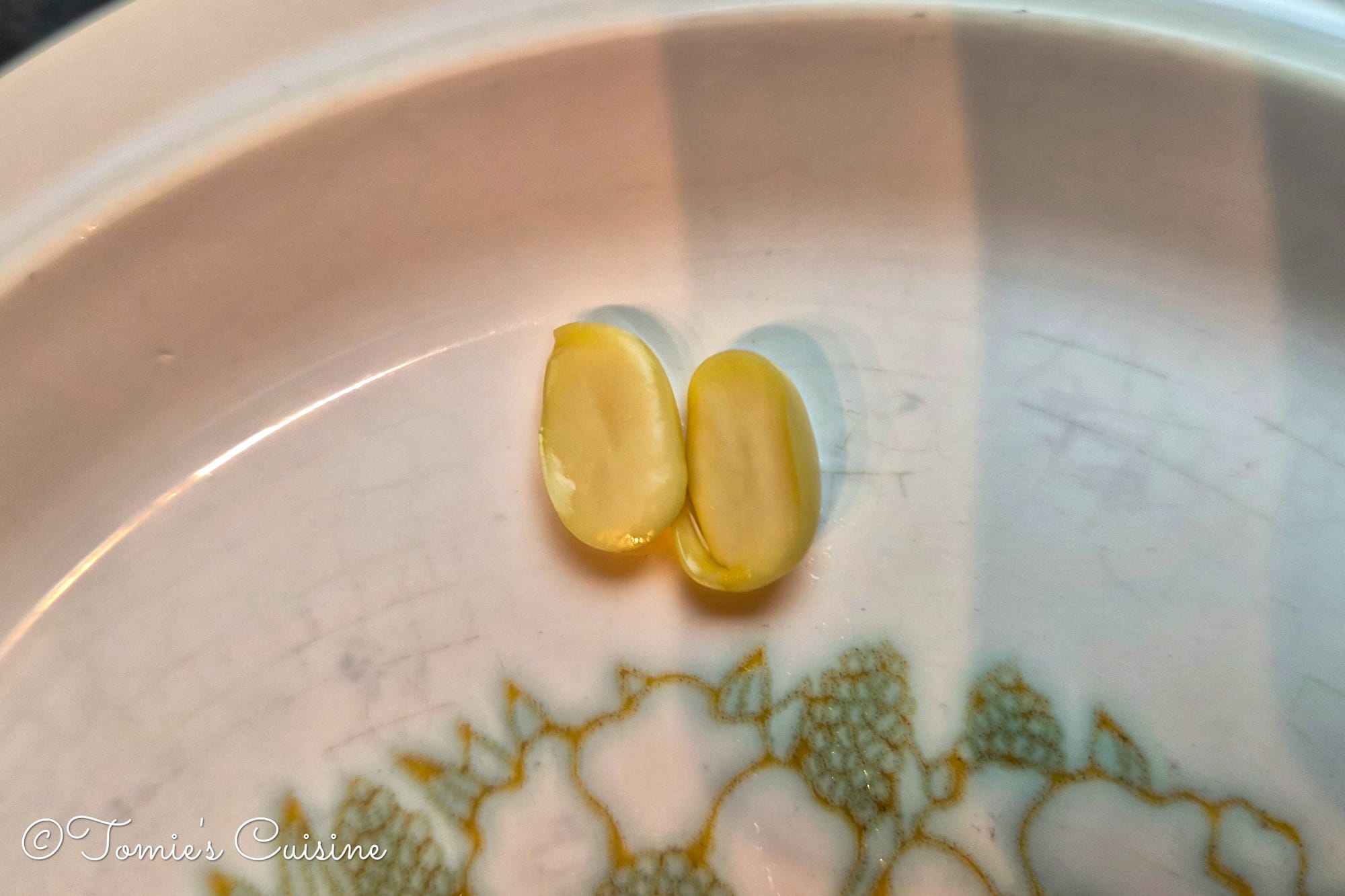
This soaking method is similar to the one I use for my homemade miso recipe. During spring and summer, the soaking time may be shorter, so if you're unsure, take a few beans from the water and split them in half. If you can see a small straight line, they are ready to use.
Tools
- Large pot
- Blender
- Jug
- Cooking thermometer
- A clean tea towel or muslin cloth (cheesecloth)
- Spatula
- 2 sieves or 1 sieve and 1 colander
- Large glass bowl
A way to squeeze the soya milk:
To squeeze the soya milk, I use a large bowl, two sieves, and a tea towel. This method makes the process easier because fresh soya milk can be extremely hot.
Instructions
- Add the soaked and strained soya beans to a large pot along with 1 litre of water.
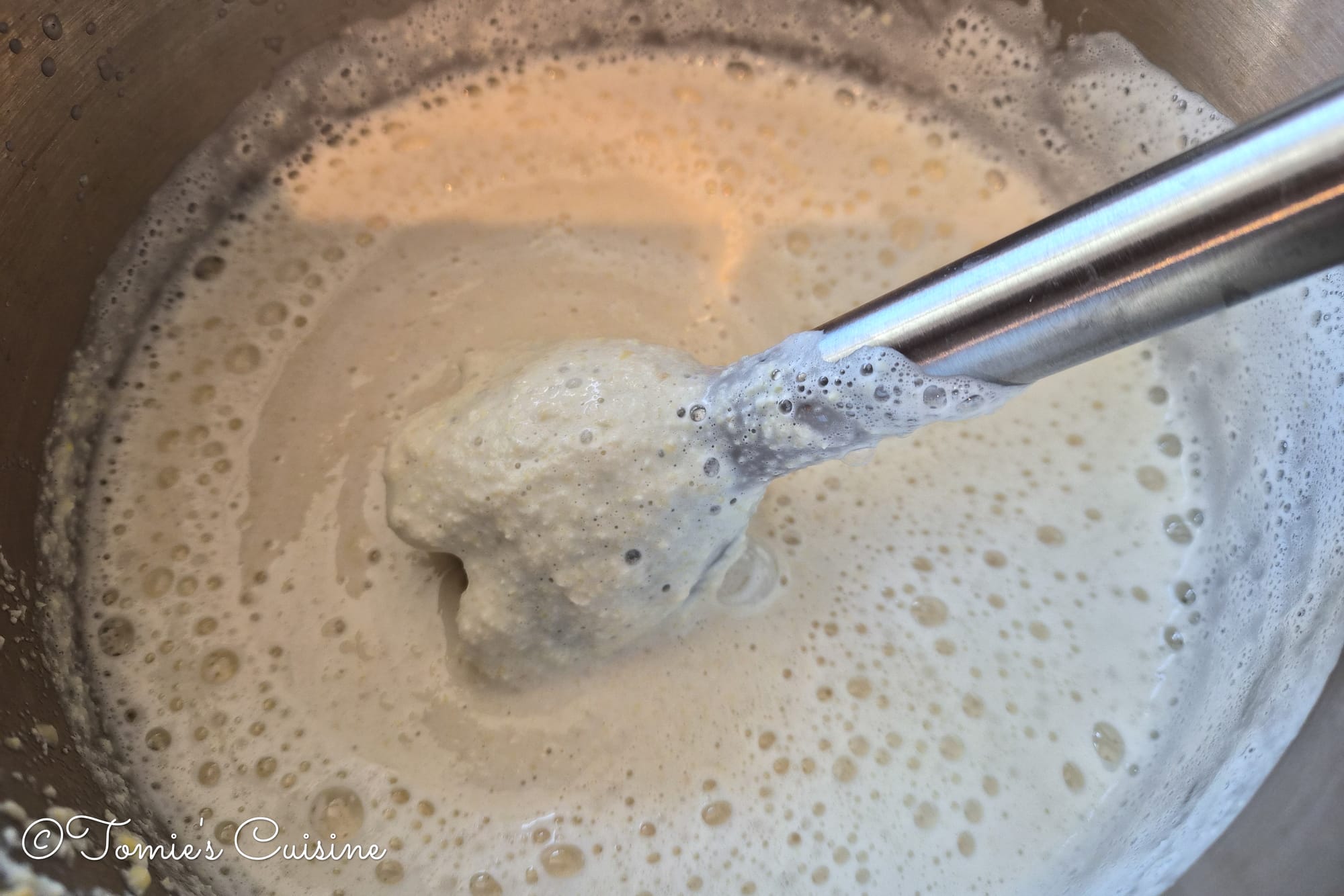
- Blend the soya beans and water using a hand blender until smooth. Then, add another 500 ml of water.
- Place the pot over medium-high heat on the stove and cook the mixture. Make sure to stir frequently and scrape the bottom to prevent burning. If the heat is too intense, lower it as needed.
- Once the mixture starts to boil, reduce the heat and cook for an additional 10 minutes, keeping an eye on the pot to prevent overflow.
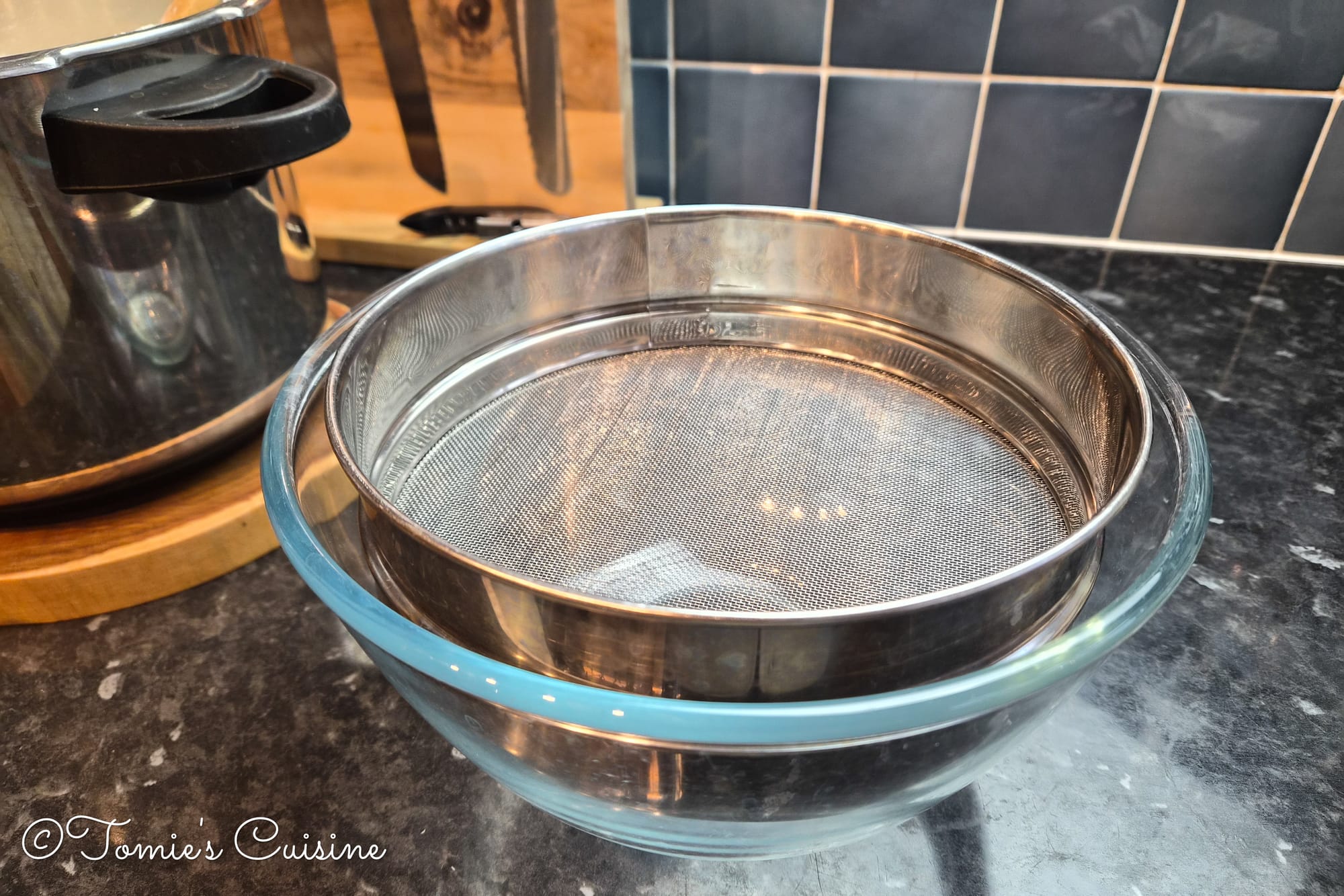
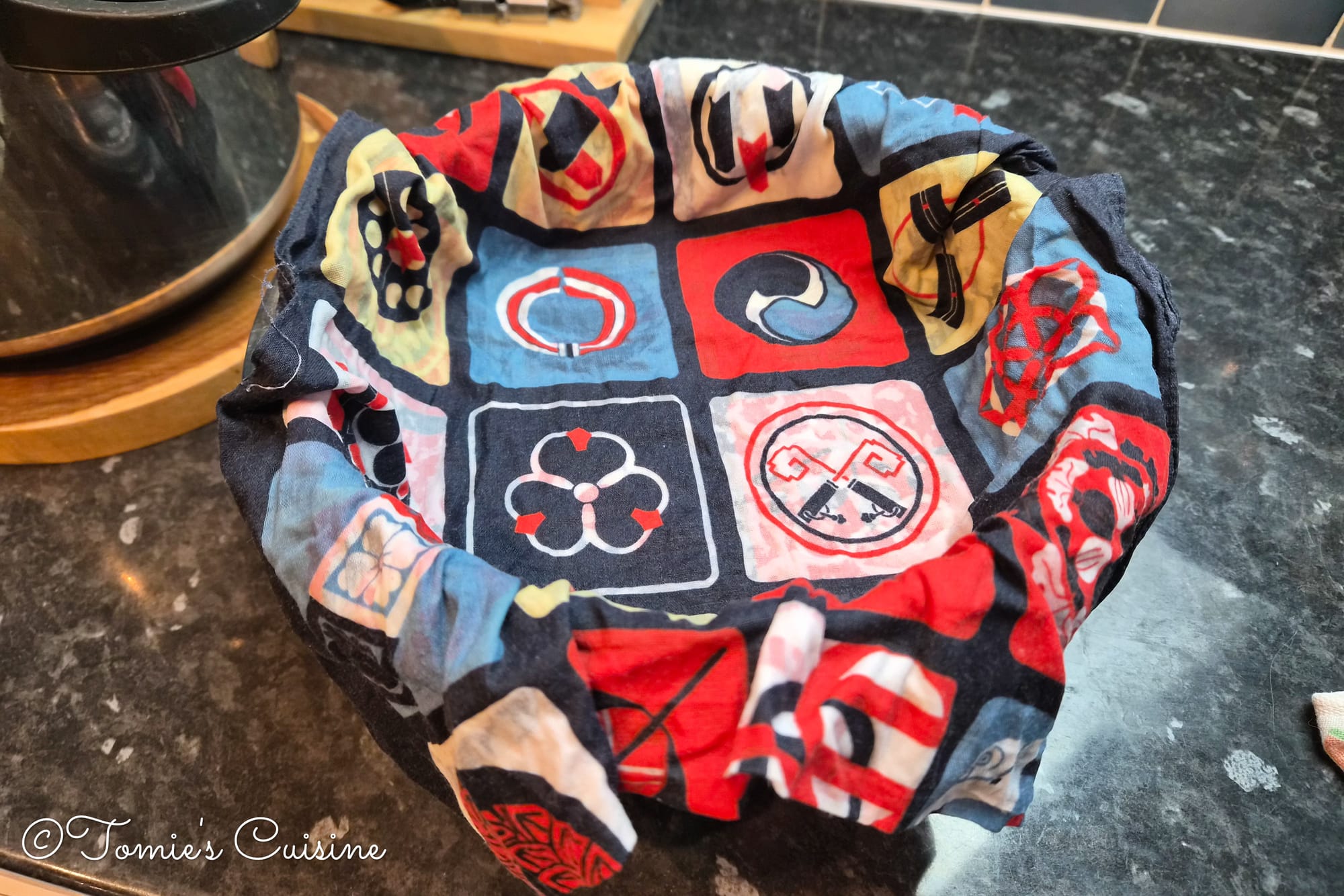
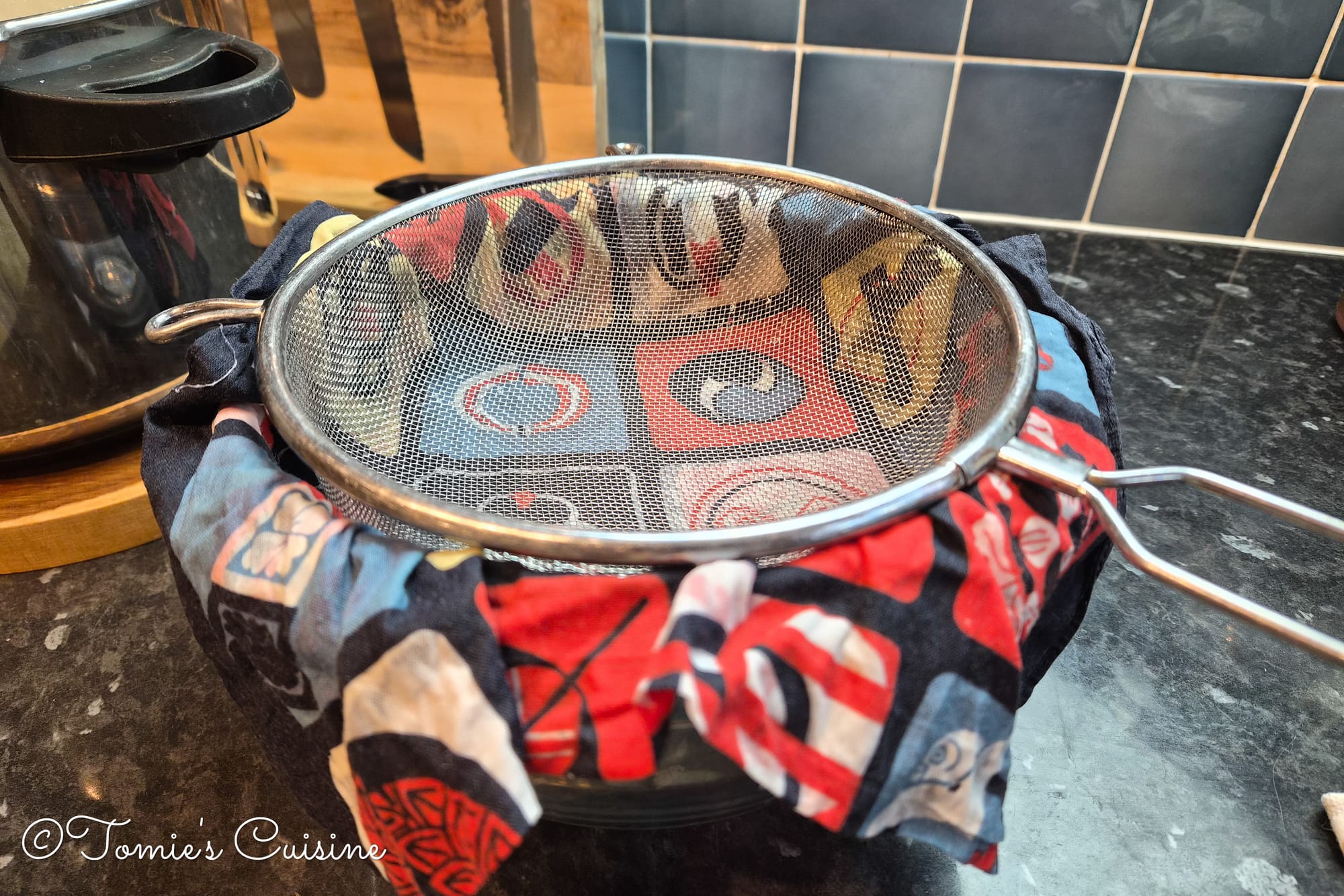
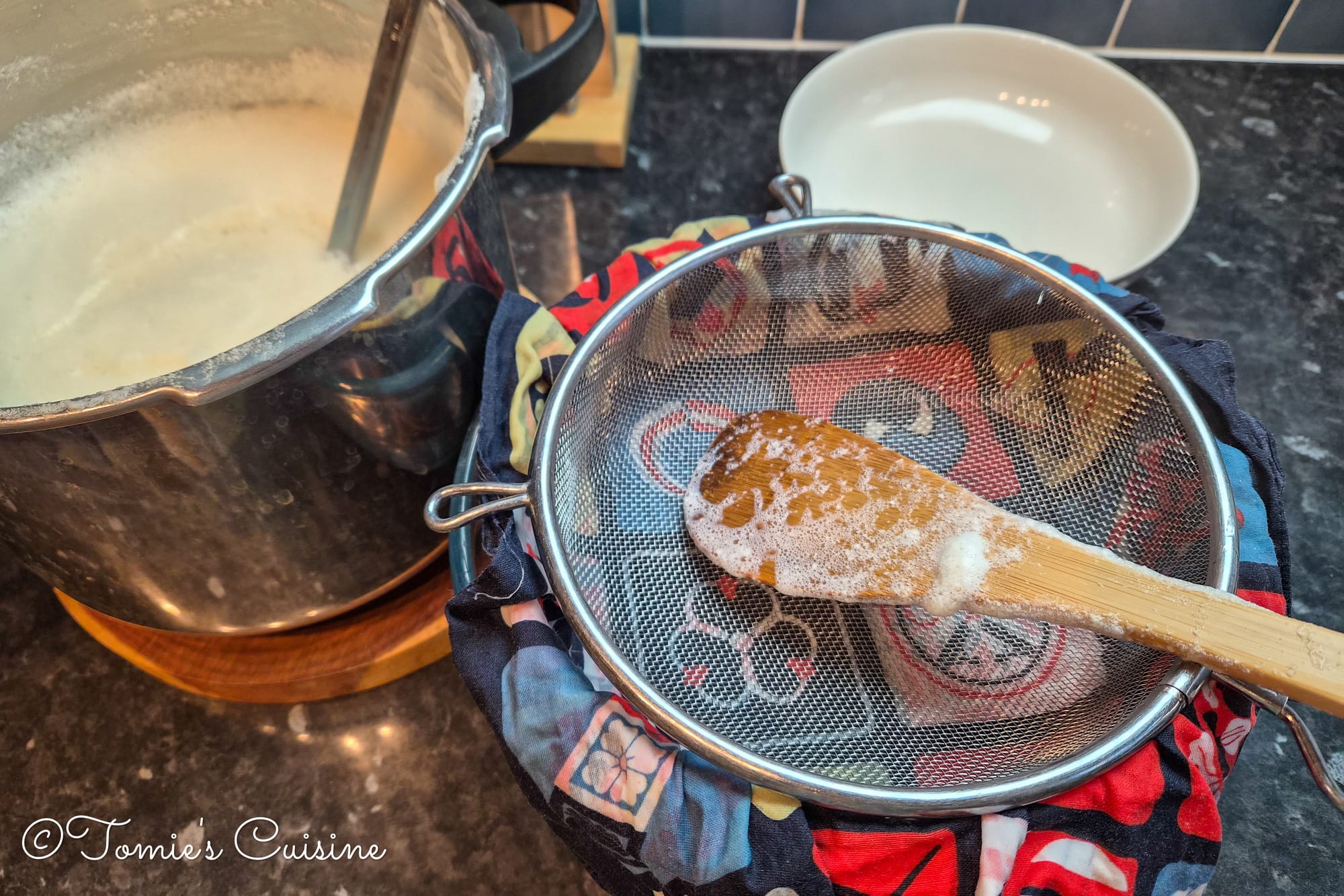
- It’s time to squeeze the soya milk: Place one sieve over the bowl and put the tea towel on top. This towel will catch any excess okara from the first sieve. Place the second sieve on top of the tea towel to create your squeezing setup. Make sure to have a large container ready to hold the okara after squeezing out the soya milk.
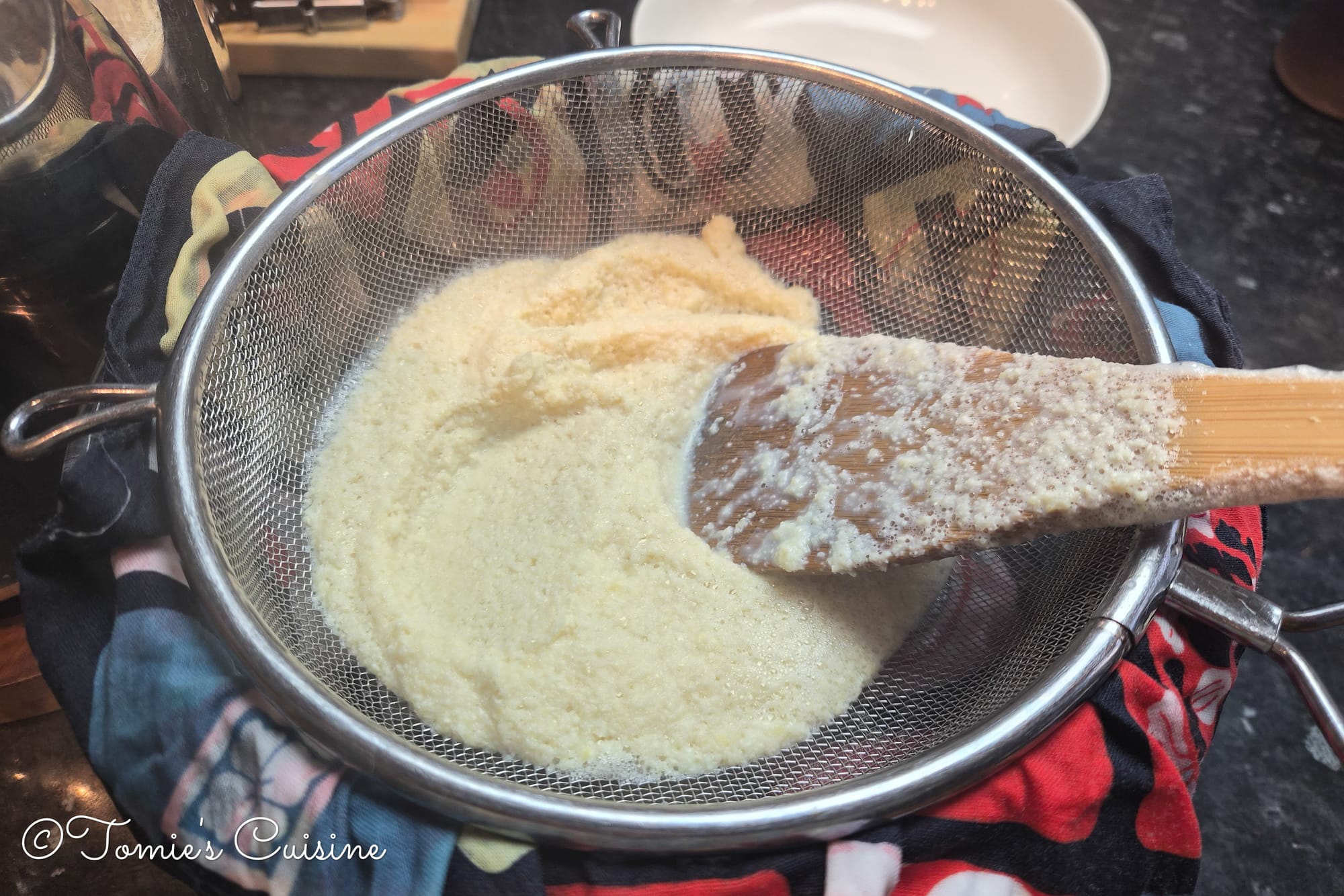
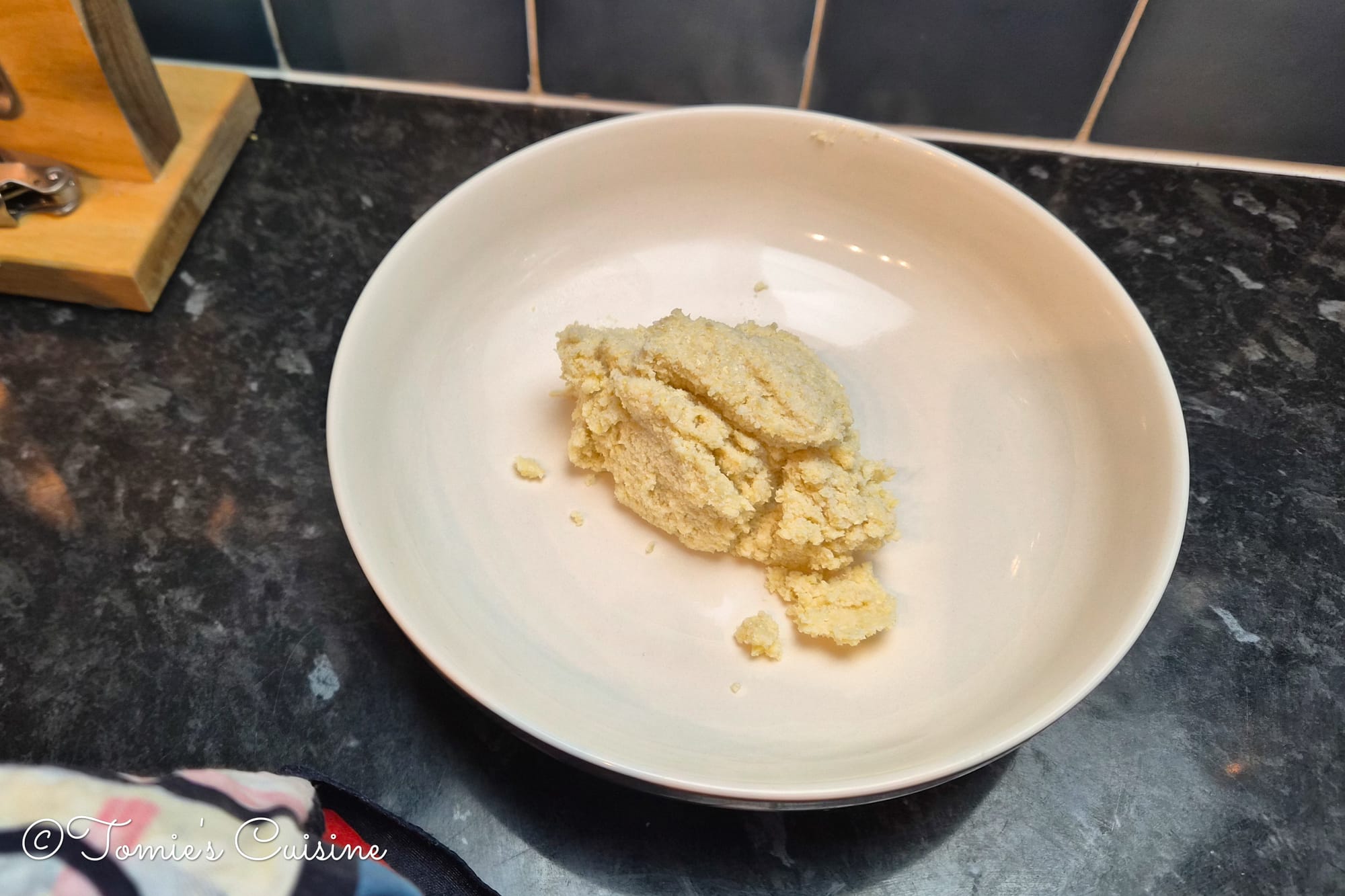
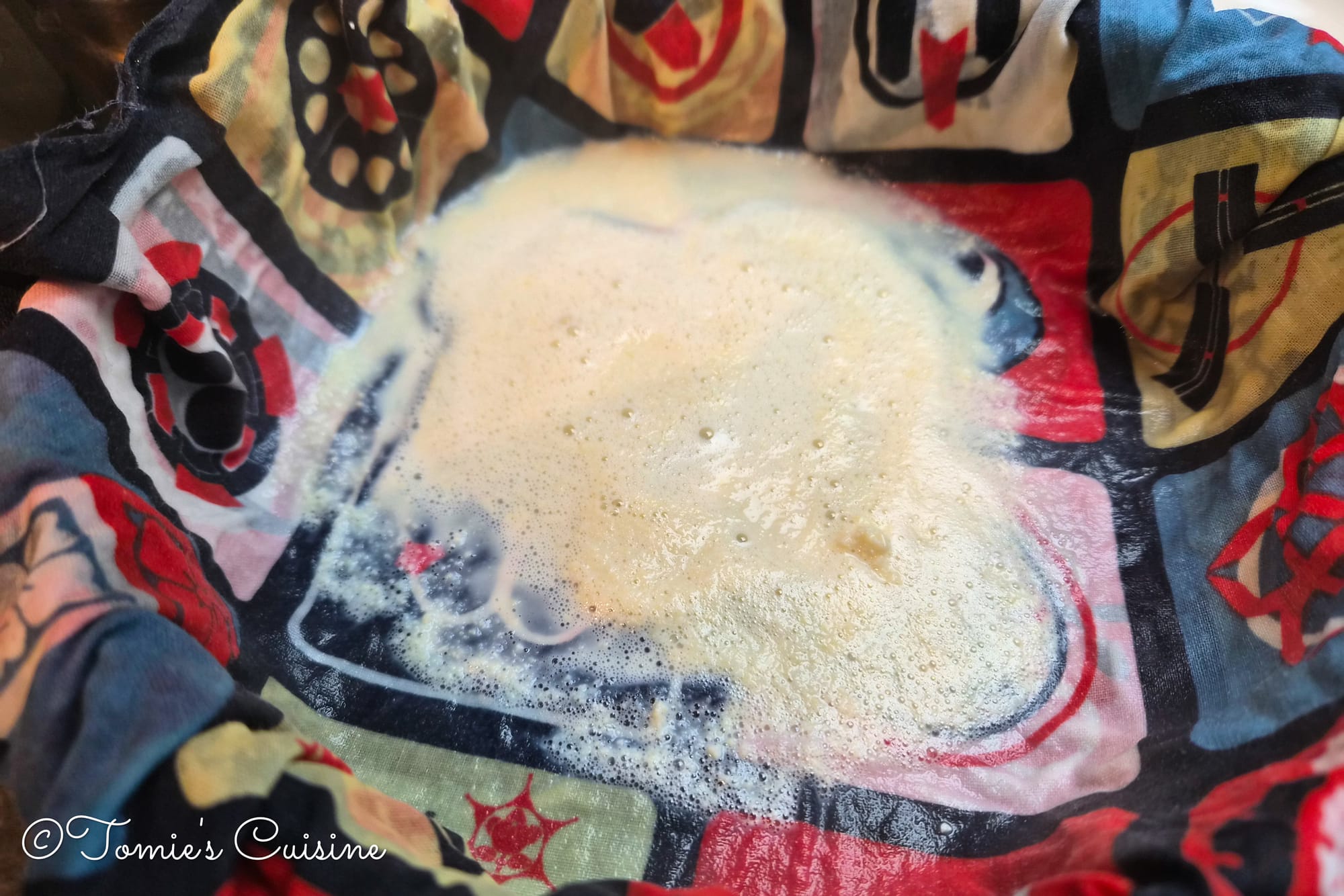
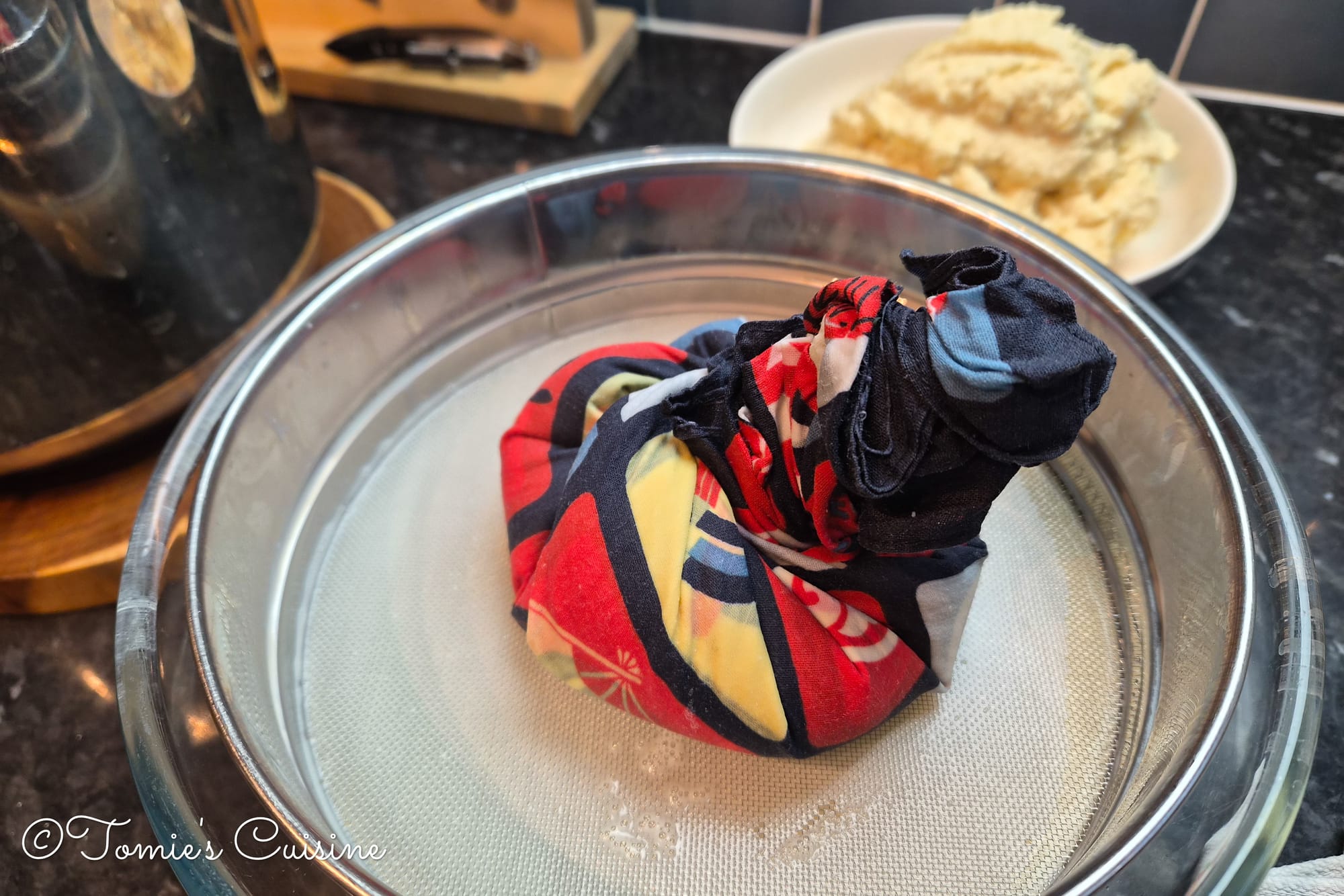
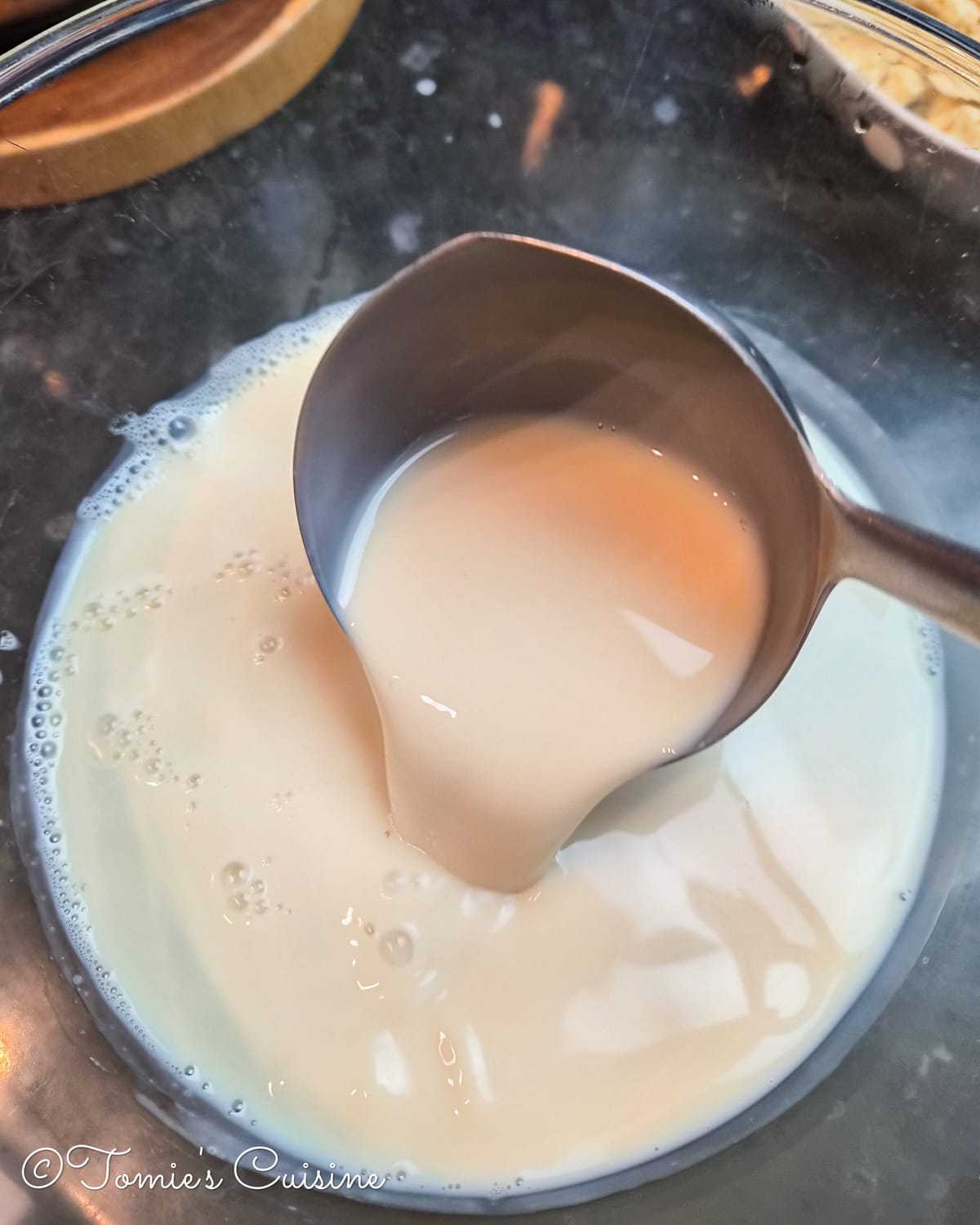
- Use a ladle to pour some of the cooked soya milk into the squeezing system and then squeeze with a spatula to extract the liquid. Transfer the remaining okara to the container prepared earlier. Repeat this process until you have squeezed out all the soya milk.
- Carefully pick up the tea towel to avoid letting any okara mix with the squeezed soya milk. If the mixture is too hot to handle, set it aside and squeeze it later.
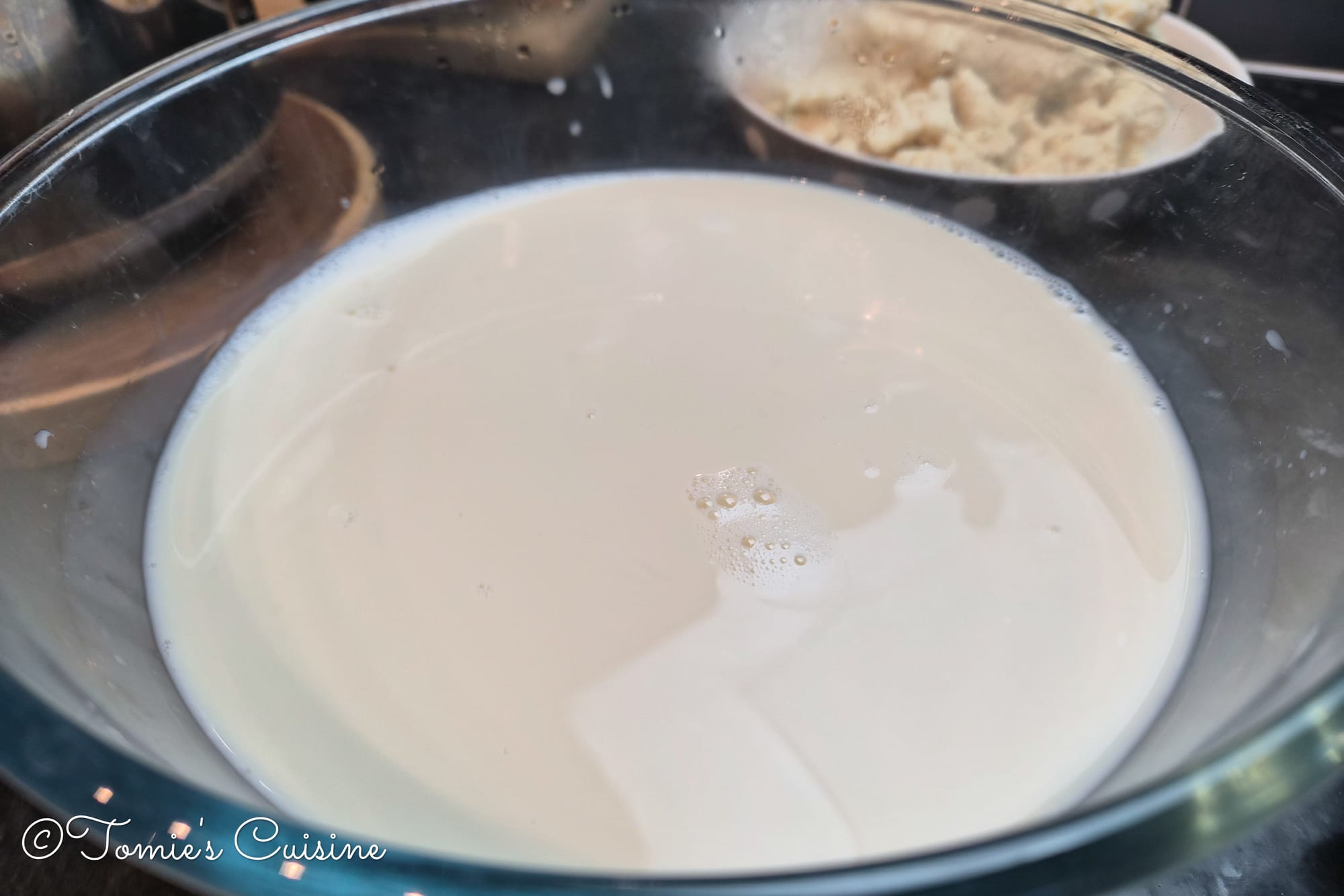
Now you have the liquid, the soya milk and the remaining soya bits, the okara.
It’s not “Barista” soya milk.
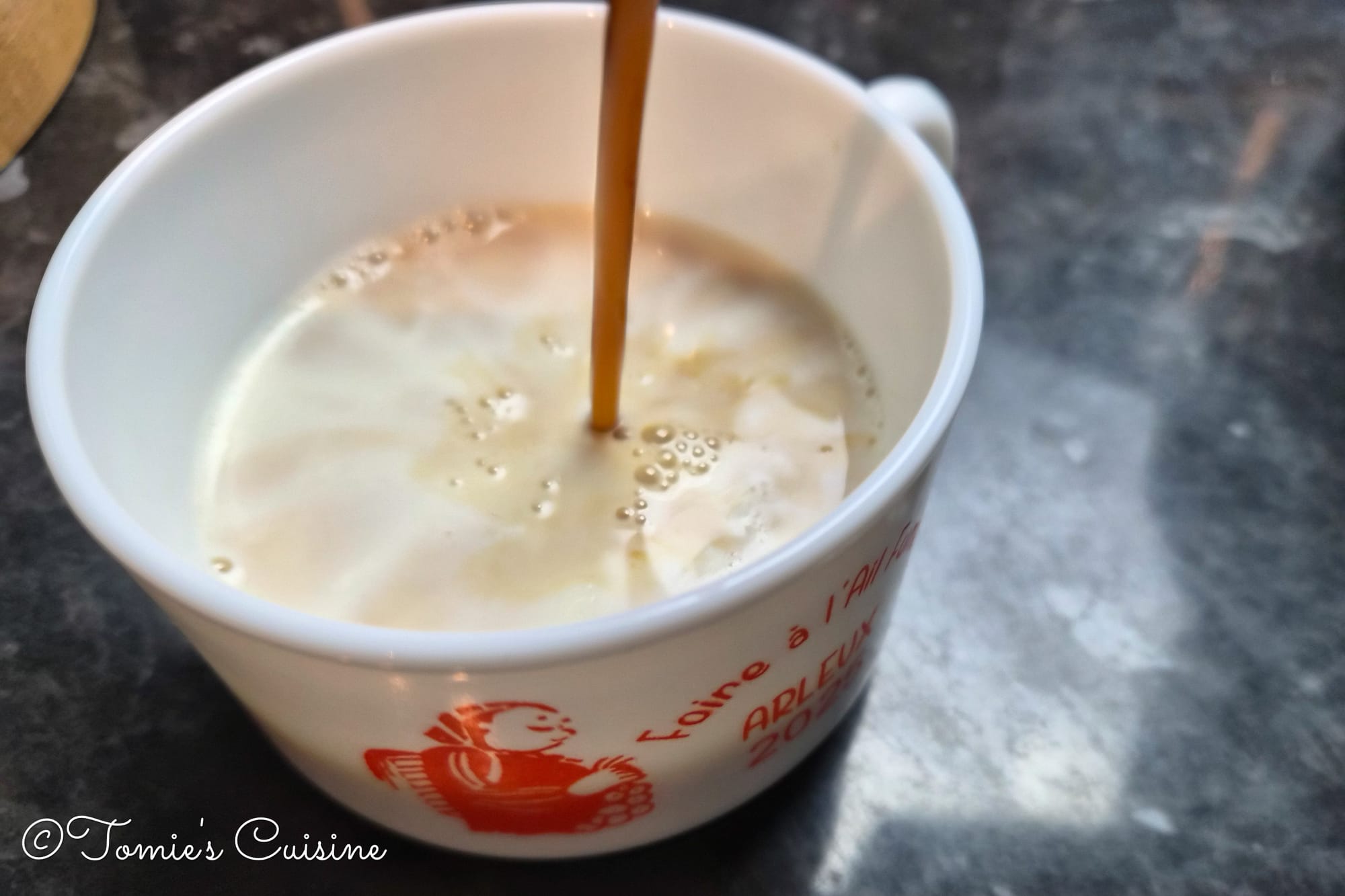
I have noticed that curdling can occur when I add cold soya milk from the fridge to hot tea or coffee. However, when I use soya milk I left at room temperature (made in the morning and cooled before refrigerating), it does not curdle when added to hot tea. It seems that temperature plays a significant role in whether soya milk curdles.
Adding soya milk to make a creamy soup
Adding soya milk to vegetable soup enhances its flavour and boosts its nutritional value. To prevent curdling, add the soya milk in the last few minutes of cooking, and be careful not to boil the soup.
I typically season my vegetable soup with homemade onion koji, and since I started using it, I haven't bought any soup stock! Adding soya milk gives the soup a creamy texture.
Give our recipes for Jerusalem artichoke soup and mushroom soup a try by substituting oat milk for your fresh soya milk!
Closing words
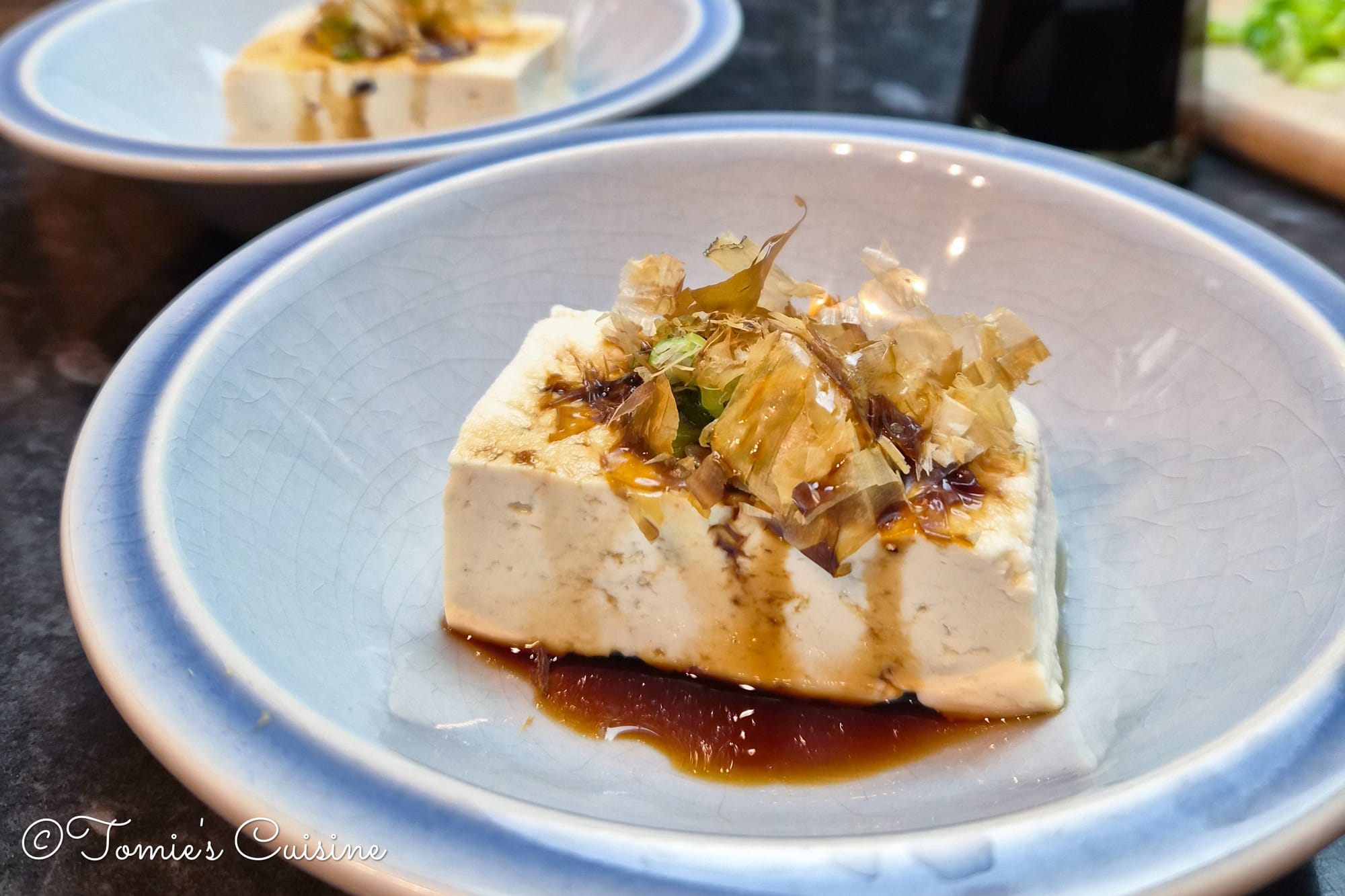
Enjoy our delicious homemade soya milk recipe! We hope it helps you stay healthy and warm. In our next article, we will also cover how to make tofu using your (freshly made) homemade soya milk. You'll see that it's both delicious and easy to prepare.
Follow us on Instagram, Pinterest, and Facebook, and be sure to subscribe to our newsletter so you don’t miss any of our future blog posts!