Nakasendo Day 9/19 (Part 2): Nakatsugawa to Magome, Gifu
he second half of Day 9: from Nakatsugawa past chestnut sweets and a hidden water koto cave to Ochiai, up the old stone-paved path through the forest, and into Magome, where we slept in a classroom.
As an Amazon Associate we earn from qualifying purchases. Hotel links to Booking.com are affiliate links: if you book, we may earn a small commission at no extra cost to you.
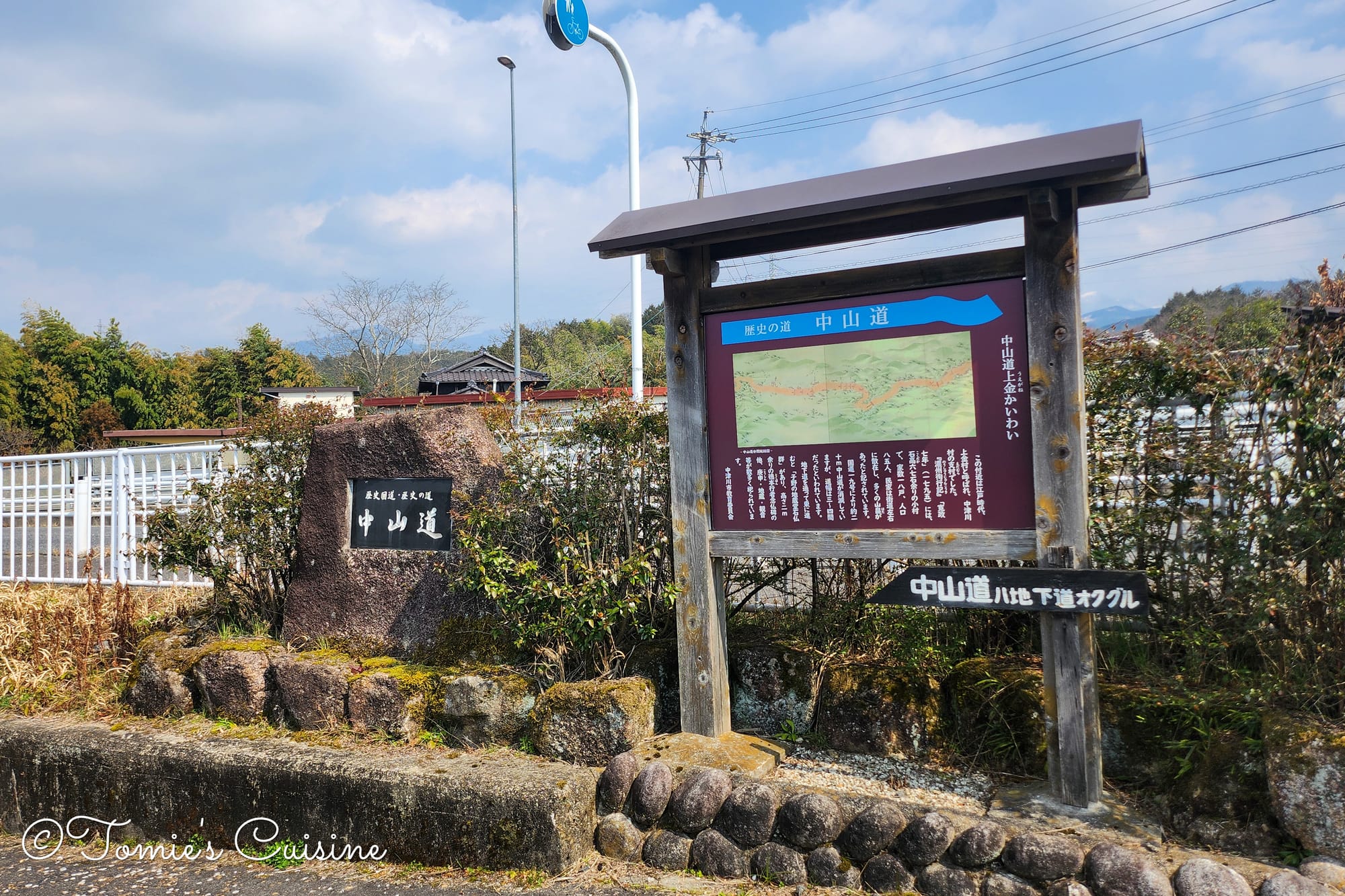
Day 9 was long, so we split it into two. In Part 1, we walked from Ooi to Nakatsugawa, had keichan for lunch and bought chestnut sweets. Part 2 starts at the end of Nakatsugawa post town and climbs through Ochiai post town, then up the stone-paved path over the pass to Magome post town (馬籠宿), our first stop in the Kiso Valley and our bed for the night in an old school.
Post towns covered in Part 2: Nakatsugawa (中津川宿) → Ochiai (落合宿) → Magome (馬籠宿)
🛅
What should I do with my luggage in Nakatsugawa before hiking? If you are travelling elsewhere and want to complete this short hike from Nakatsugawa to Magome, luggage delivery services are available. A luggage transfer service used to run at Nakatsugawa Nigiwai Plaza for 800 JPY per bag, but it is currently suspended, with no word on when it will reopen. Another option we found is NLTS (Nakasendo Luggage Transfer Service). While a reservation is required, they offer both English and Japanese websites where you can request a quote. For example, we ran a test quote before publishing this article to transfer from Nakatsugawa to Magome, and it came to 4,000 JPY for two pieces of luggage.
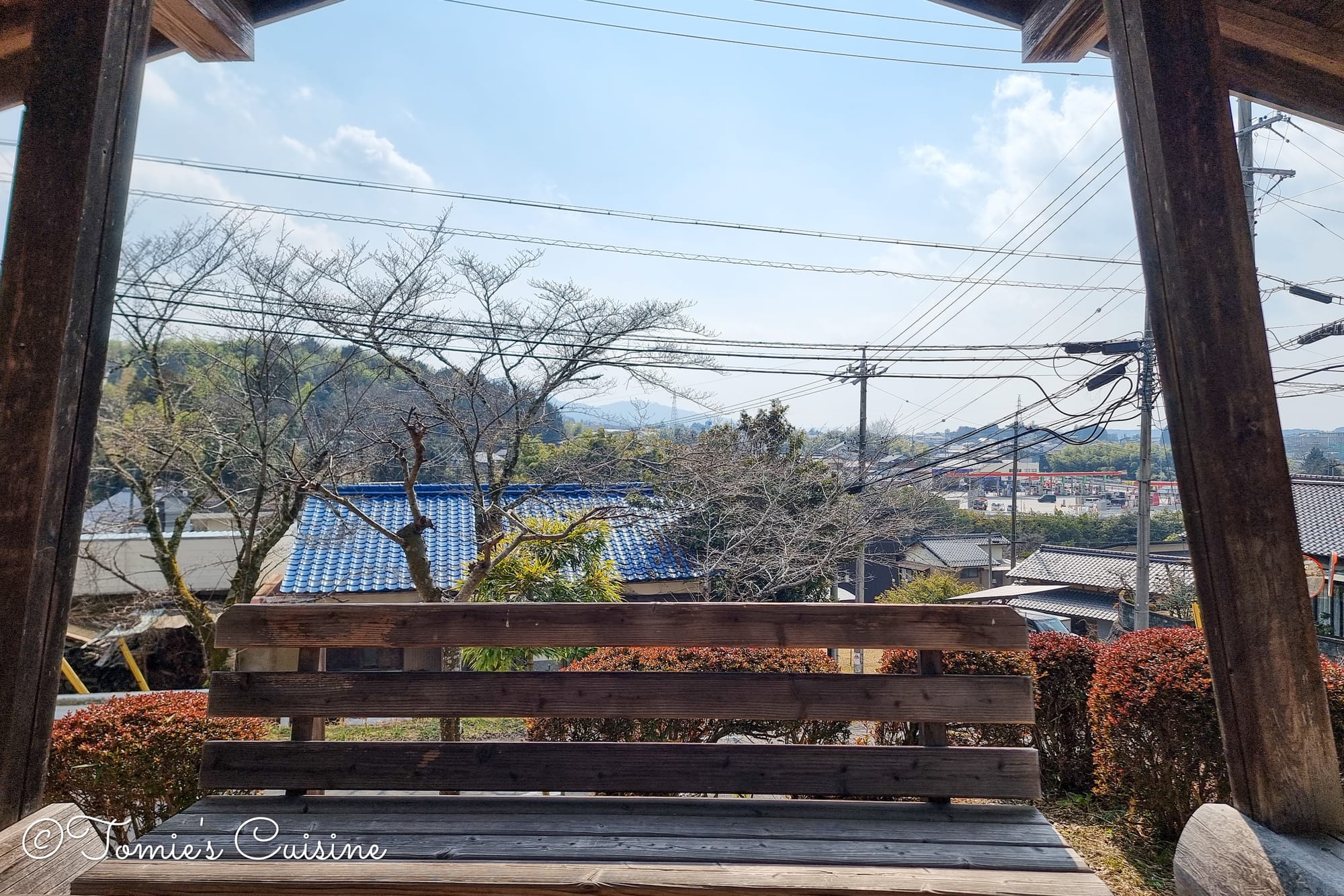
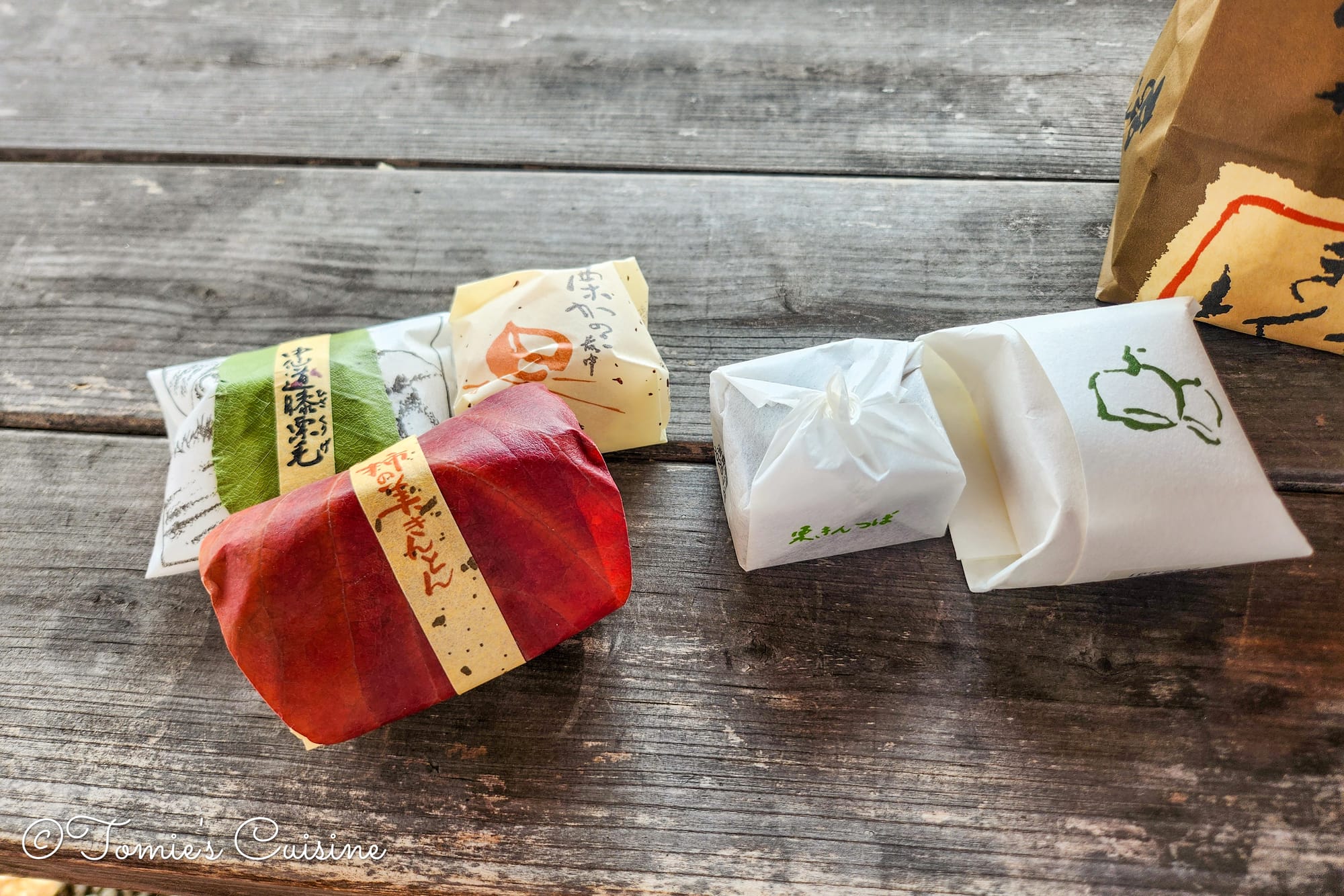
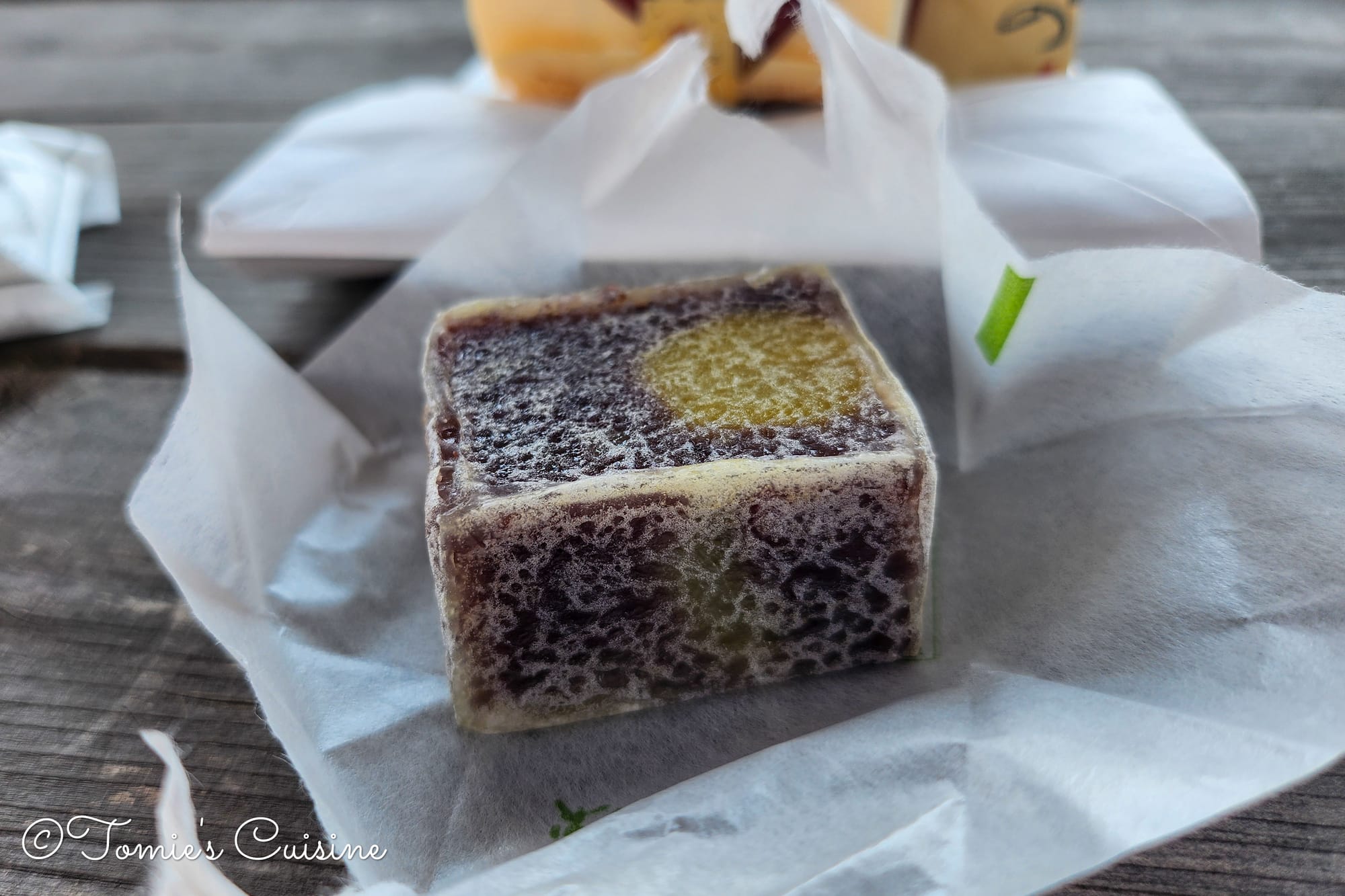
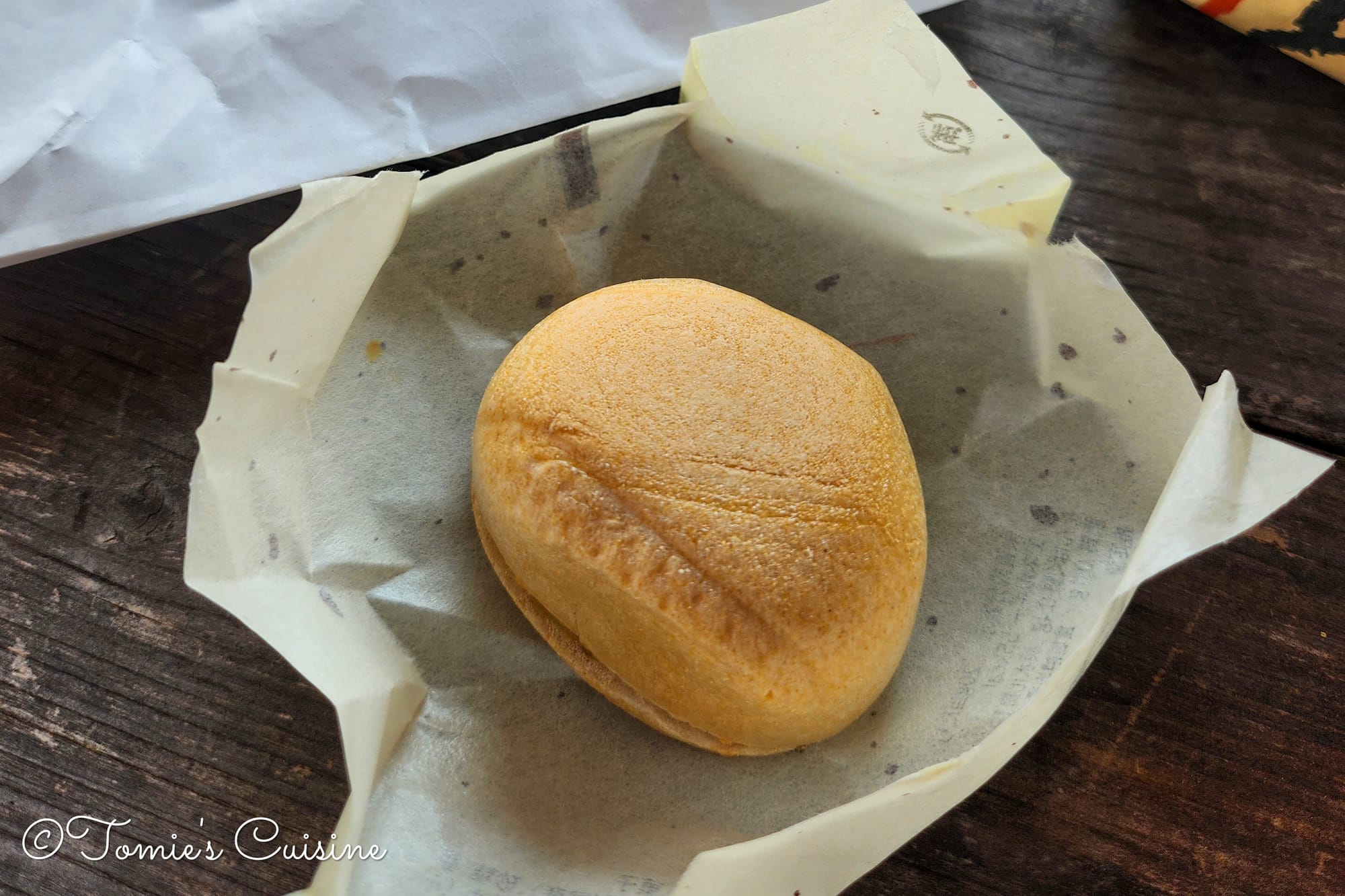
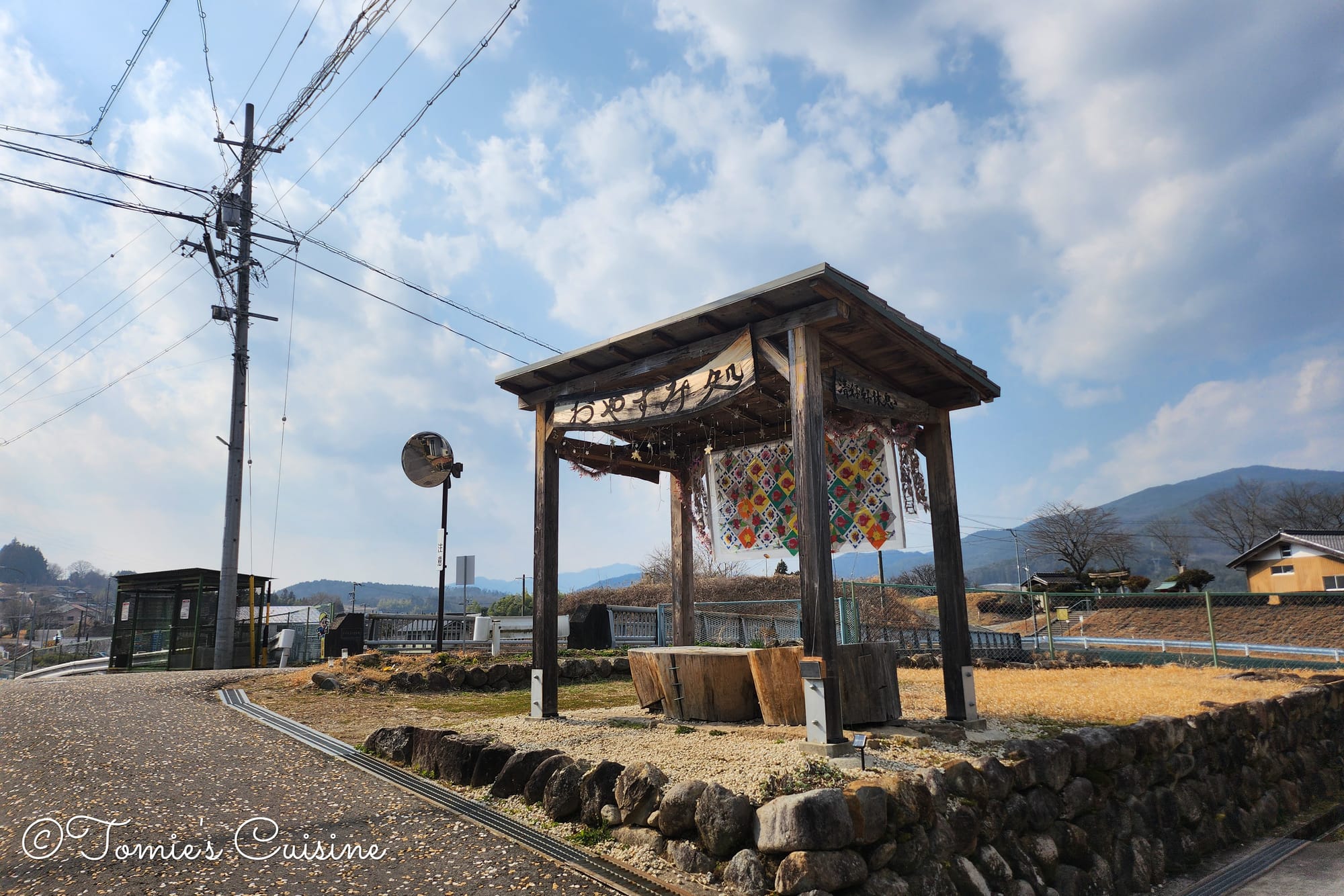
We haven’t walked much, but we found a resting area with a toilet and a table with a view, so we stopped before heading to Ochiai post town. Since we bought these beautiful sweets from Kawakamiya and Suya, let’s try some. We tried the chestnut Kintsuba from Suya and chestnut kanoko Monaka from Kawakamiya. They were delicious and beautiful. We wish we could go back during the chestnut season and try everything they have!
Meeting a lovely hiker couple
As we were preparing to leave, a couple arrived, and we had a brief chat. They were visiting from Kagawa Prefecture and were walking from Tsumago on that day. When we told them we were travelling the Nakasendo from Kyoto to Tokyo, they recommended another route in Japan, such as the Shikoku Pilgrimage (お遍路さん), which takes up to 2 months to complete! They were a lovely couple, and it was great to hear about their hiking experience.
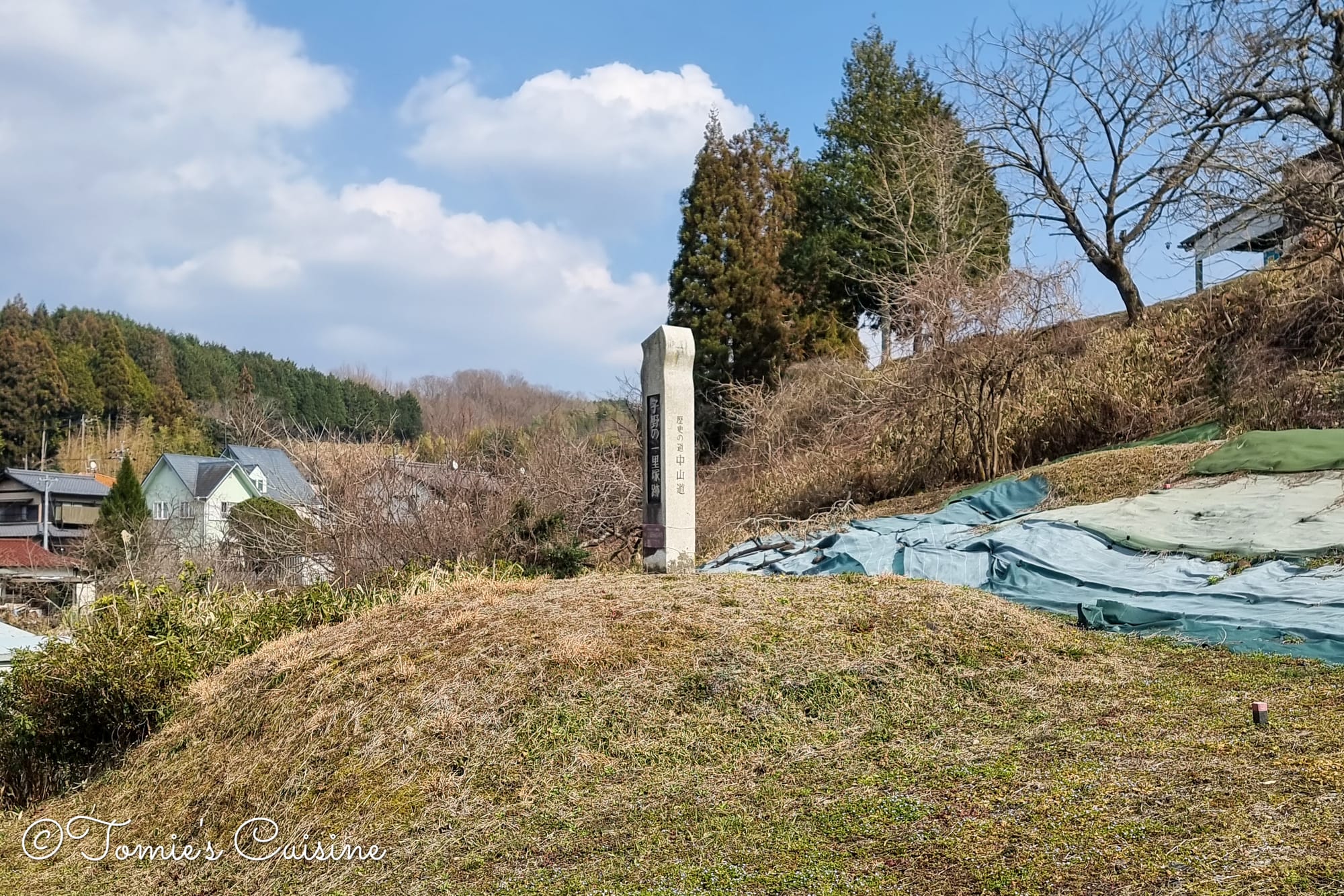
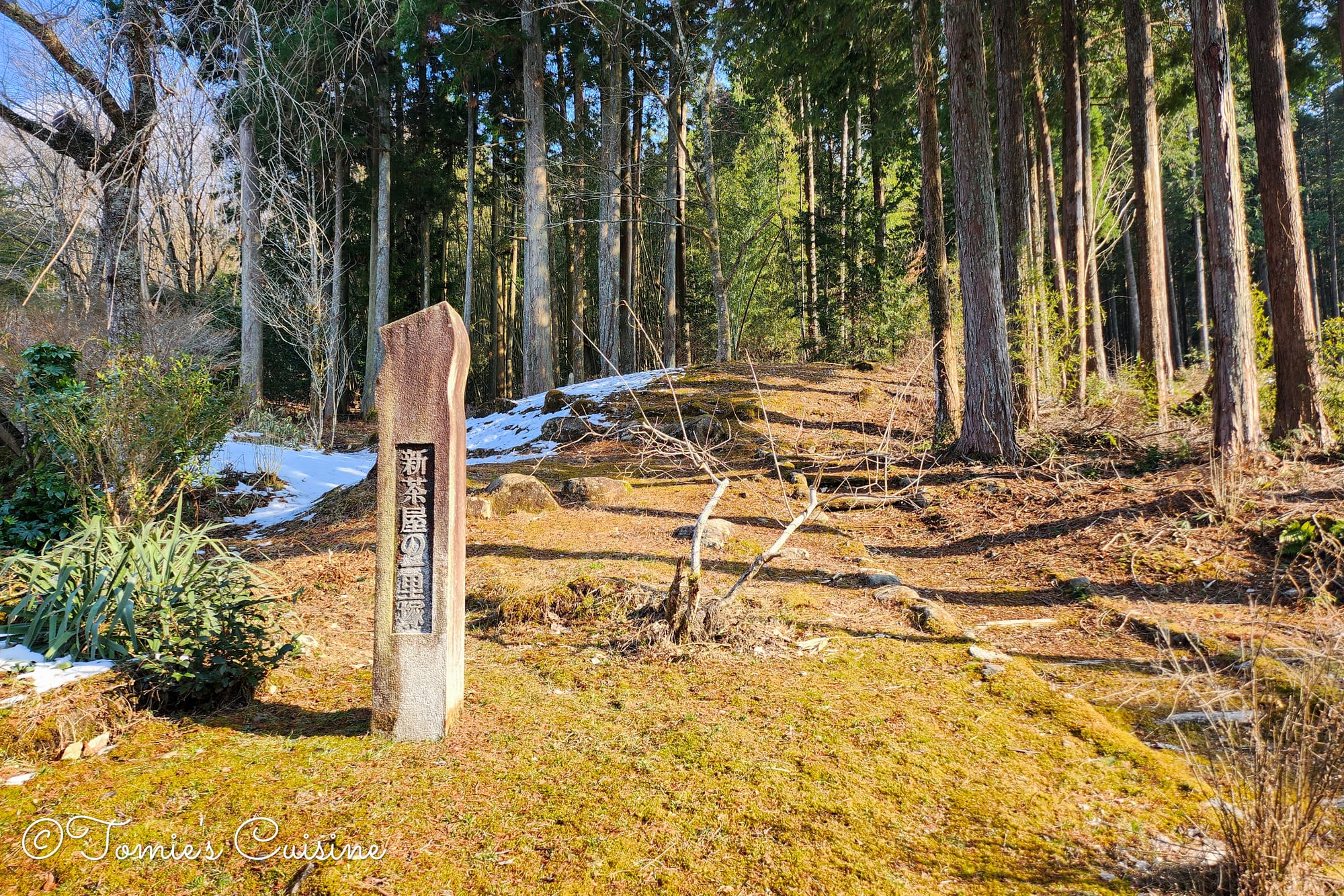
2:20 pm Kono Ichirizuka Milestone ruin (子野一里塚跡)
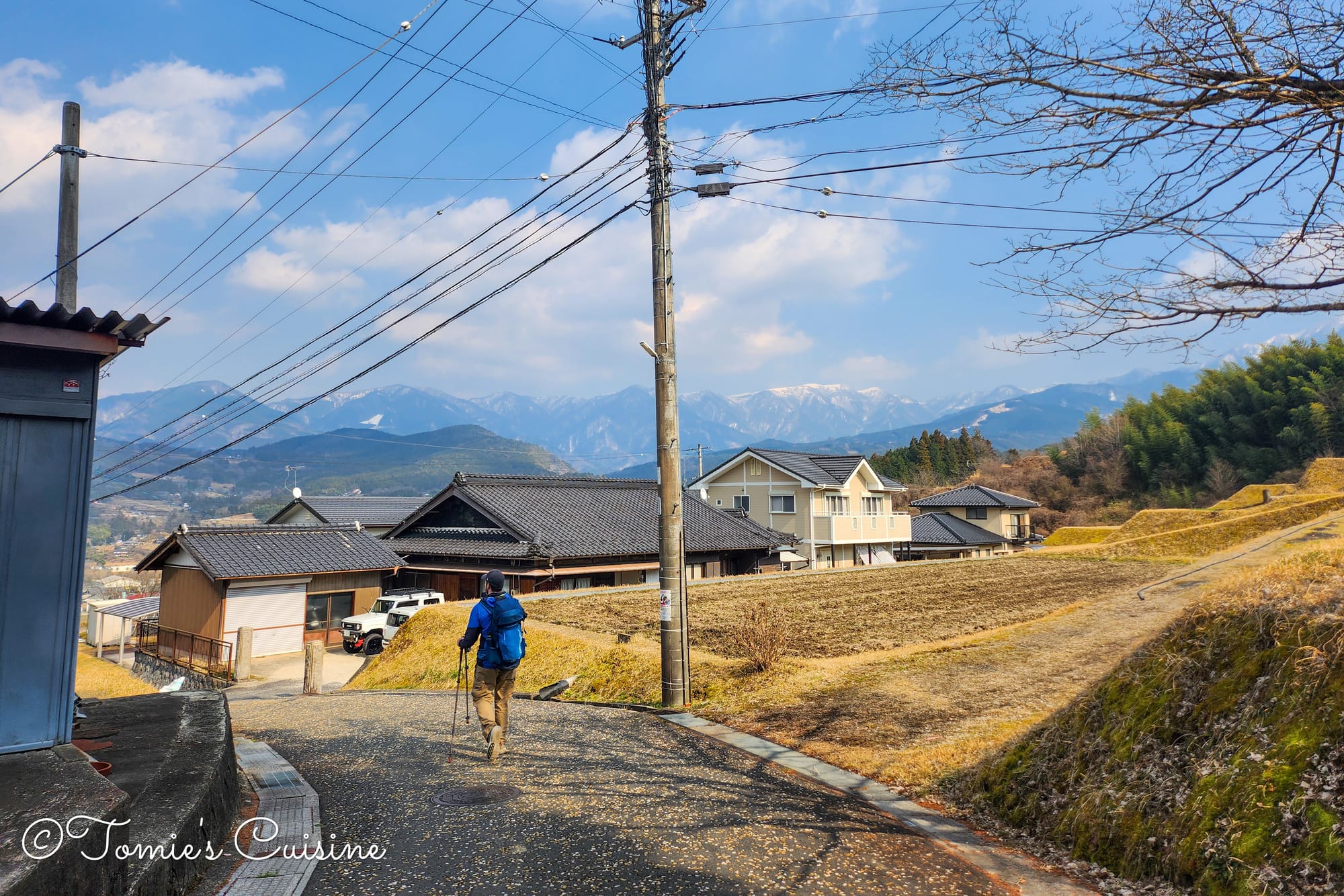
Going up the hill towards Ochiai
The slope around here was quite steep. Kevin didn’t wait for me, and I was trying my best to walk as fast as I could, but it was pretty steep! As we walked up the slope, I met a lady coming down. She seemed like she was from the neighbourhood and asked if we were walking to Magome. She also told me about her granddaughter, who married an Australian and misses her because she can’t see or talk to her often. I told her about a video call. She told me there is a cafe at the top of the slope where we can rest. I was like, “awwww”, because she was very sweet to me, too! I hope her granddaughter visits her soon.
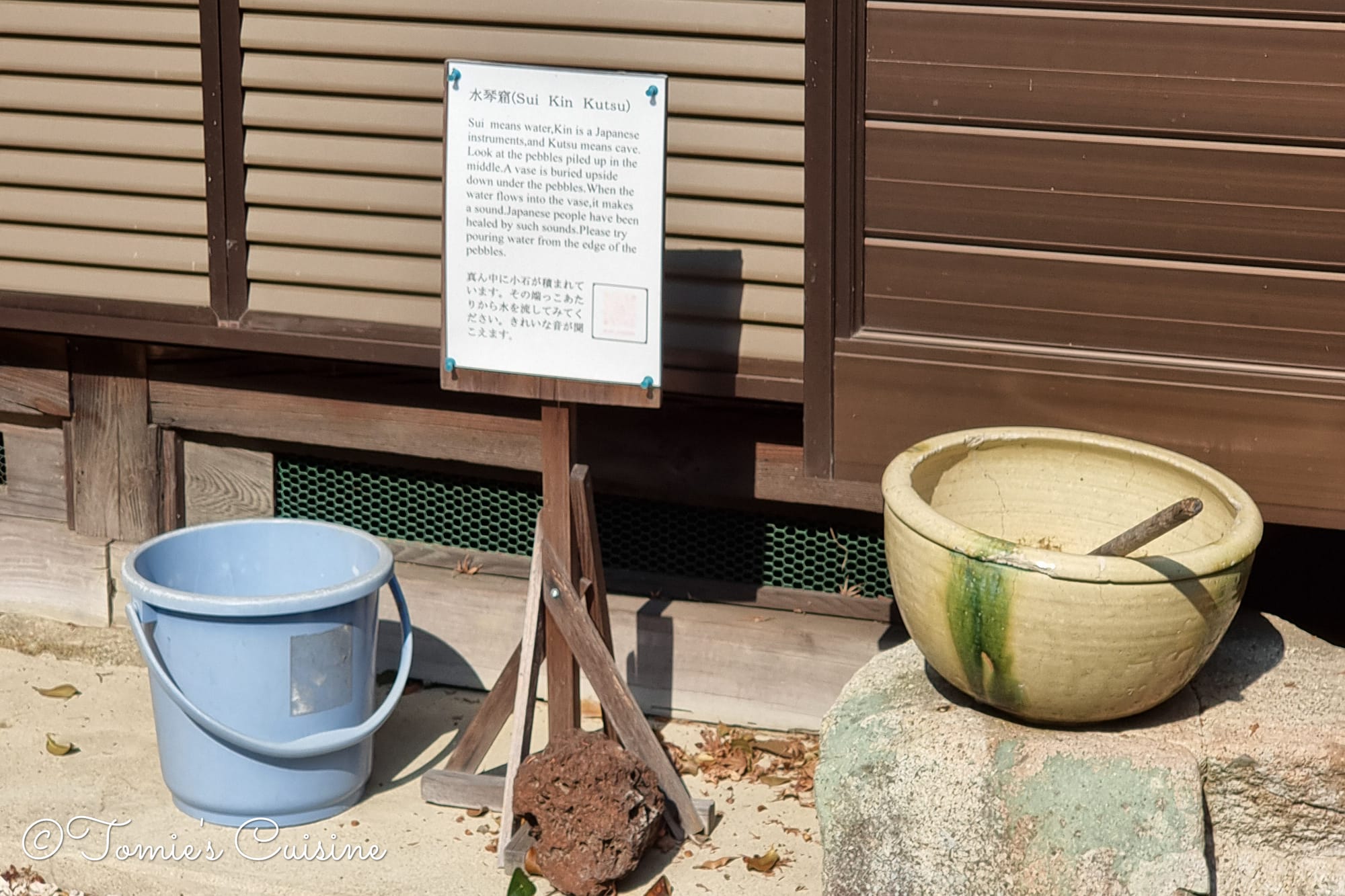
Suikinkutsu (水琴窟), a water koto cave, 2:30 pm
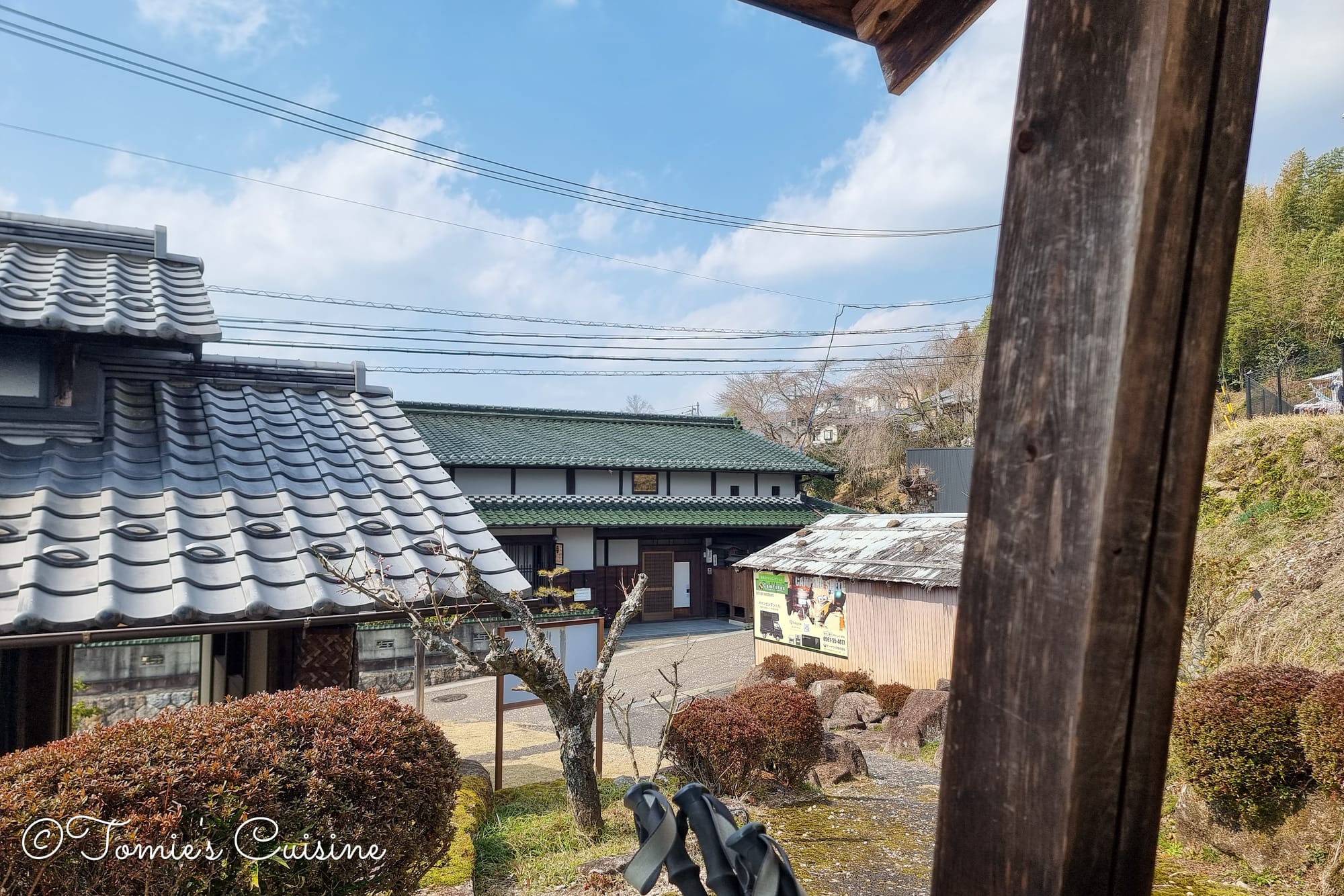
At the top of the hill, there is a building with a cafe that the lady told me about earlier. Then I saw Kevin talking with two ladies. Apparently they came to the cafe and the Suikinkutsu, which is located in the garden right next to the cafe, but the cafe was closed. So they told us where the Suikinkutsu is and went to see it together. We tried to listen to the sound together but couldn’t hear much. If they hadn’t been there and spoken to Kevin about it, we wouldn’t have known! We thanked them, and we both left the cafe.
🎶
A Suikinkutsu is a traditional Japanese garden ornament that creates a beautiful, musical sound. It consists of an upside-down ceramic pot buried underground beneath a stone water basin. When water drips down through a small hole at the top of the pot, it splashes into a small puddle inside, creating a resonant, echoing sound like a bell or a harp. People invented it during the Edo period to bring a sense of tranquillity and elegant sound to Japanese gardens.
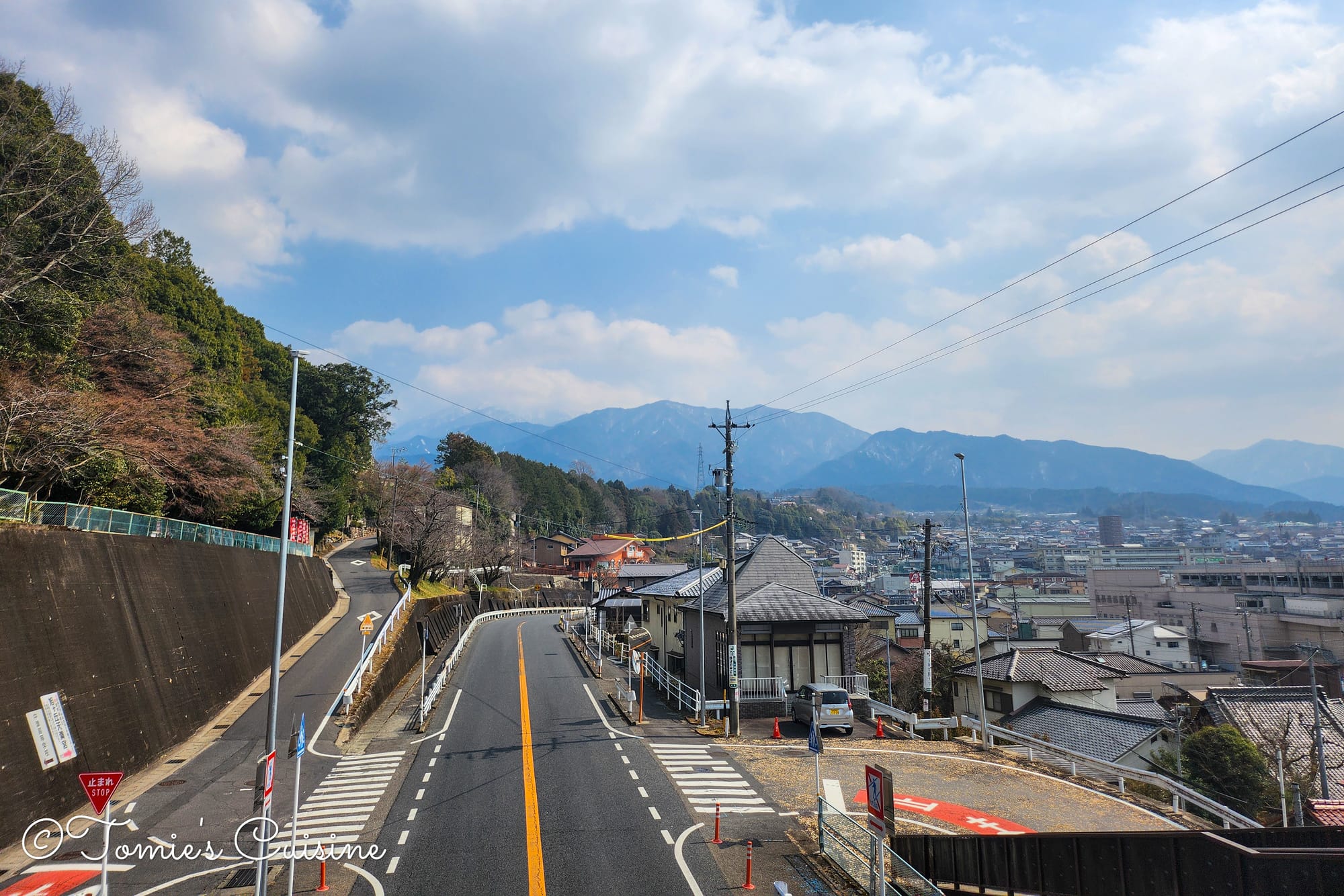
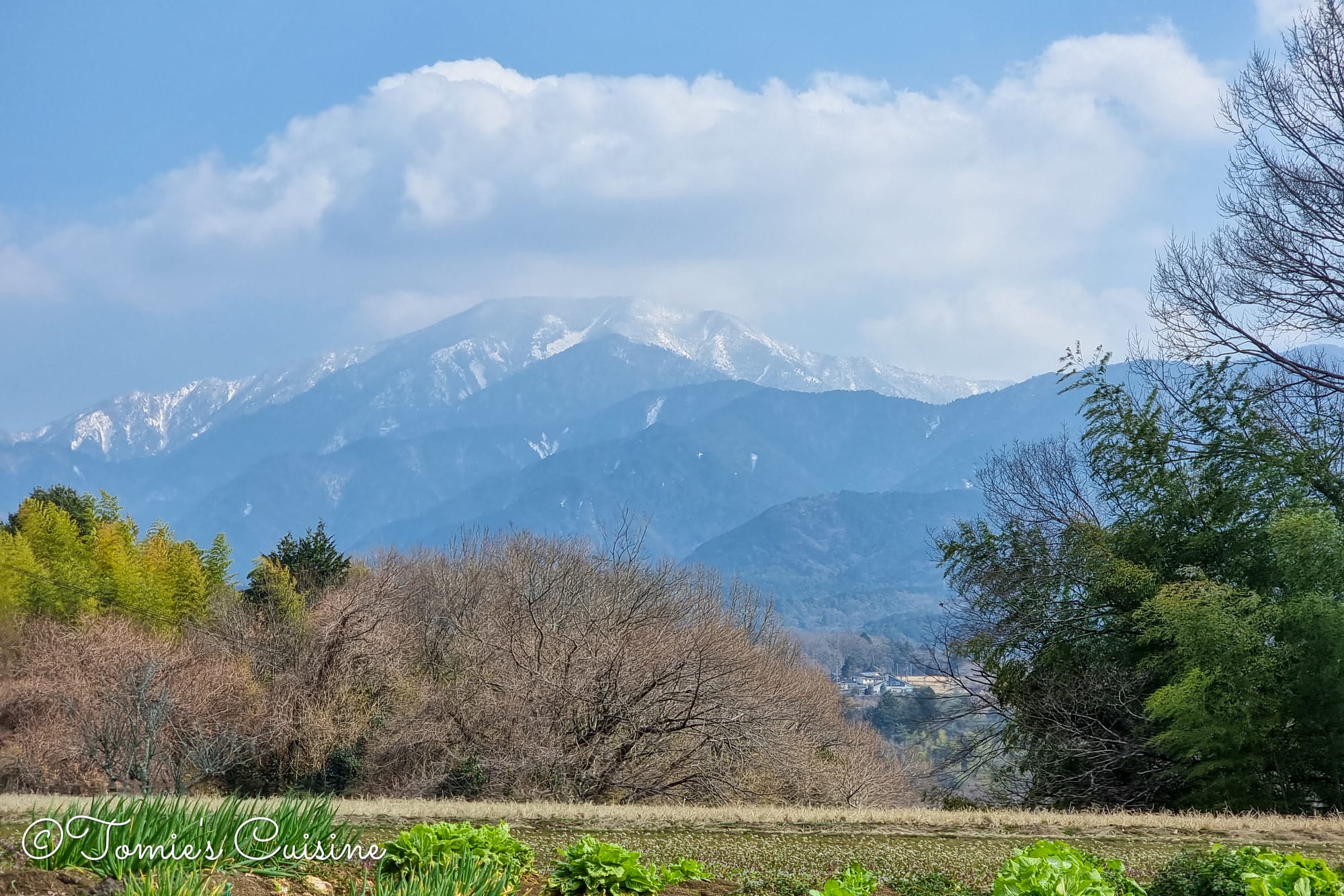
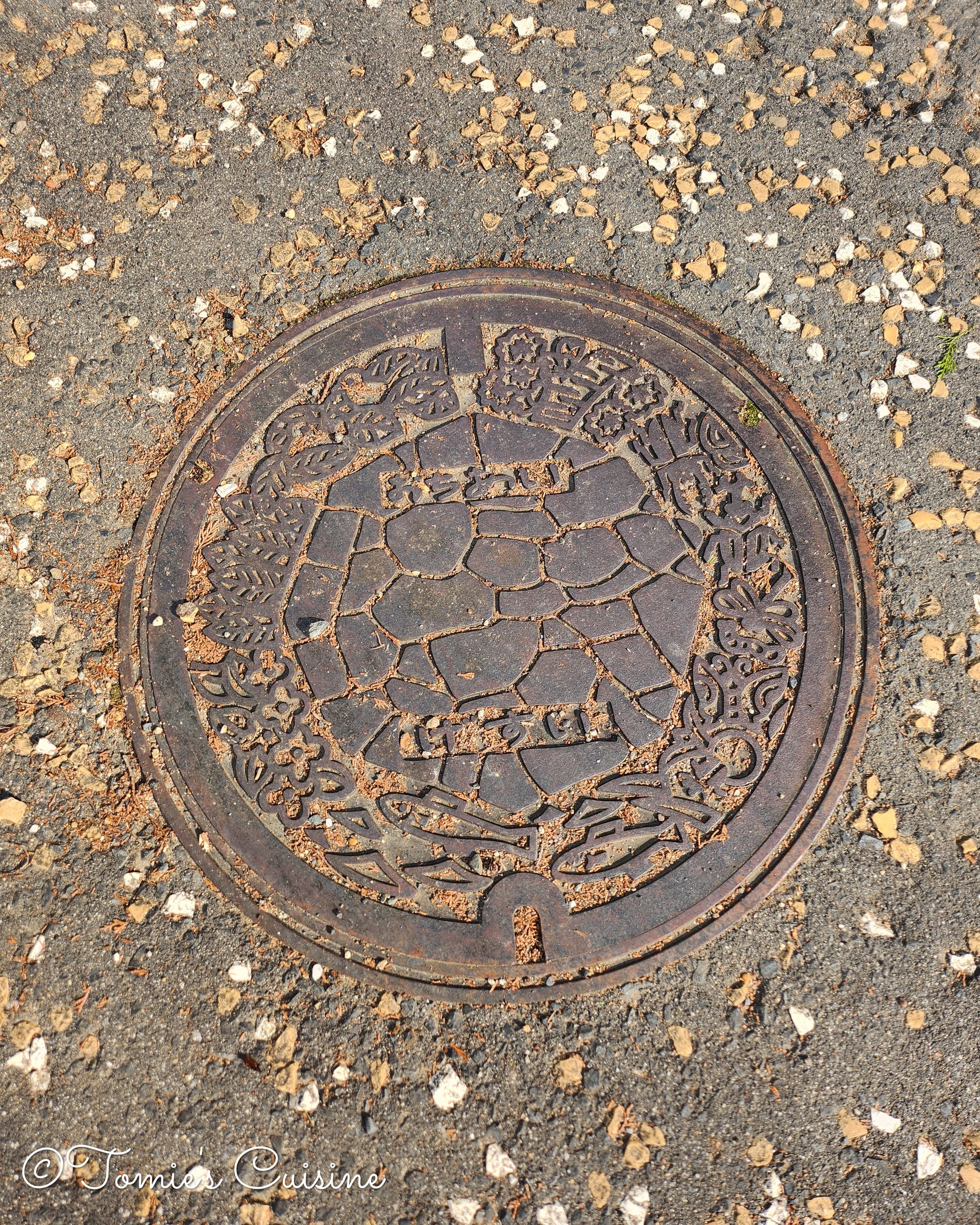
Going down the slopeBeautiful view of the mountains.A utility hole with Ochiai local design.
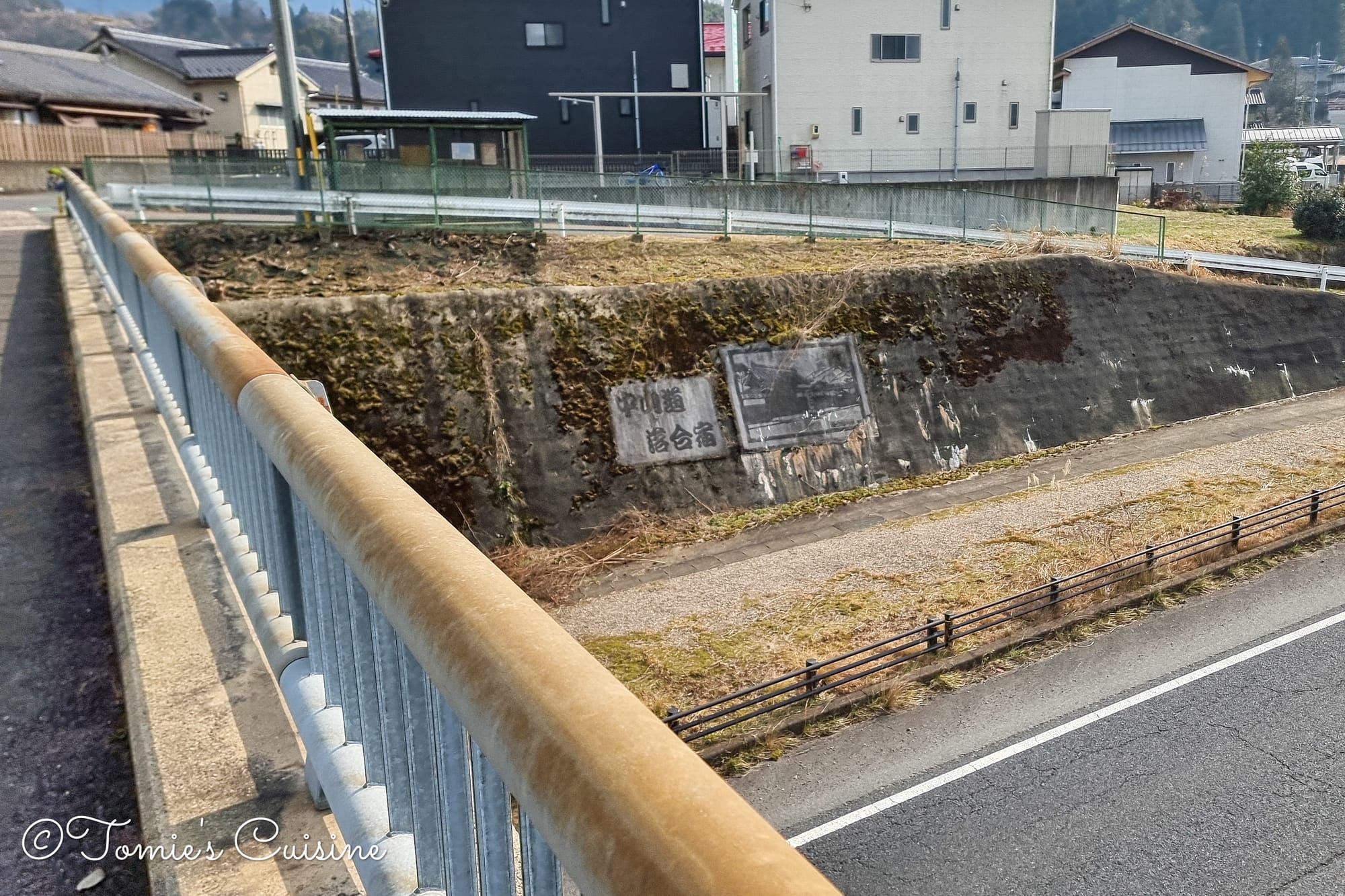
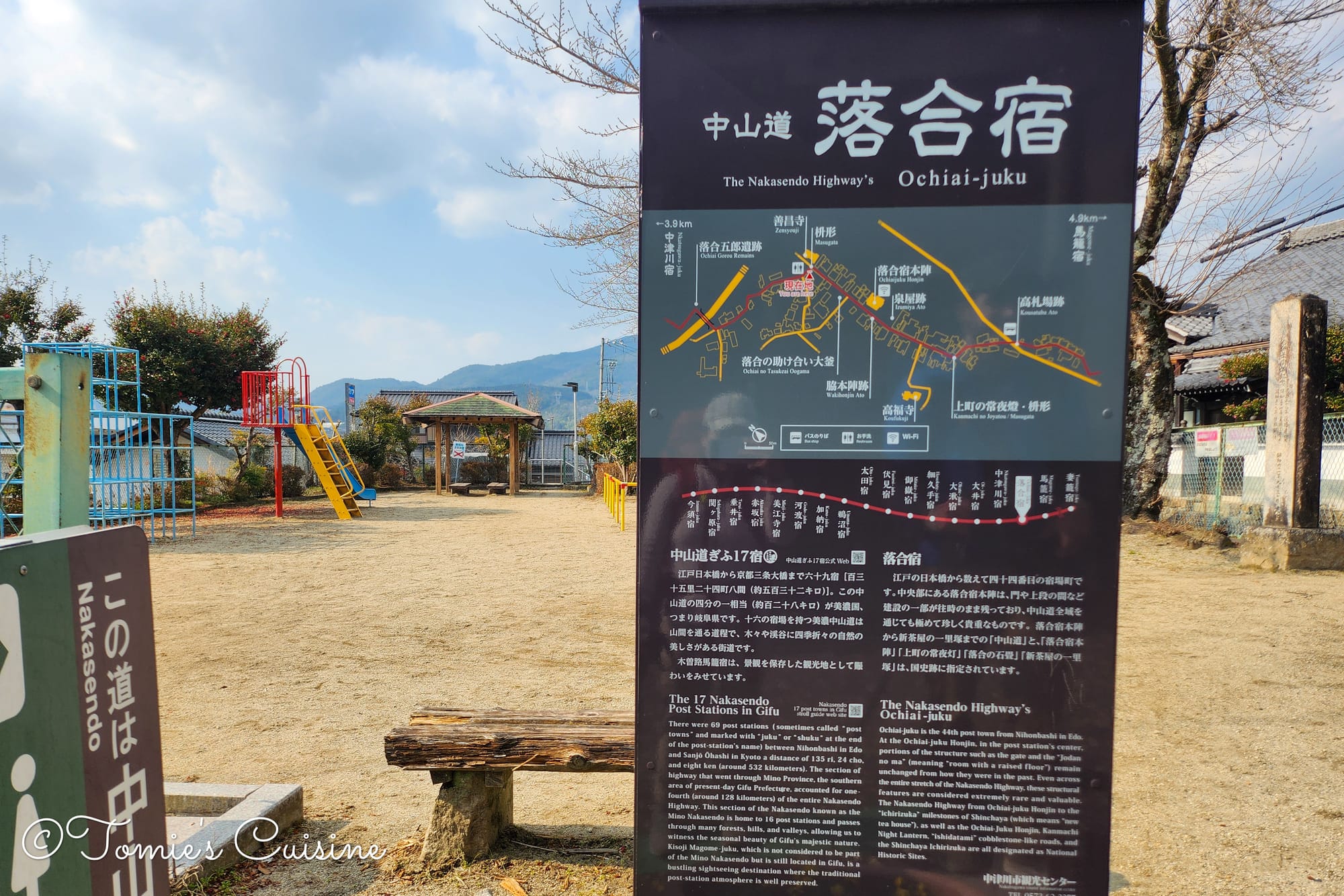
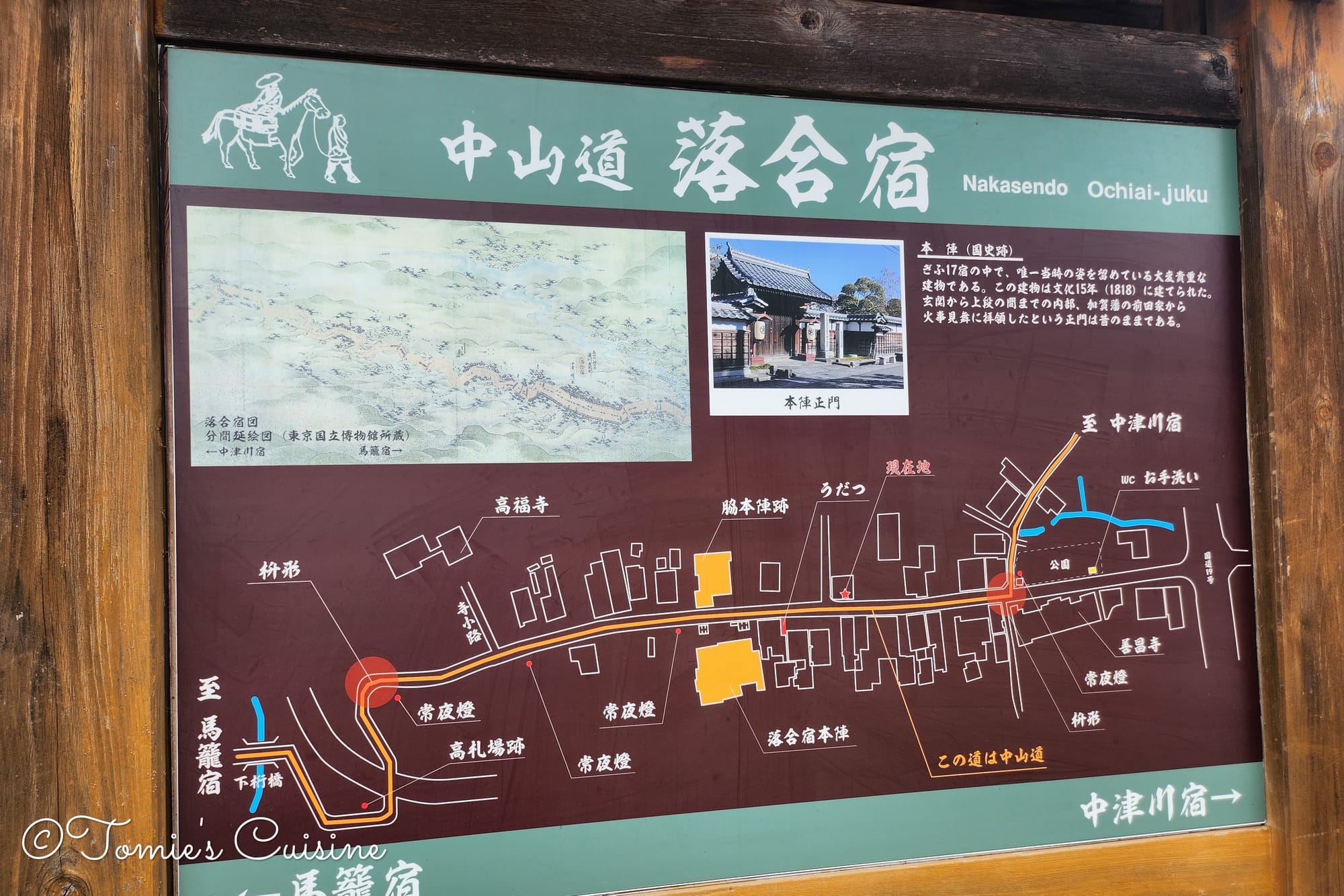
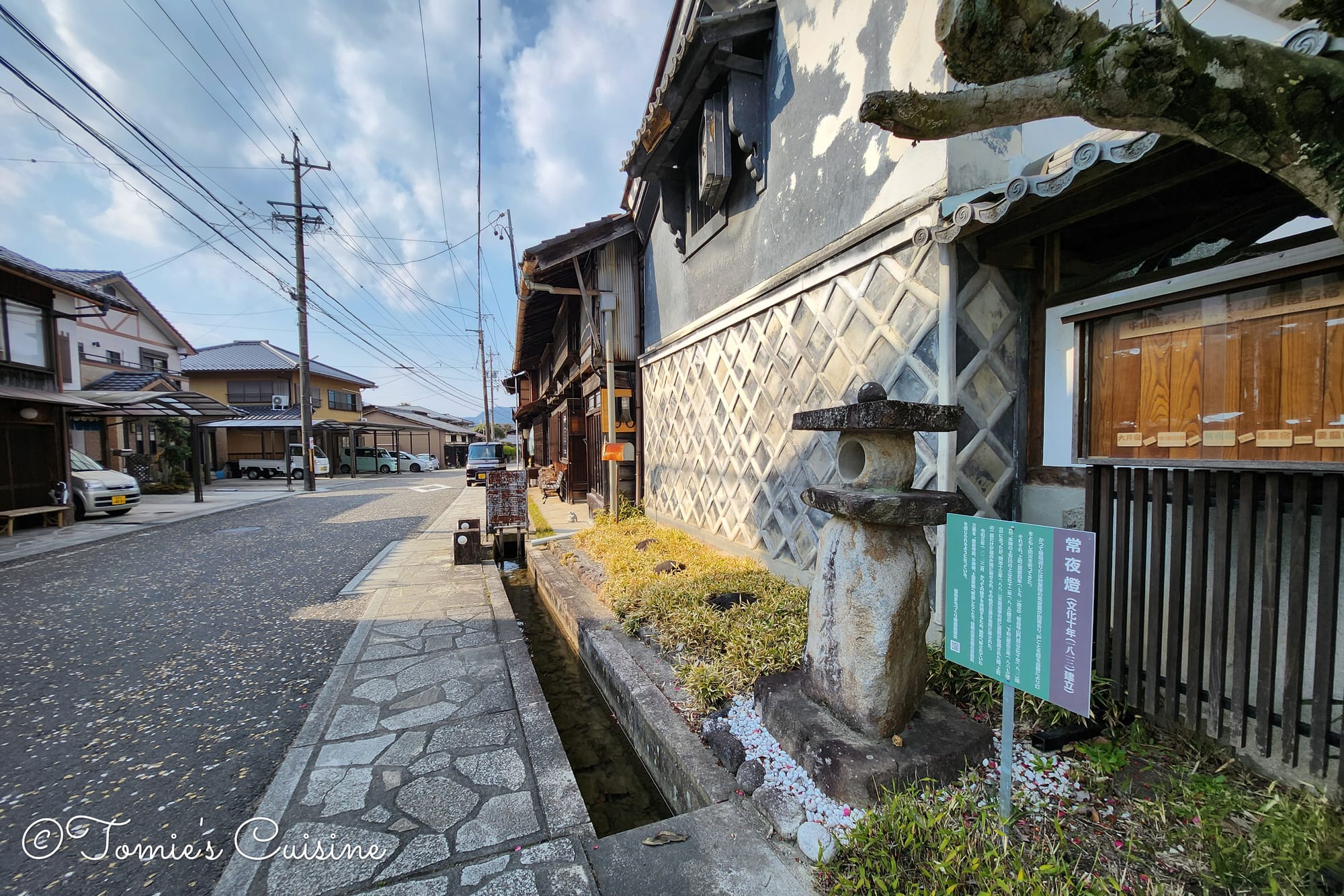
Ochiai post town (落合宿), 2:45 pm
Small cute resting area
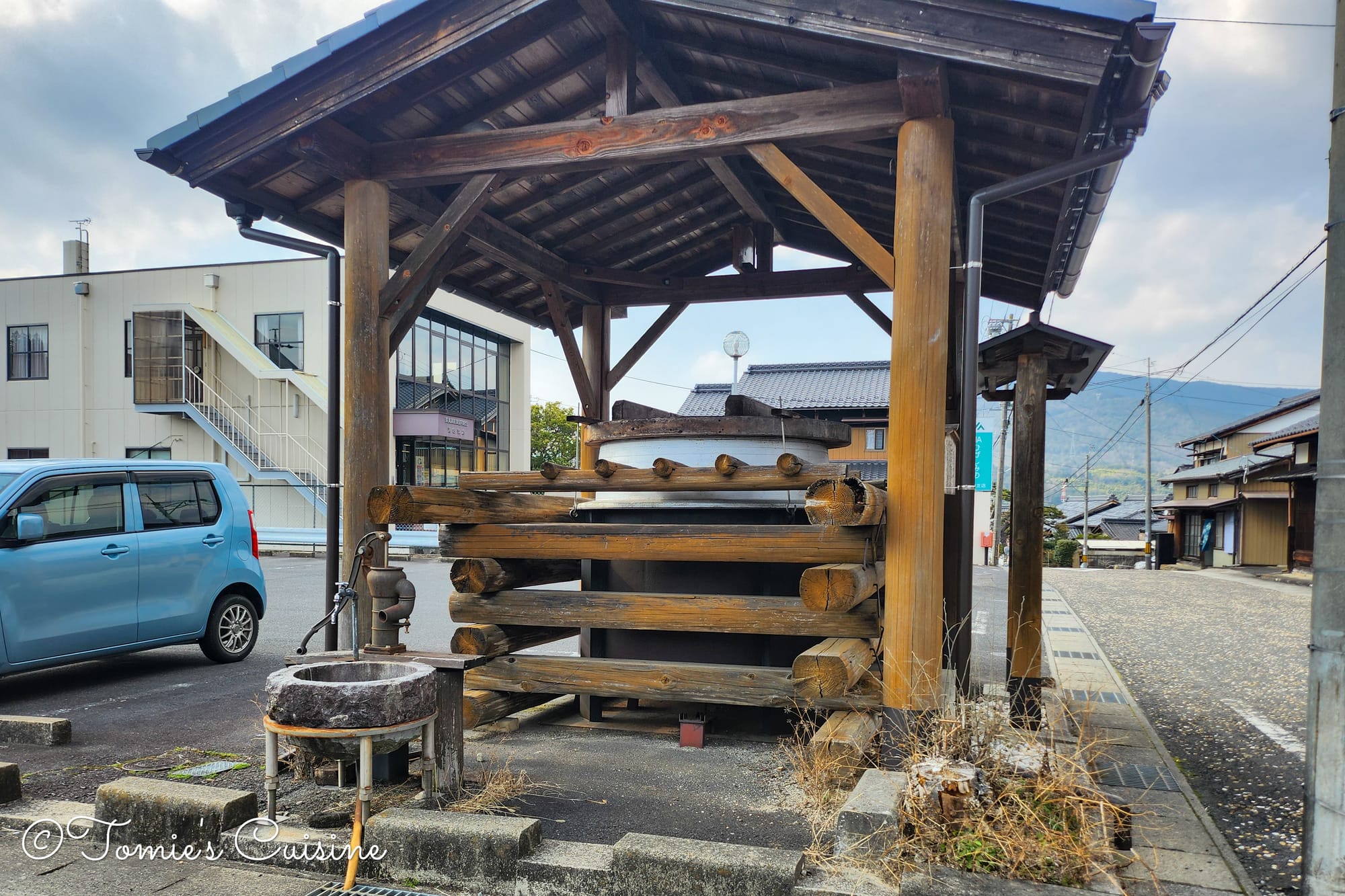
The Large Cauldron at Ochiai-juku (落合宿助け合い大釜), 2:50 pm
The “Nakasendo Ochiai post town festival (中山道落合宿まつり)” takes place every November. From 2003 to 2019, they used this big pot to make mushroom soup for visitors during the festival. They no longer use this cauldron, but they keep it in the middle of the post town as a symbol of welcome.
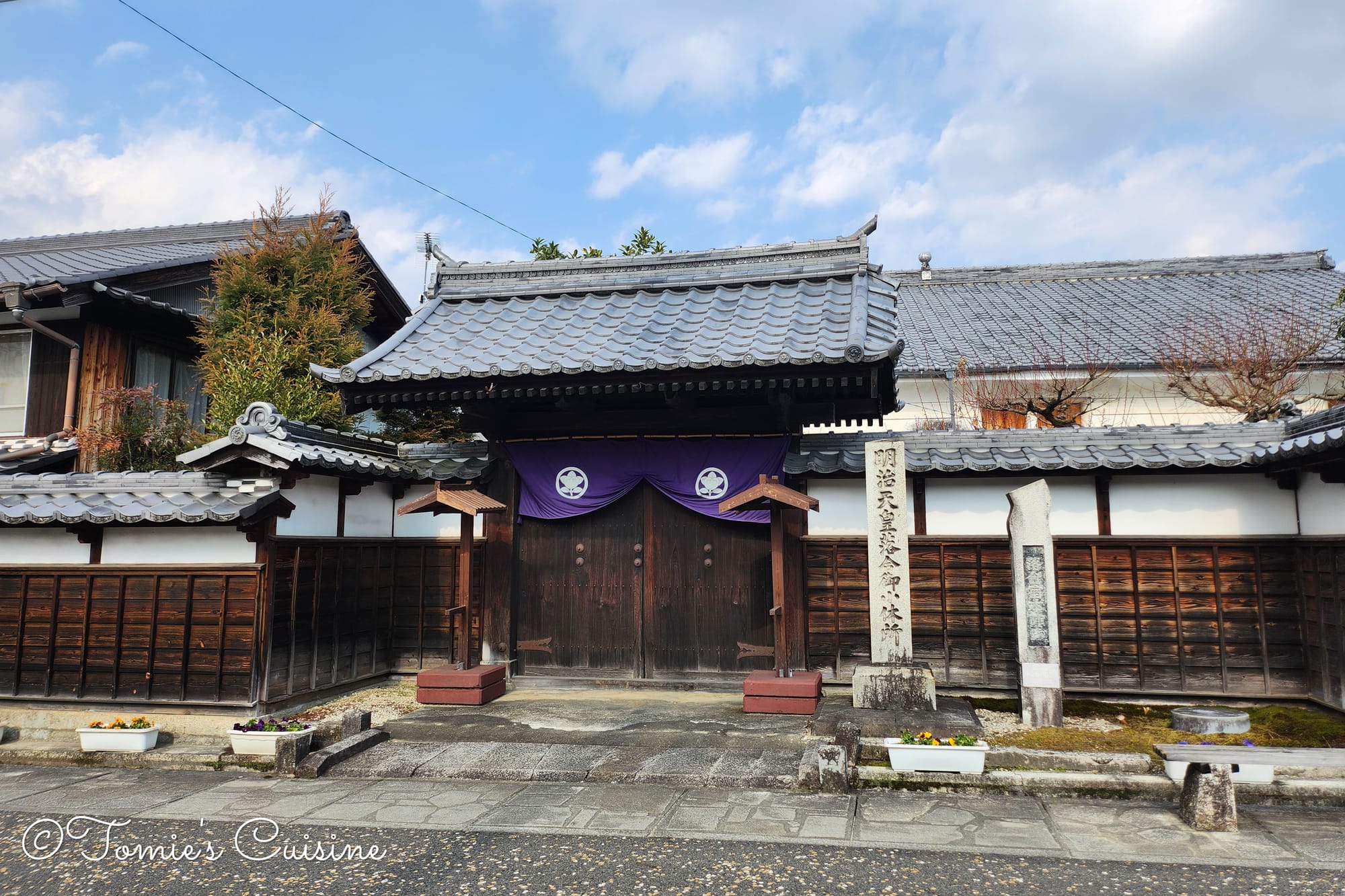
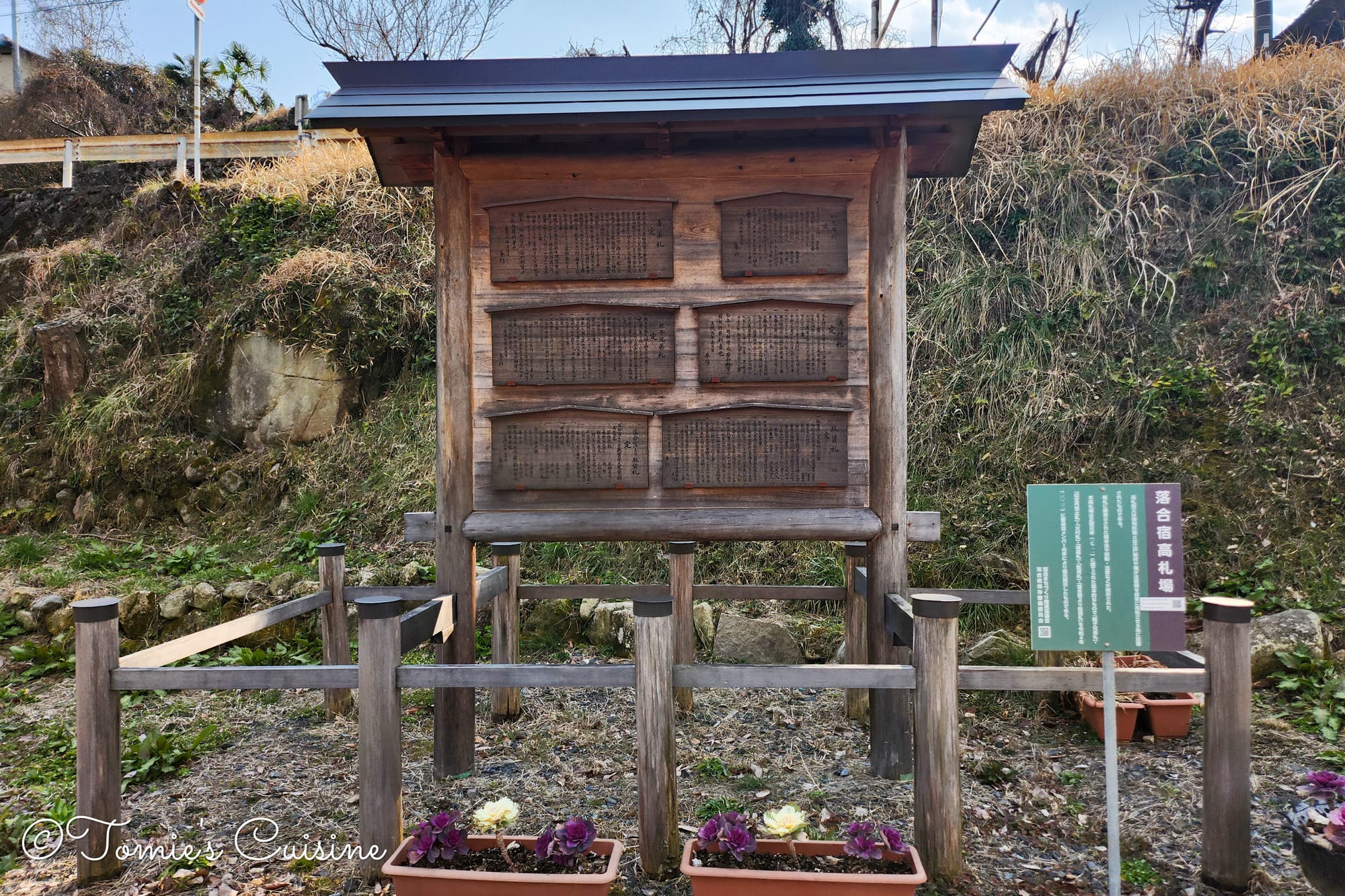
Ochiai post town Honjin ruin (落合宿本陣跡)2:58 Kousatsuba Notice board (落合宿高札場跡)
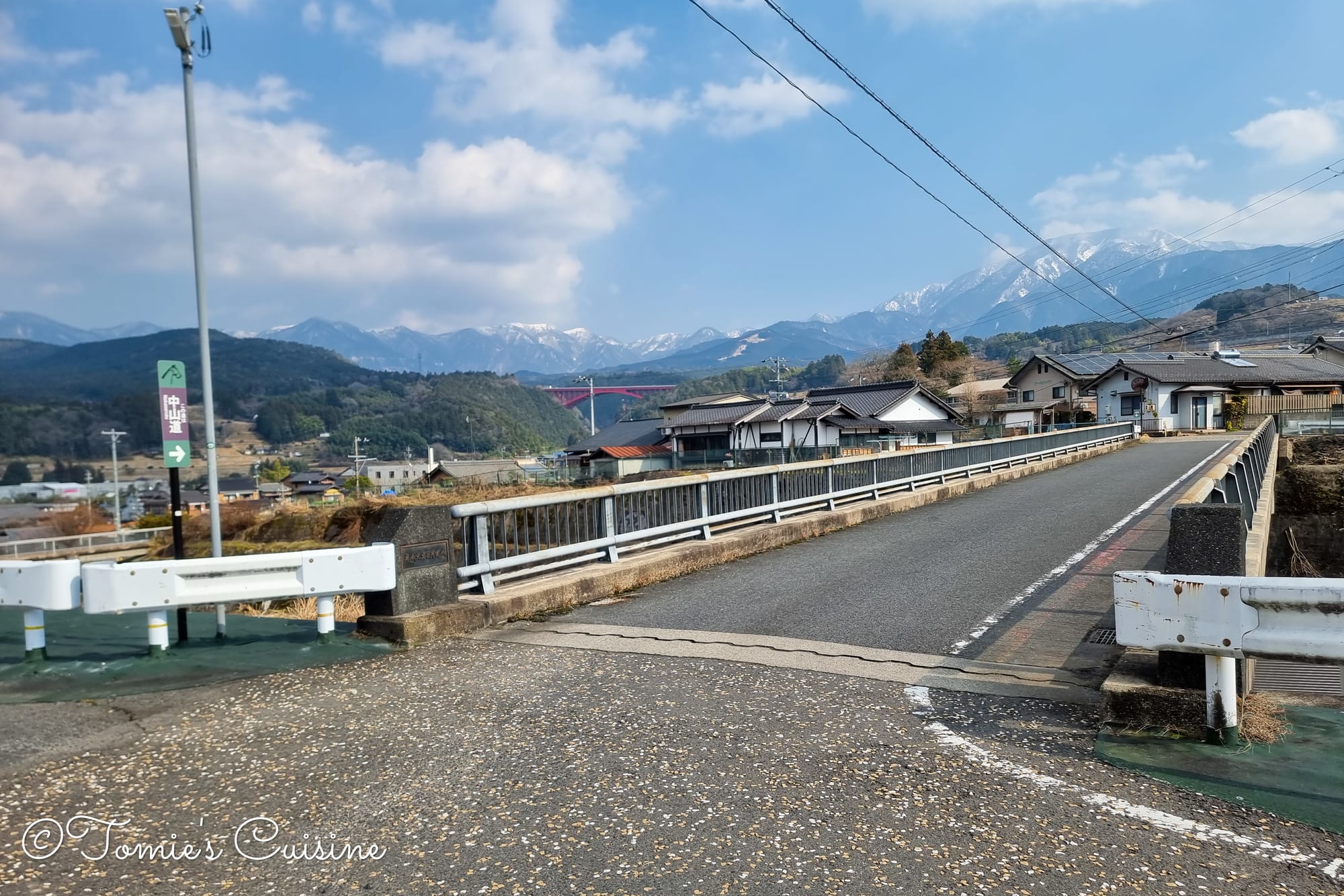
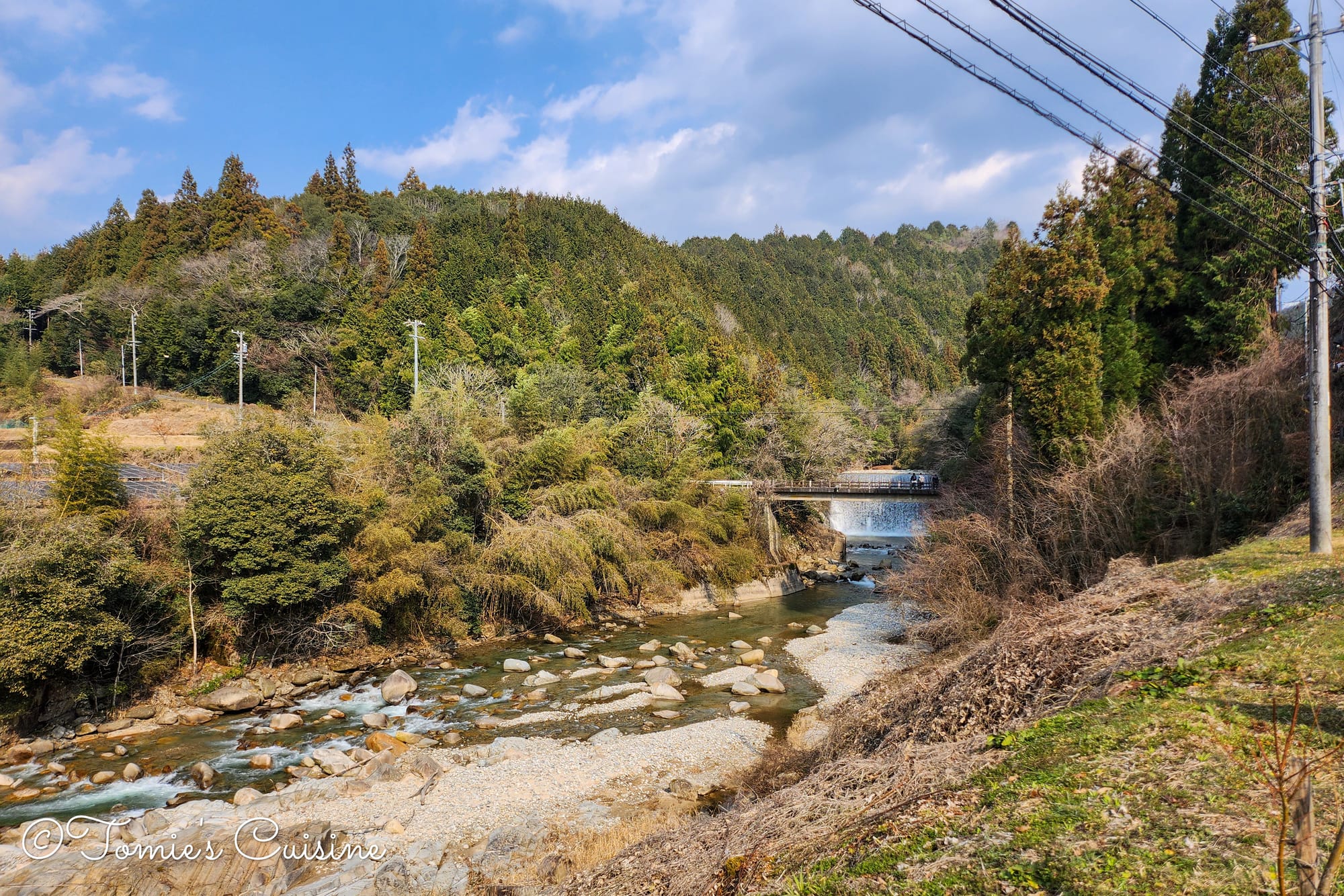
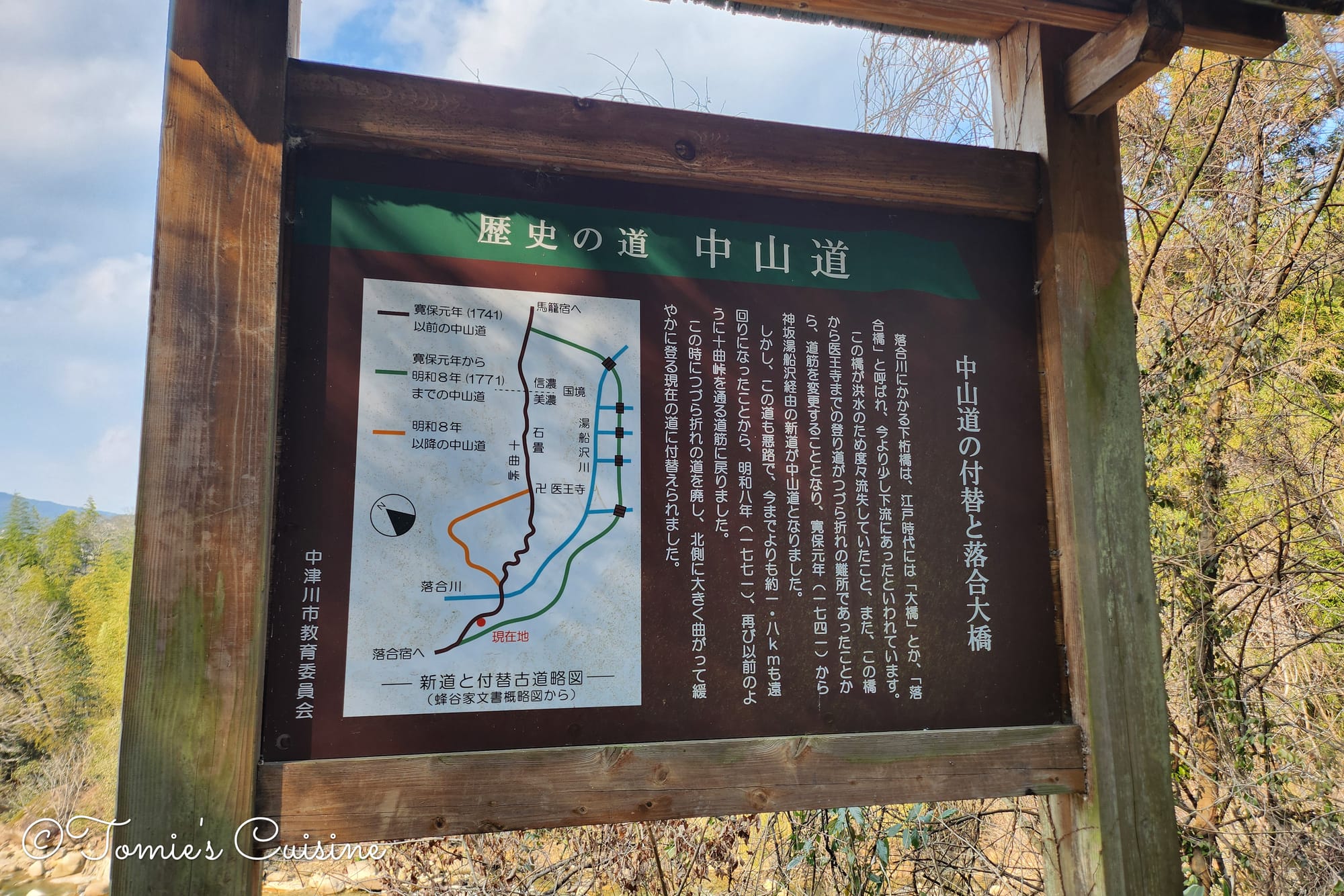
Ochiai Ohashi Bridge (落合大橋), 3:00 pm
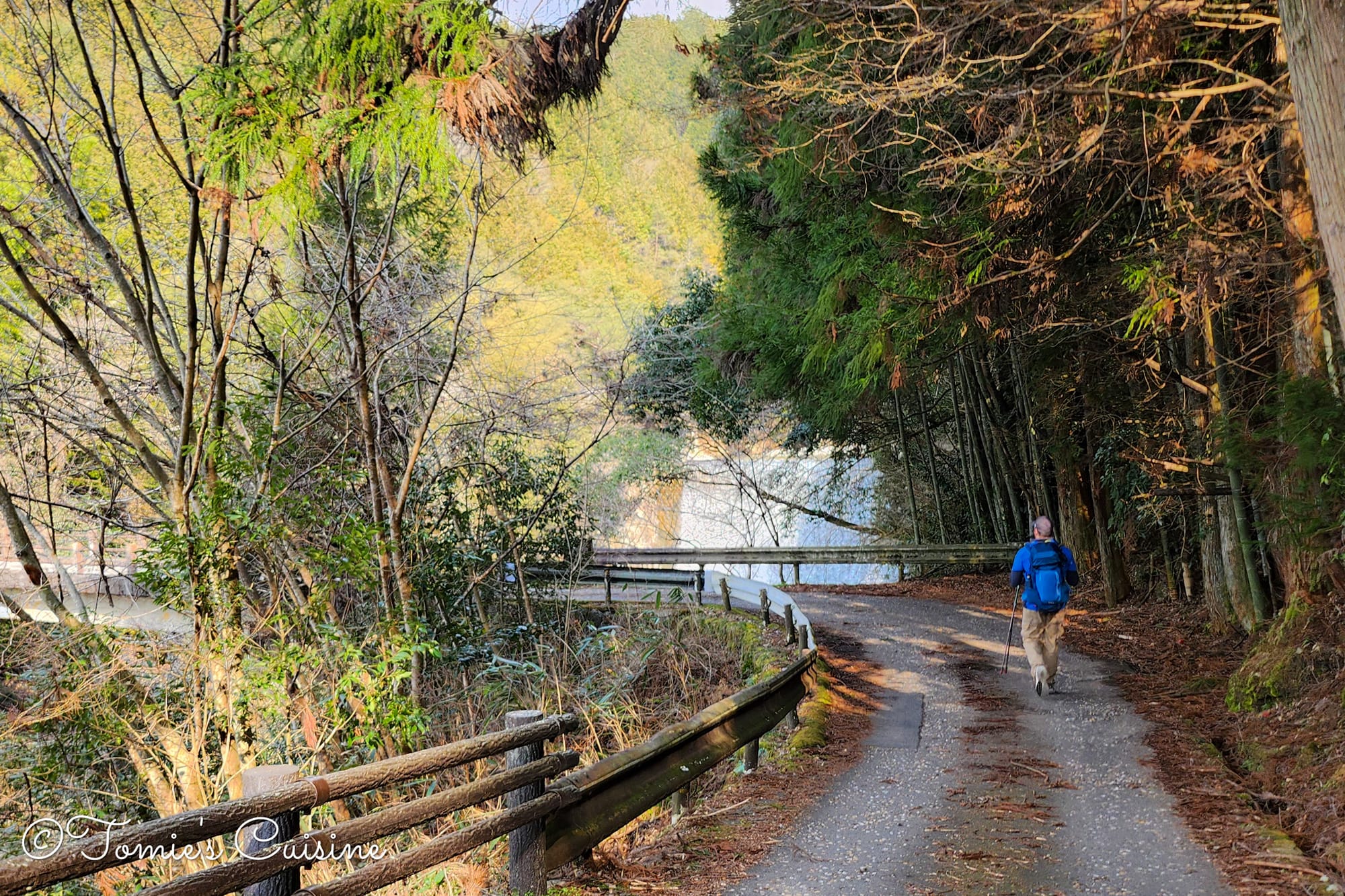
After crossing the bridge, the slope got steeper! From here, we saw more foreign tourists than in any other post town we'd passed through so far.
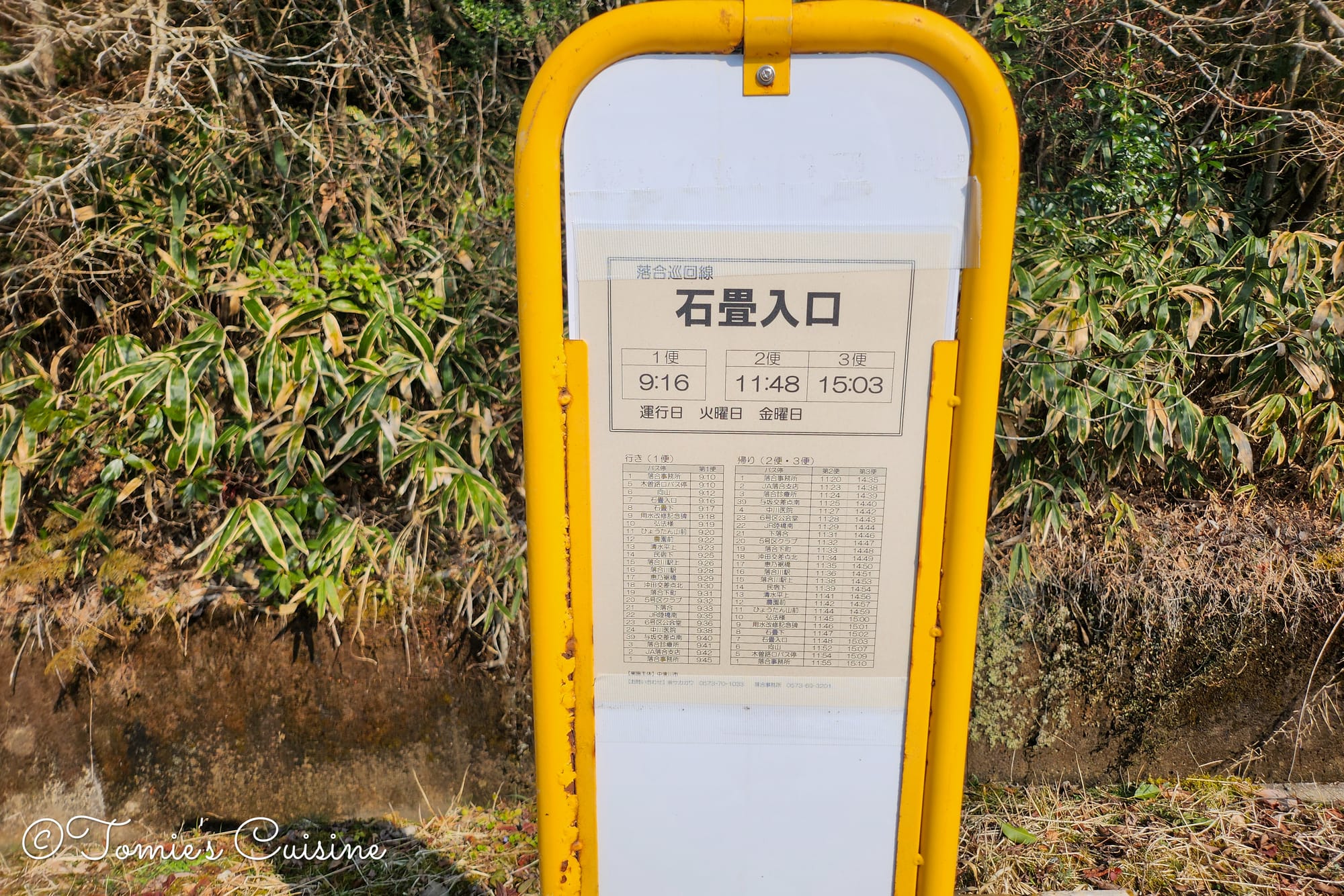
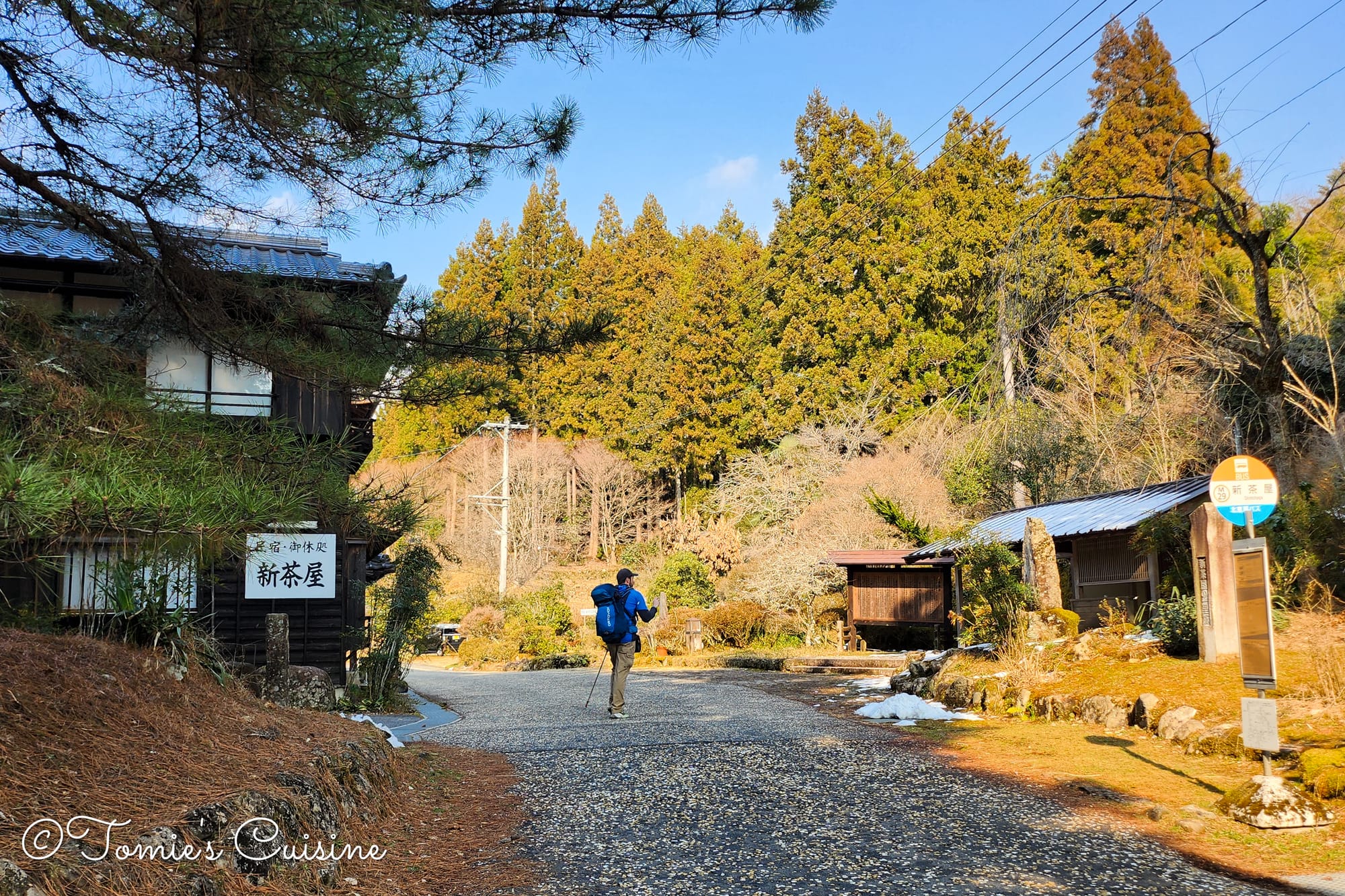
Bus stop only available on Tuesdays and Fridays and three times a day.
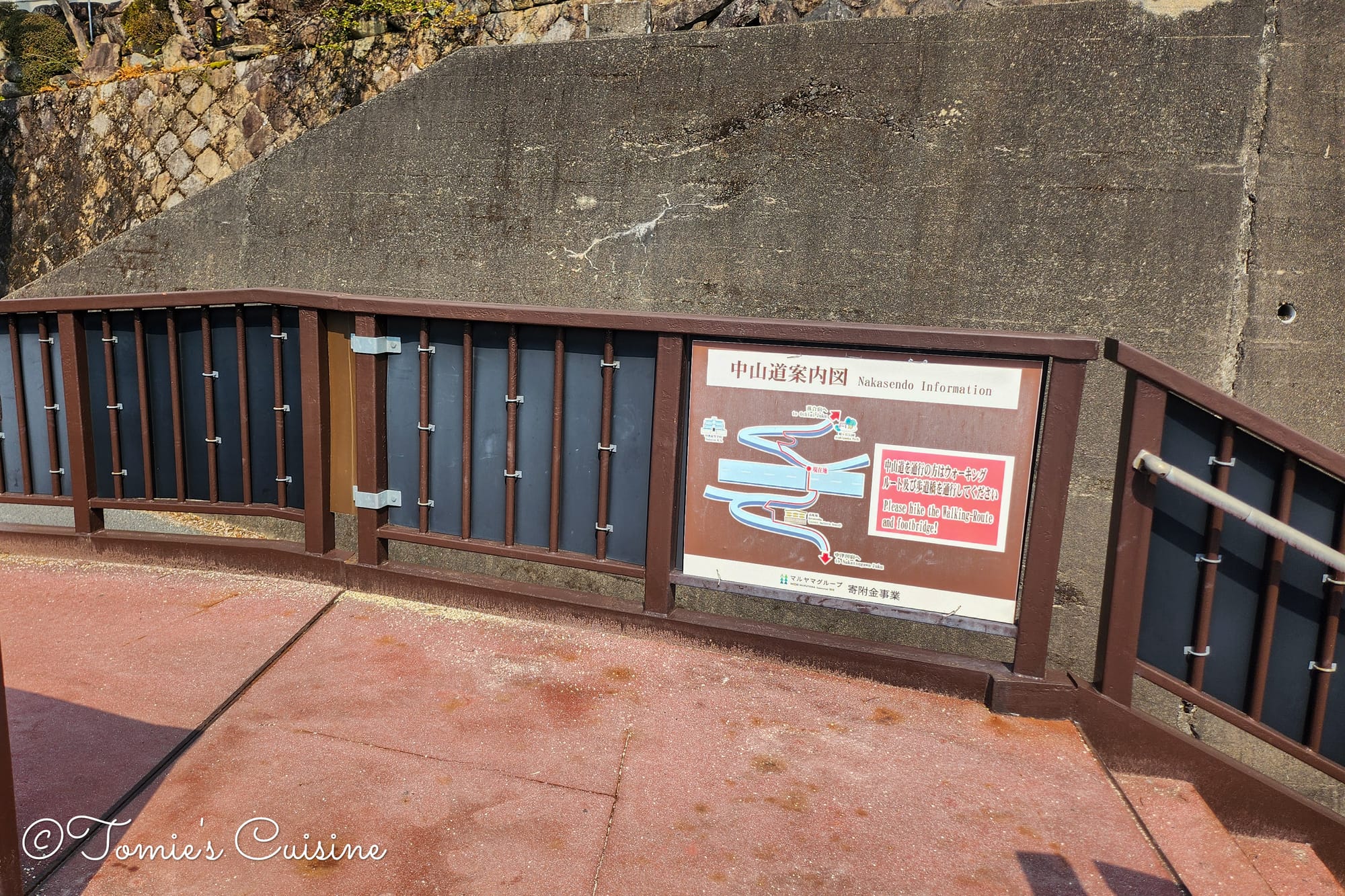
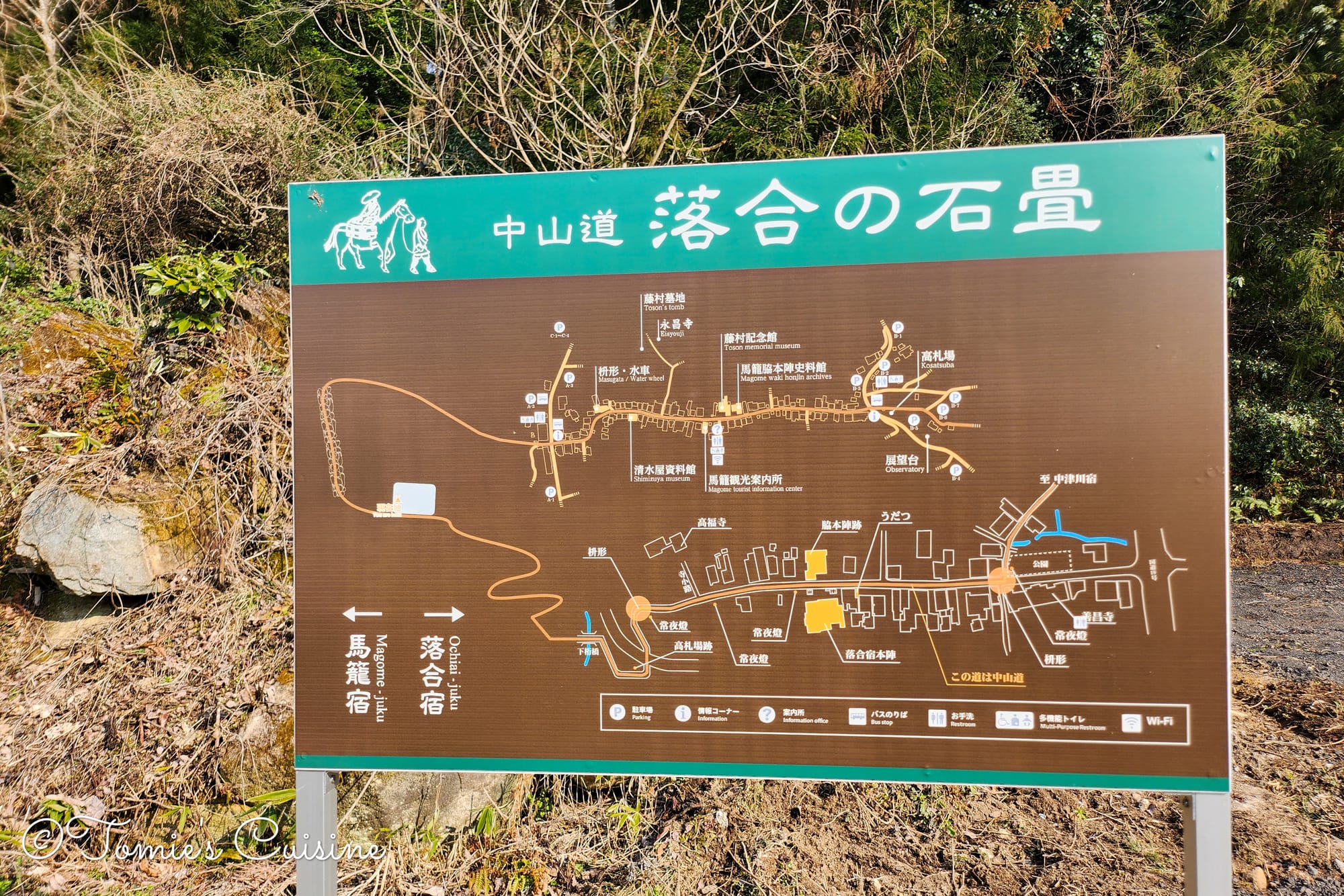
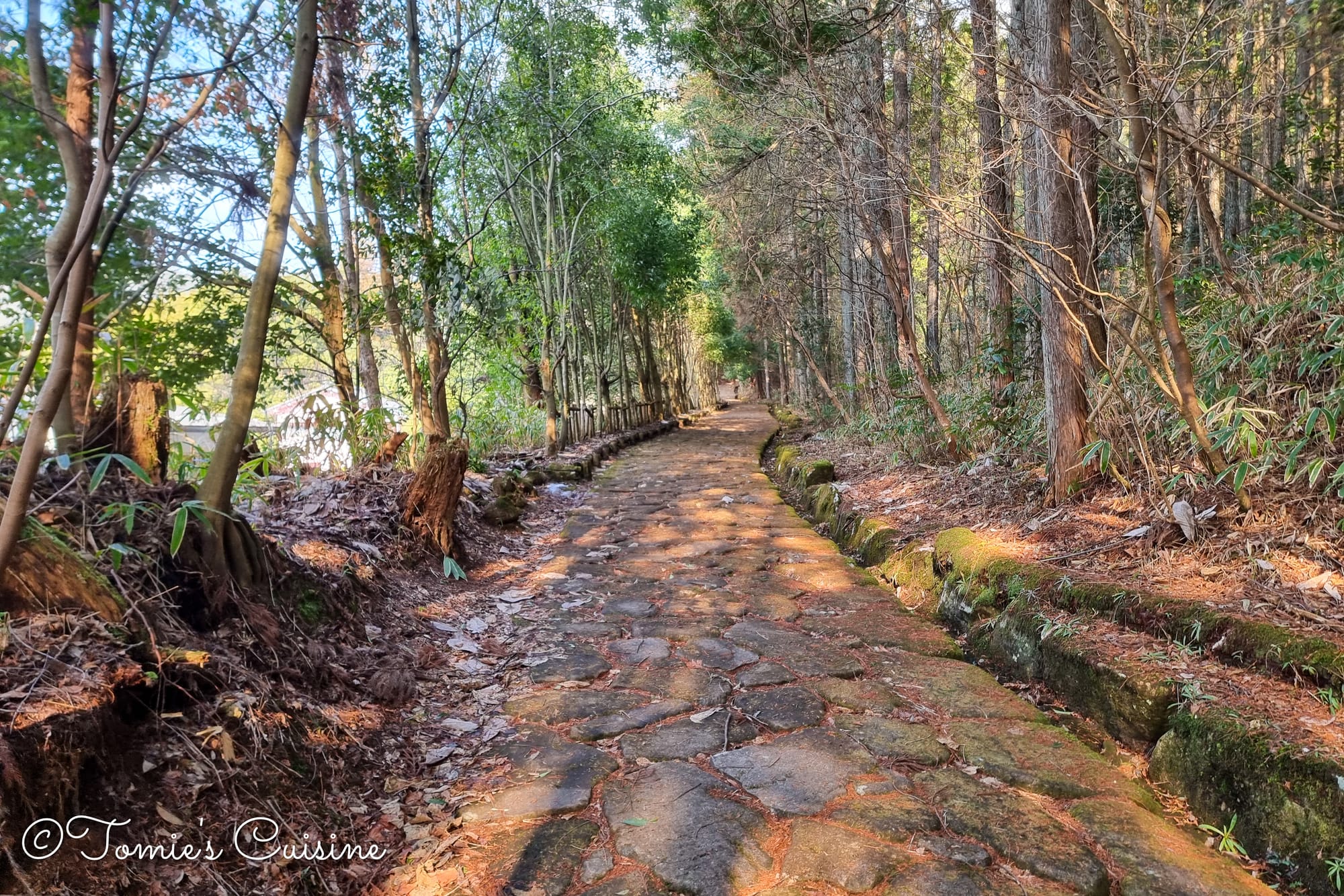
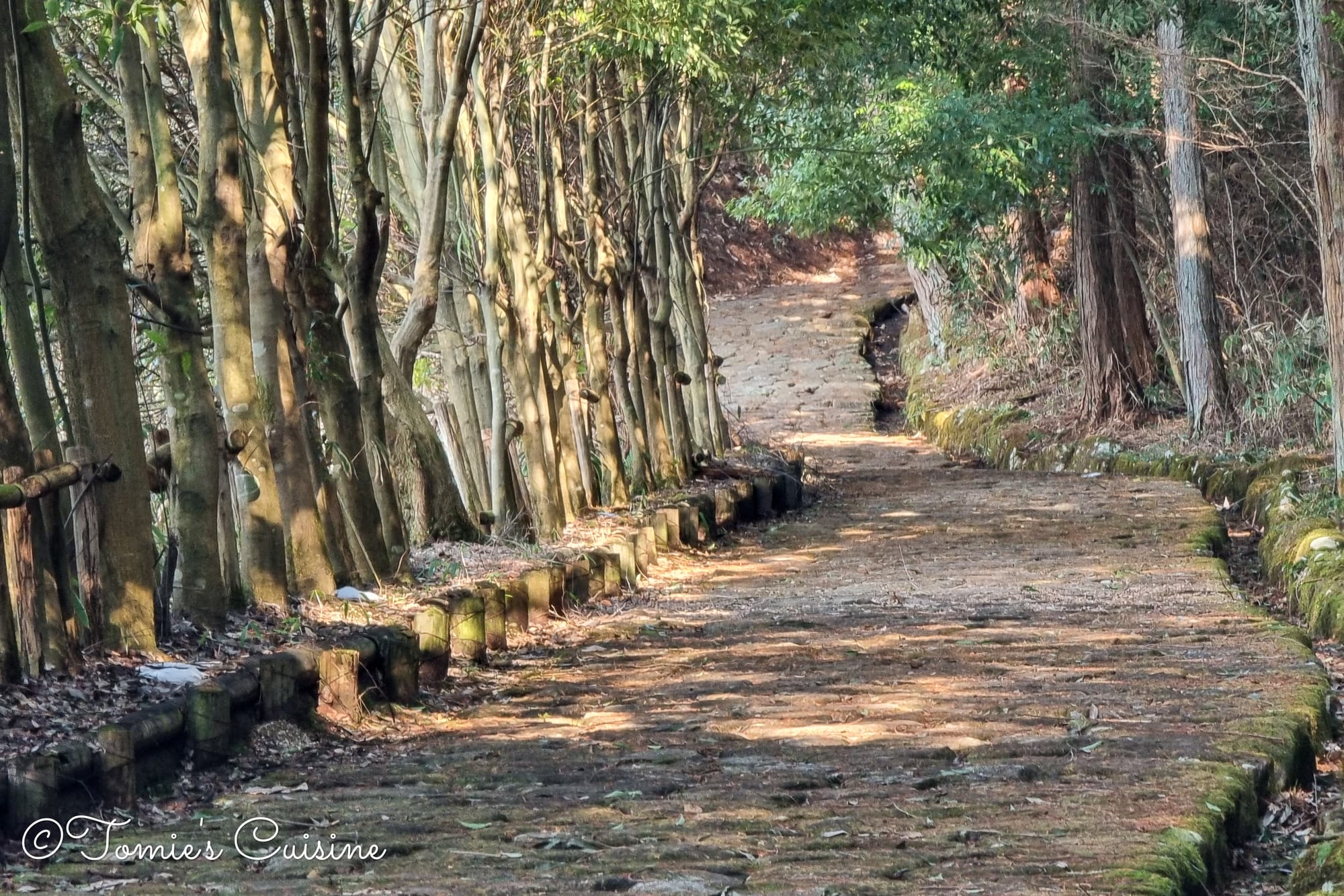
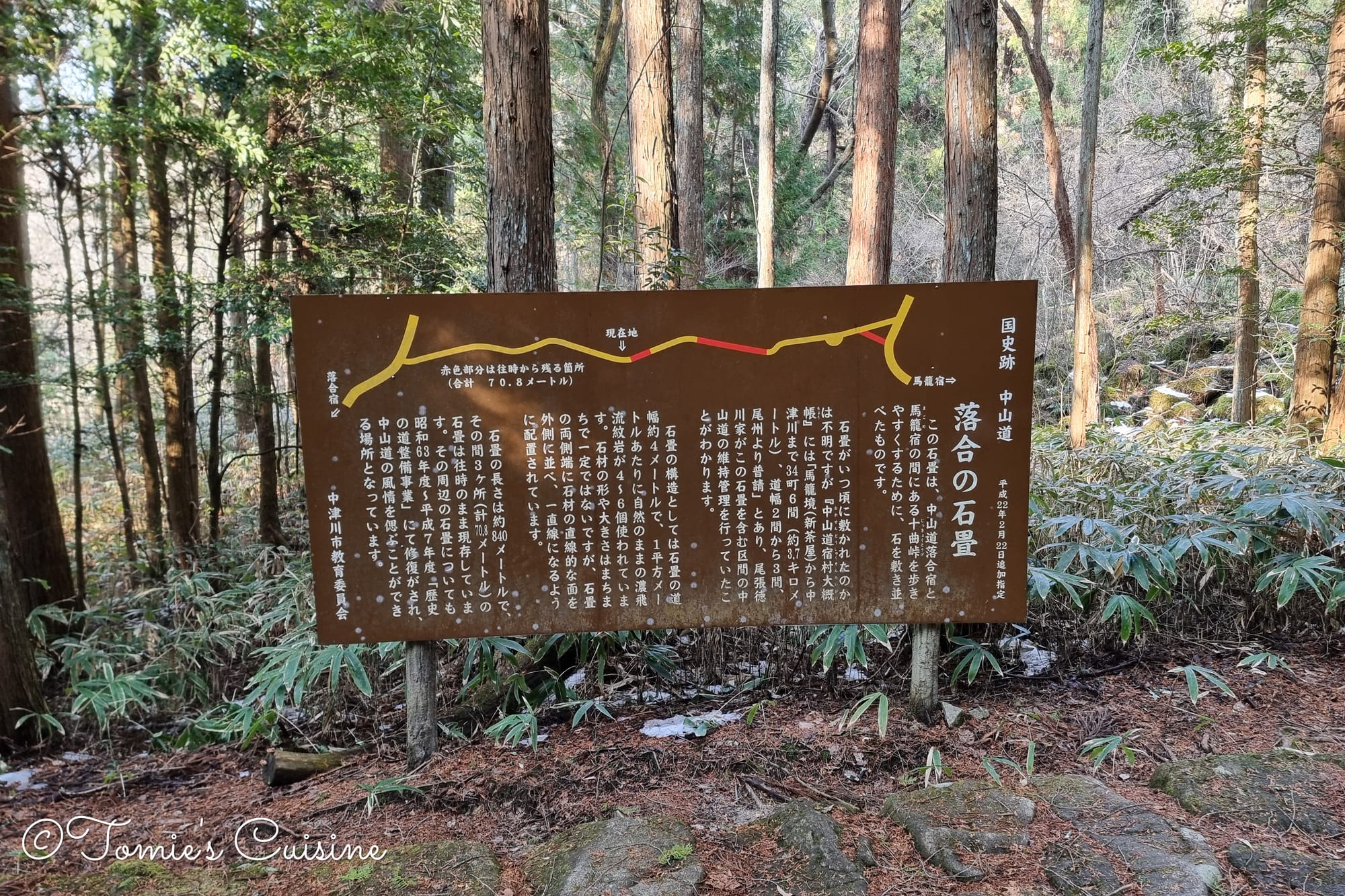
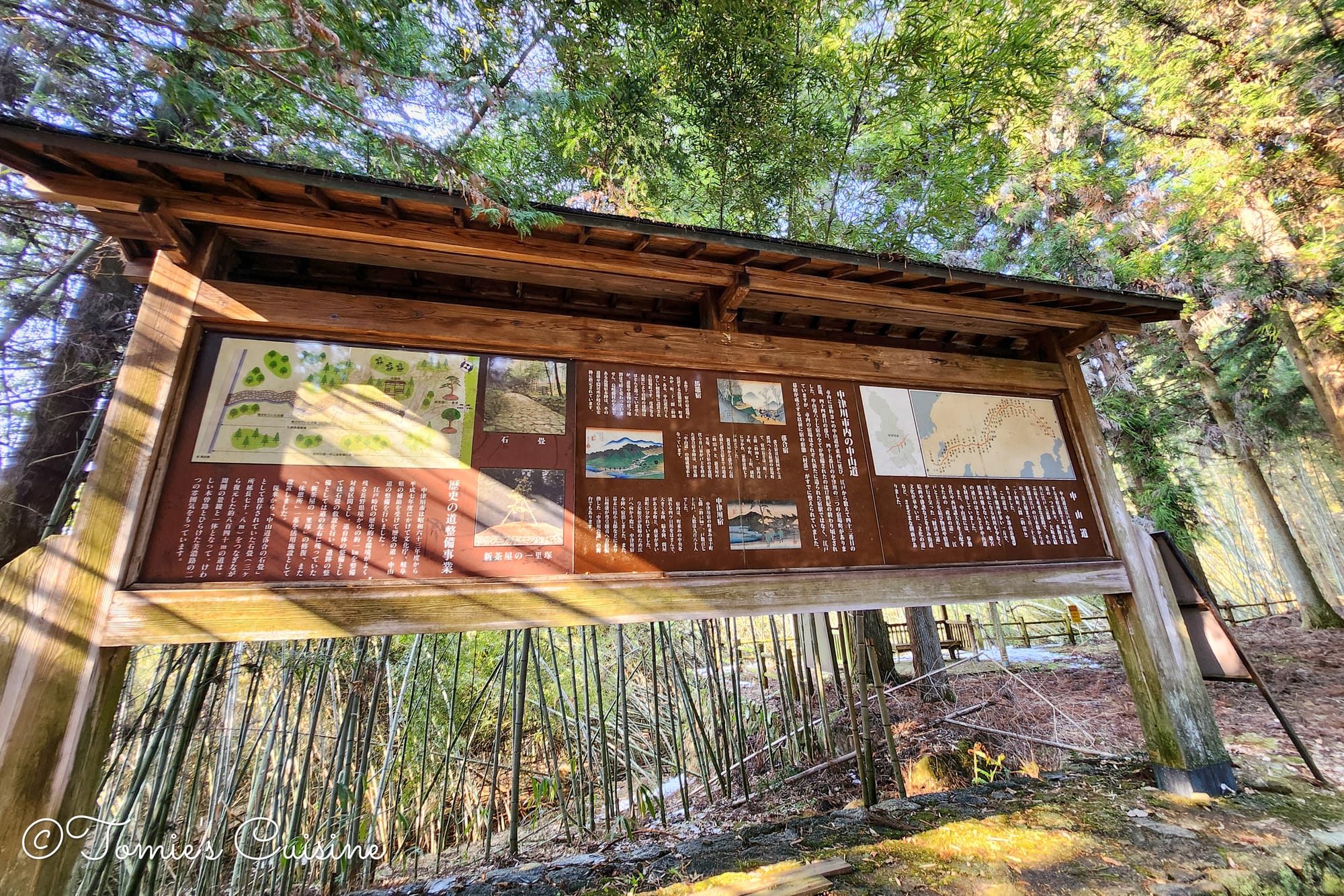
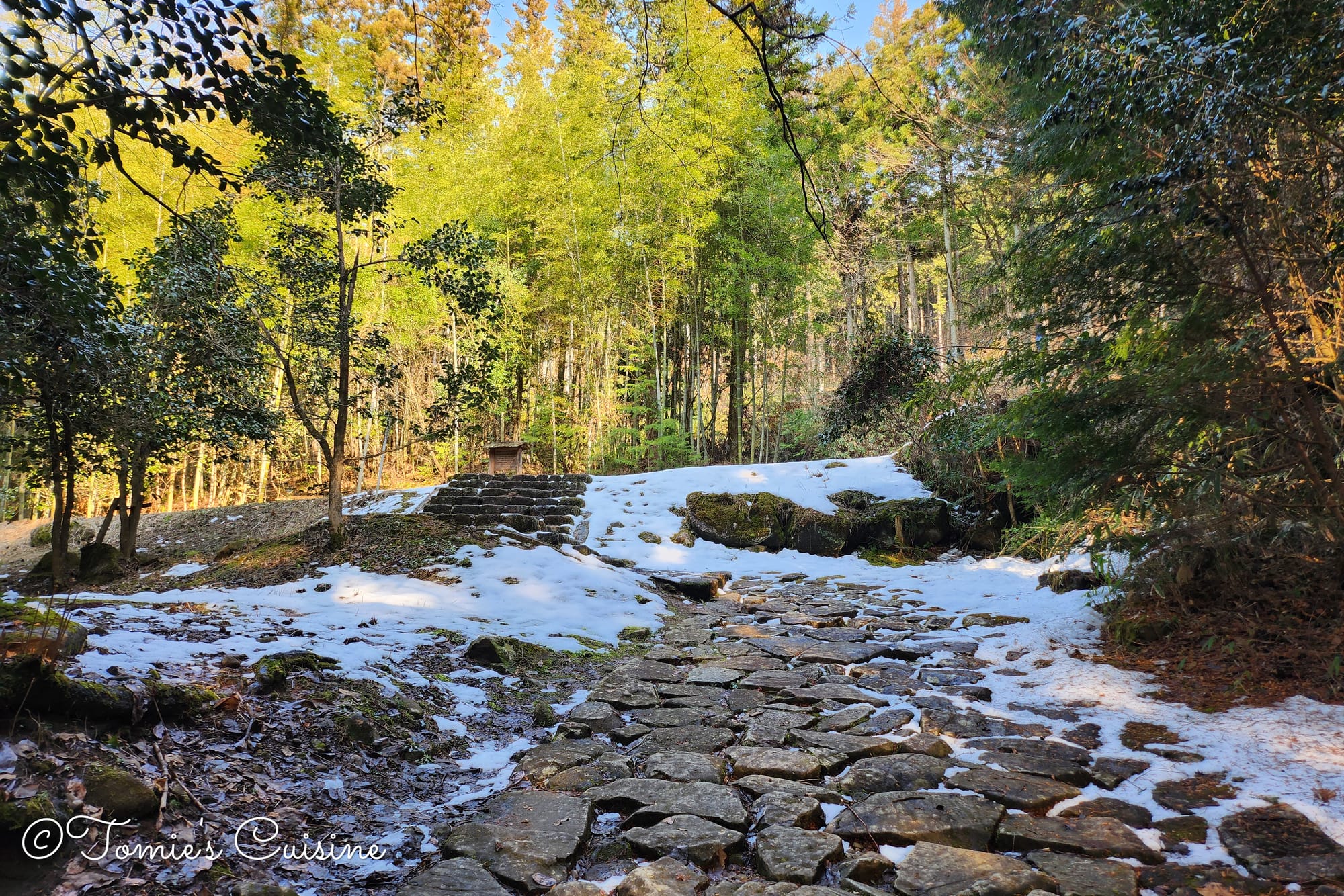
The Ochiai Stone Pavement was built to help travellers walk more easily through Jikkyoku Pass (十曲峠) between Magome post town and Ochiai post town. It is about 840 meters long, and three sections remain in their original state. Gifu Prefecture has registered this stone pavement as a historic site since 1964, and as a national historic site since 2010.
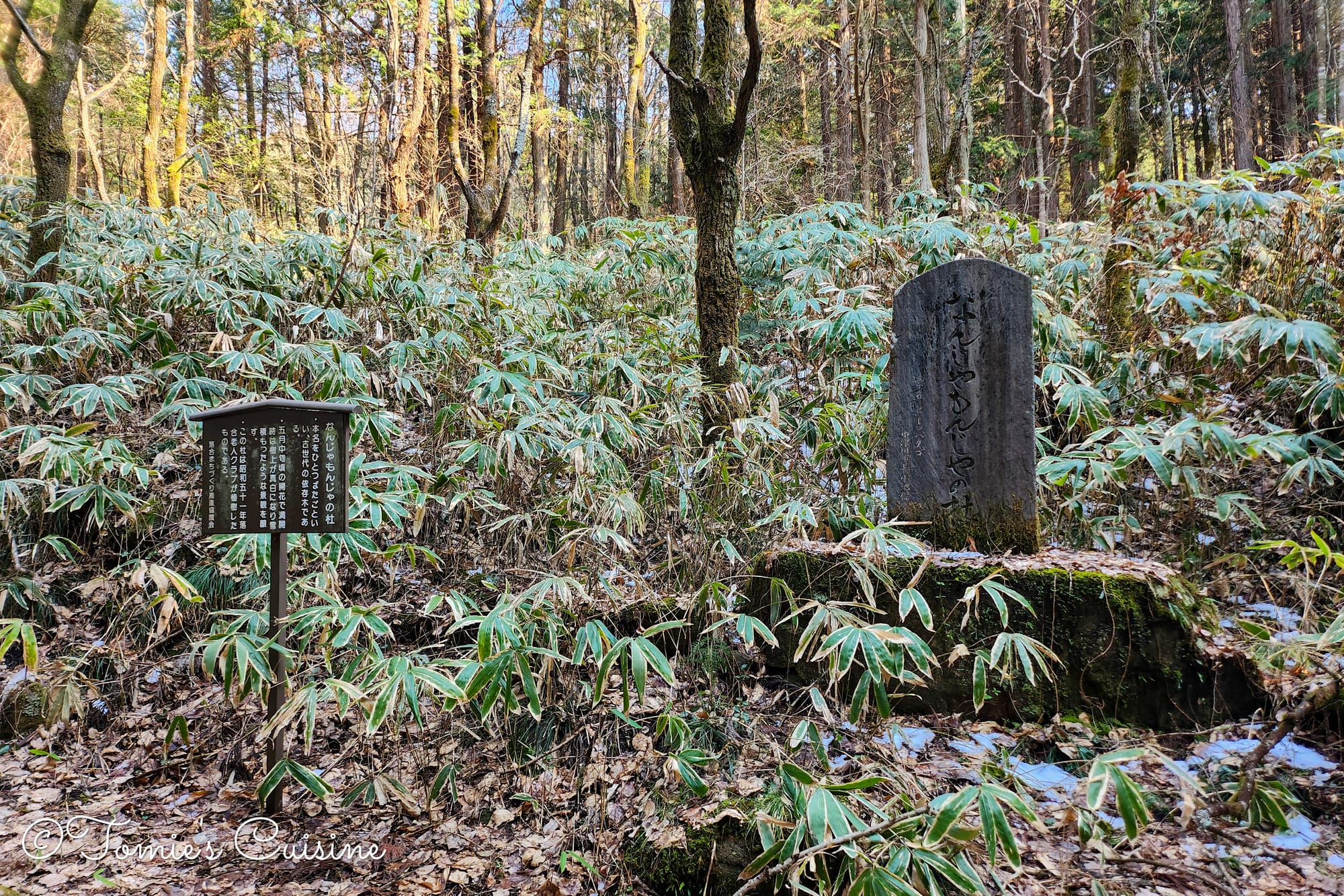
Nanjamonja Tree (なんじゃもんじゃの木)
This rare tree's official name is Hitotsubatago, but it is best known as Nanjamonja. In Japan, it grows naturally in only a few areas, including the Kiso River basin, and its habitat is legally protected as a National Natural Monument. The funny nickname Nanjamonja comes from local history. Long ago, villagers were mystified by the unique tree and didn't know what it was. They would look up and constantly ask each other, "What on earth is this tree?" in Japanese. Over time, those confused words blended into the single nickname Nanjamonja, which essentially means "What-on-earth-is-this?"
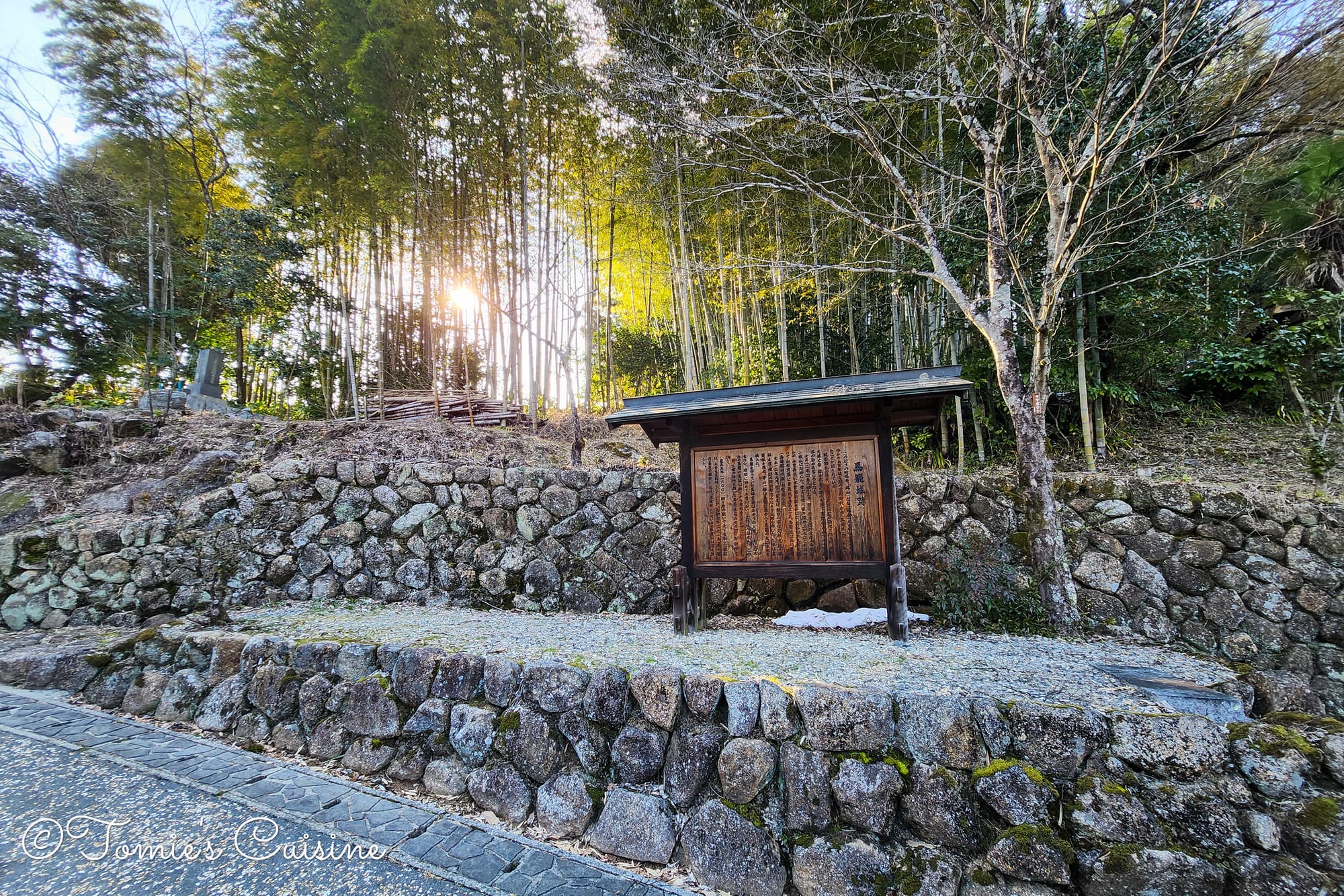
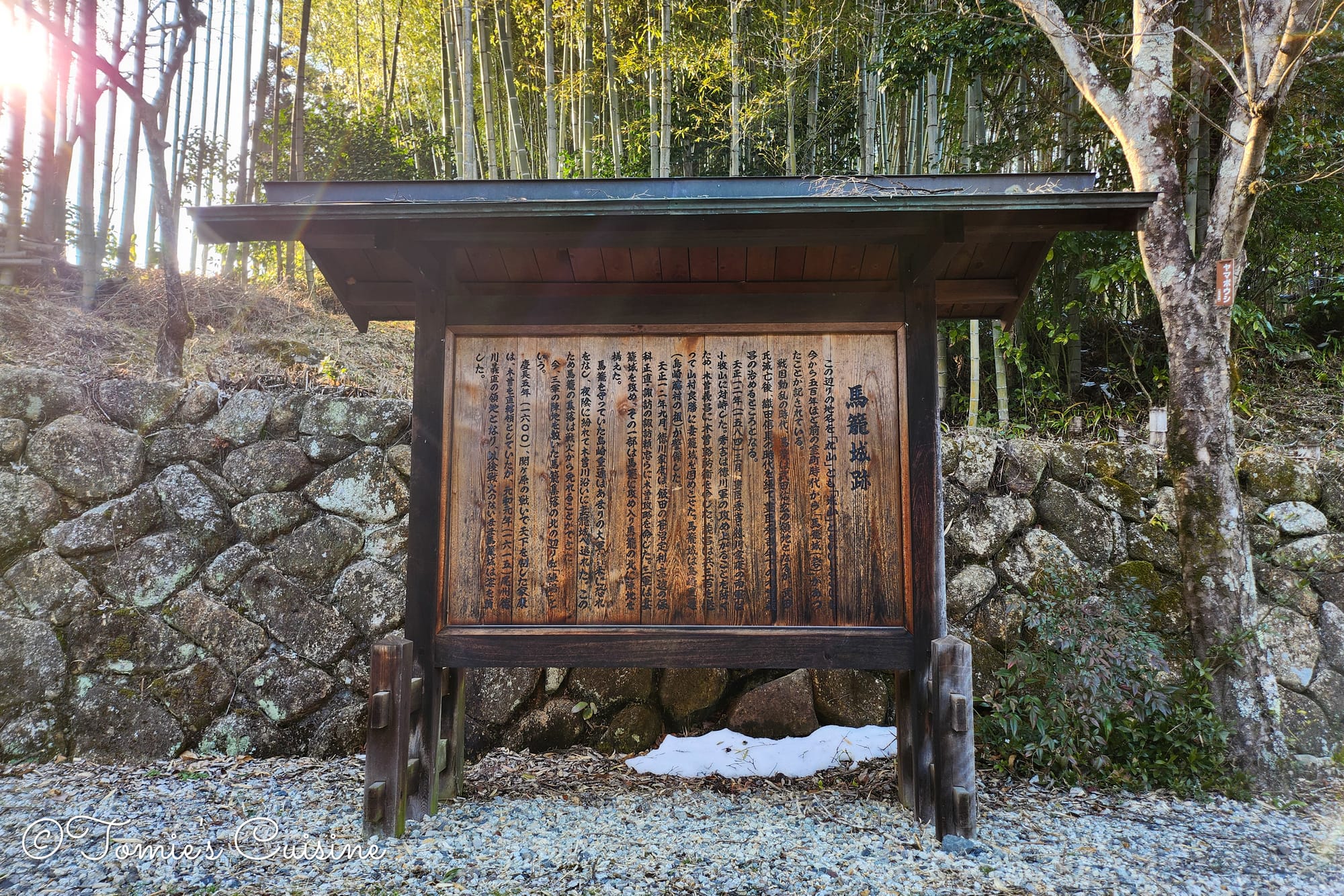
Just before Magome, the Nakasendo passes below Maruyama Hill, where Magome Castle once stood, a small hilltop castle about 400 m southwest of the post town. In 1584, during the Battle of Komaki and Nagakute, Shimazaki Shigemichi held it for Hideyoshi. Tokugawa Ieyasu's troops invaded the Kiso region with far more men; the castle fell, and Shigemichi barely escaped to Tsumago. It was never rebuilt. Today, a stone monument, an explanation board, bamboo, and fields stand where the old enclosures once stood. Shigemichi's family later ran Magome's honjin (the main inn for lords), and the novelist Shimazaki Toson was born there in 1872. To read more about the Magome Castle story, check out this article on Castle-jpn.
Here we are, Magome post town! The feeling we had at Ochiai Ohashi Bridge is even stronger now; we can clearly see far more people visiting than in any other post town since Kyoto!
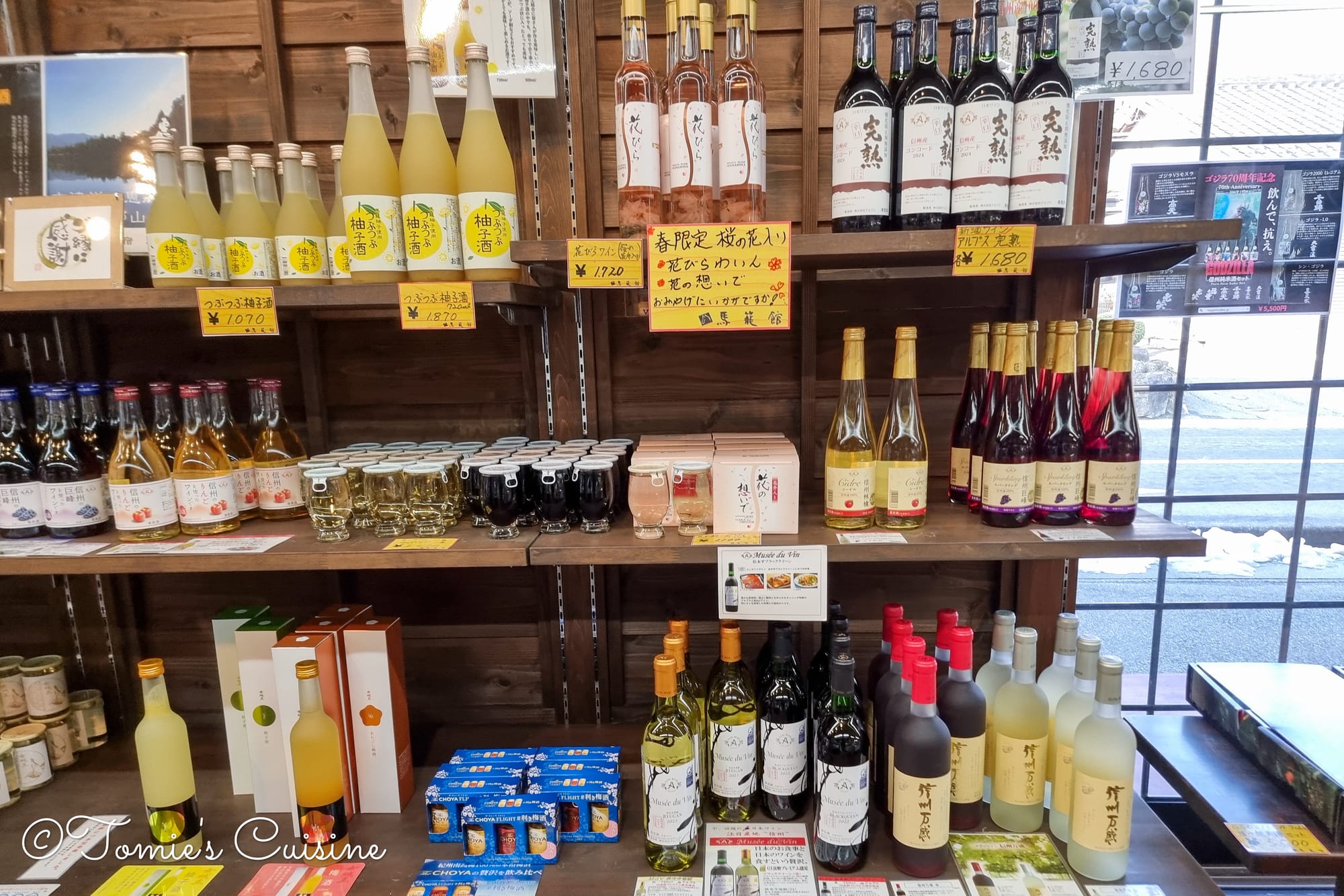
The first thing we saw was the shop called Magome-kan (馬籠館), which sells local produce and souvenirs and has parking for cars and buses.
It reminded me a little of Le Mont Saint-Michel in France. It’s different from other places in Japan, almost unreal because the town is so well maintained.
We will talk more about the history of Magome post town on Day 10.
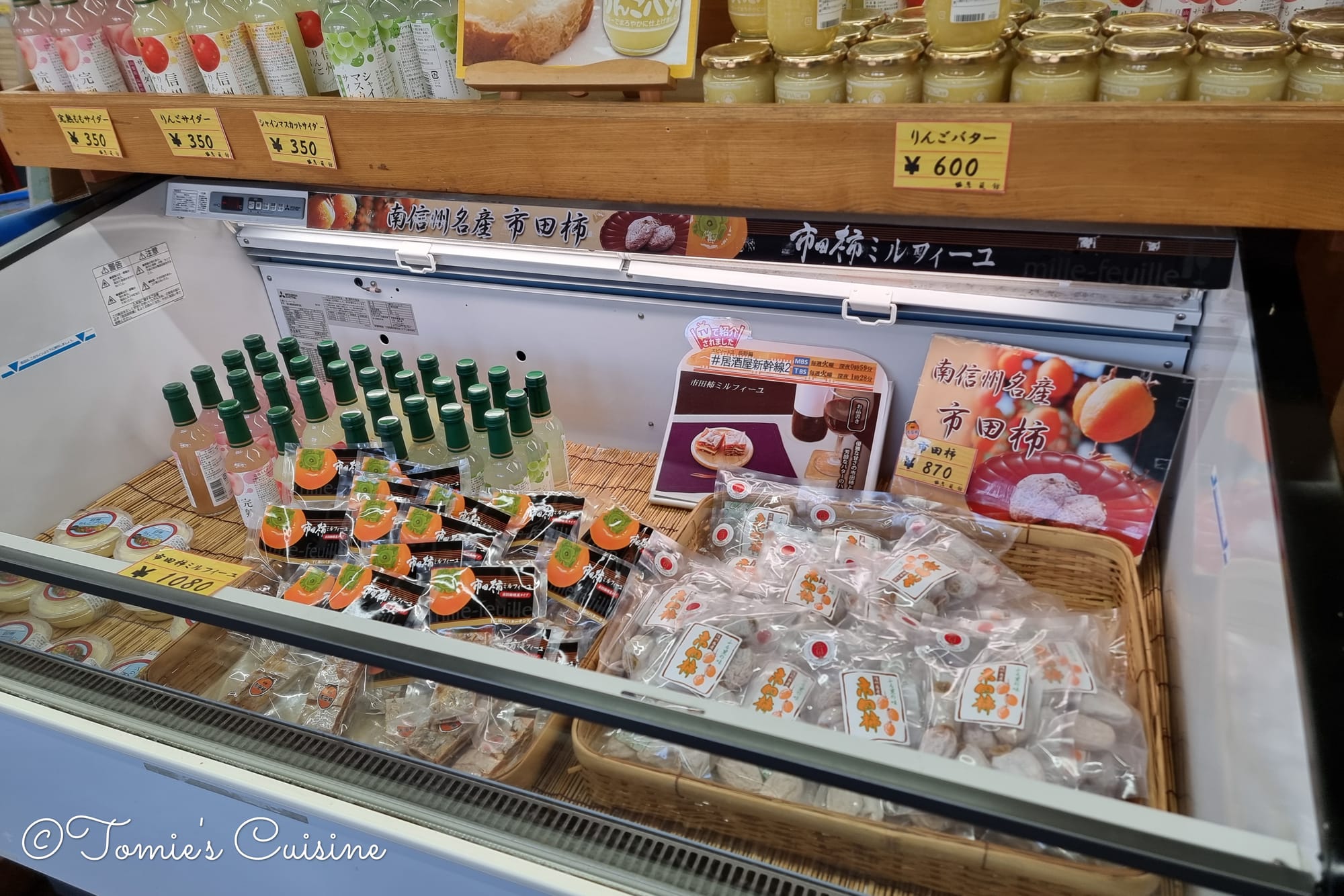
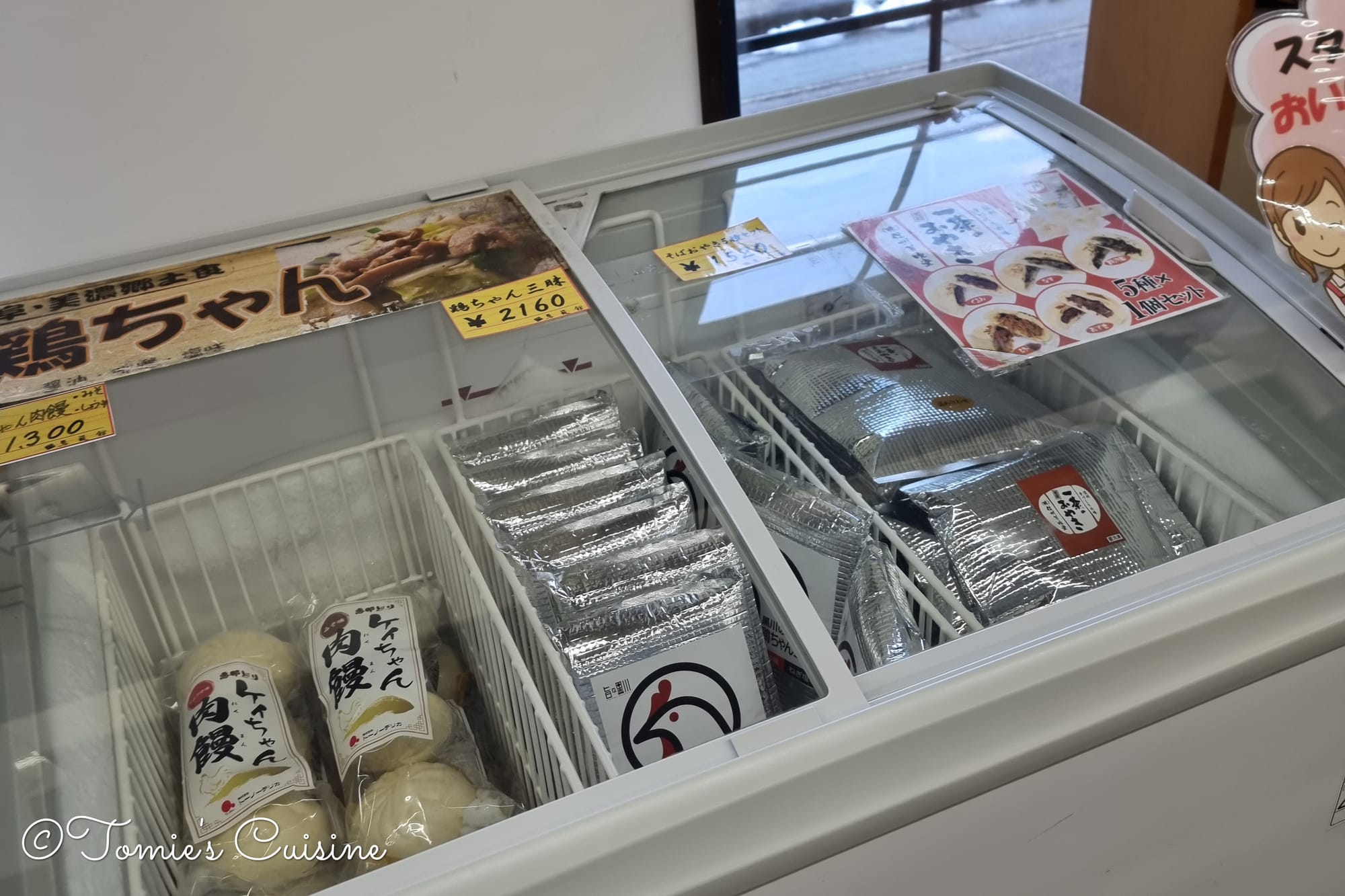
Once we arrived in the main part of Magome post town, we found a fairly large souvenir shop filled with local delicacies and merchandise; we stopped by, especially since Magome was the first, and so far the most touristy, post town on our Nakasendo trip.
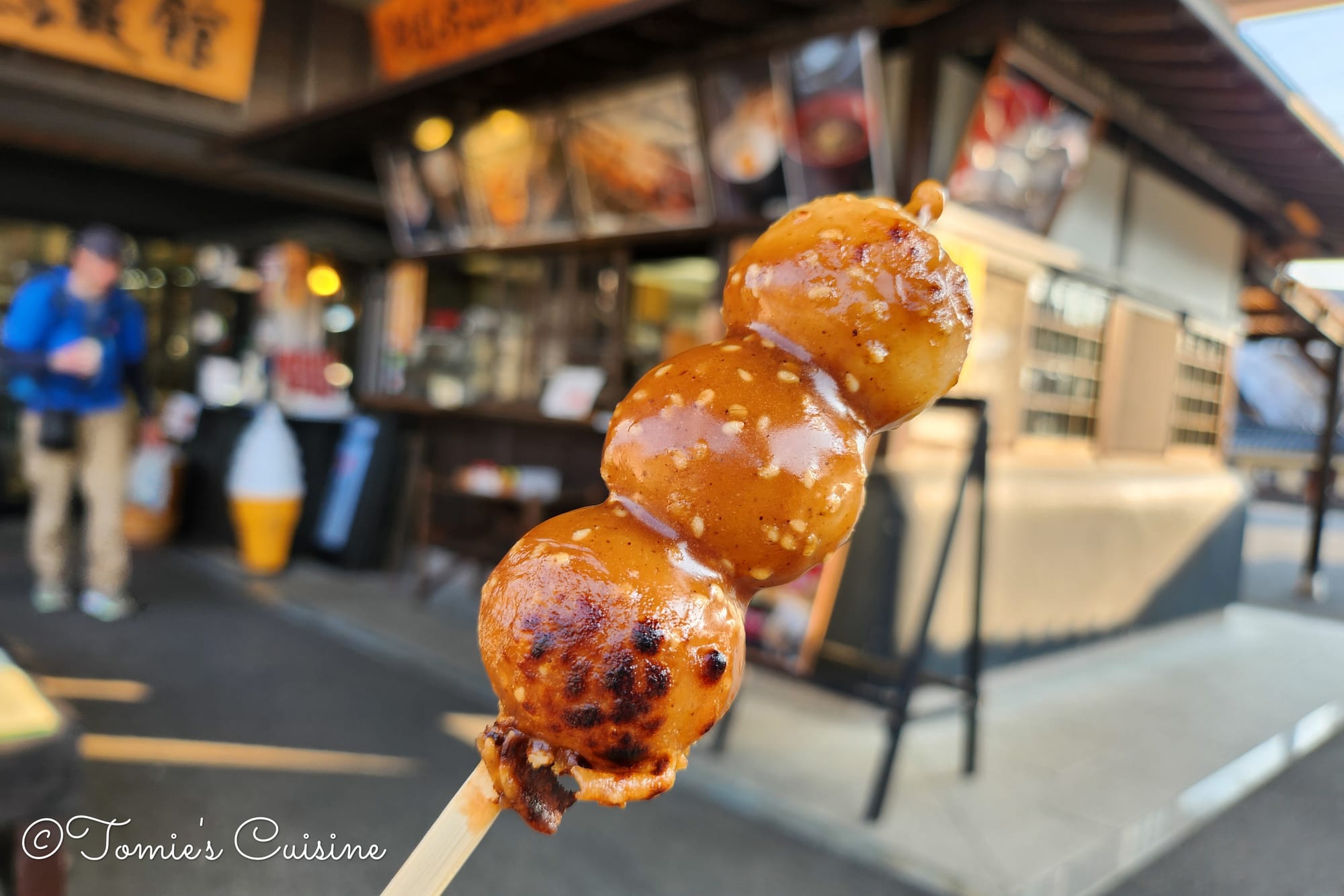
Gohei mochi from Magome-kan
The shop offered a wide selection of items, including local food, sake, and snacks, plus a food stall selling freshly prepared local delicacies.
🍡
Goheimochi (五平餅) A traditional grilled rice cake from Japan's mountainous Chubu region, including Nagano, Gifu, and Aichi prefectures. Unlike regular mochi, which is sticky and made from glutinous rice, Goheimochi is made from regular short-grain white rice (うるち米), so we often make it at home with leftover rice. It has a sweet, savoury taste with a nutty flavour from walnuts.
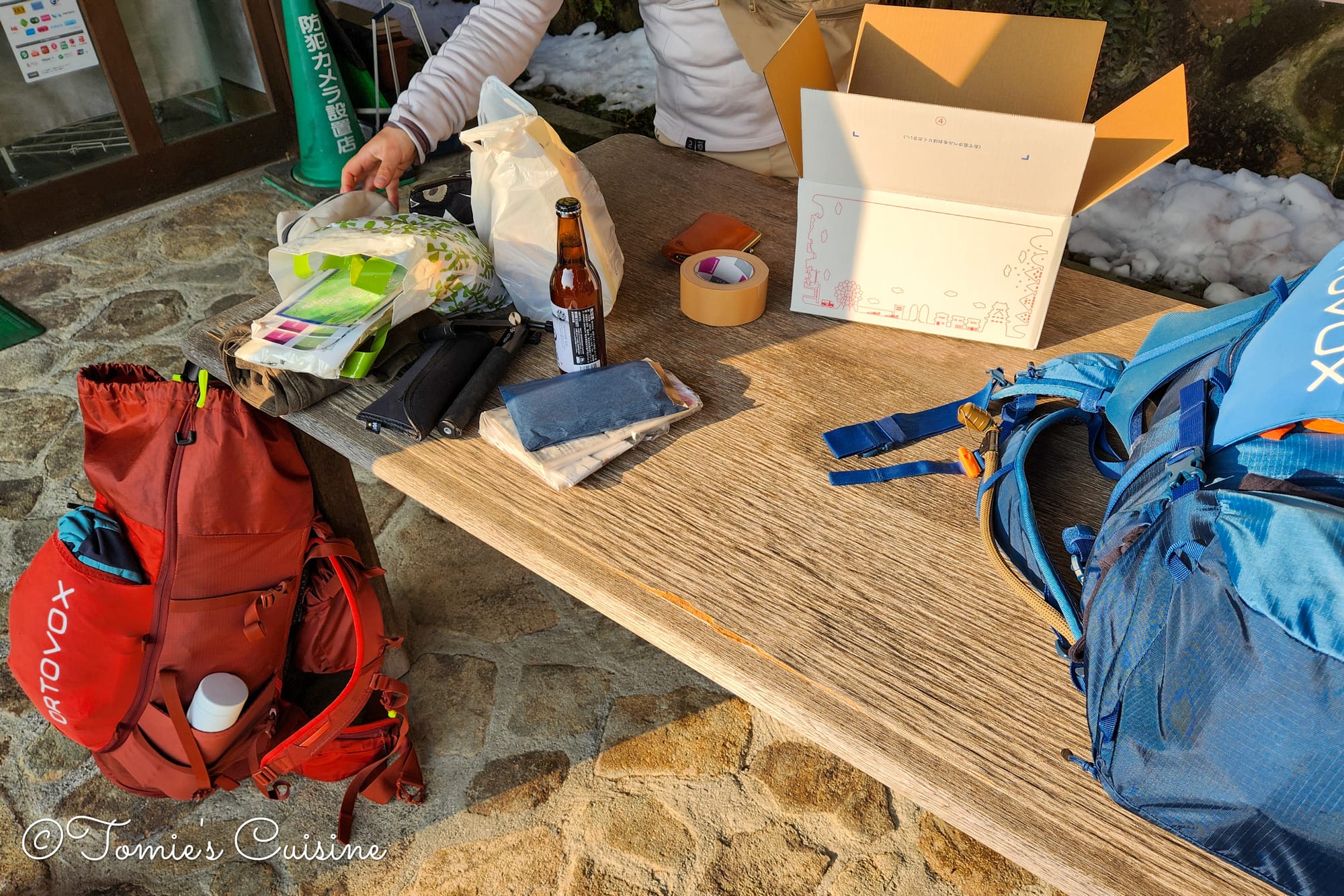
We stopped by the post office to send a few things we don’t need, or carried too much of, to my parents' house in Aichi prefecture. We bought a box big enough for everything and some souvenirs for my family, then packed it at the table right outside the post office.
You can also send packages (they sell them there) or postcards abroad from there if you have any presents or souvenirs you'd like to send home.
The post office staff were very friendly, and we enjoyed talking with them.
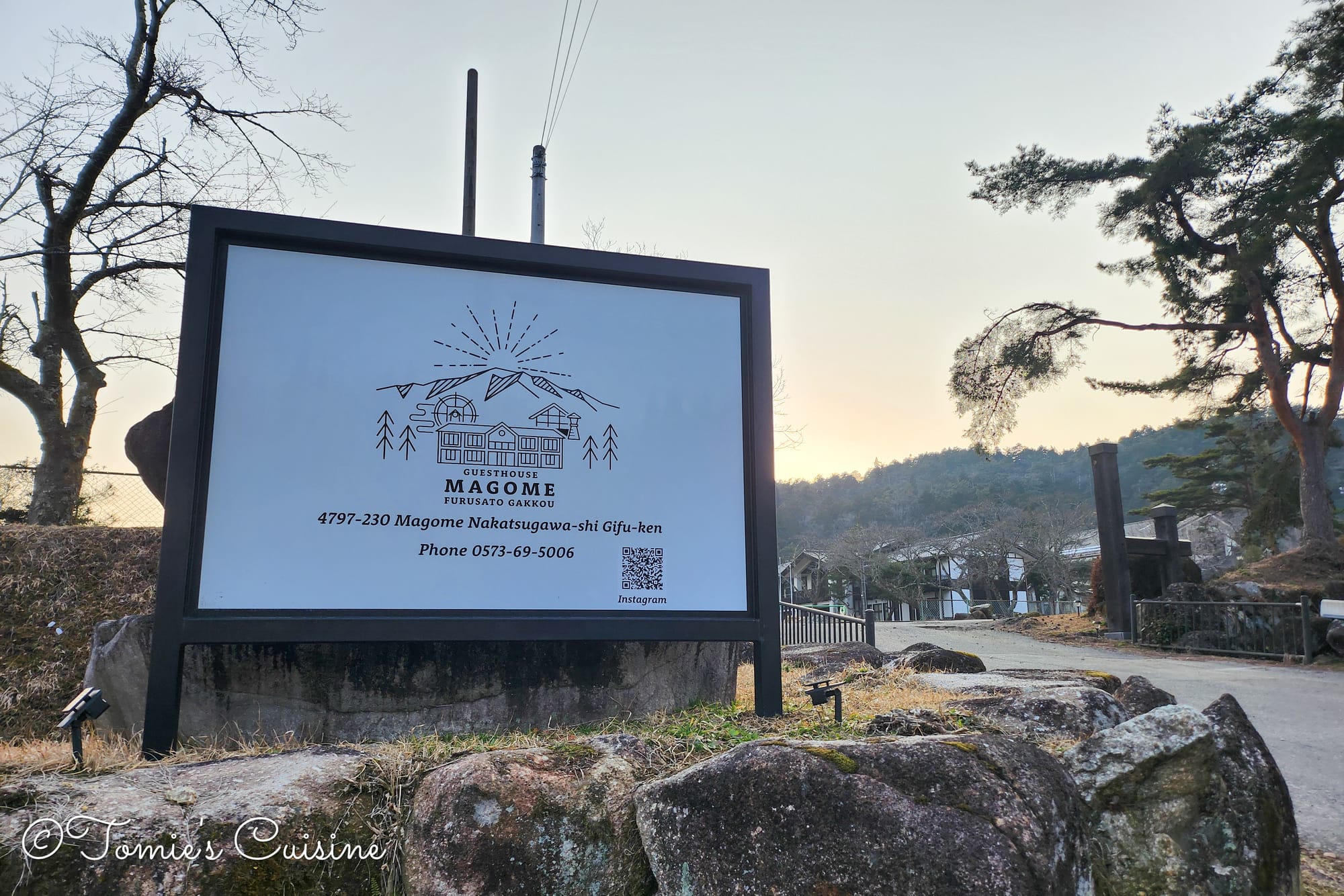
5:14 pm: Wow. It’s really a school, and the mountain views are stunning.
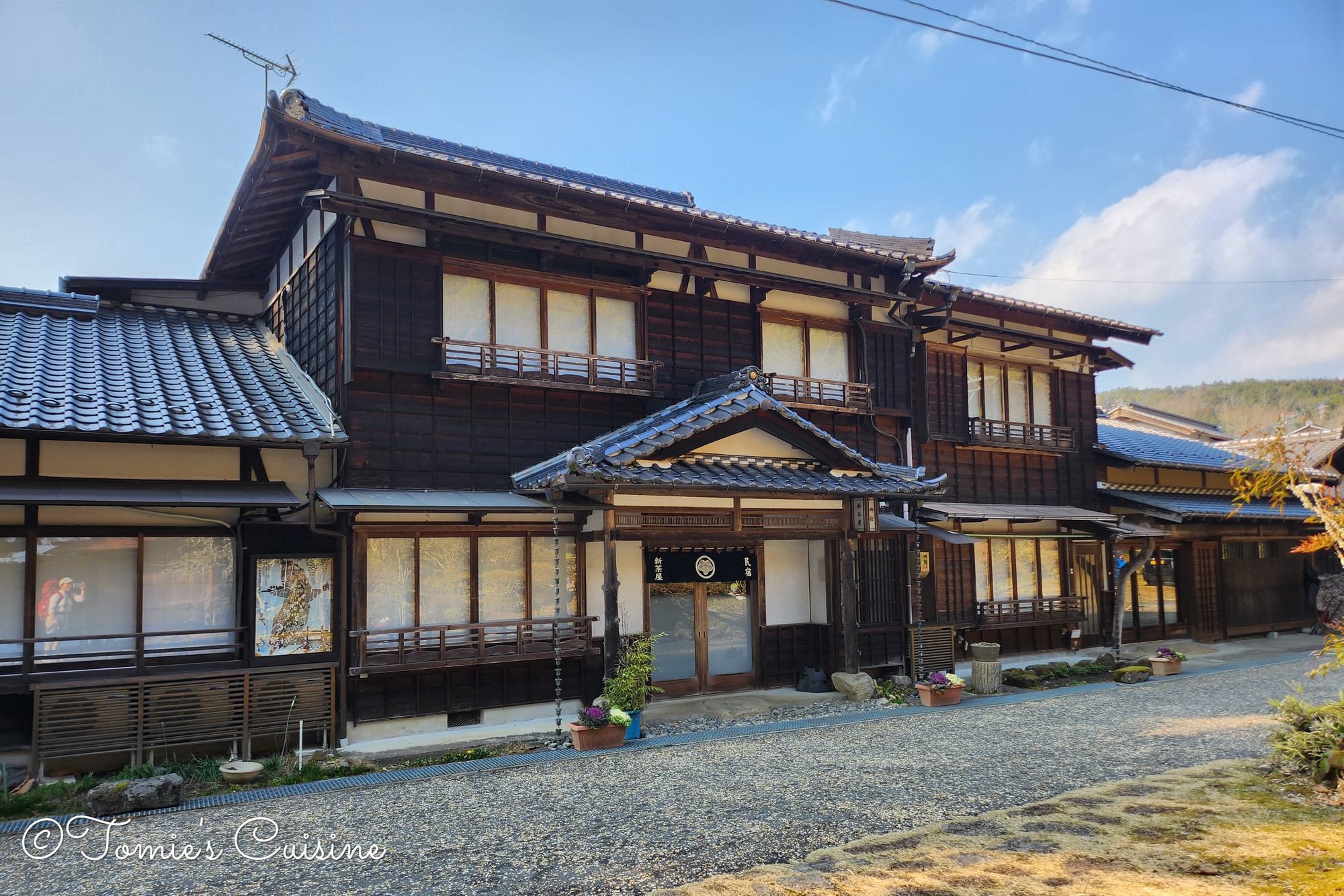
The actual school was called "Misaka Elementary School, Yamaguchi Village (山口村立神坂小学校)". The building was built in 1999, and the school was closed when the village was merged into Nakatsugawa City in 2005. In 2010, Magome Furusato Gakko was opened as a community centre, and in 2018, they started offering accommodation.
We were knackered and needed to have a good sleep. At first, we booked a room separated by a wall from the other rooms, but we were worried about hearing the neighbours, so we asked if they had a private room available (you can read more in our accommodation guide). Luckily, they had a last-minute cancellation, so we took the room for an extra 5,000 JPY.
The shower and toilet are shared, but it was quite clean. There are a few washing machines, a dryer, and a kitchen, so it’s also perfect for a long stay.
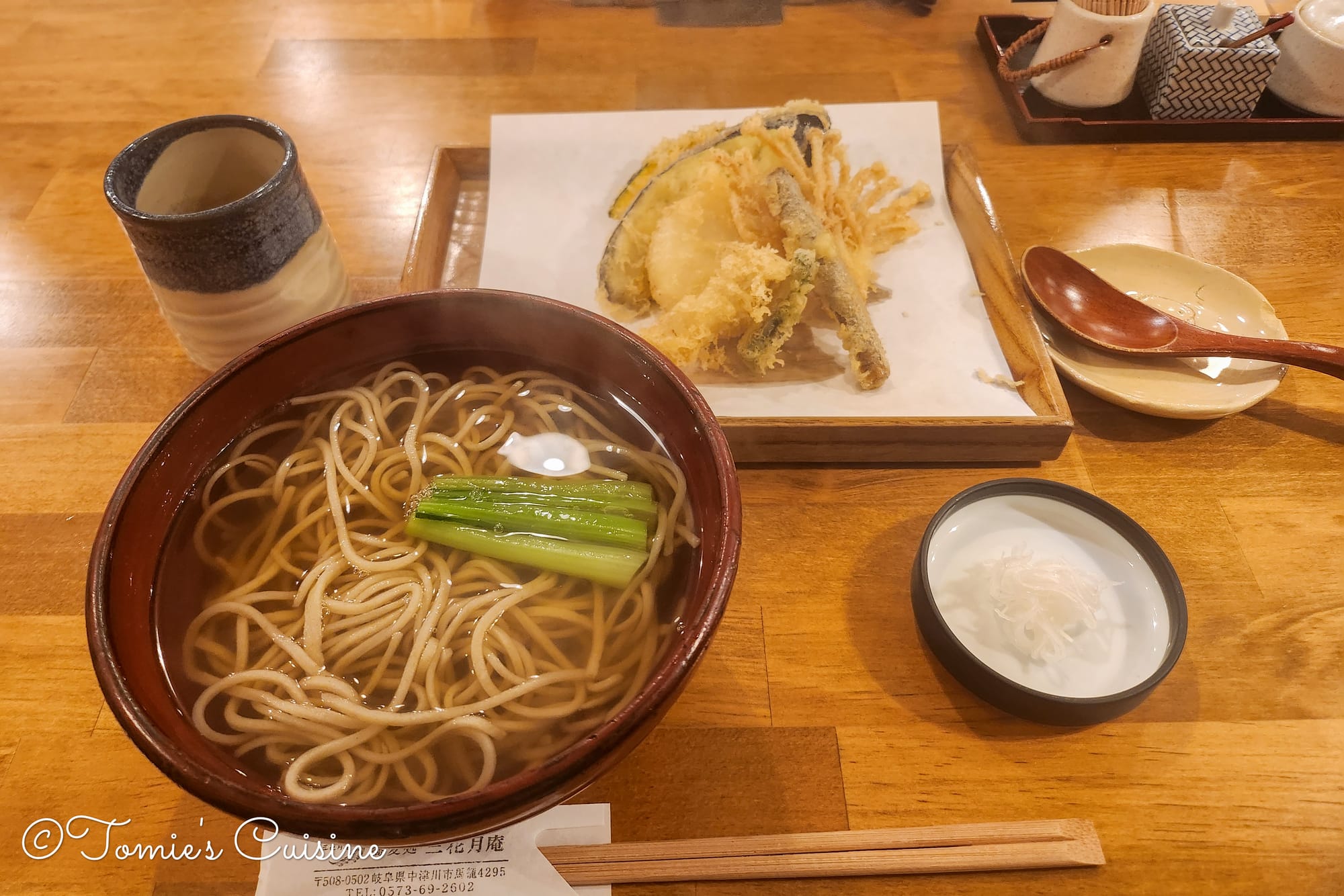
Dinner at Mikazukian (蕎麦処 三日月庵), a soba restaurant in Magome, 6:00 pm
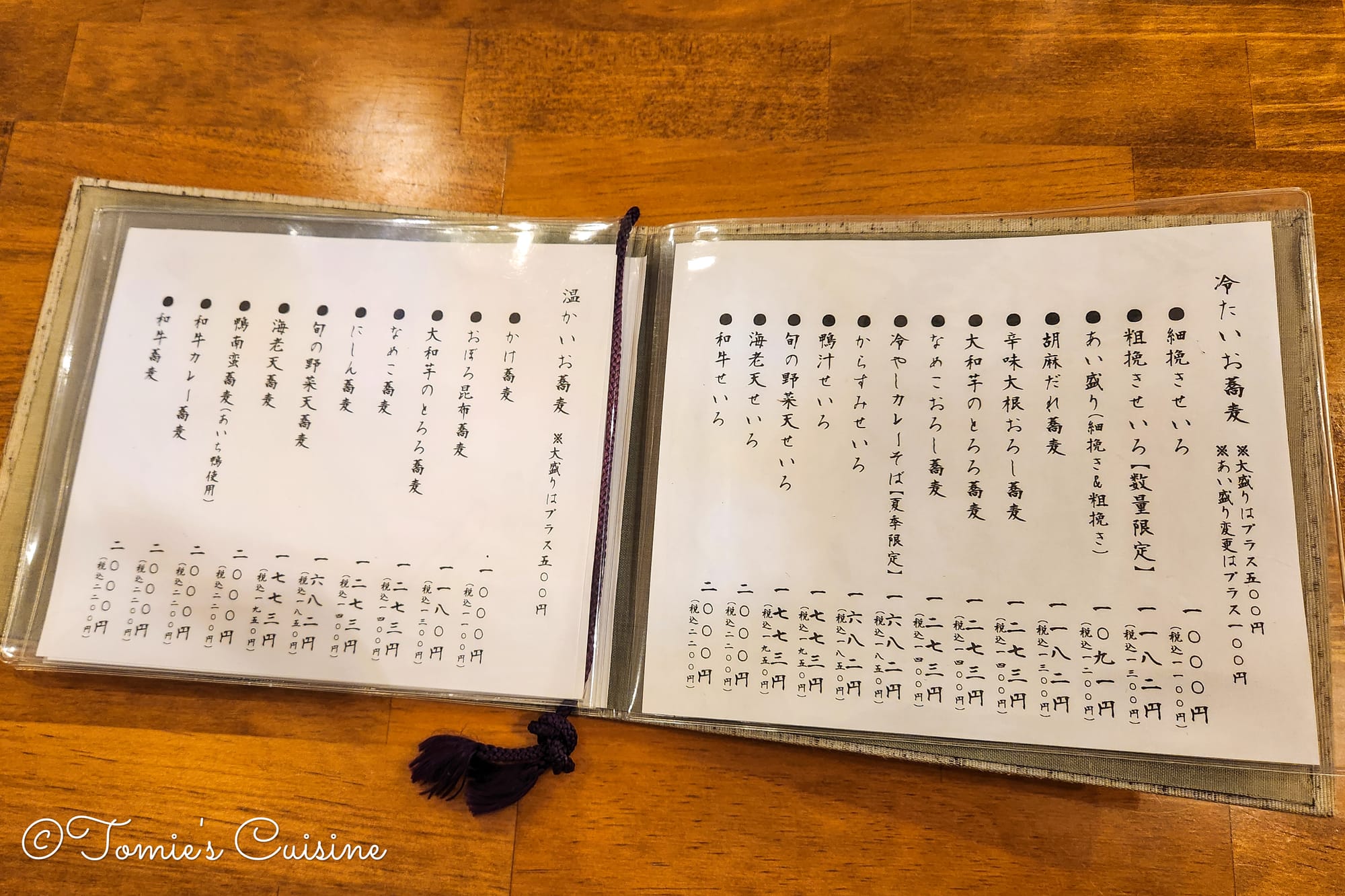
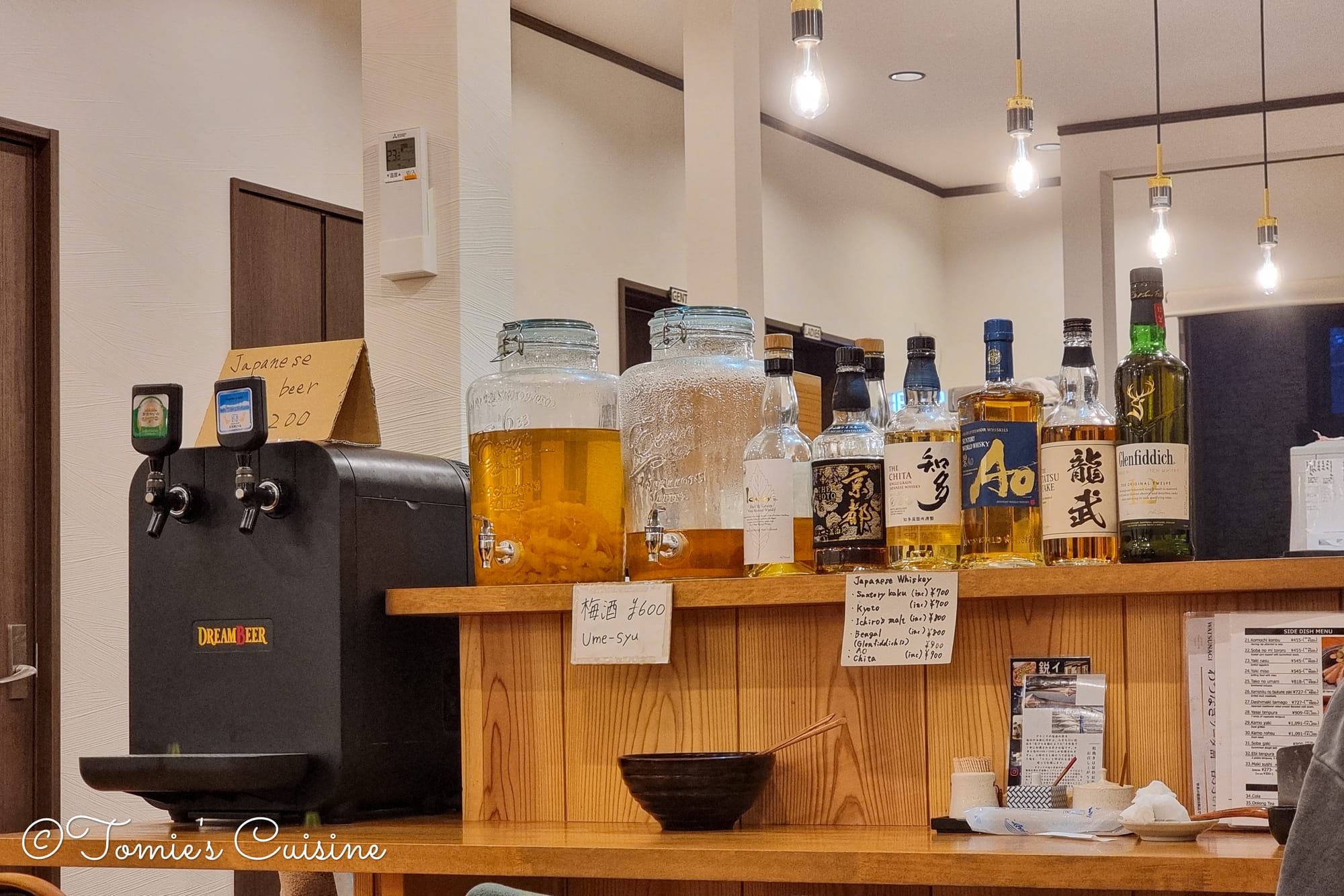
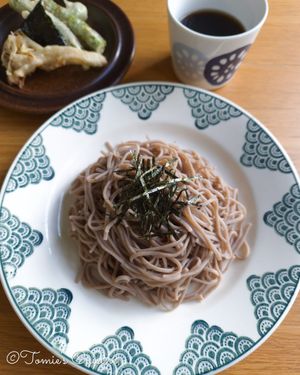
Hot soba with vegetable tempura and assorted tempura. We had the non-alcoholic beer. It was a little chilly outside; the hot soba noodles with tempura were comforting and delicious.
That day, they also had a guest chef grilling yakitori (skewered grilled chicken) right outside the restaurant, and it was delicious too. There are plenty of places to eat, so if we could stay longer, we would love to see what else Magome has to offer.
Sleeping in a classroom at Magome Furusato Gakko
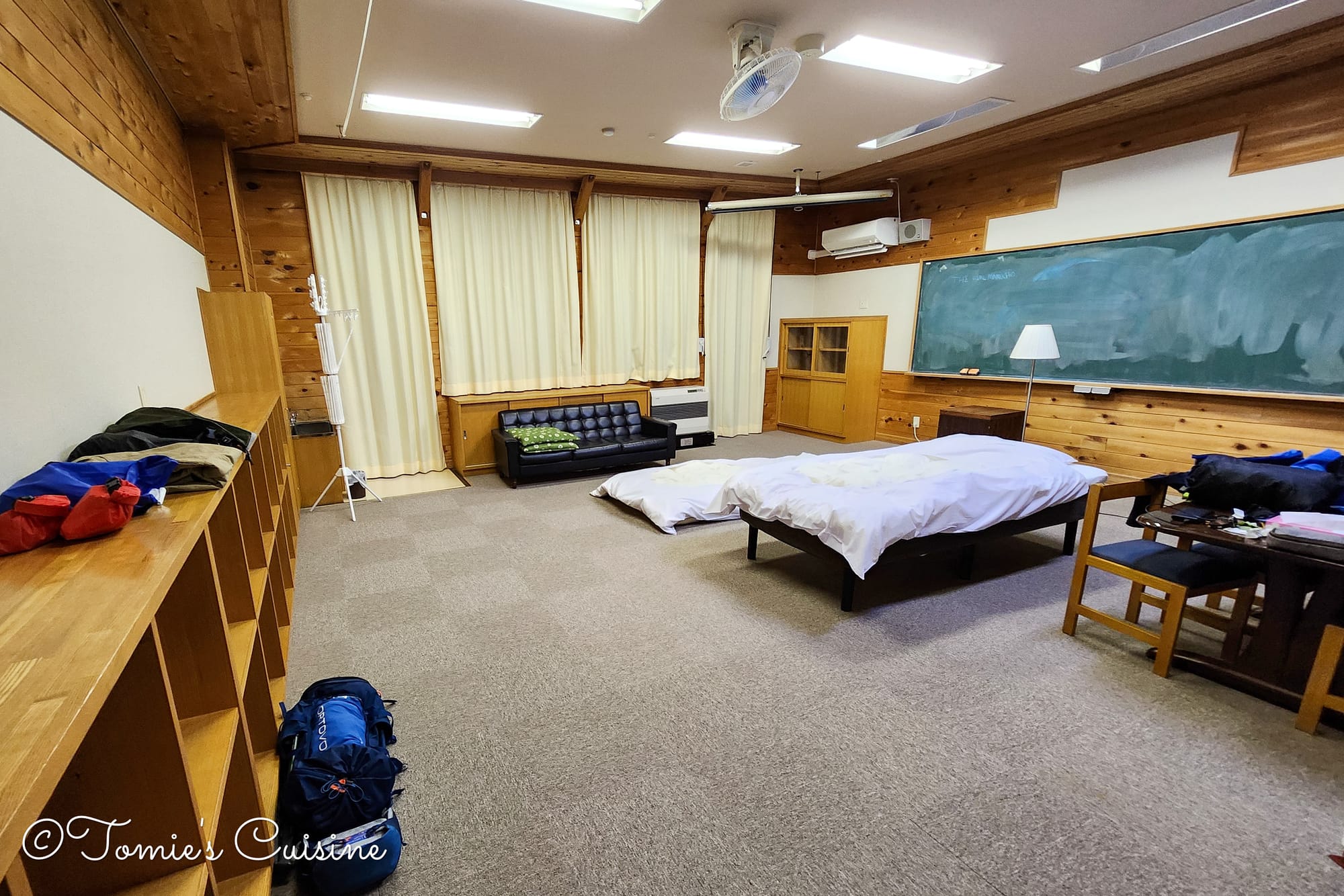
When we came back from the restaurant, the room was ready for us. They had prepared one bed and one futon. It’s a classroom, so the room is massive, but we had never stayed overnight in a classroom; it felt strange and kind of special.
Closing words
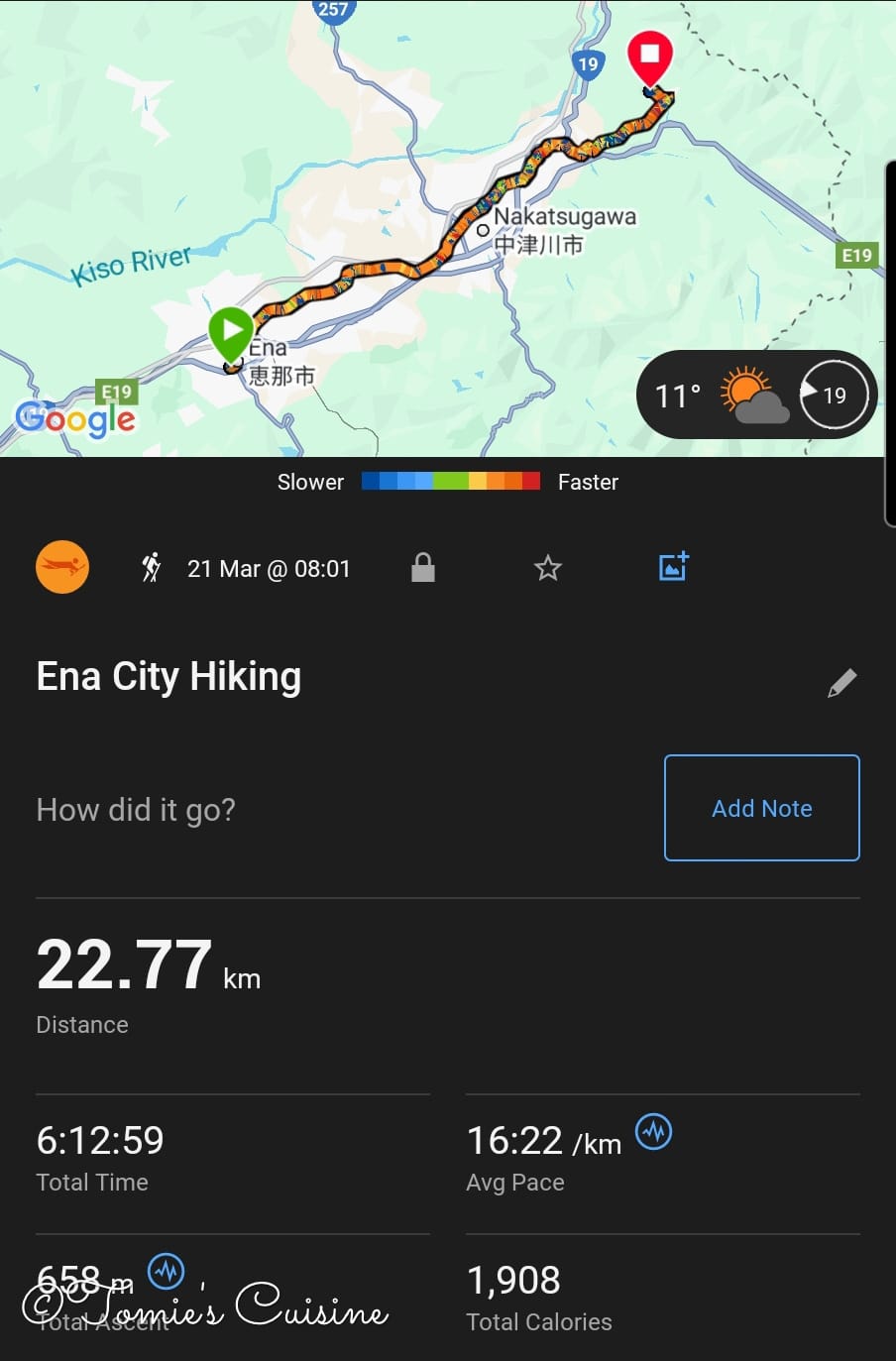
Day 9 was 22.7 km in all (both parts), shorter than the 30 km-plus of Days 2 and 3, but with a few steep climbs! We had a nice chat with various people, and that always warms us up. Next, we head from Magome to Suhara via Tsumago, covering some of the most popular destinations along Nakasendo.
If you have any questions or would like to see early photos of Nakasendo, feel free to visit ourInstagram,Pinterest, orFacebook page. We’re happy to answer any inquiries!