Nakasendo Day 9/19 (Part 1): Ooi to Nakatsugawa, Gifu
Day 9 was too good to fit in one post, so here's part one. From Ena we walk through Ooi, the post town with six right-angled masugata corners and no castle to protect, to Nakatsugawa, home of chestnut sweets and a lunch of keichan, Gifu's soul food.
As an Amazon Associate we earn from qualifying purchases.
Day 9 was long, so we split it into two parts. This first part covers our walk from Ena through Ooi post town, where the road twists through six right-angled corners built to slow down an army that never came, past the roadworks for Japan’s future maglev train, and on to Nakatsugawa, a town I'd wanted to visit for years for its chestnut sweets. We also stopped there for lunch and tried keichan, one of Gifu's best-loved local dishes.
It was Friday, 21 March, the day after the spring equinox holiday, and the last day before the Nakasendo heads into the Kiso Valley. In Part 2, we climb the Ochiai stone path and arrive in Magome.
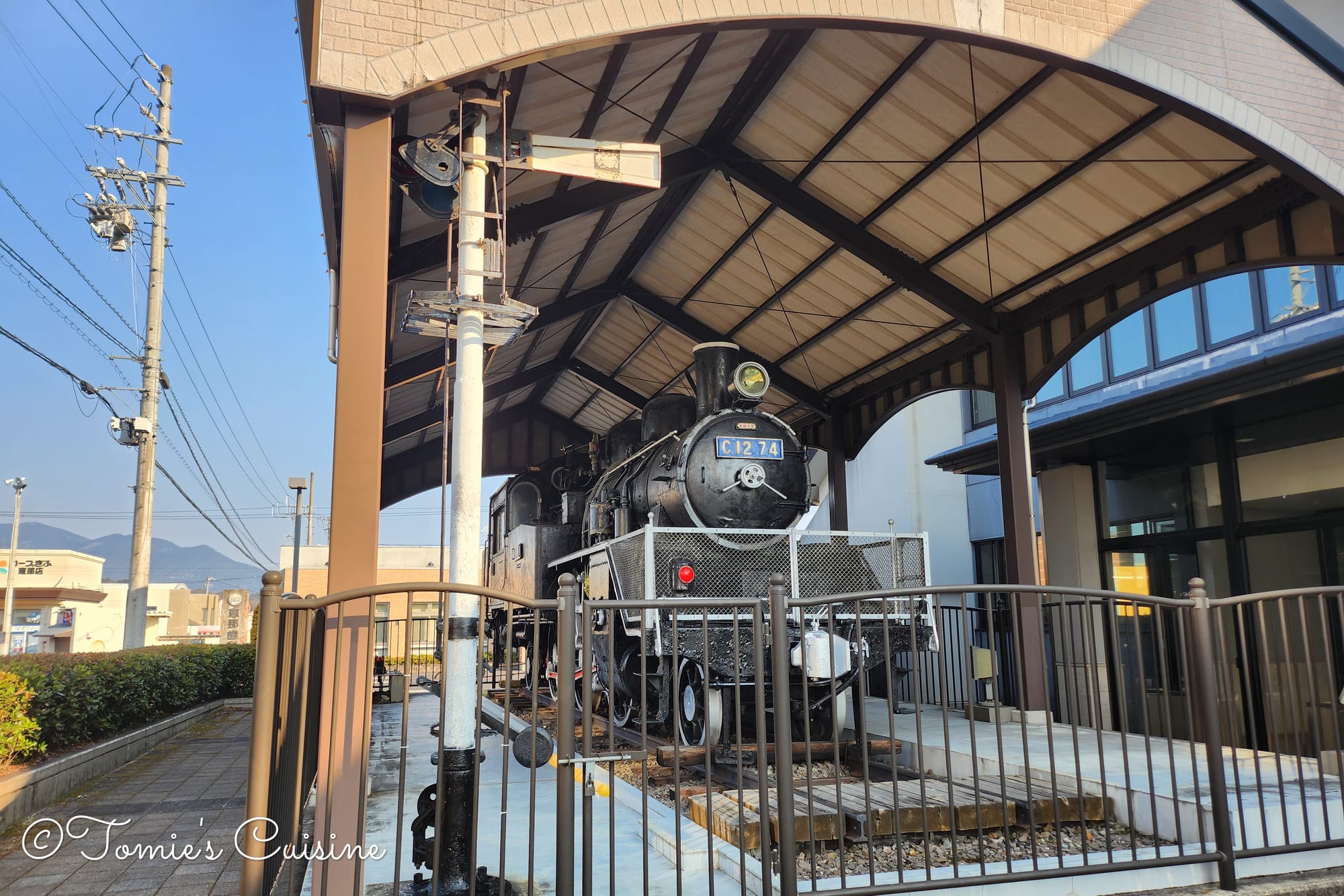
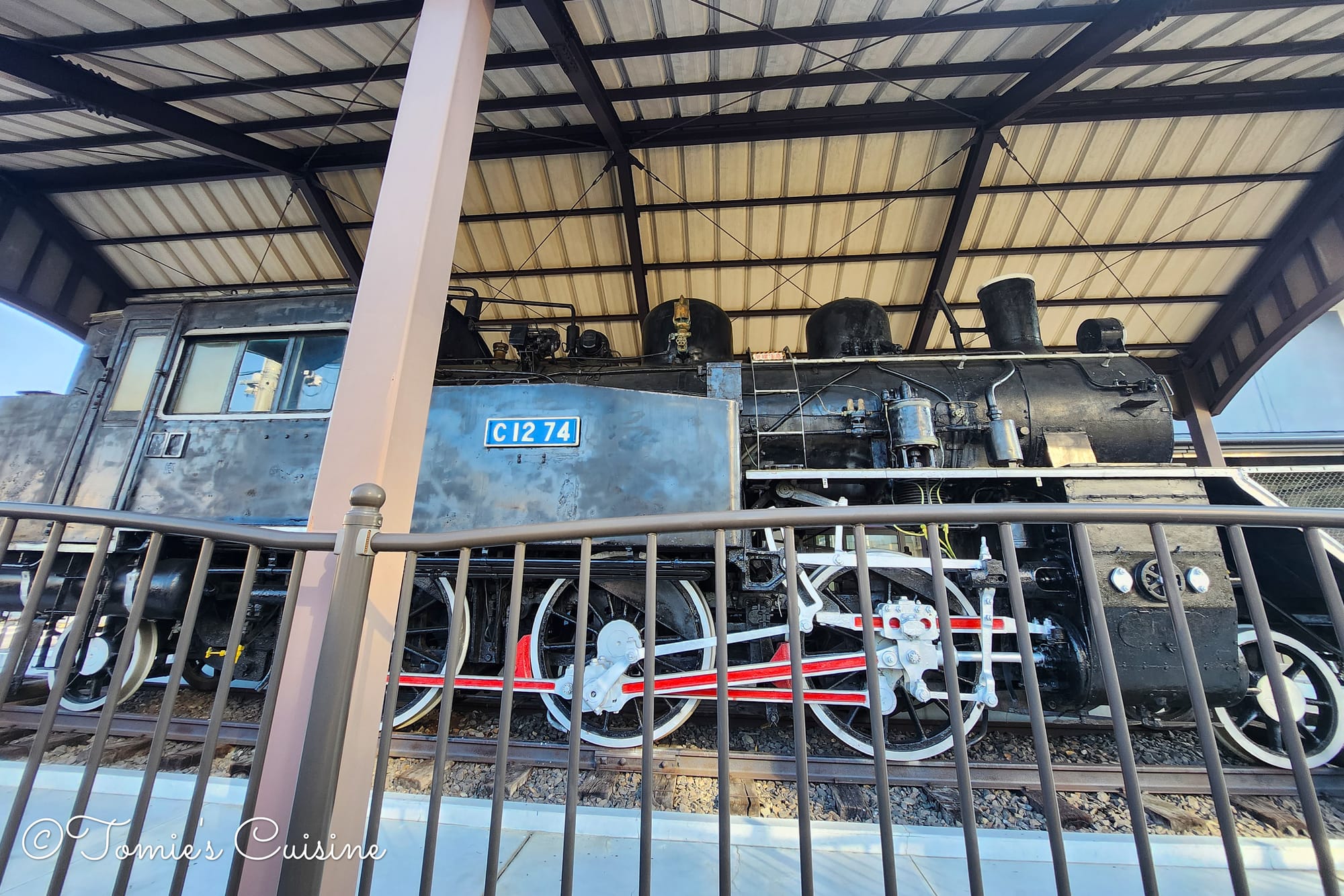
The locomotive, a C12 74, sits right outside the library. According to the information board, it was in service from 1934 to 1972, was displayed at Ena City Hall from 1972, and moved here in 2007, when the library opened. It's a five-minute detour from the Nakasendo and worth it if you like trains.
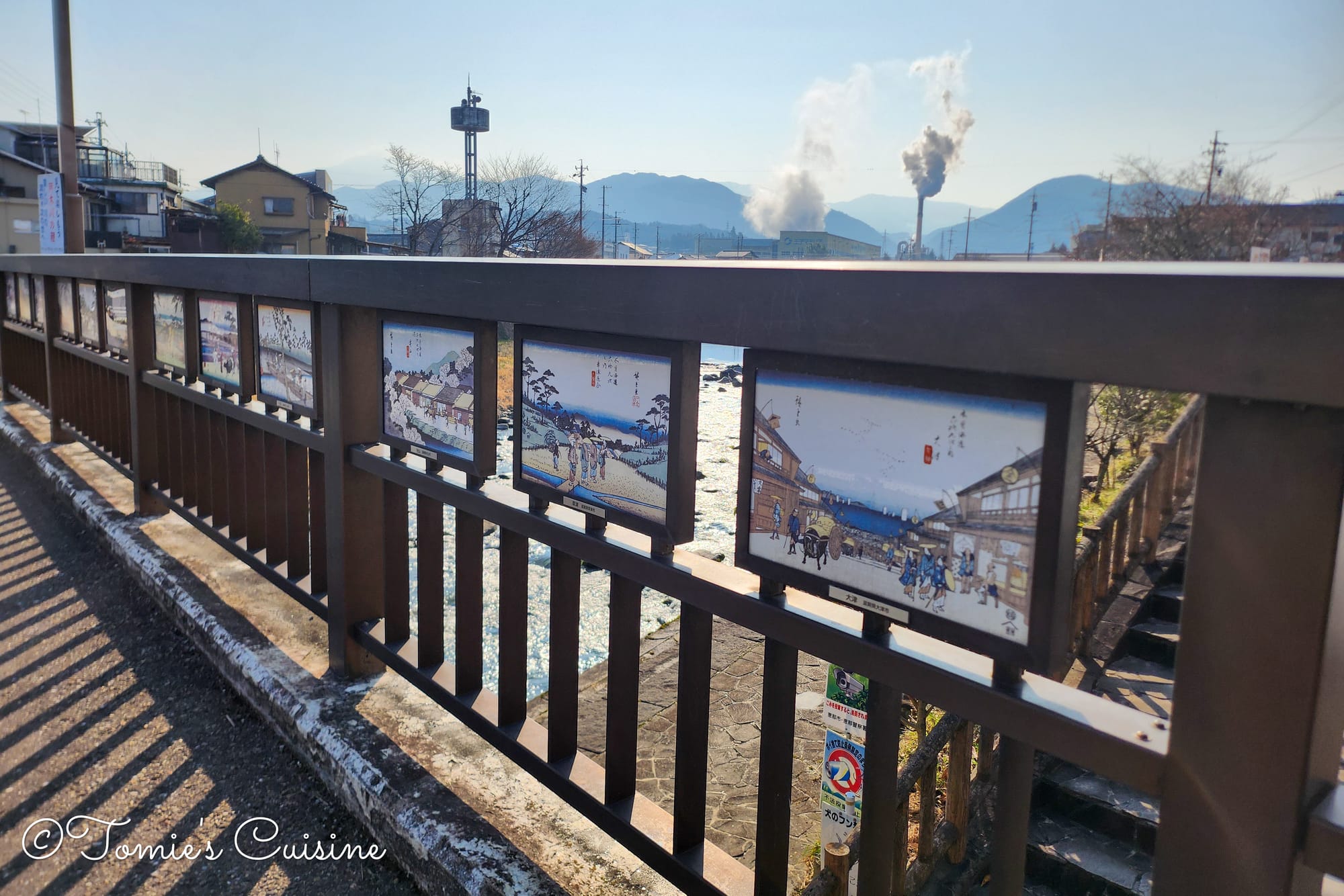
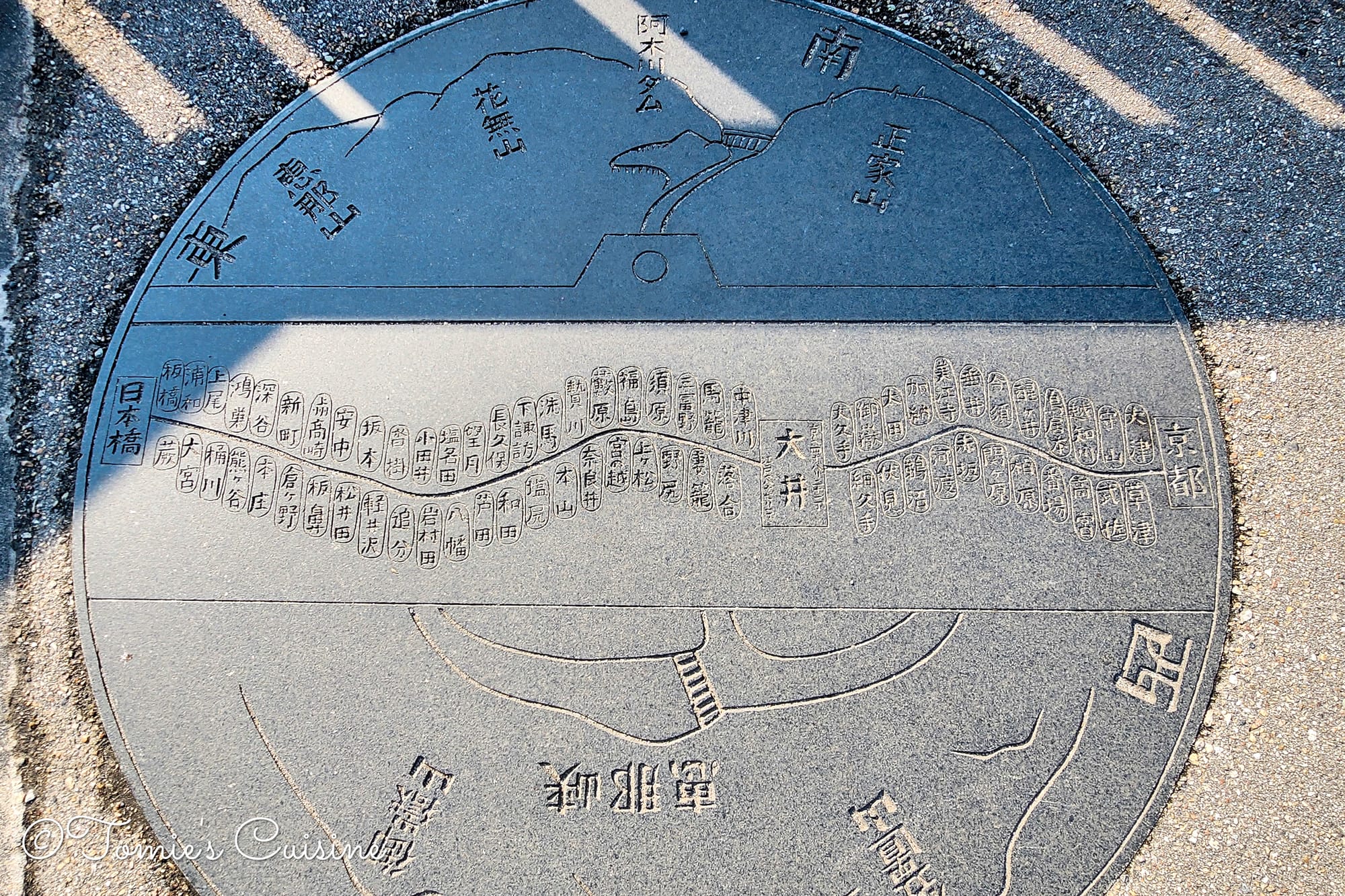
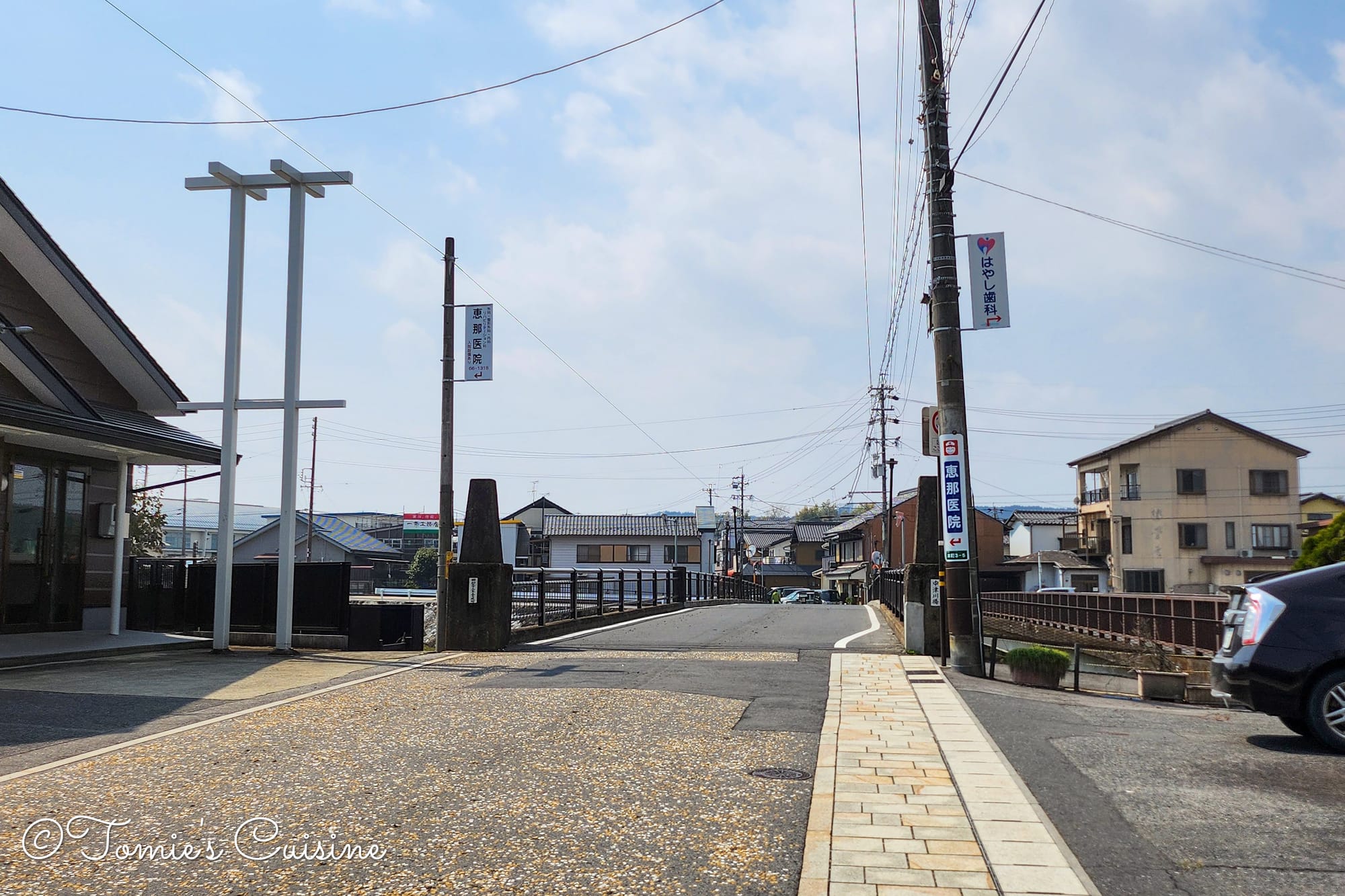
The railings of the Ooi Bridge are lined with ukiyo-e prints of every post town on the Nakasendo. After our last-minute dash around the Hiroshige museum on Day 8, it was fun to spot the ones we'd already walked through, and the ones still to come. Then, in the middle of the bridge, a local mountain viewpoint map listed the names of each Nakasendo post town.
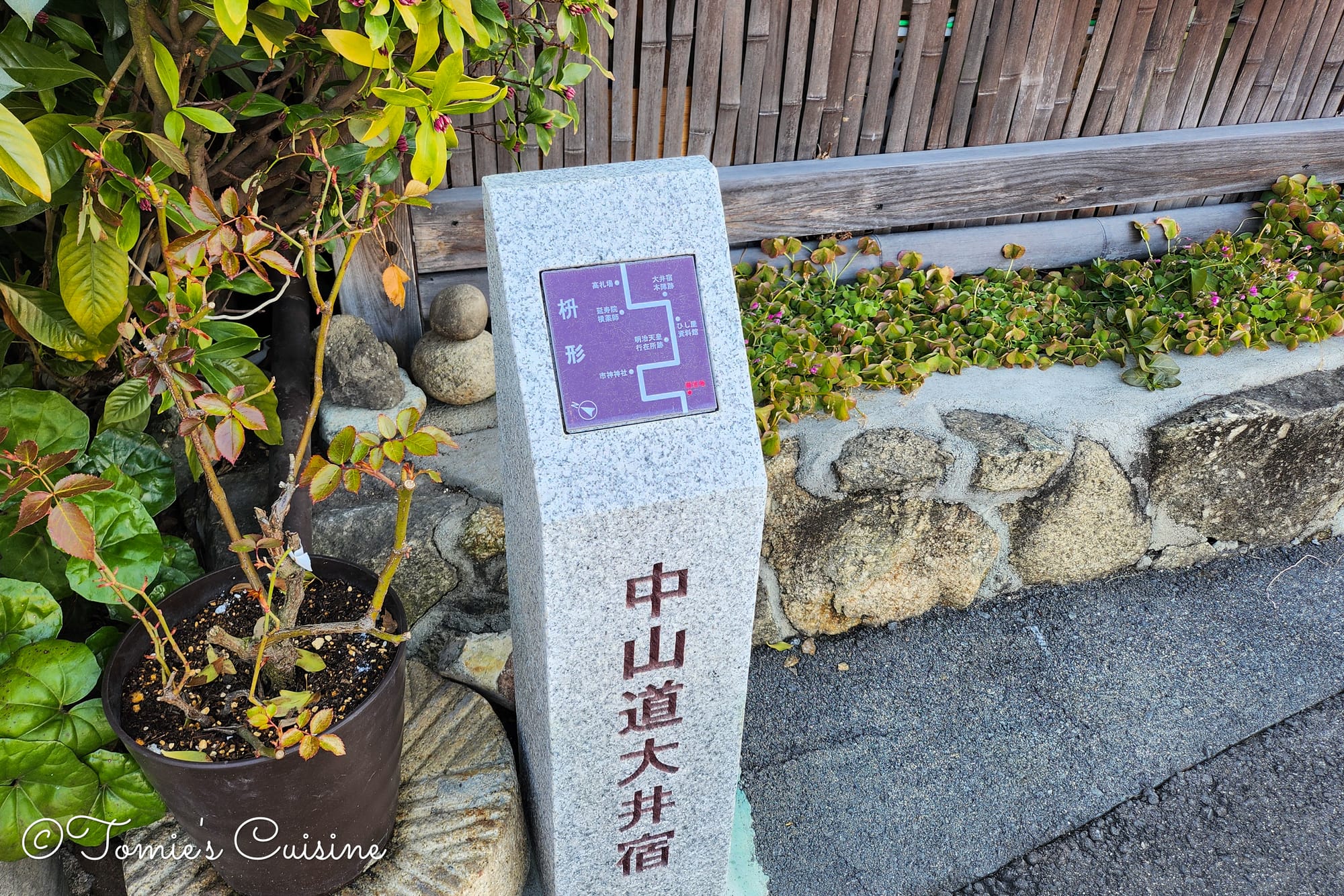
Masugata 枡形
The 'Masugata' map.
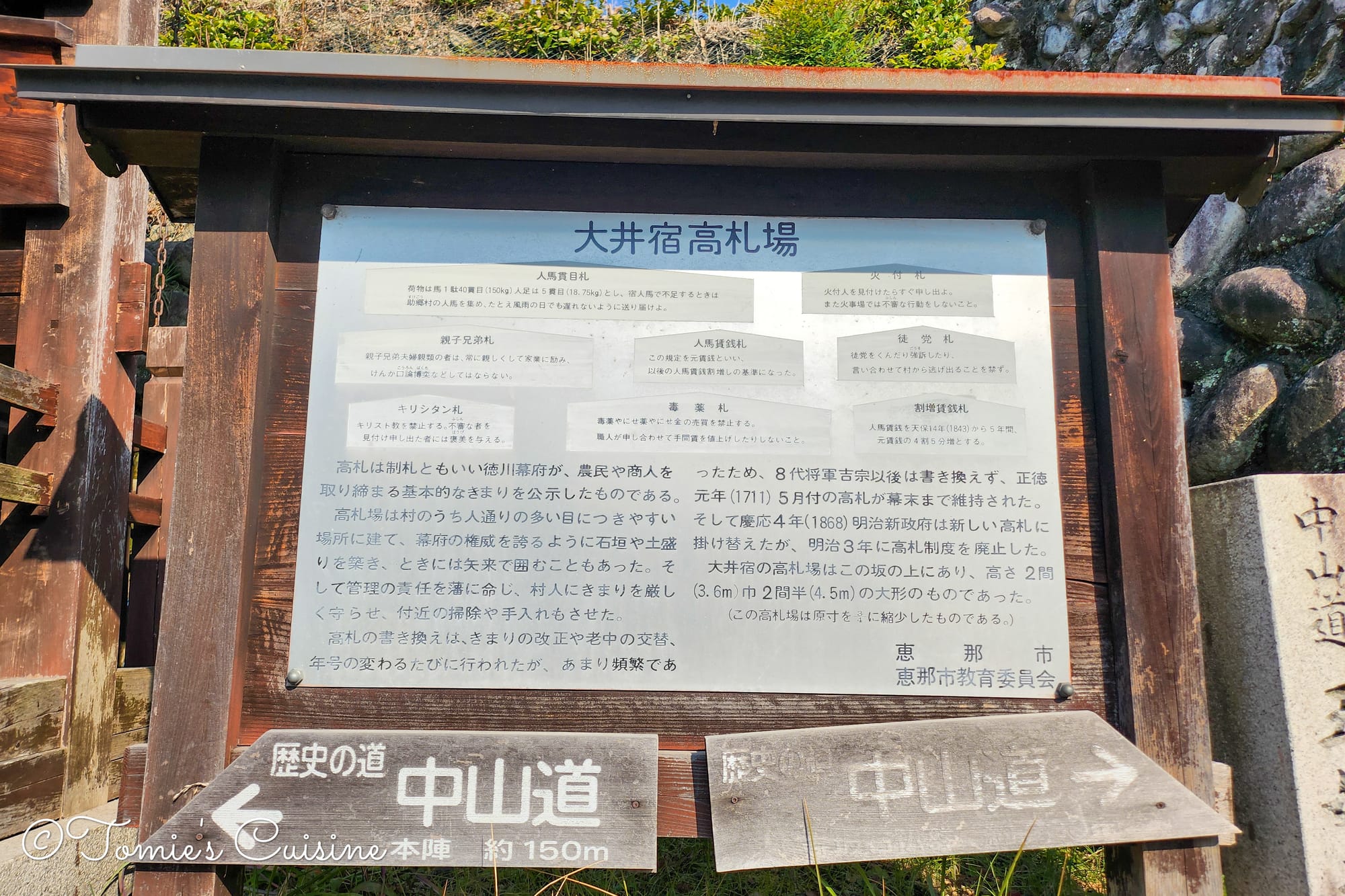
A masugata (枡形) is a square bend in the road with two right-angle turns, built to slow down an invading army.
You usually find masugata in castle towns, so enemies can't march straight up to the gate. We actually passed one in Kano on Day 5, which makes sense, as Kano had a castle. Ooi has six, and no castle at all. According to Gifu Prefecture's tourism website, no other post town on the Nakasendo has so many.
Nobody is quite sure why. One theory is that people once planned a castle here; another is that the zigzags were simply a way to fit as many inns as possible into a narrow strip of land. The ruins of Ooi Castle in Ena City date to the Sengoku period (the late 15th to late 16th century), long before the Nakasendo, so the two aren't connected.
Walking it, you really notice them: every few minutes the road turns sharply, then turns again, and you lose sight of what's ahead. It's a little reminder that this peaceful post town was designed with war in mind.
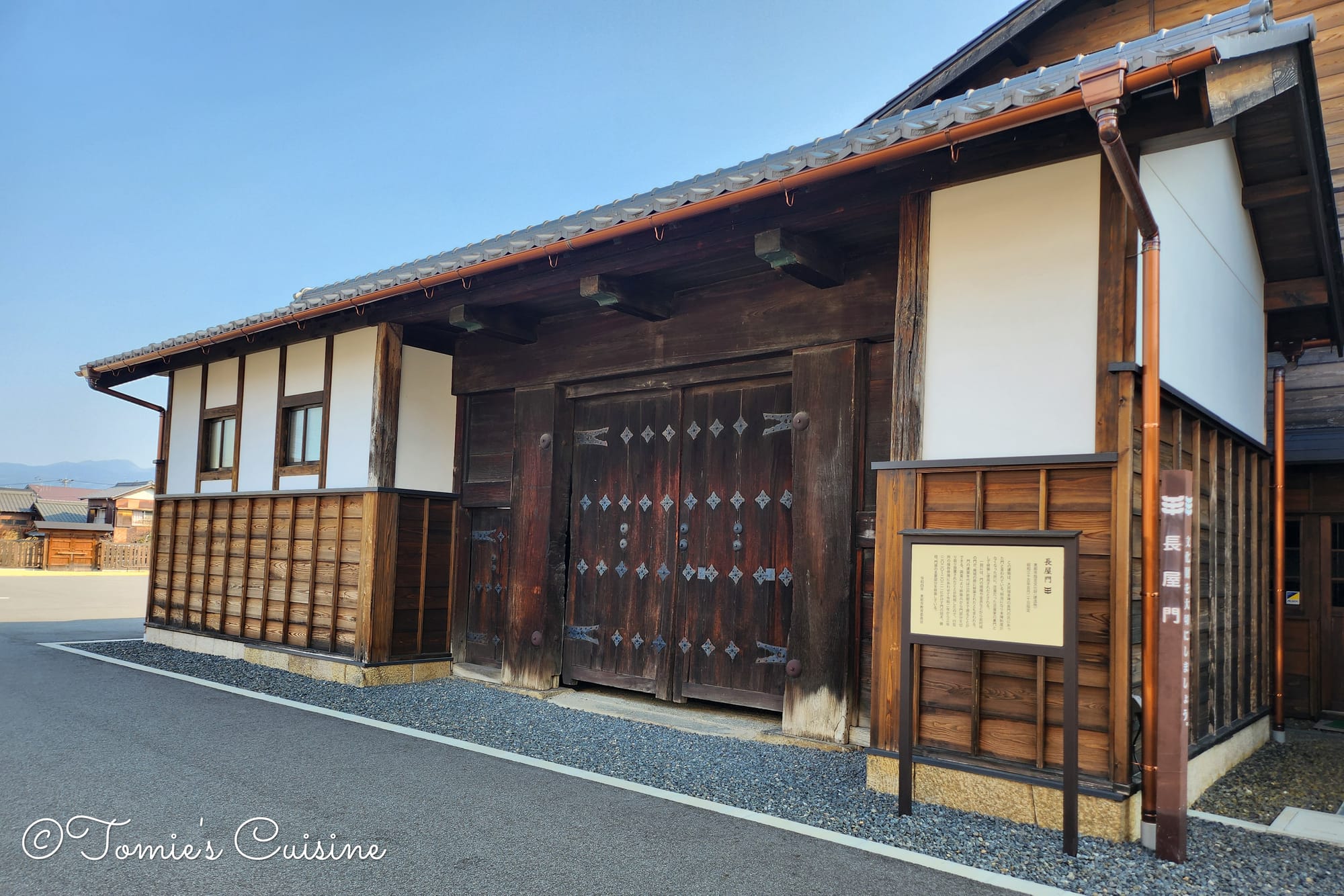
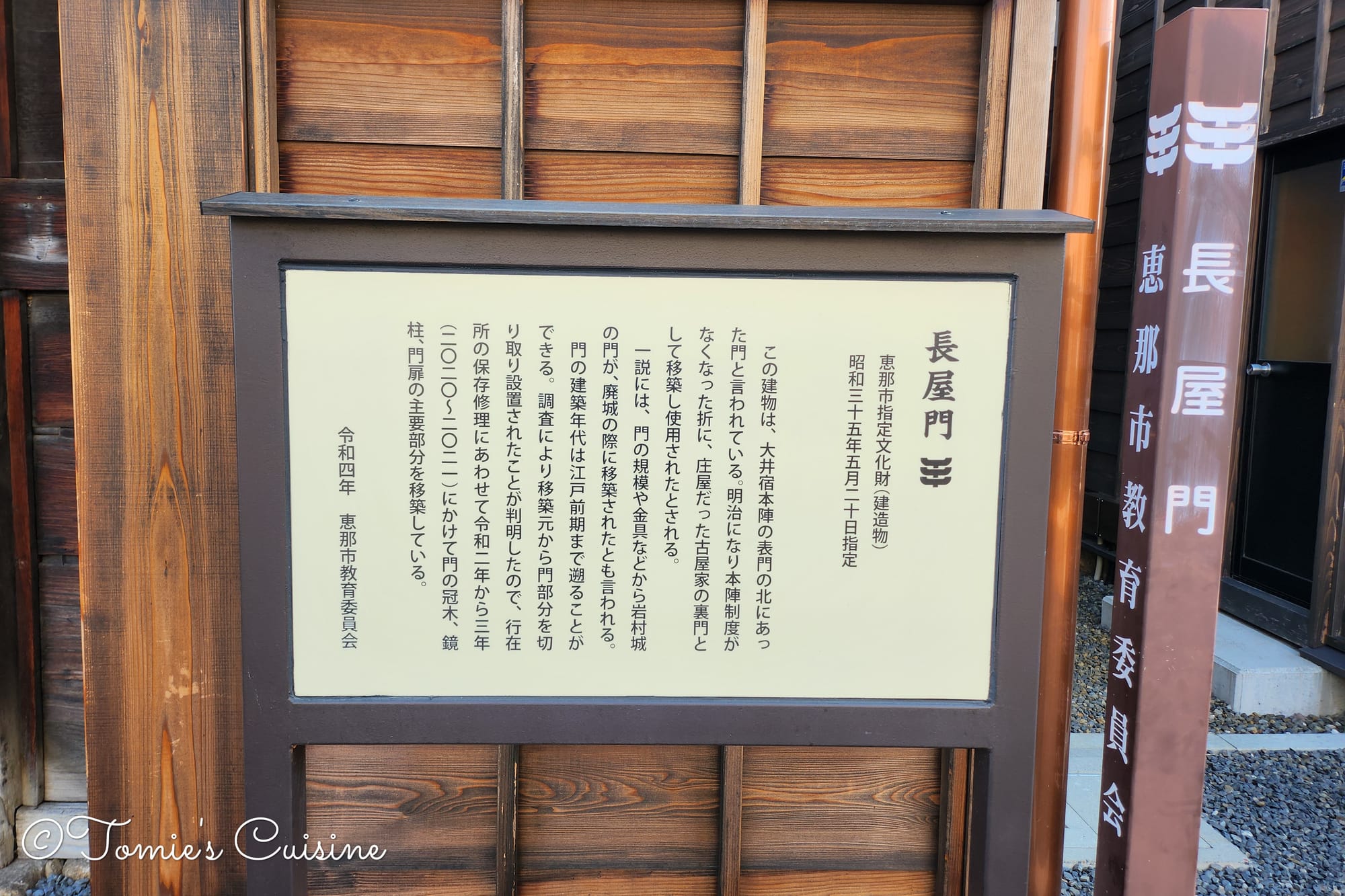
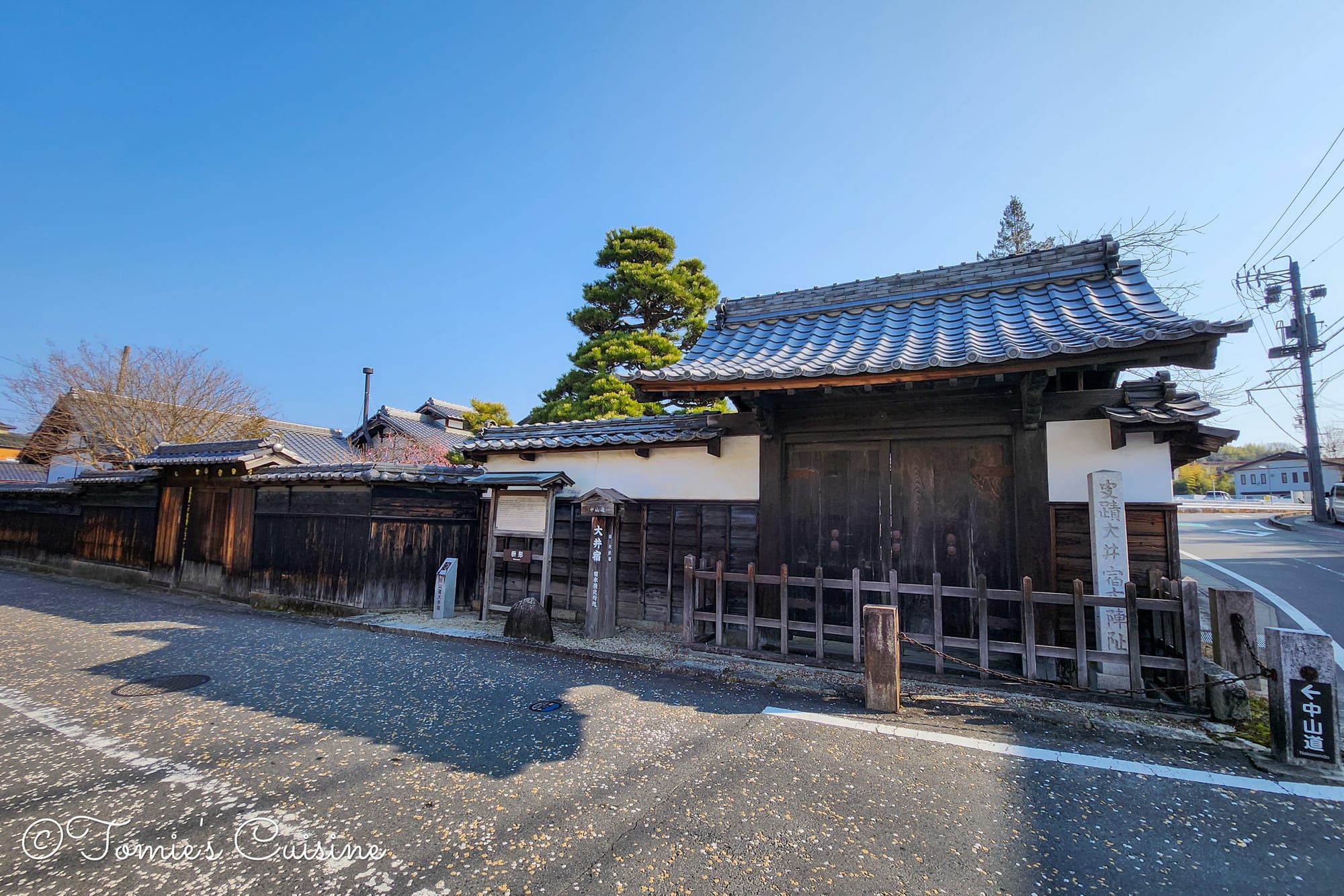
This gate used to be north of the front gate at Ooi post town Honjin, and one theory is that its structure suggests it could be an old castle gate.
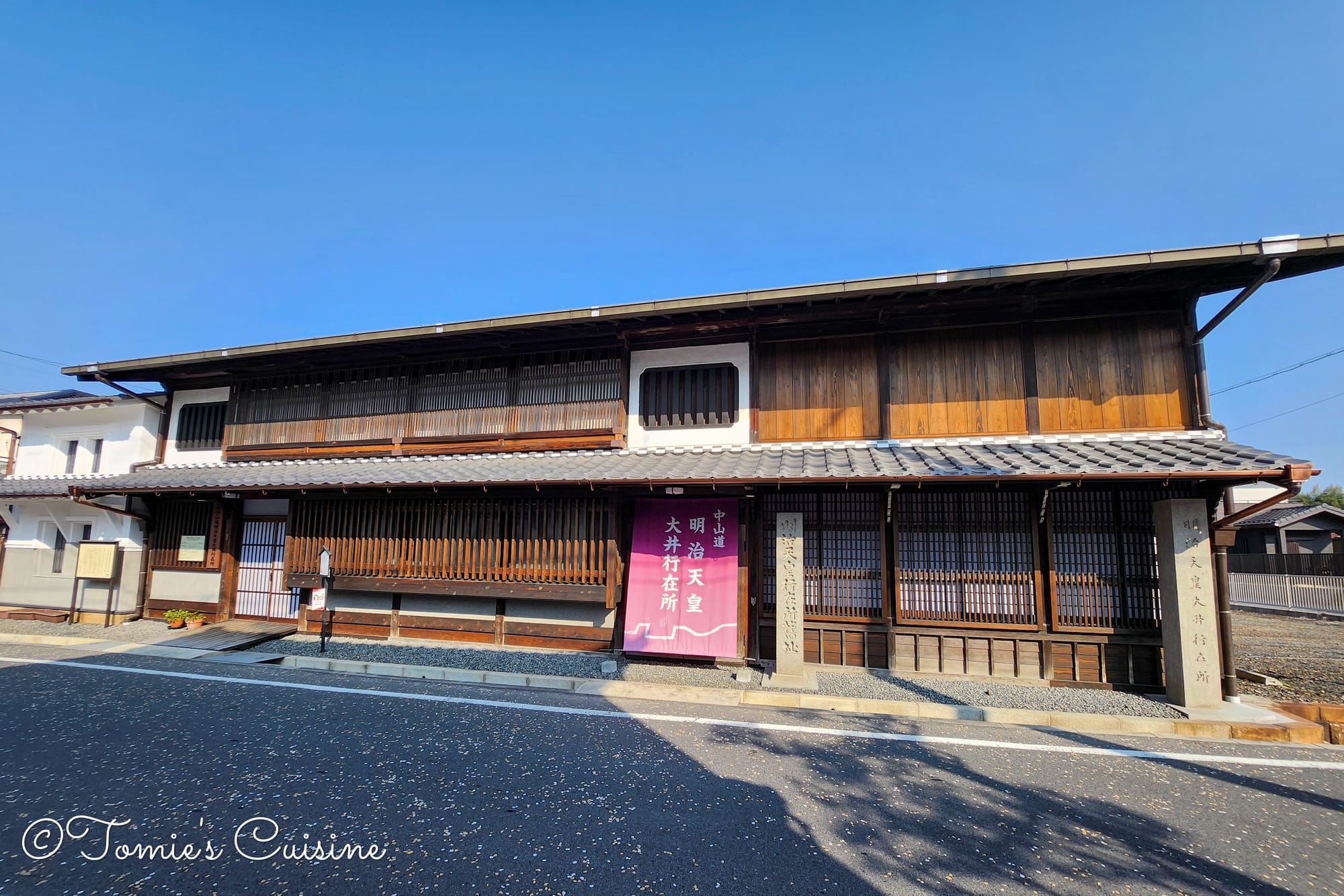
Emperor Meiji’s Ooi Anzaisho (中山道明治天皇大井行在所)
The former Ikedaya inn, where Emperor Meiji stayed in 1880, is now an Ena City cultural property.
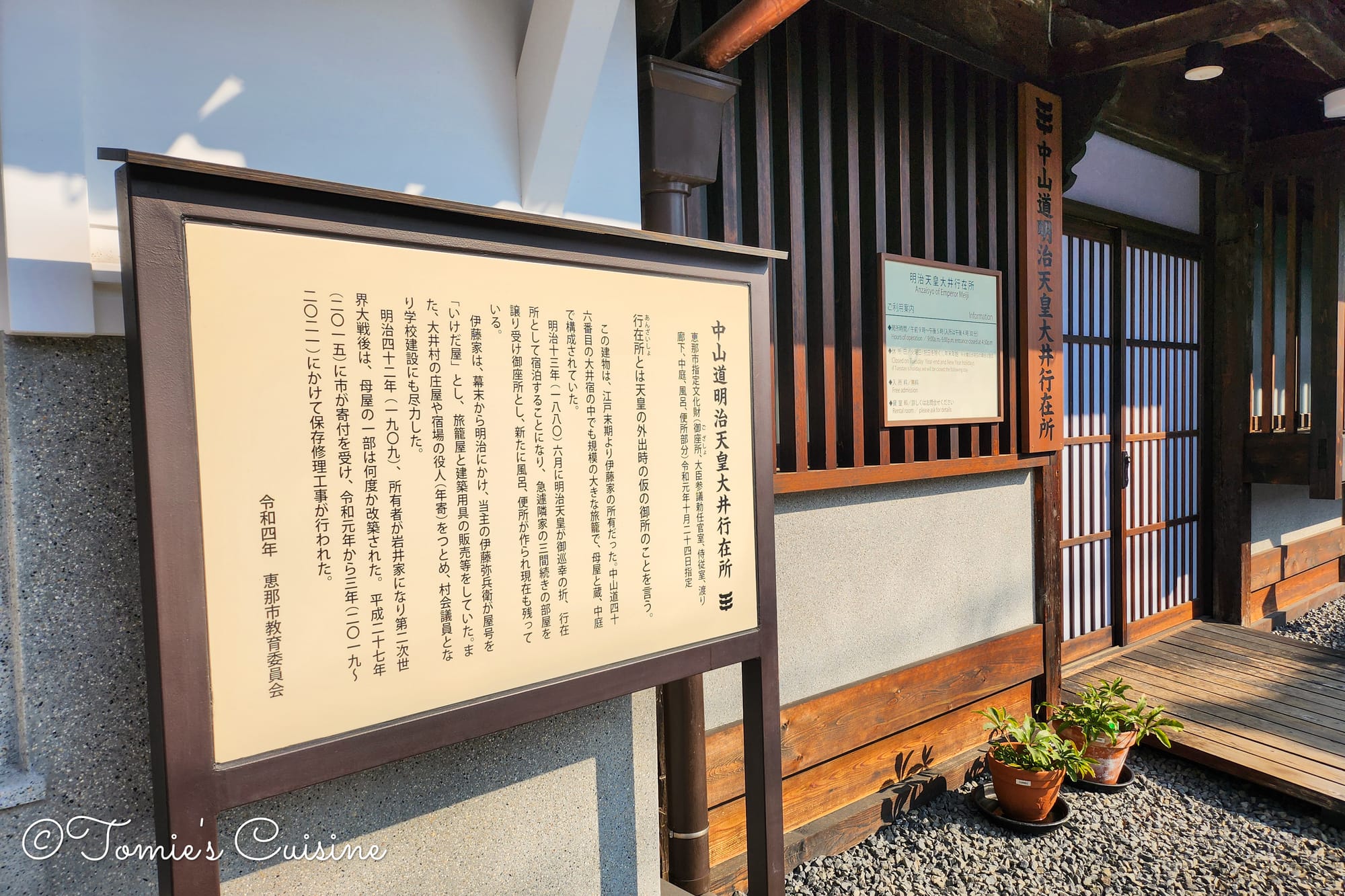
An anzaisho (行在所) is a temporary residence for the Emperor while he’s travelling. This building was once Ikedaya, one of Ooi's largest inns, run by the Itō family. When Emperor Meiji stayed here on his tour in June 1880, the family quickly took three adjoining rooms from the next house to become his quarters and built a new bath and toilet for him, both of which still stand today.
The head of the family, Itō Yahei, wasn’t just an innkeeper. He also sold building materials, served as Ooi village’s headman and a post-town official, and helped build the local school. The city was given the building in 2015 and restored it, and the Emperor’s rooms, the chamberlain’s room, the courtyard, the bath and the toilet are now protected as an Ena City cultural property.
We didn't stop by, but it looks great from the photos online. It's open to the public, so you can see what life was like back then. It's on our list for when we visit Ooi again.
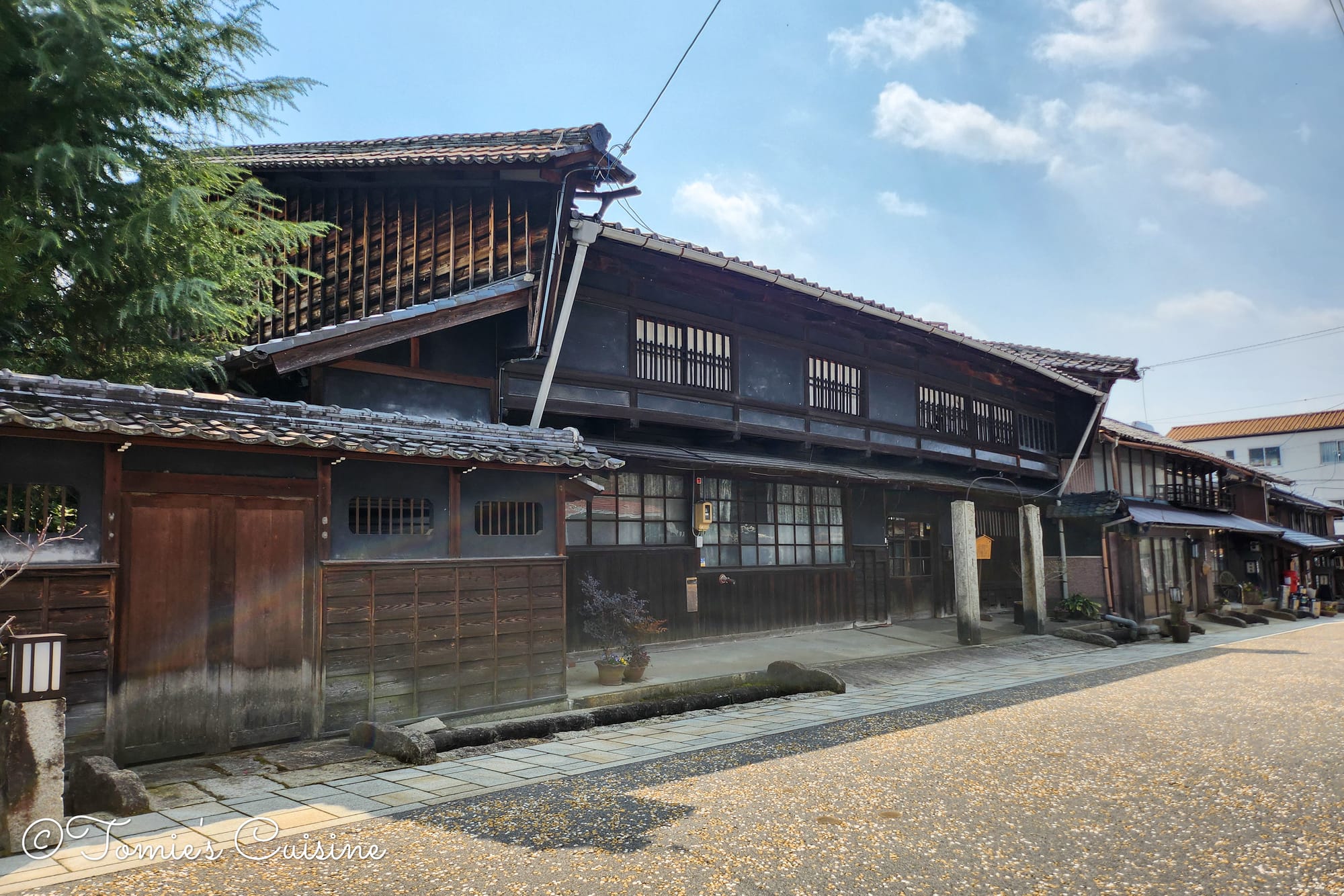
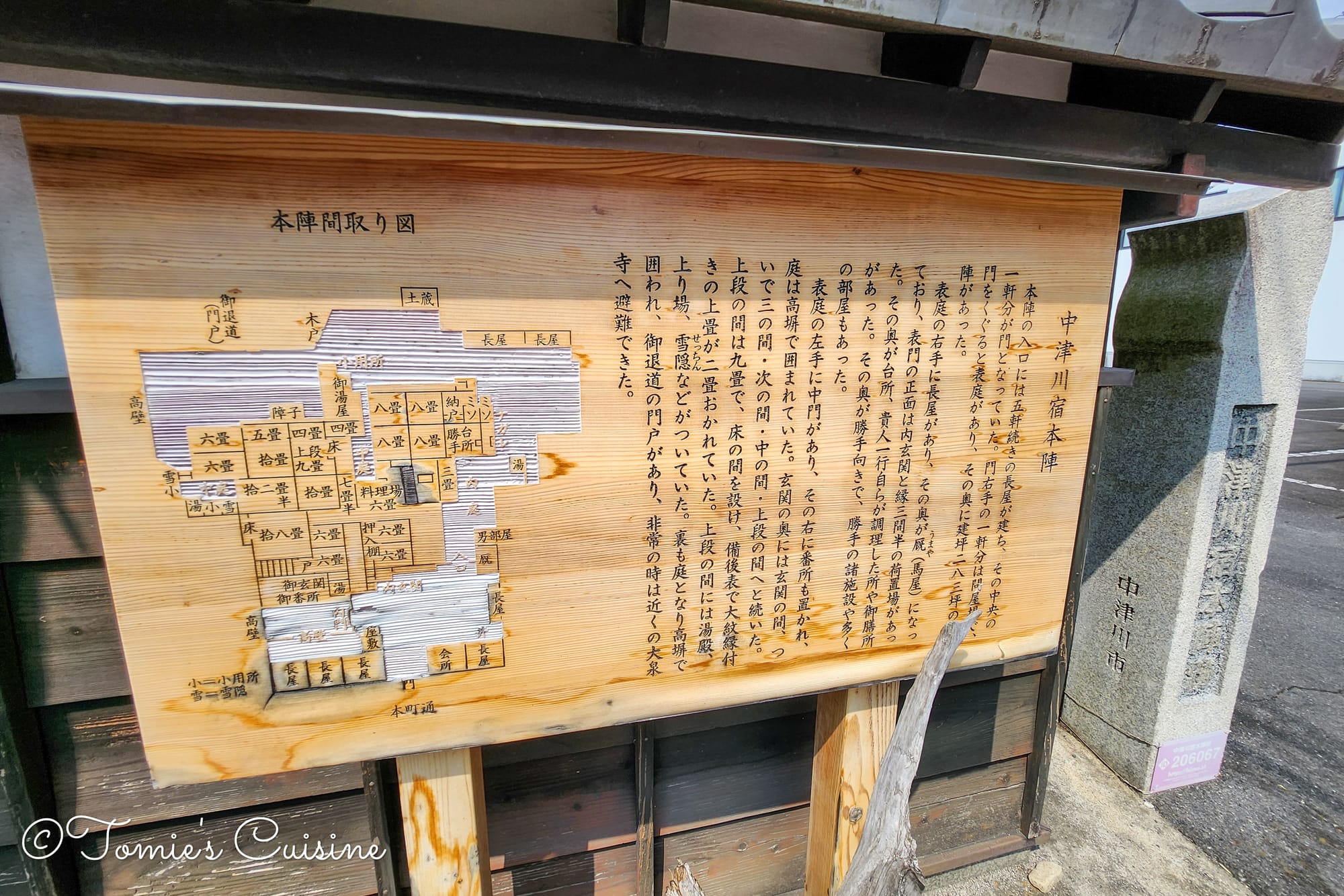
The Honjin was where daimyo and court nobles stayed when they passed through Ooi. According to the Gifu Prefecture website, the main building burned down in a 1947 fire, but the front gate and garden survived, and you can still see them from the road.
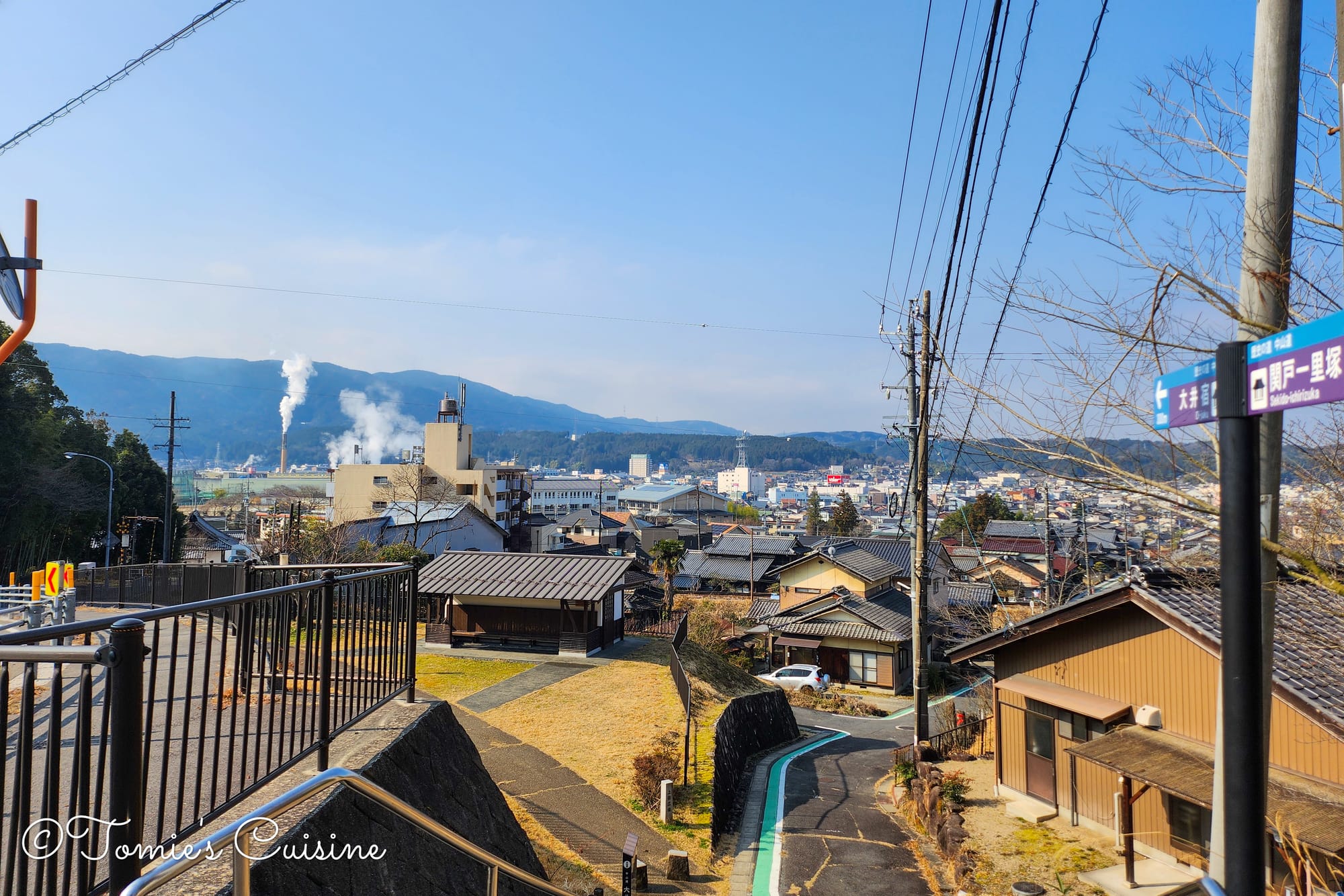
Going down the Jinbei Slope and arriving at Jinbeizaka Park.
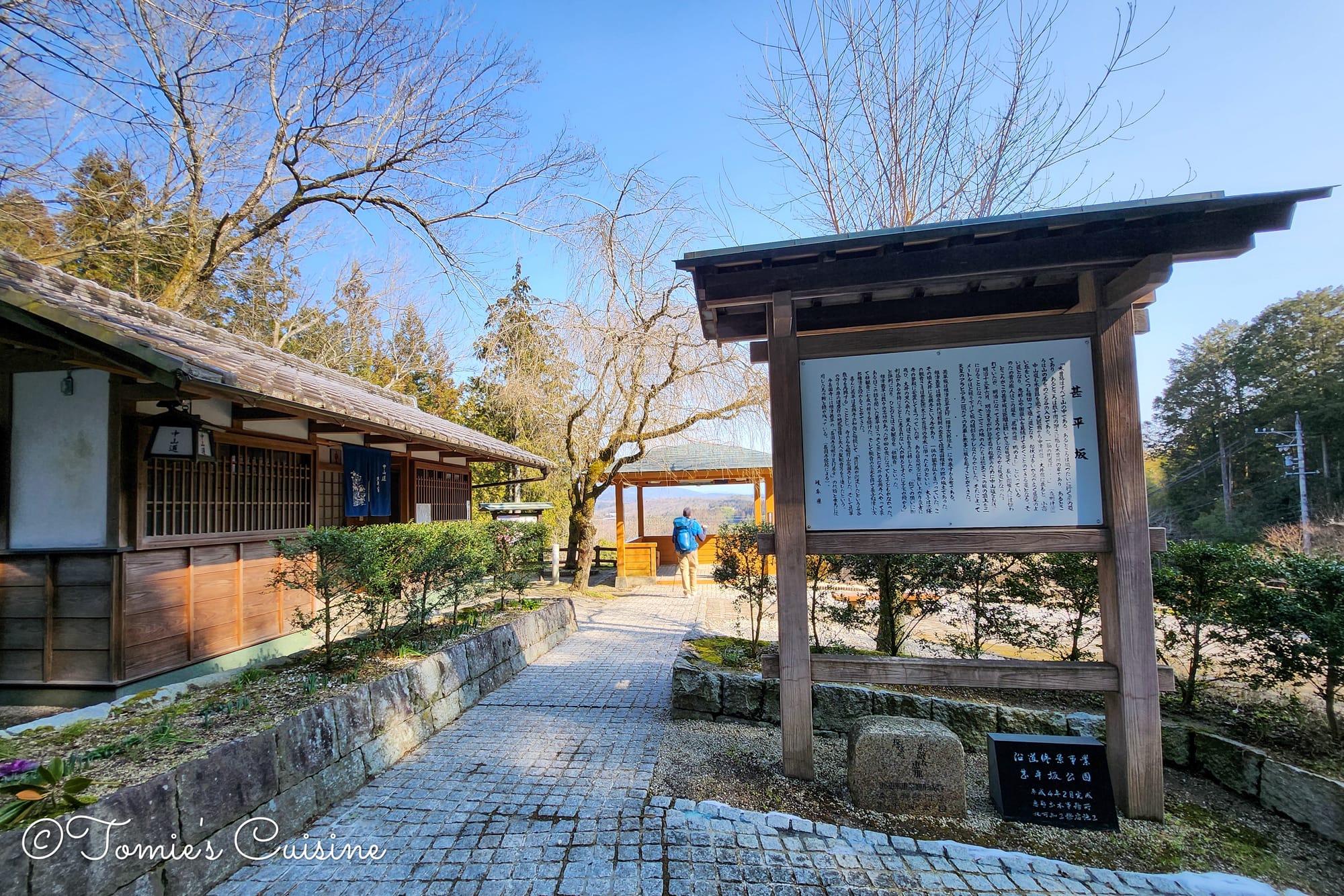
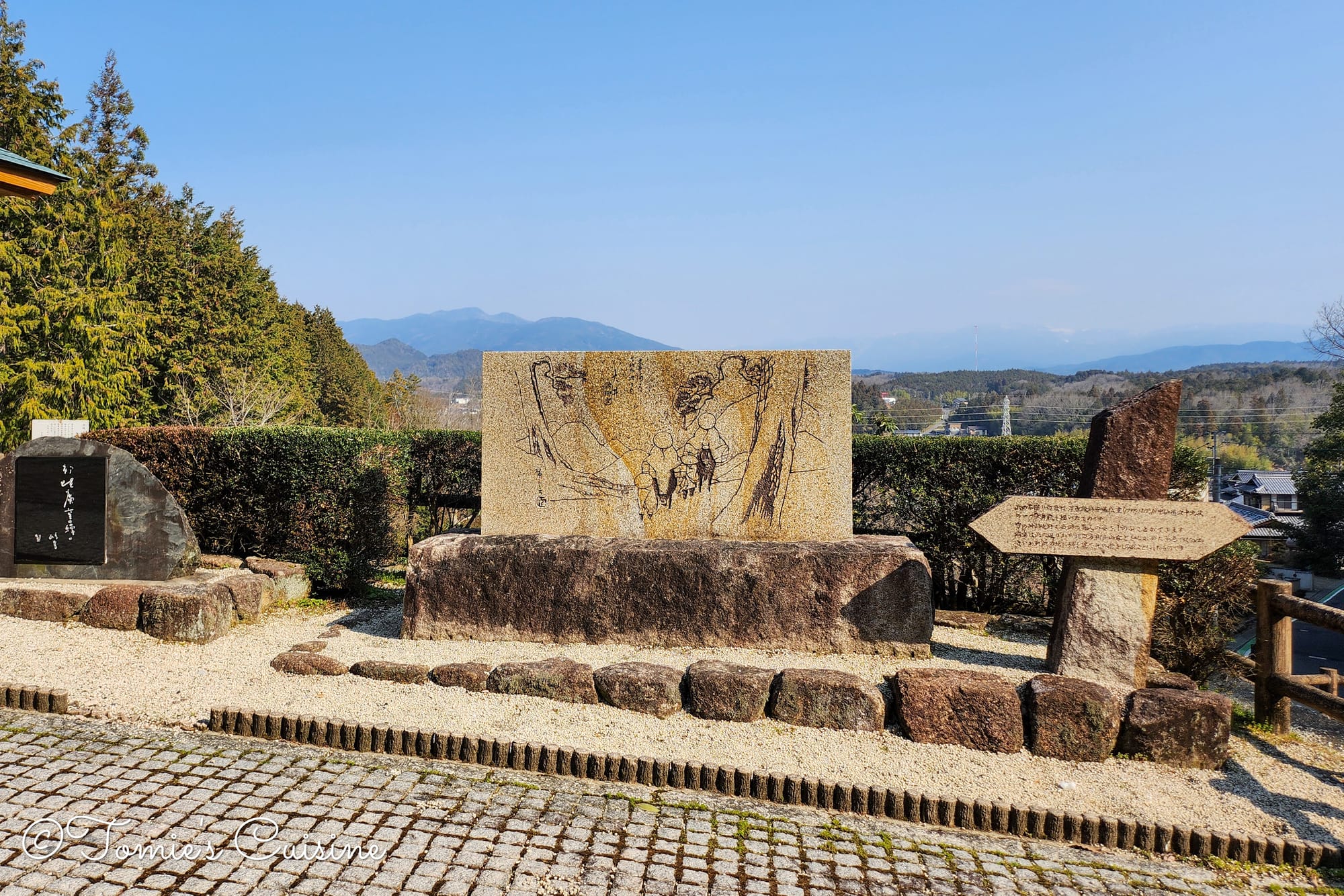
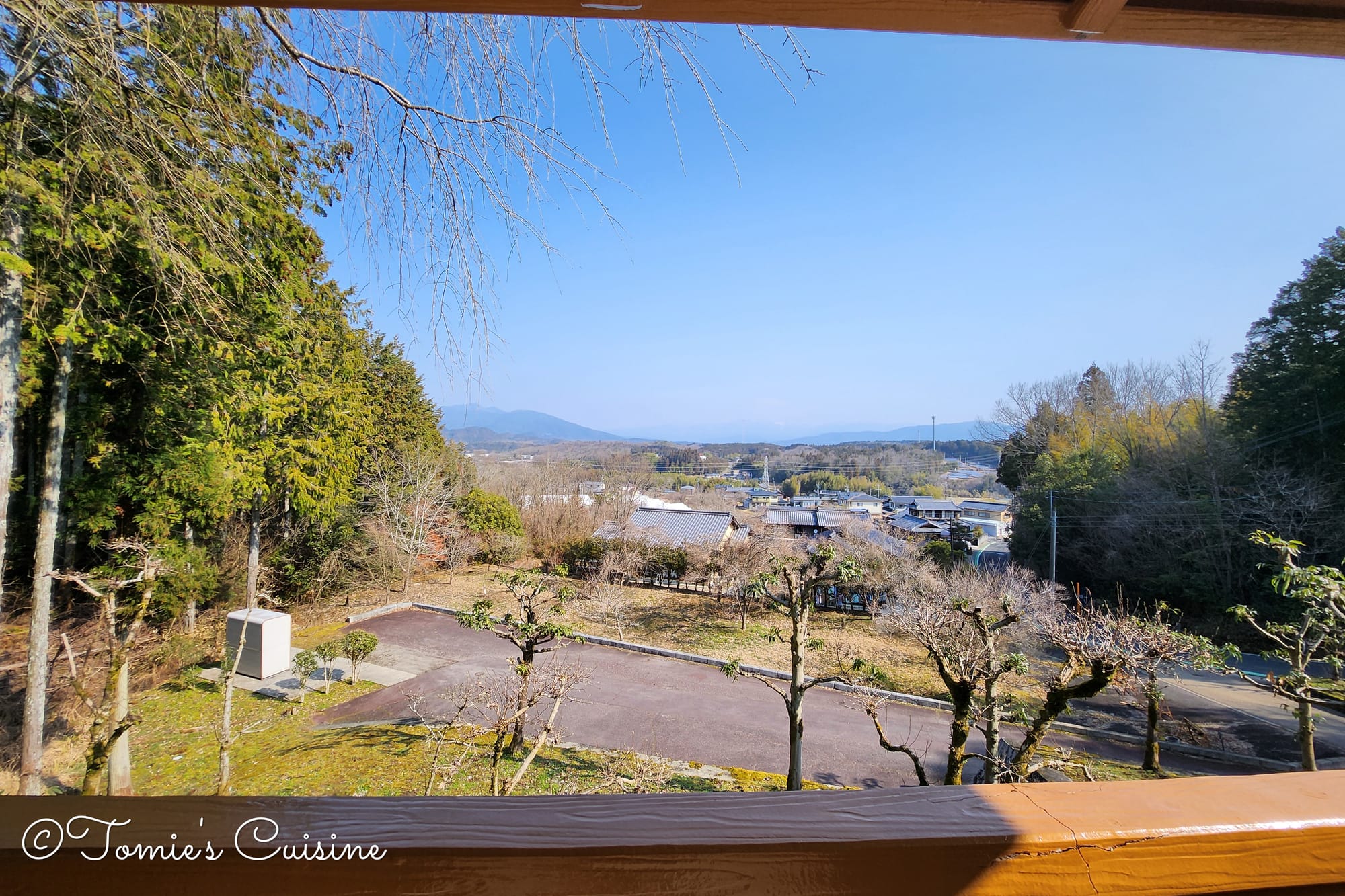
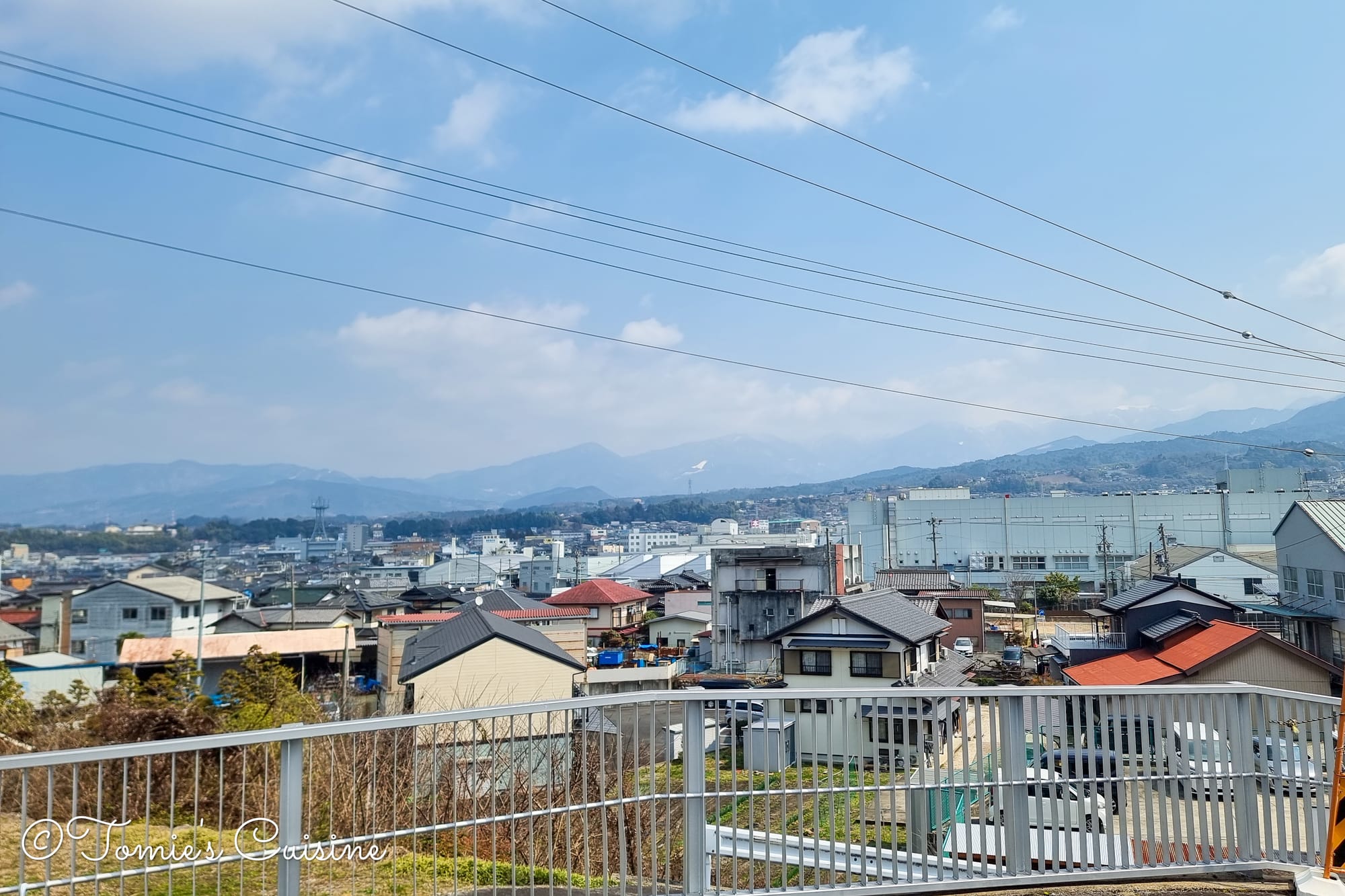
This park at the top of Jinbei Slope has a nice viewing spot with information about the mountain you are looking at, plus a public toilet.
9:15 am: We spotted the "Nakasendo Okase" area sign across the road.
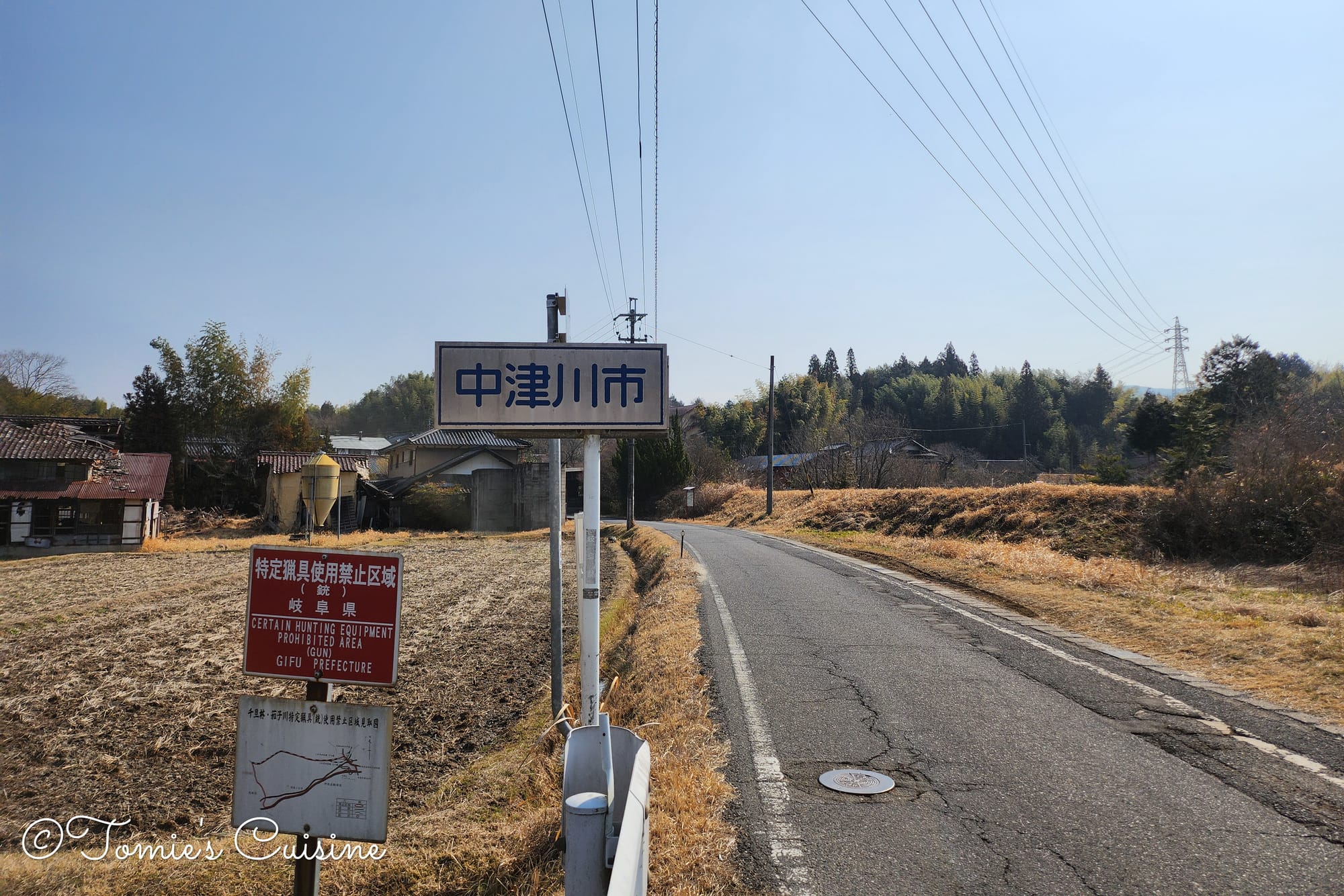
9:24 am Entering Nakatsugawa City (中津川市)
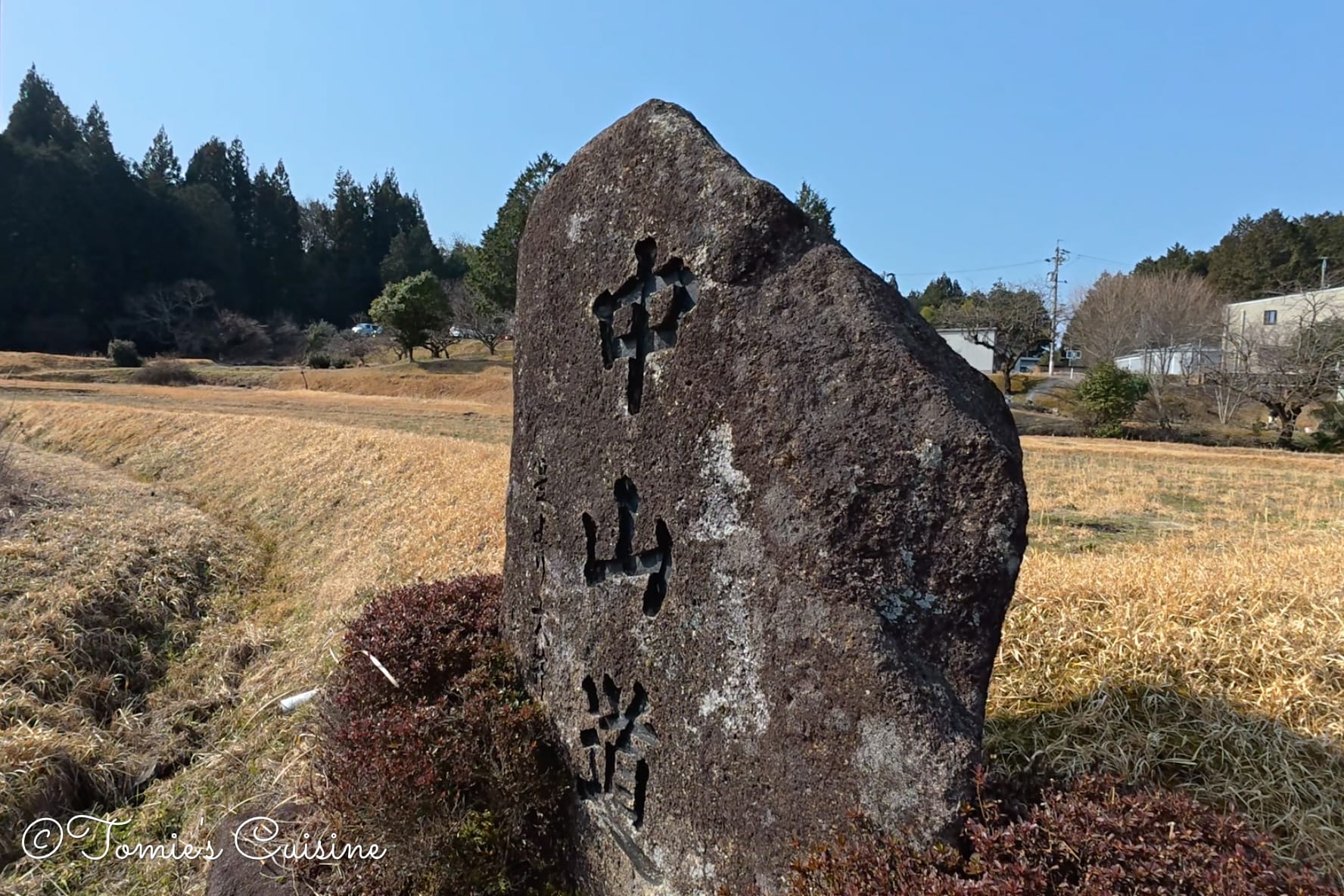
"Nakatsugawa City" sign (left), and a rock with "Nakasendo" engraved on it (right).
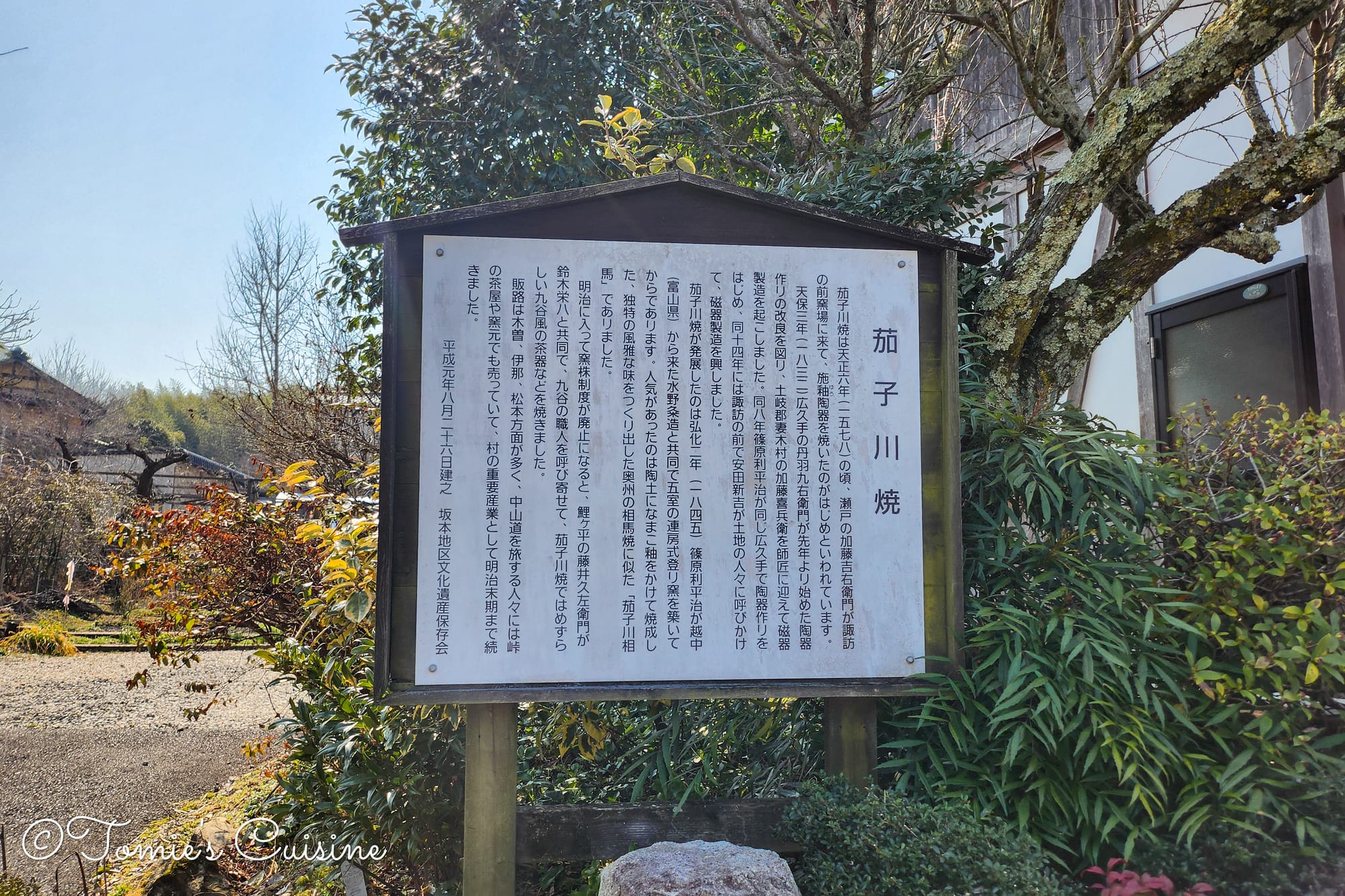
9:33 am Nasubigawa yaki pottery board (茄子川焼き)
Nasubigawa-yaki (茄子川焼) was crafted in Nasubigawa Village (now part of Nakatsugawa City). It became a popular souvenir among travellers on the Nakasendo highway during the Edo and Meiji periods.
At its peak in the late 19th century, the pottery production flourished. However, a major earthquake in 1891 and the opening of the Chuo Railroad Line in 1902 sharply reduced traffic on the old highway. Cheap, mass-produced ceramics from nearby production centres also flooded the market. As a result, all the kilns closed by the end of the Meiji period, making Nasubigawa-yaki a rare historical treasure today.
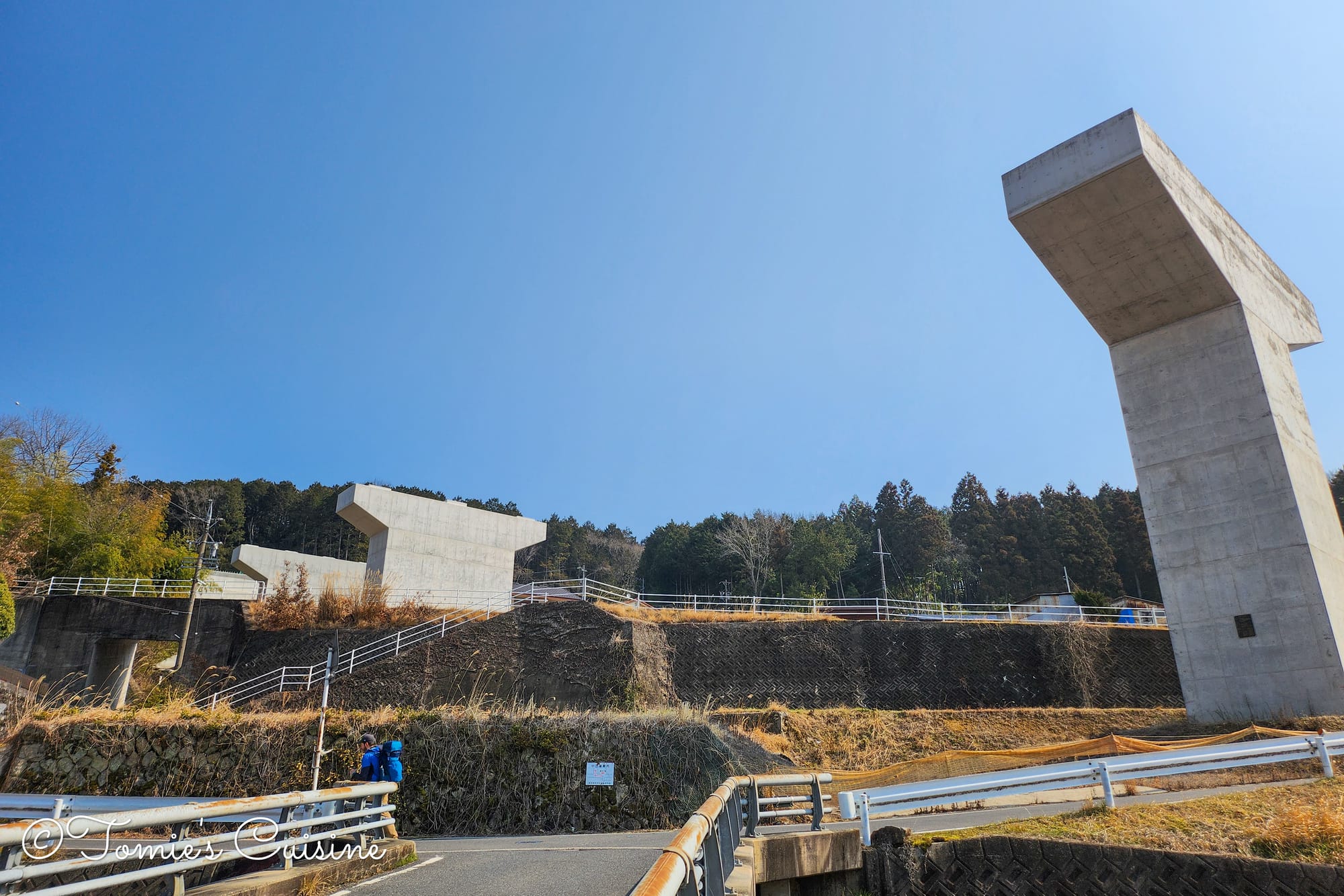
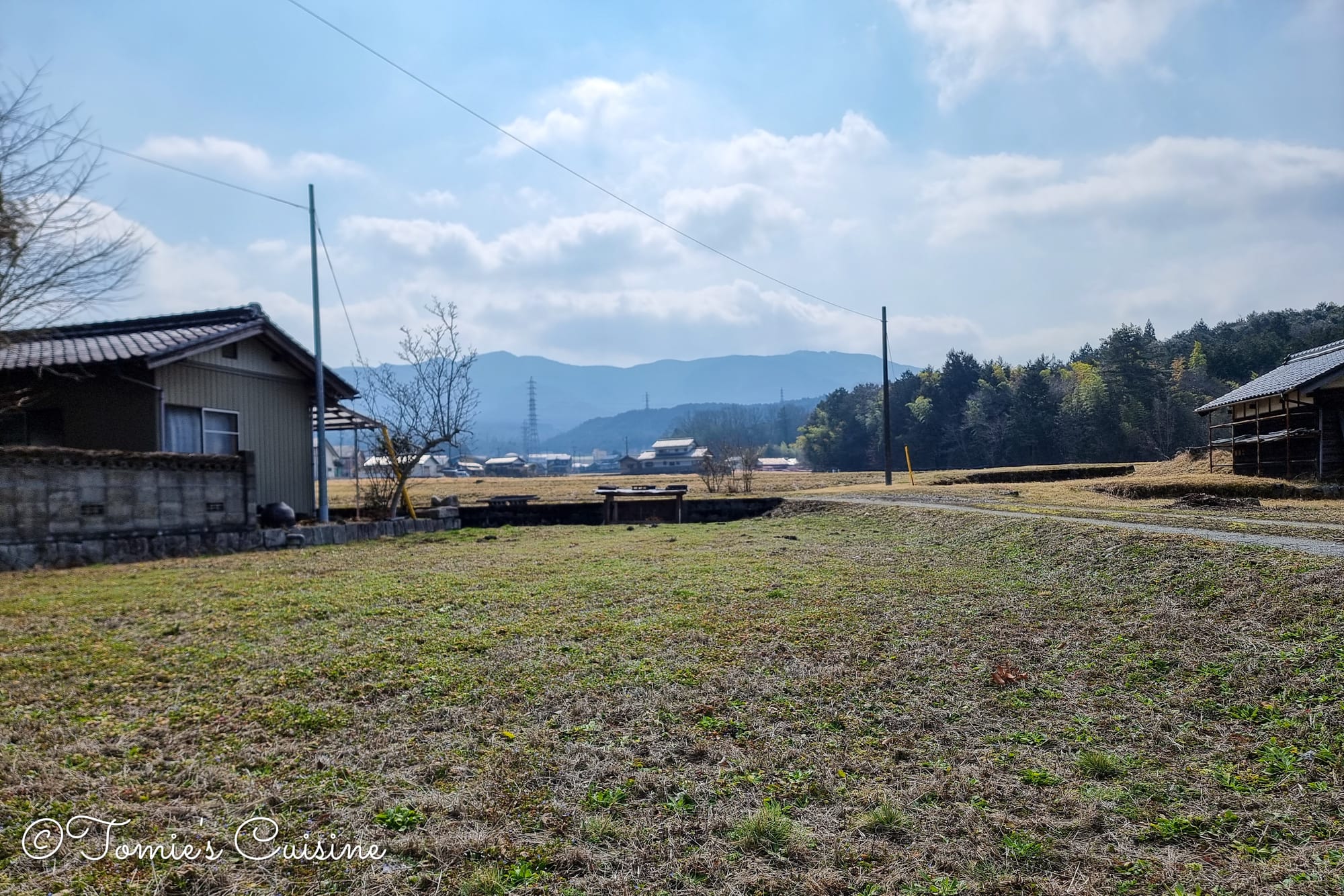
Just after Nasubigawa, the old road runs alongside some big roadworks. They’re building a new road from the motorway to the future station for the Linear (リニアモーターカー), Japan’s new maglev train, which will one day run between Tokyo and Nagoya with a stop here in Nakatsugawa. Walking a path people have used for four hundred years, past a road being built for trains that will float above their tracks, felt surreal.
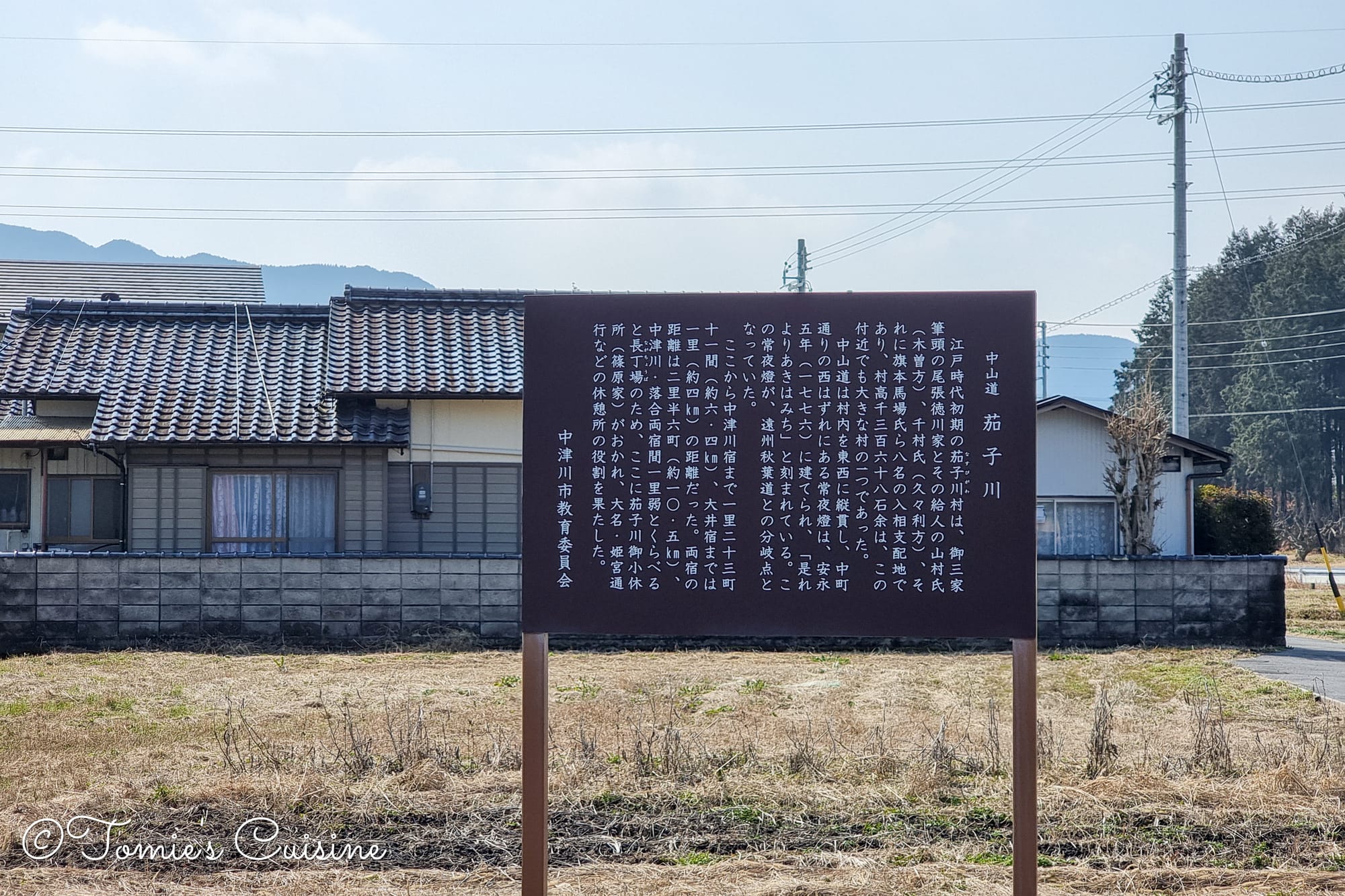
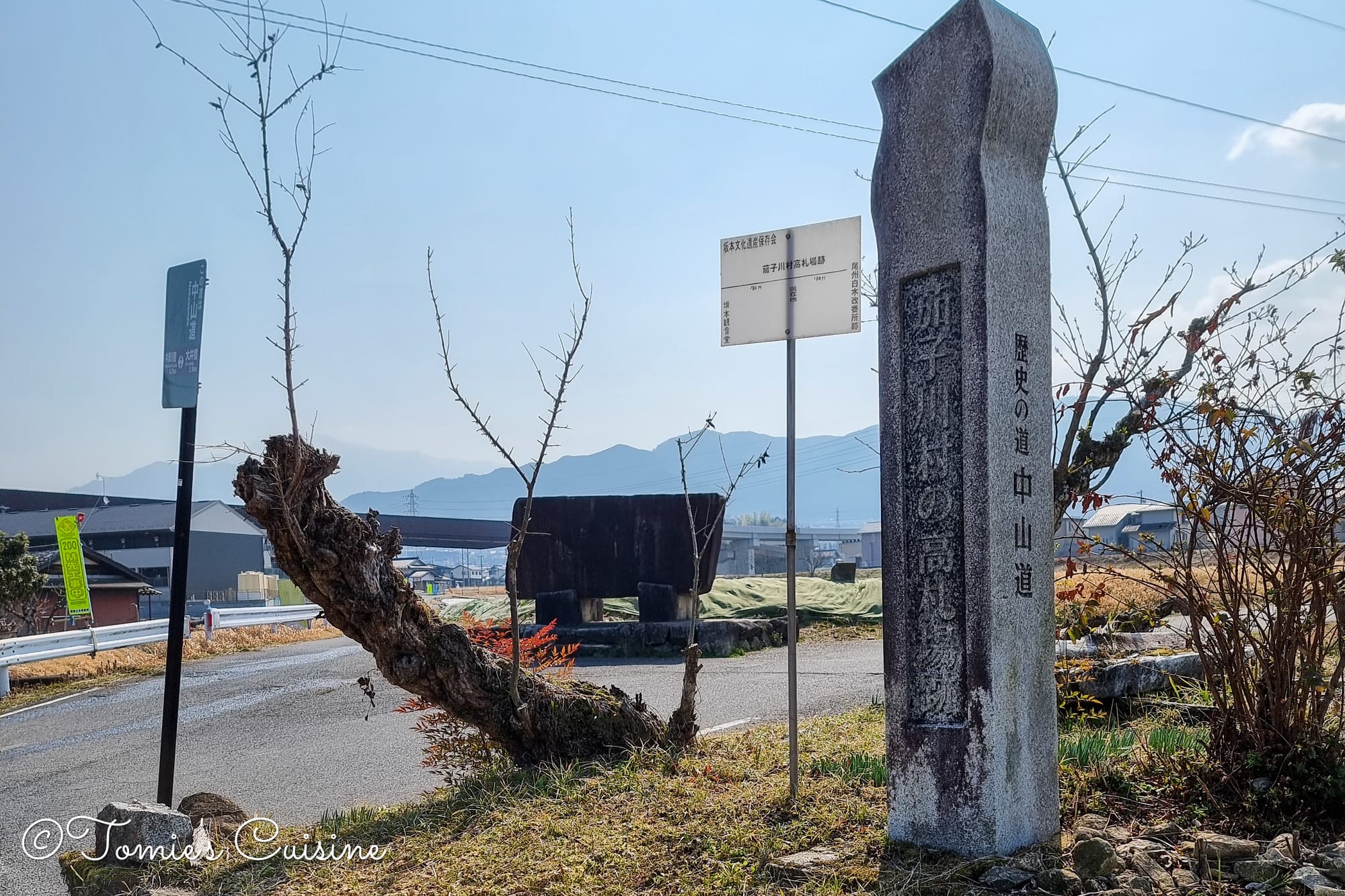
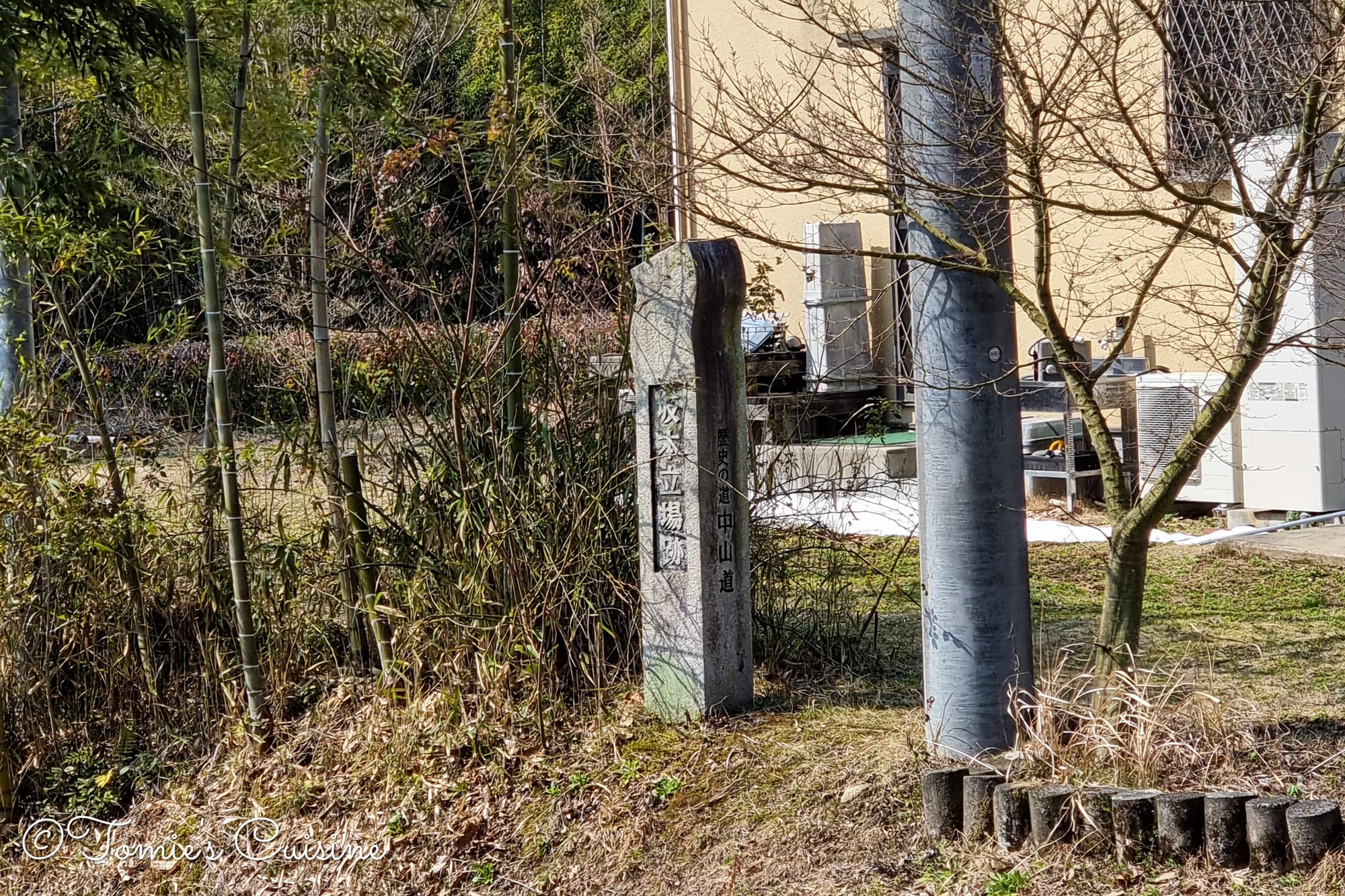
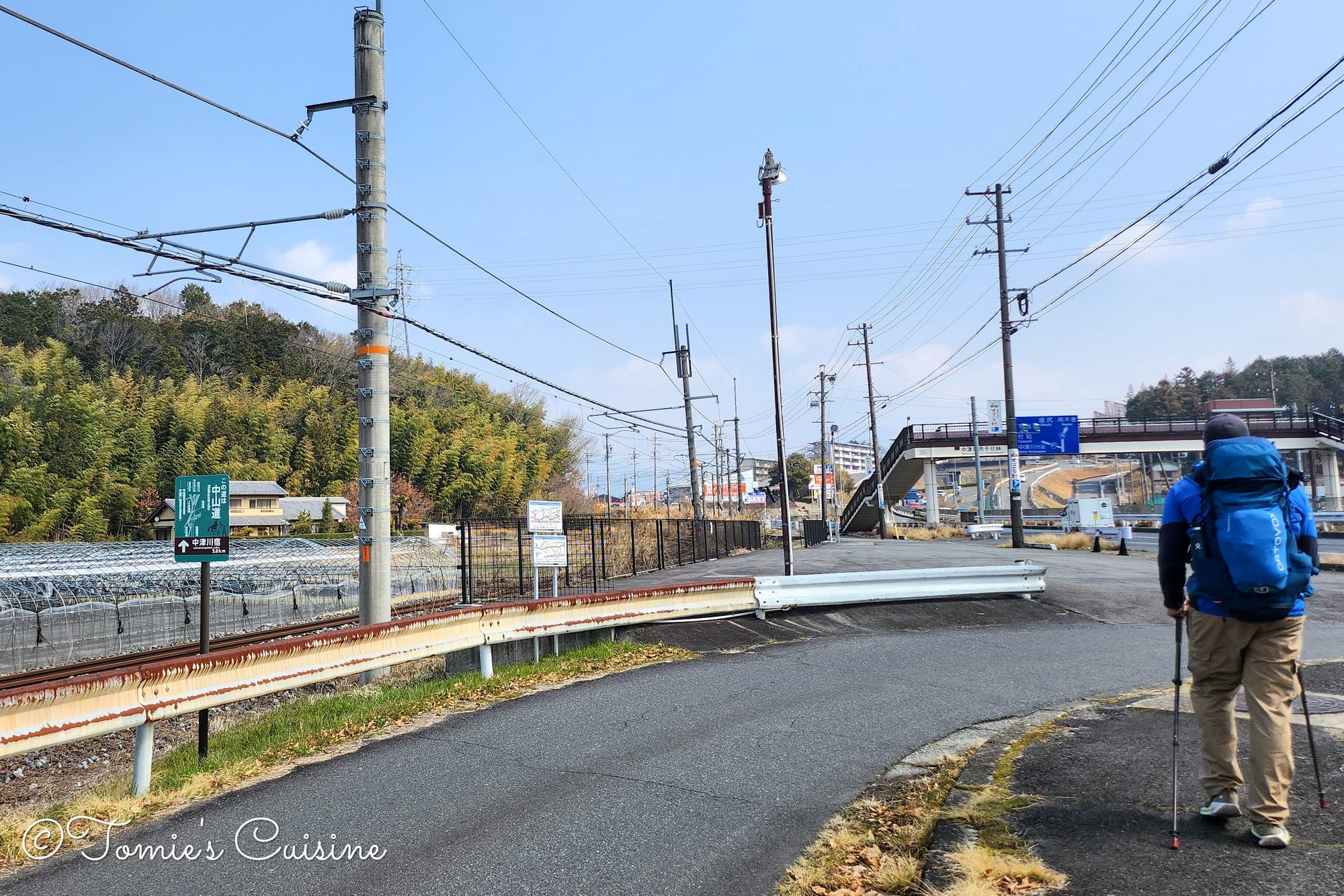
10:00 am Sakamoto Tateba ruin (坂本立場跡) (tateba = rest stop)10:28 am Short break on the side of the road.Merging to a main road (National route 19).A water channel alongside the road
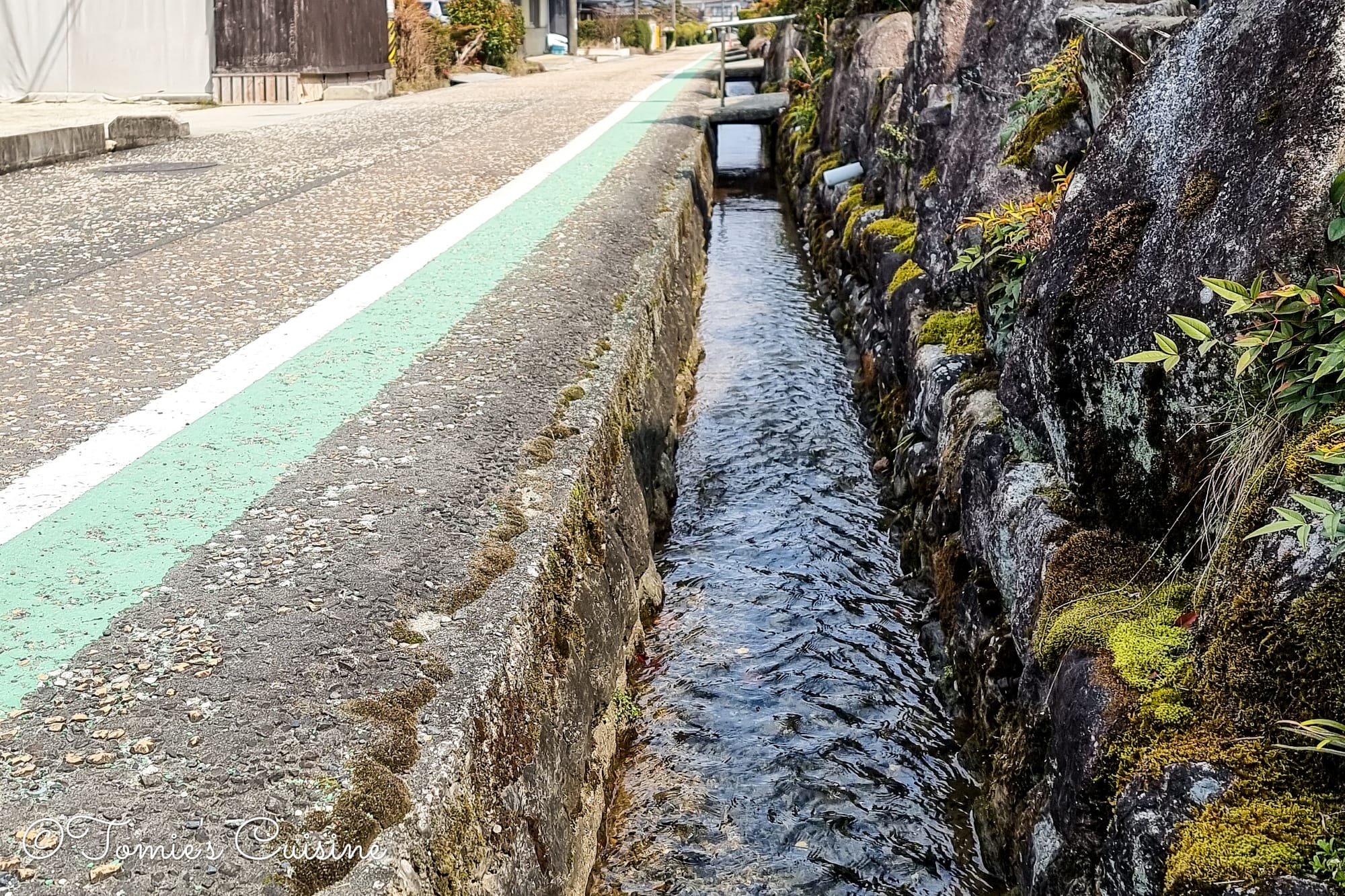
11:14 am: We're back to a residential area with a small water path between the houses and the road. The water looked very clean!
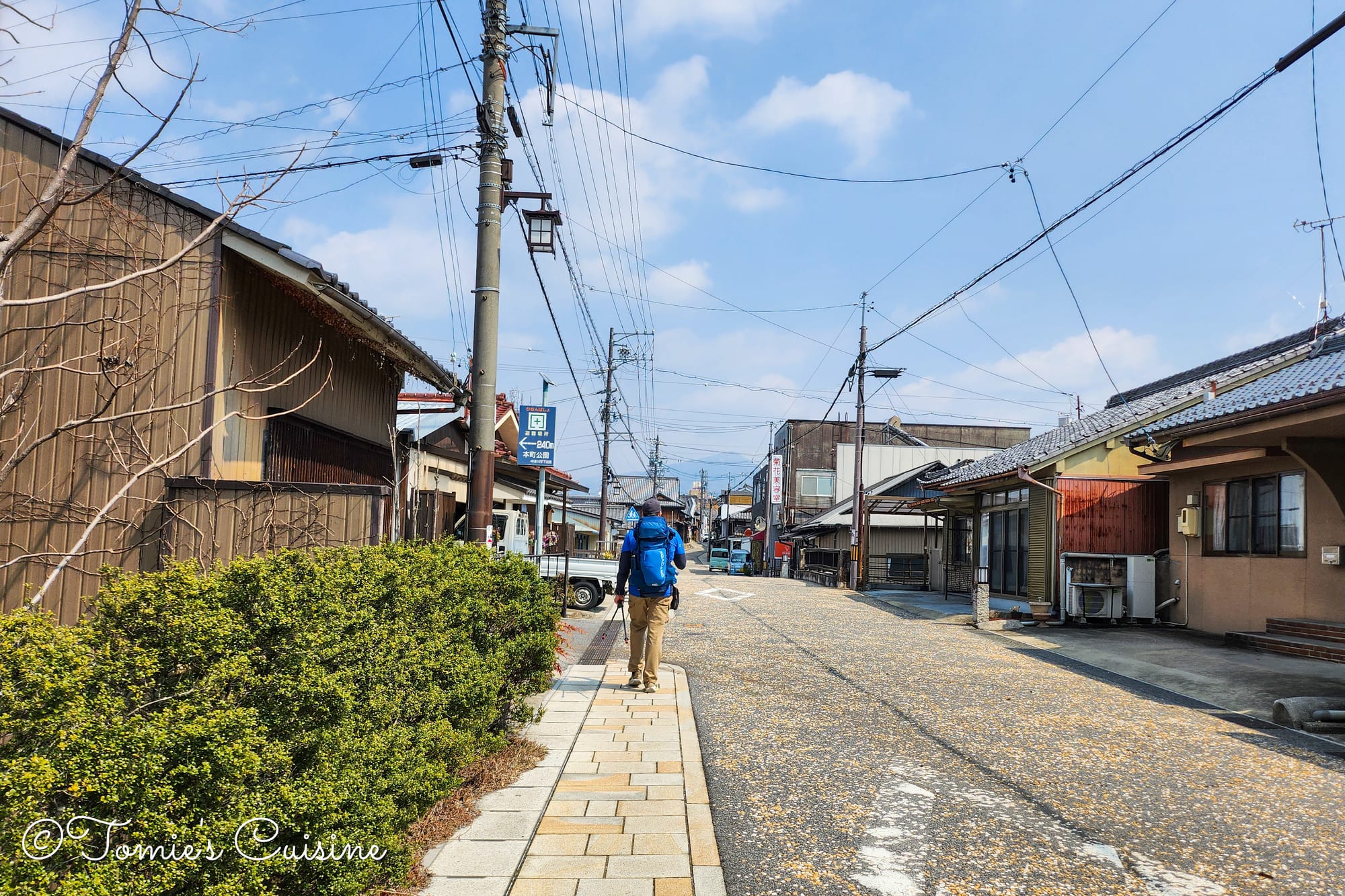
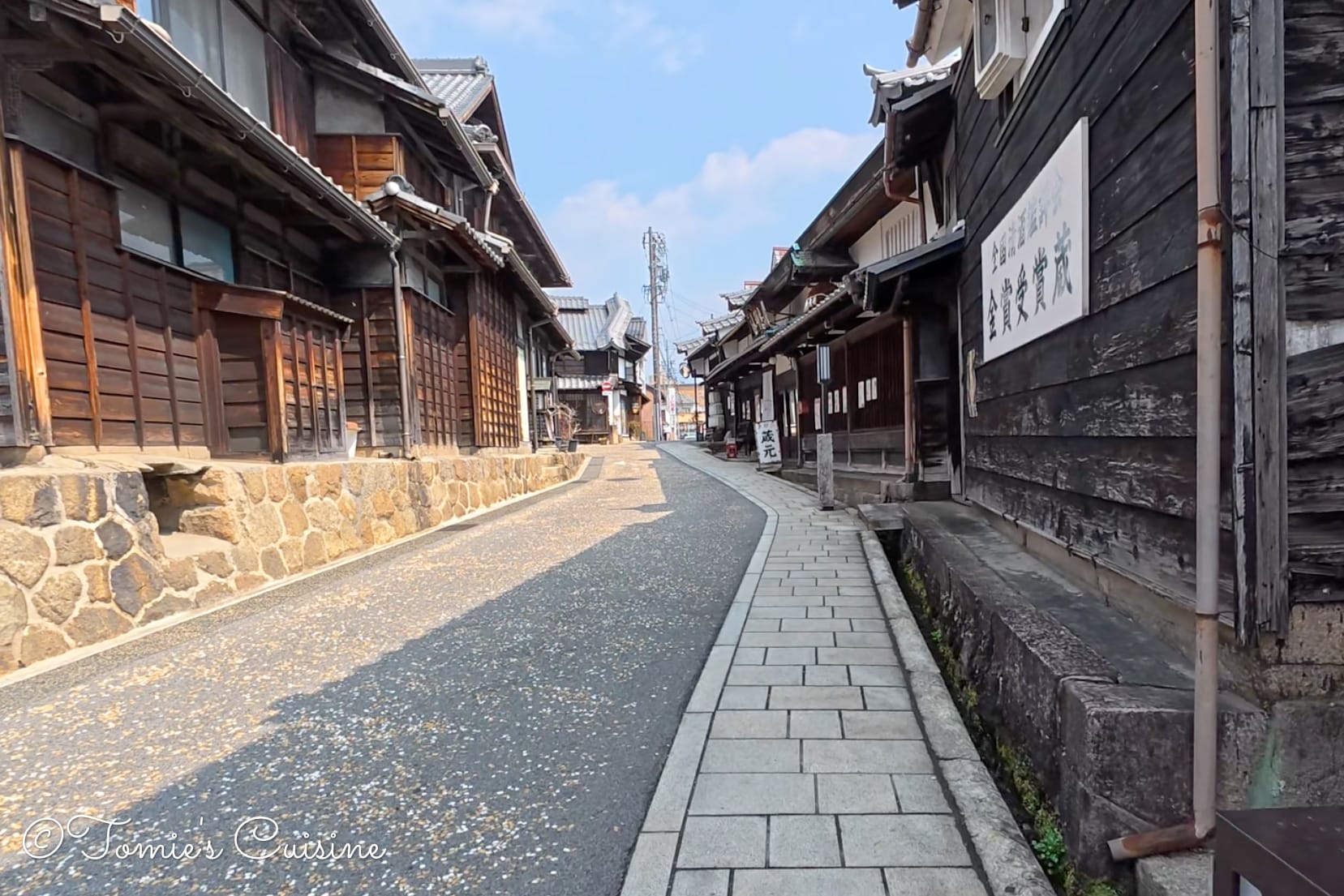
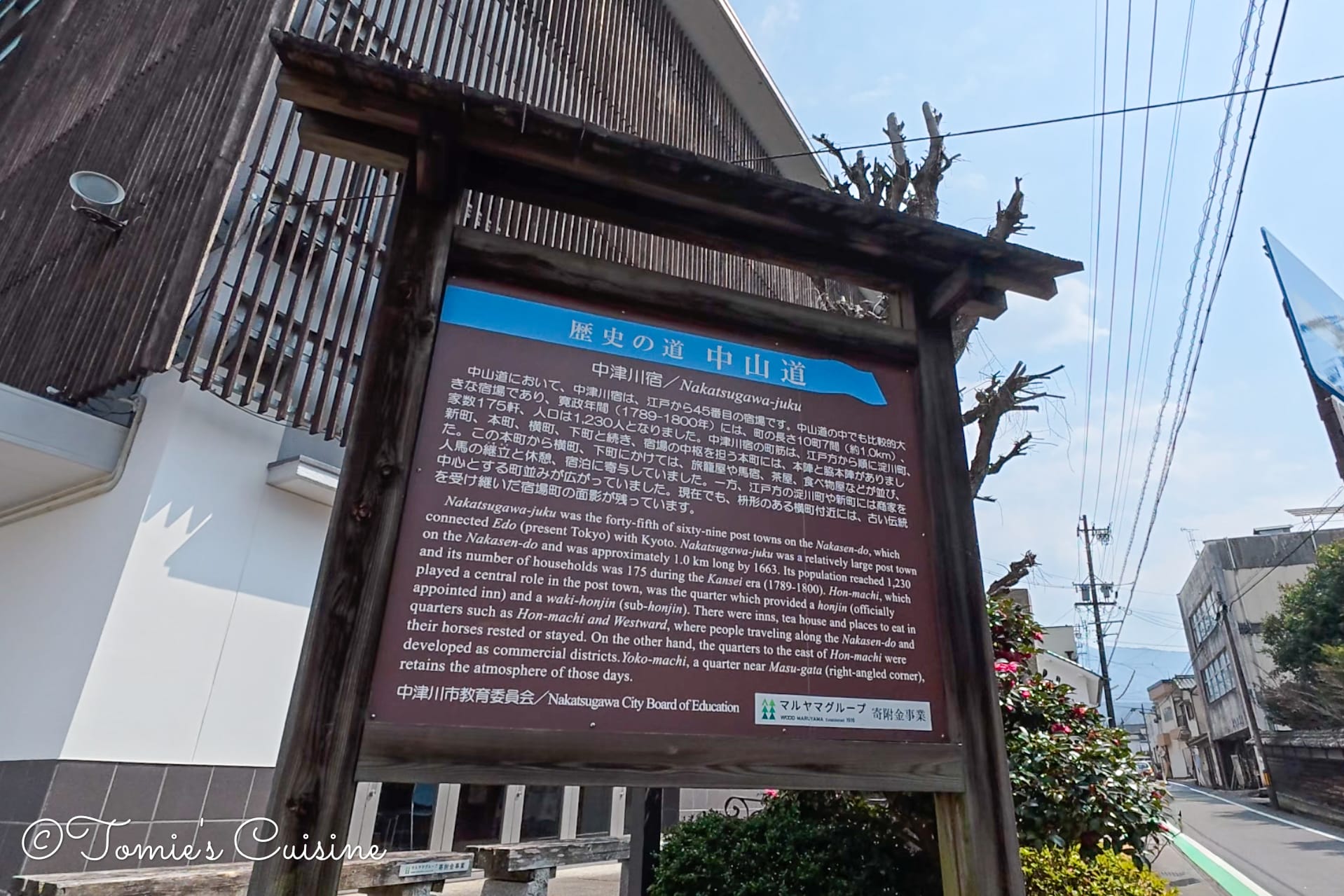
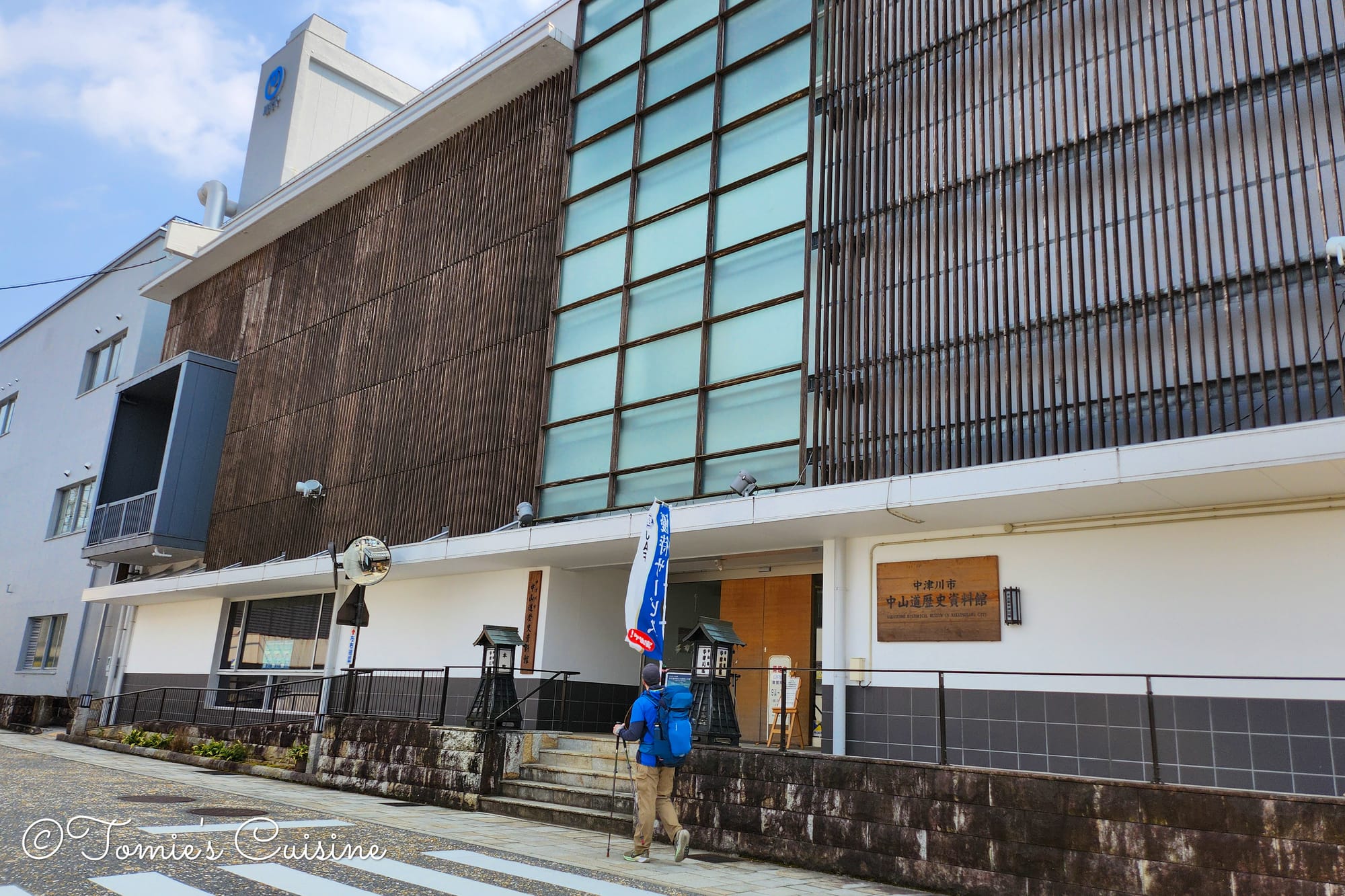
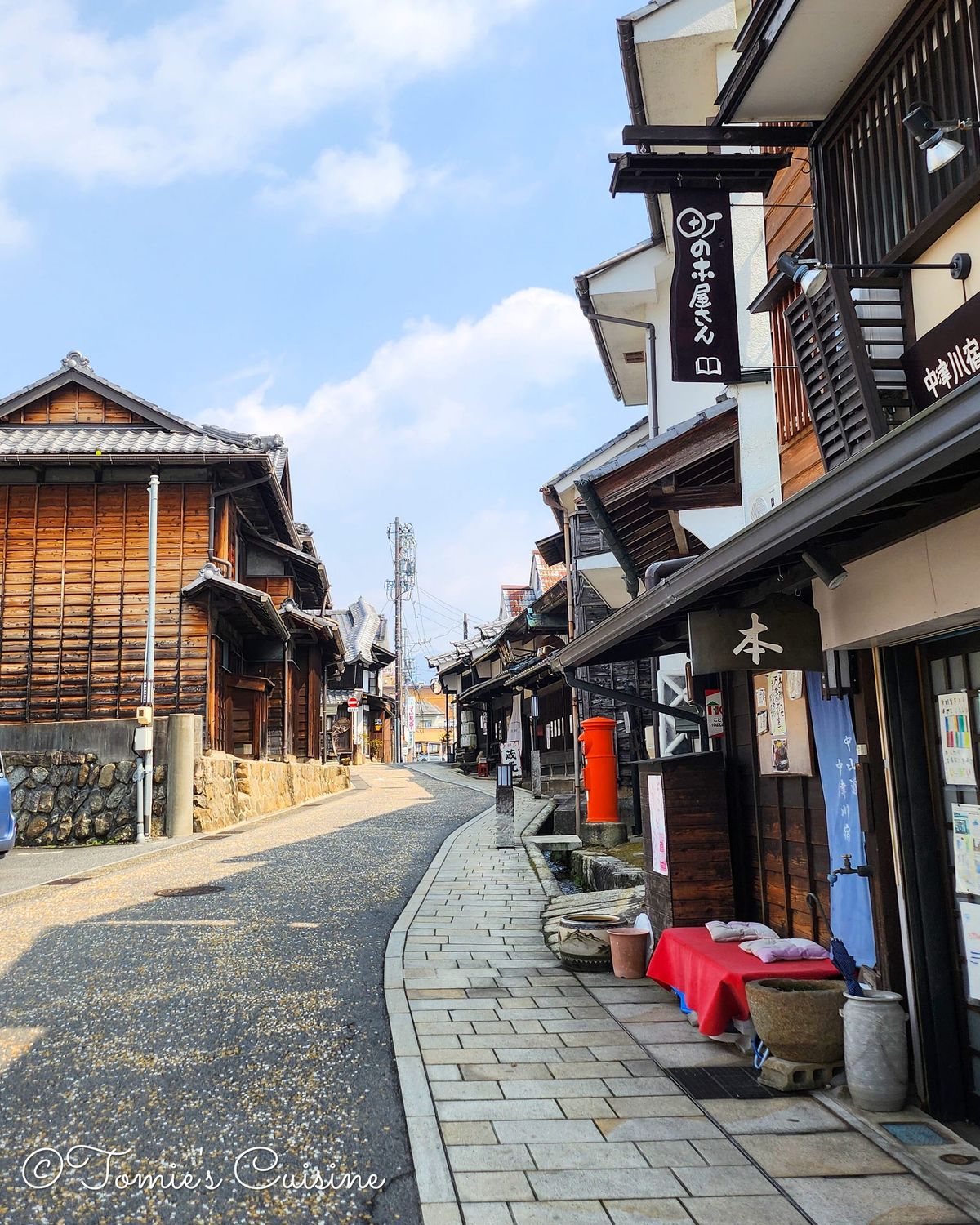
Going into the centre of the post town. The ambiance changes completely.
Here we are, Nakatsugawa. We had never been, but I always wanted to visit to try their chestnut sweets!
🌰
Nakatsugawa is famous for its chestnut sweets The area where Nakatsugawa is located has been a good chestnut-growing area for a long time.
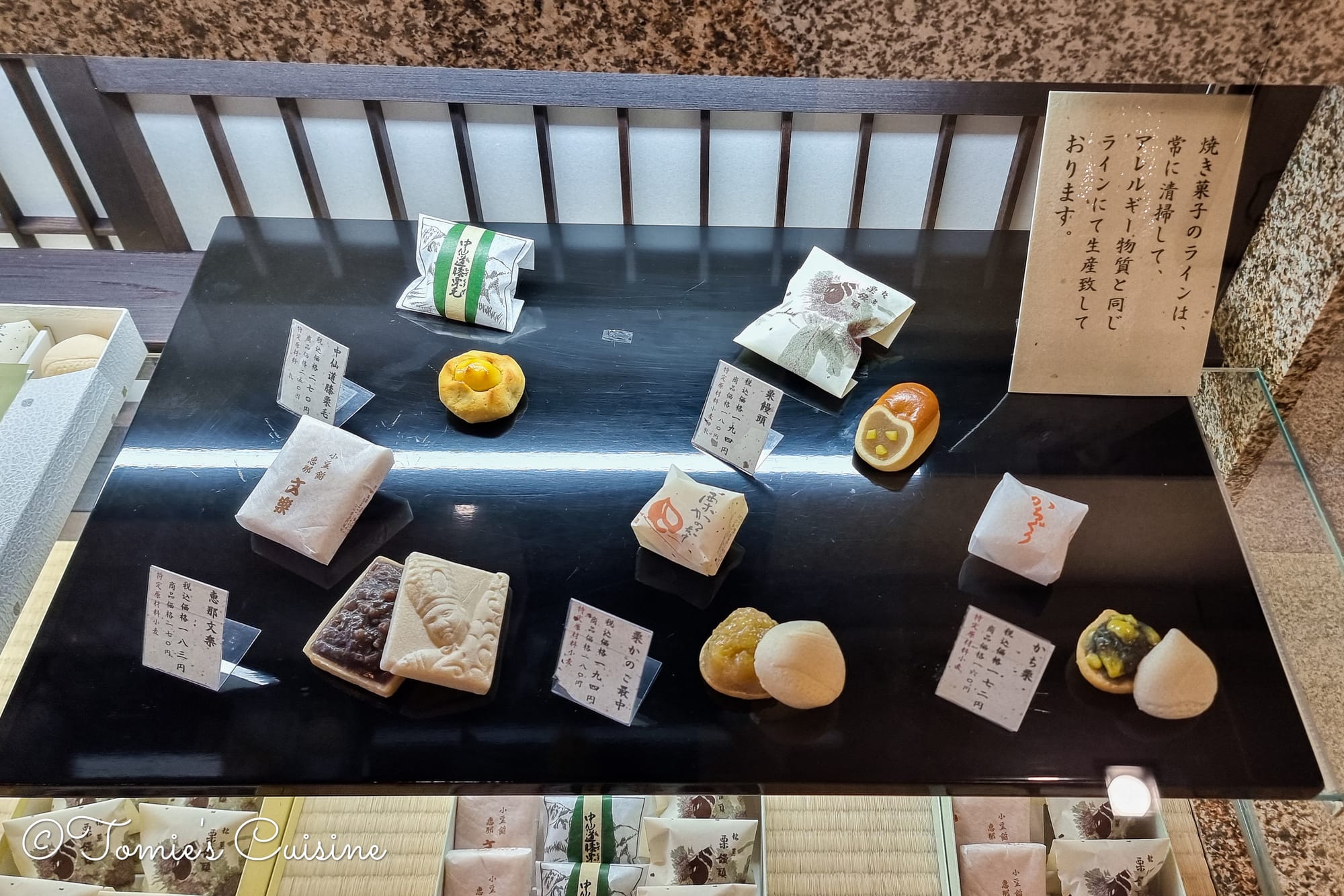
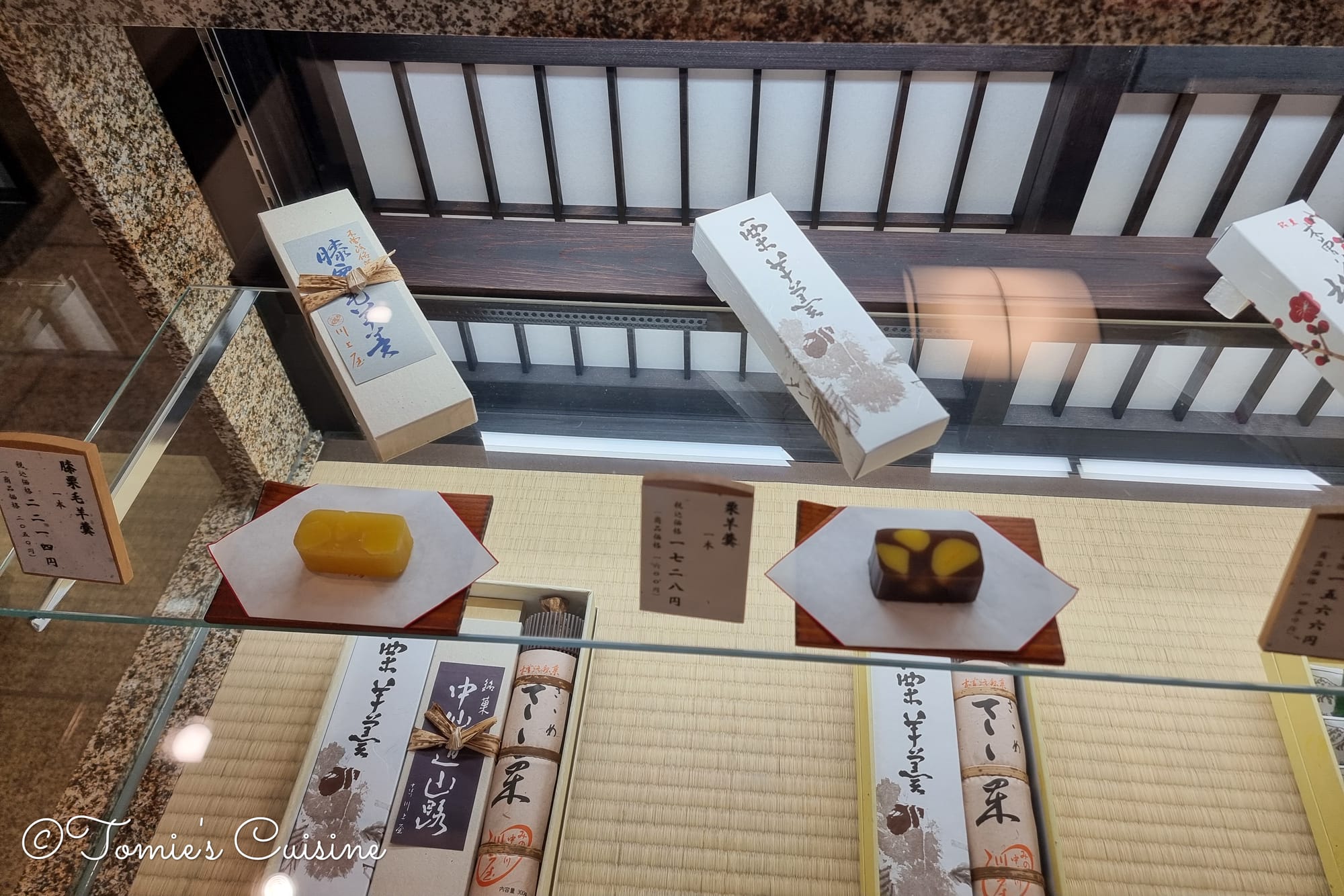
The town is famous across Japan for kurikinton (栗きんとん): steamed chestnuts mashed with a little sugar, then twisted into a small chestnut shape in a cloth. That's it, just chestnut and sugar, which is why the quality of the chestnuts matters so much. The season runs from autumn into winter, and in September the town is full of people queuing for the first batches.
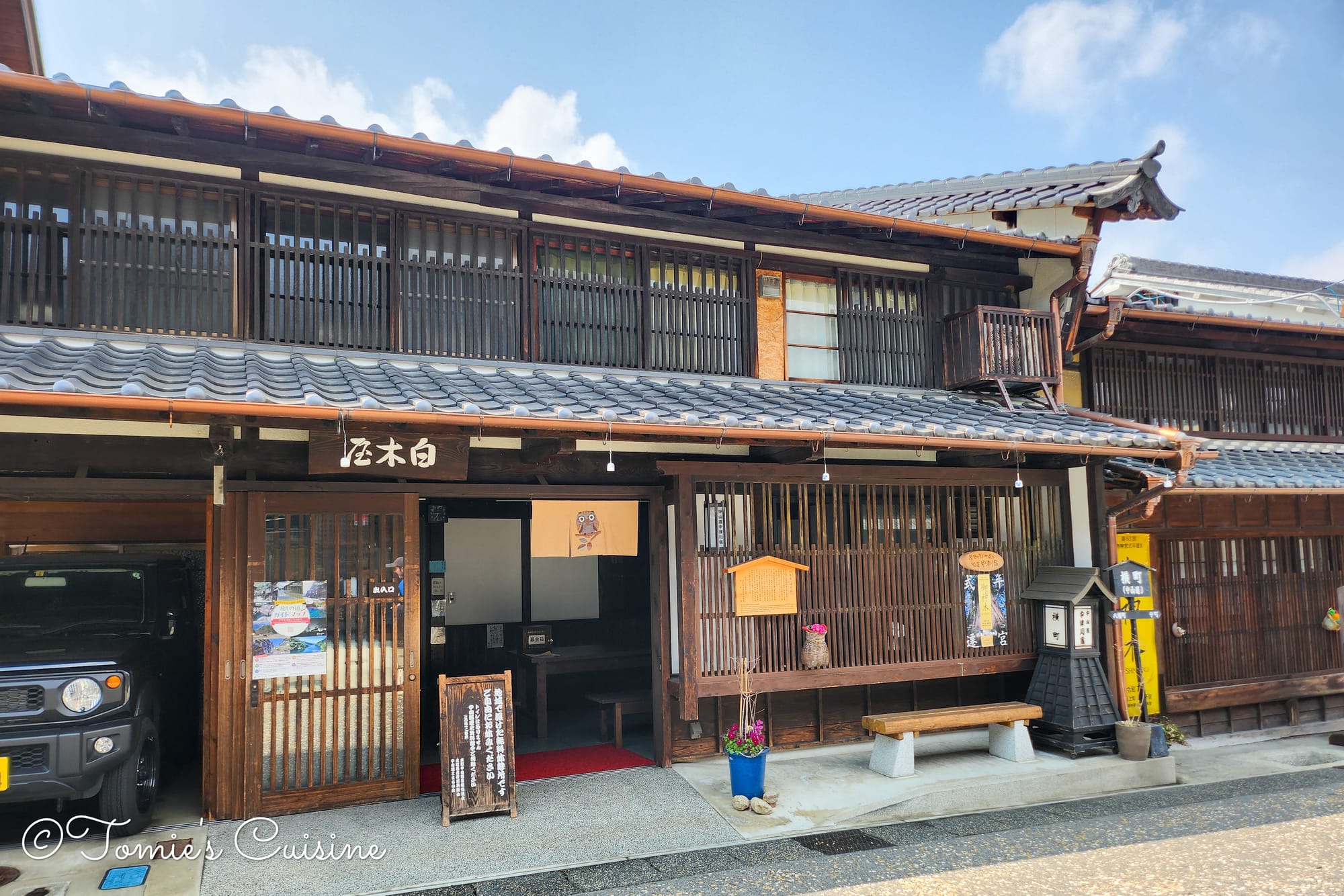
This building was open to the public as a resting area (no toilets). It's actually an izakaya restaurant in the evening!
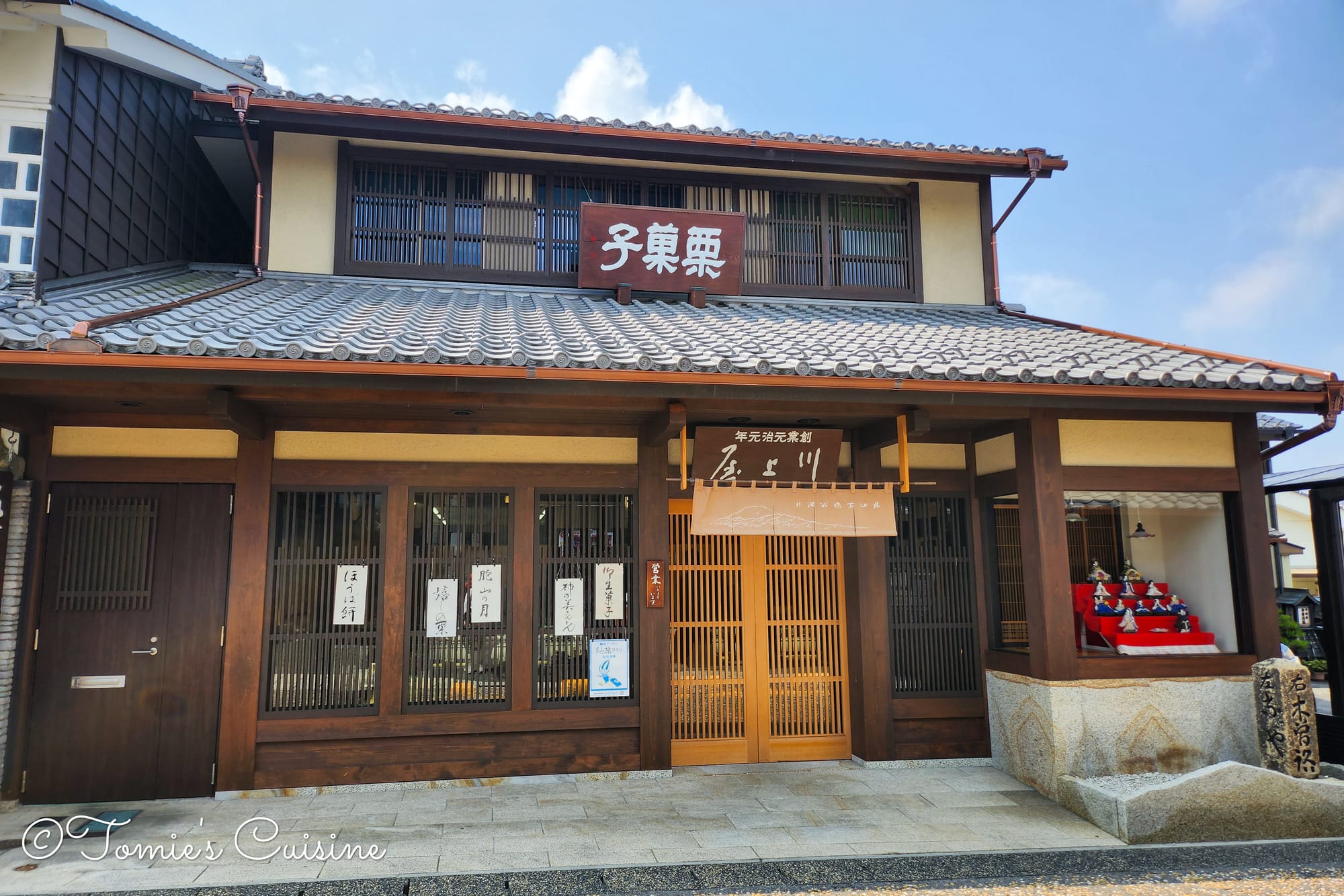
Kawakamiya is a famous Japanese chestnut sweet shop. I used to see the advert on TV when I was living at my parents’ in Aichi Prefecture.
We wish we could bring with us more!
When I learned that Nakatsugawa is one of the Nakasendo post towns, I immediately put this shop on my list to visit! I was so happy to be there and would love to go back.
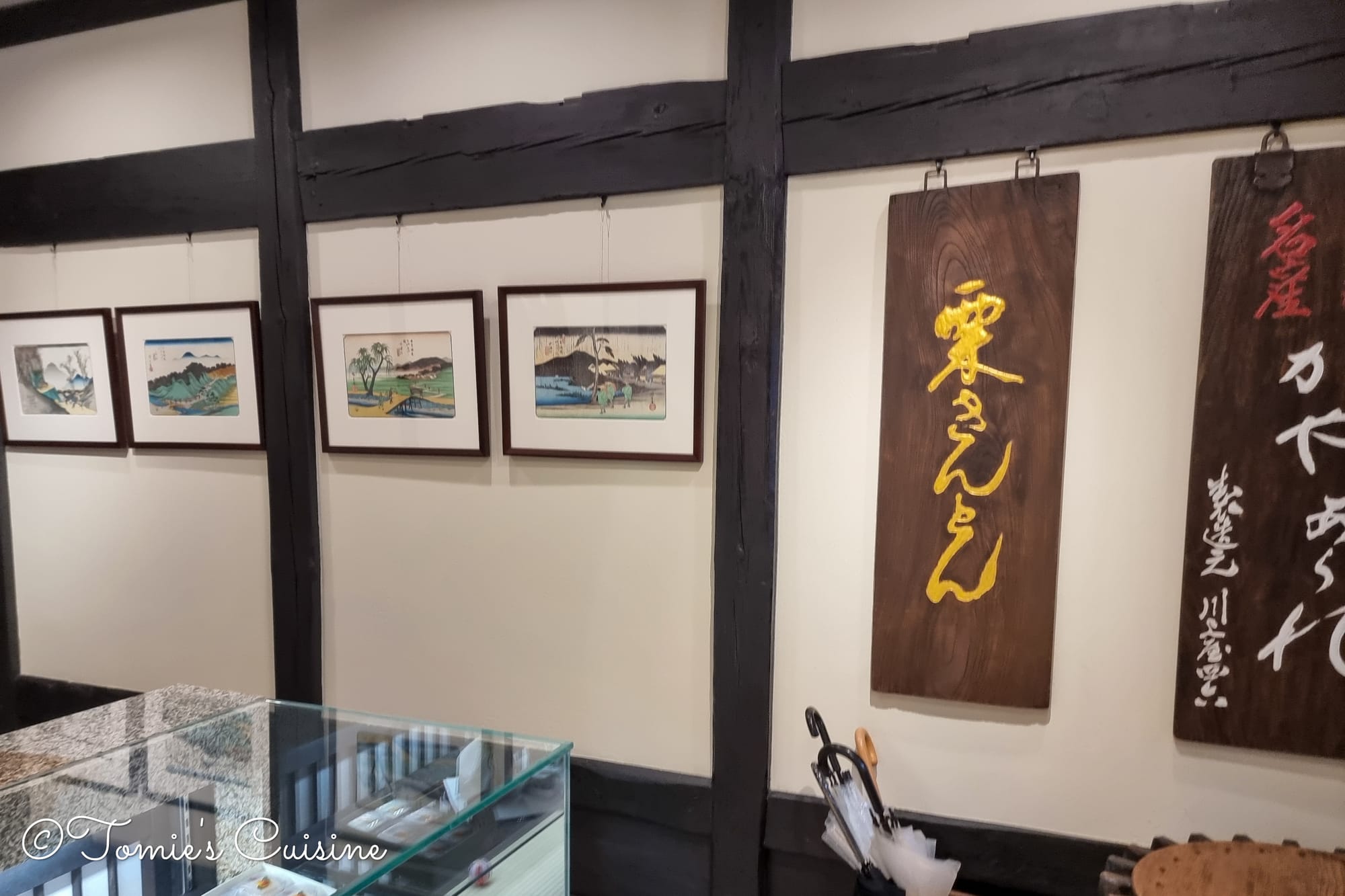
Nakasendo Nakatsugawa post town related ukiyo-e on the wall in the shop.
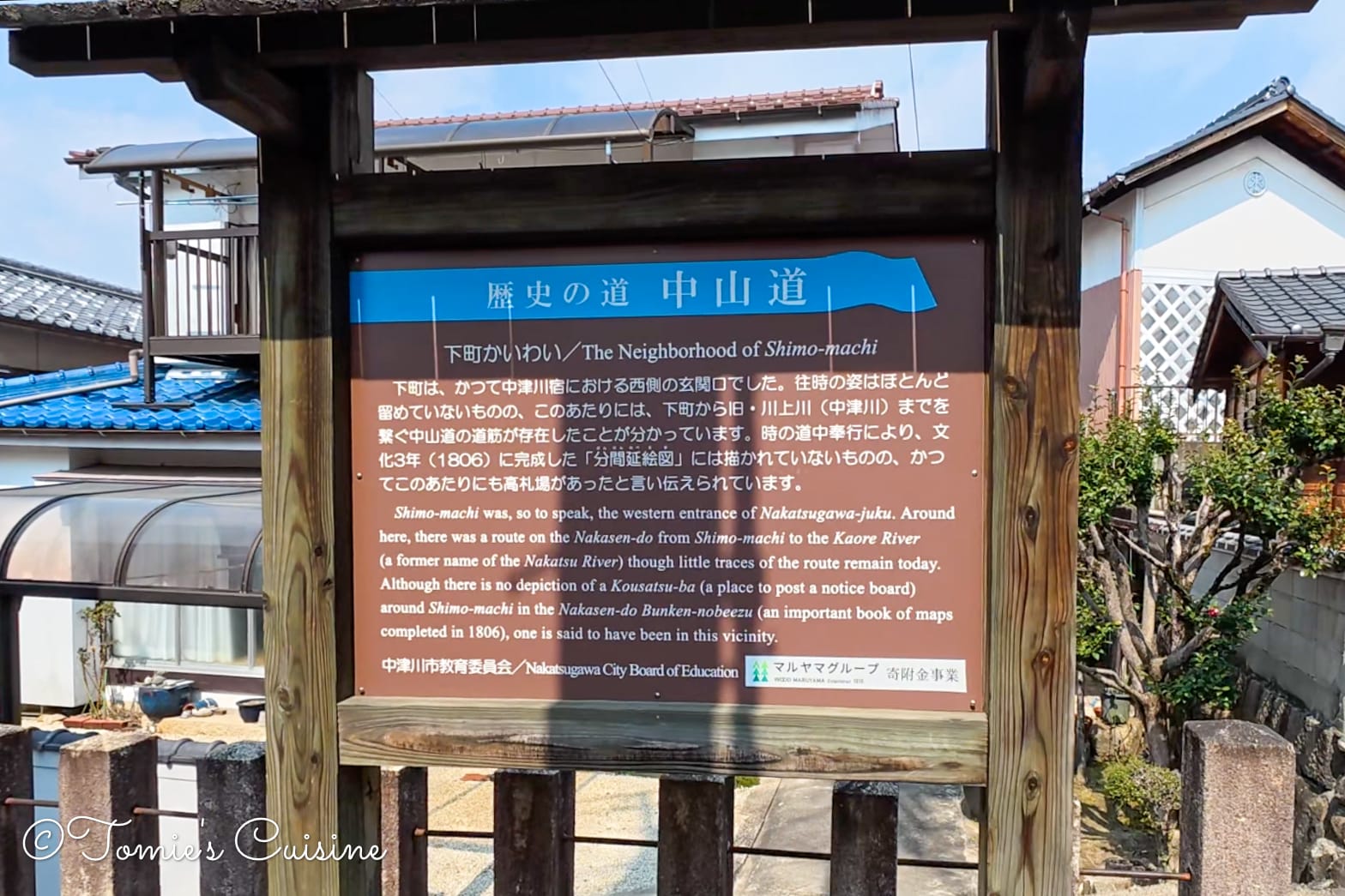
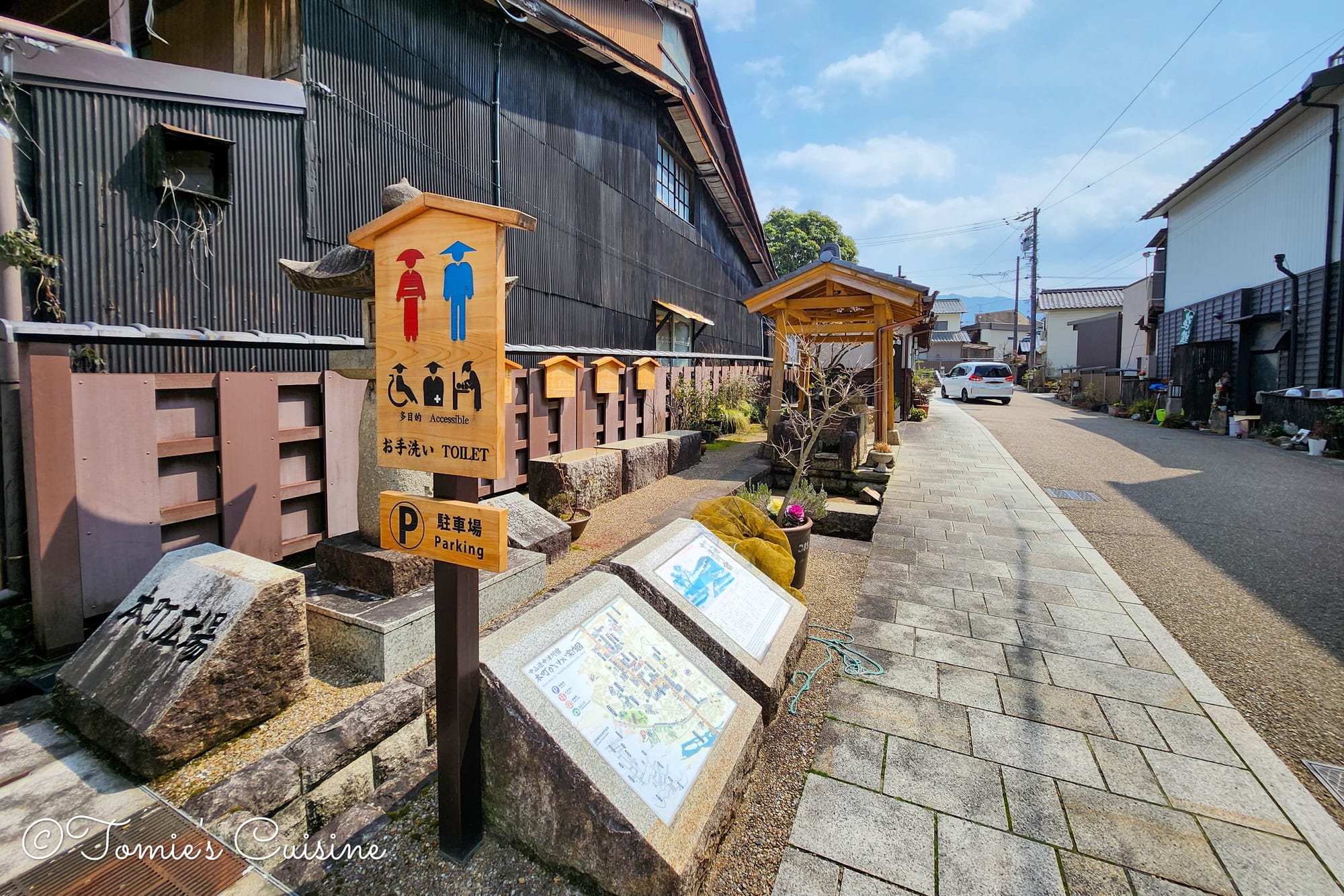
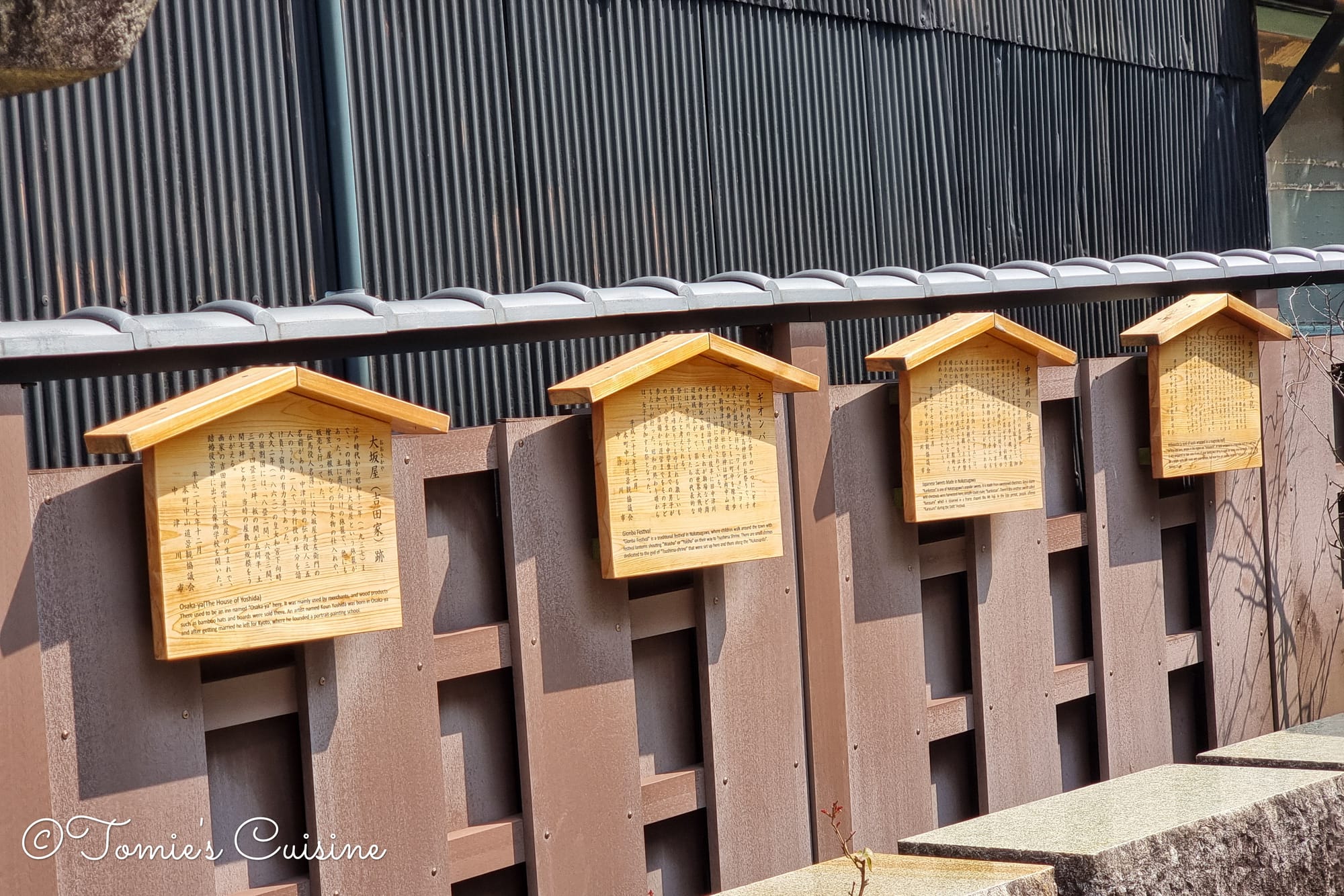
A public toilet is at Motomachi Square (本町広場). (left) We saw those small explanation boards quite a lot in Nakatsugawa post town. (right)
12:20 pm Keichan for lunch: Gifu’s local delicacy.
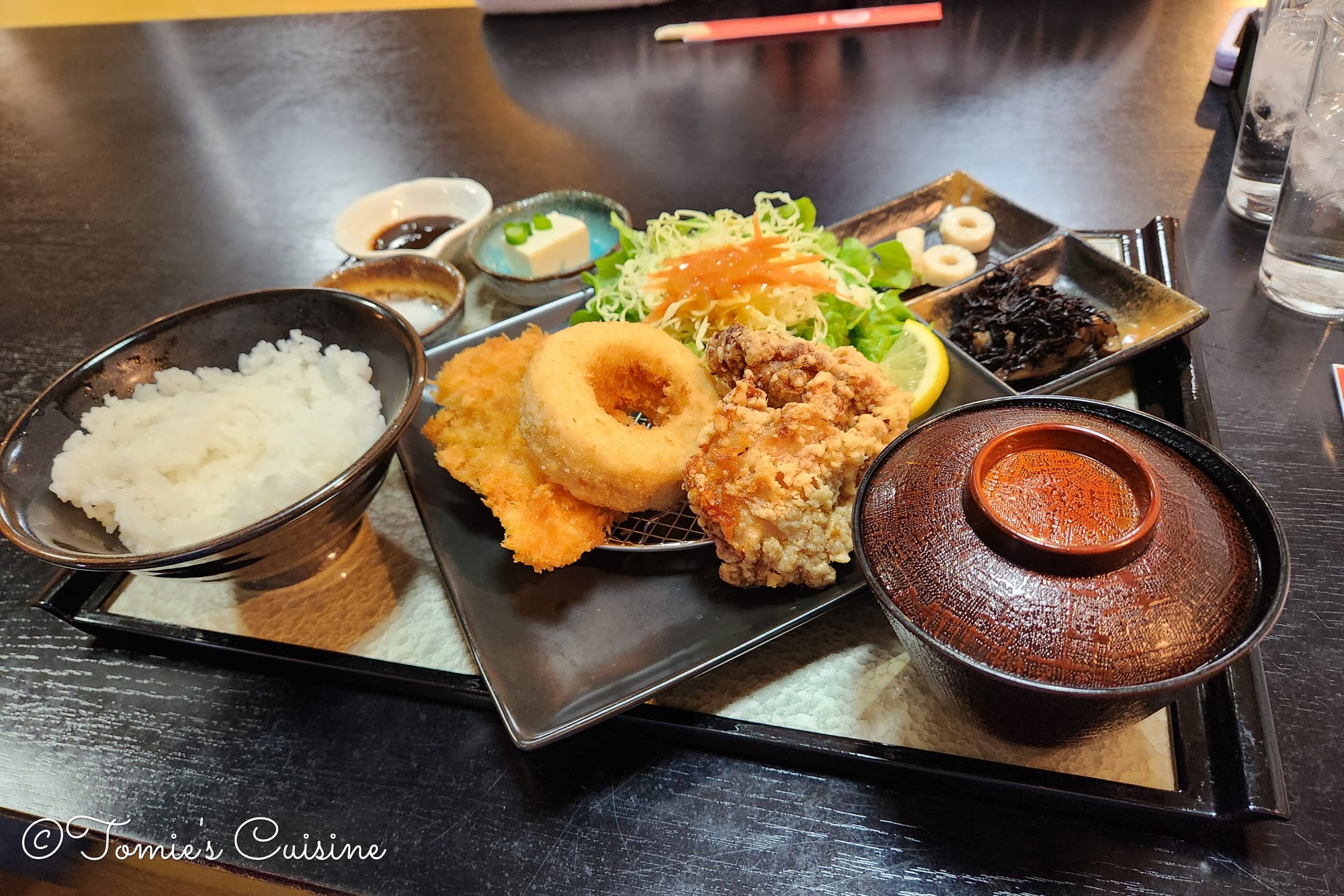
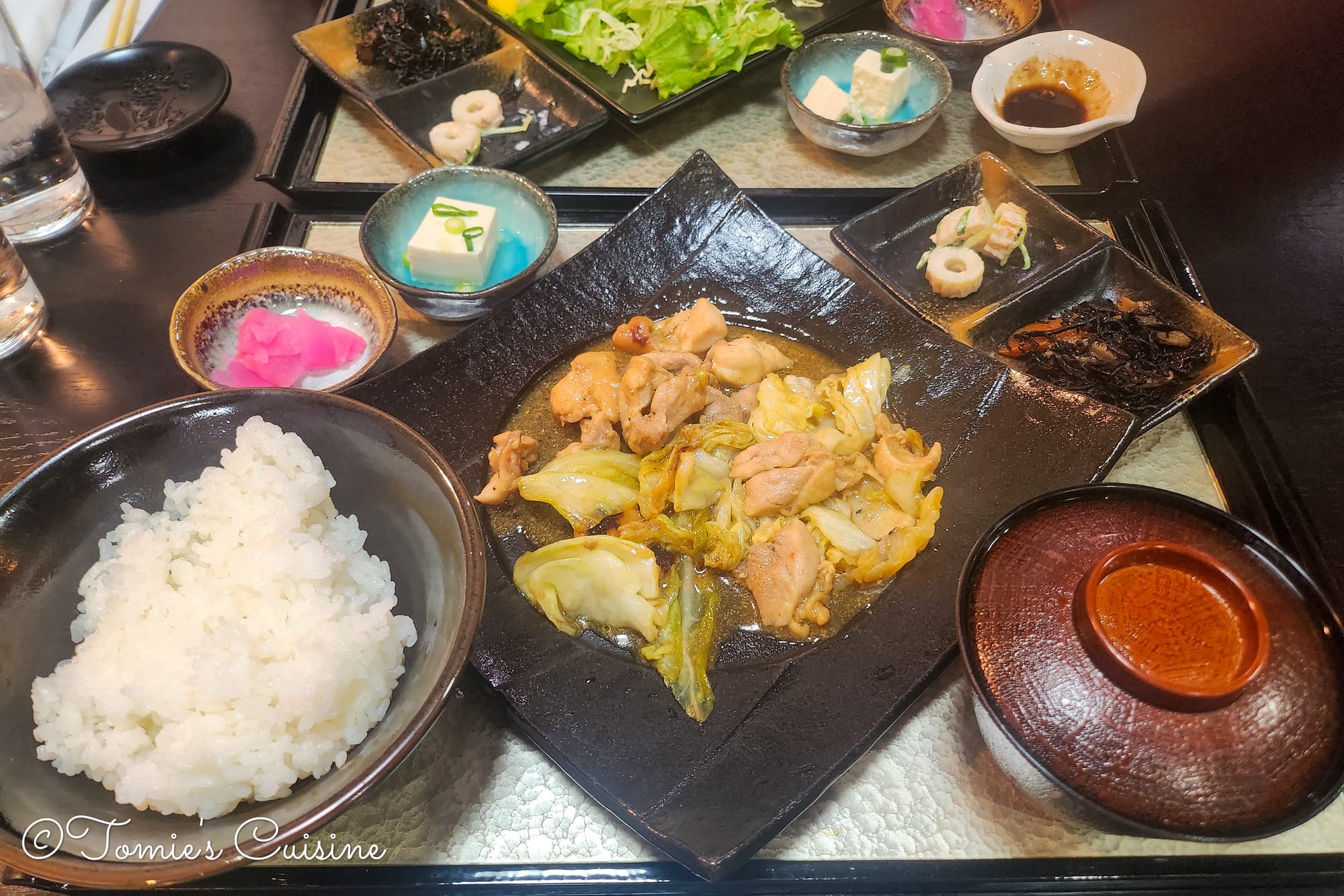
Our lunch sets from Chicken House
On the Nakasendo, we found Chicken House, a restaurant serving various chicken dishes. They served a dish called “Keichan Yaki”, a local dish from Gifu prefecture, so we stopped here for lunch to try it.
It was quiet on the Friday we visited. The lunch sets were reasonably priced (1000 and 1500 JPY) and came with several small side dishes. They also accept card payments.
A tip if you're walking: ask how long each dish takes when you order. My dish arrived almost 15 minutes after Kevin's. When we asked, the waitress apologised and explained that it takes longer to cook, and that she should have mentioned it. On a long walking day, aiming to arrive before dark, 15 minutes matters. This was the only time it happened to us on the whole Nakasendo.
While we waited, Kevin shared his lunch with me, so it all worked out. The food was worth it.
🐓
What is Keichan Yaki (鶏ちゃん焼き)? Keichan Yaki is a famous delicacy from Gifu Prefecture, made with chicken, vegetables such as cabbage, onion, and garlic, and seasonings. Recipes vary by household, but the common sauce base is either miso or soy sauce. It tastes savoury and slightly sweet and goes very well with steamed rice.
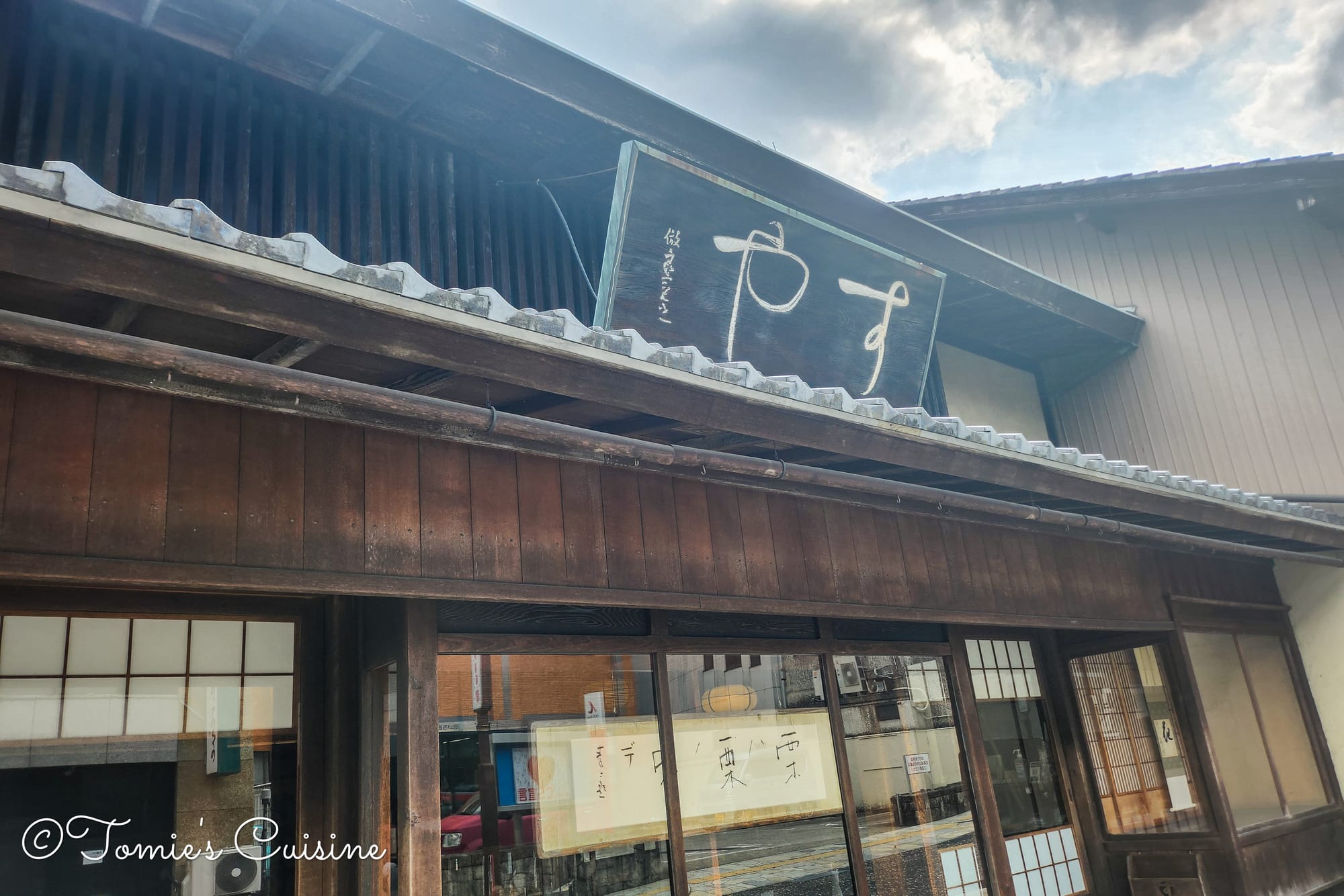
Suya shop entrance (the sign is read from right to left, as in the old style)
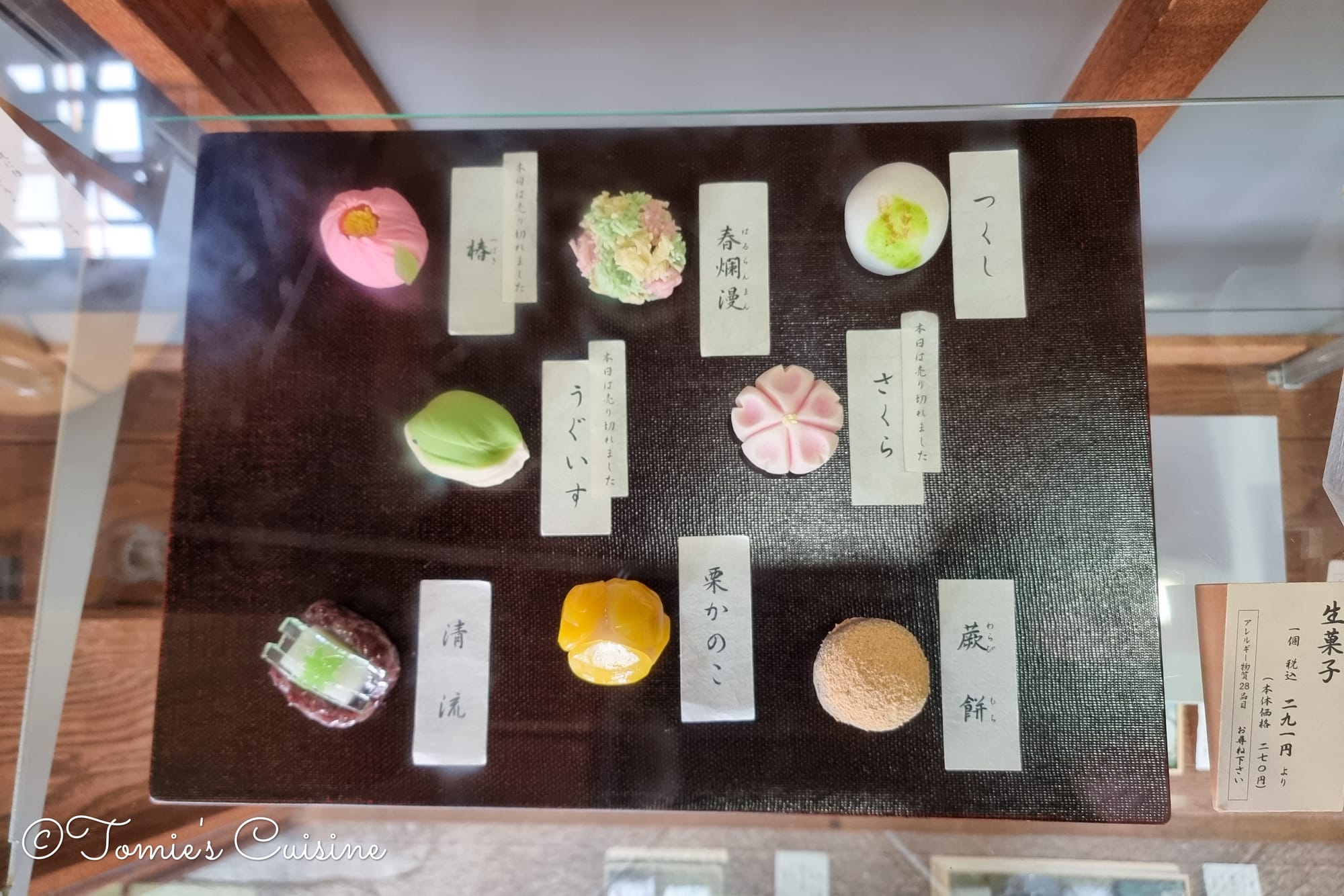
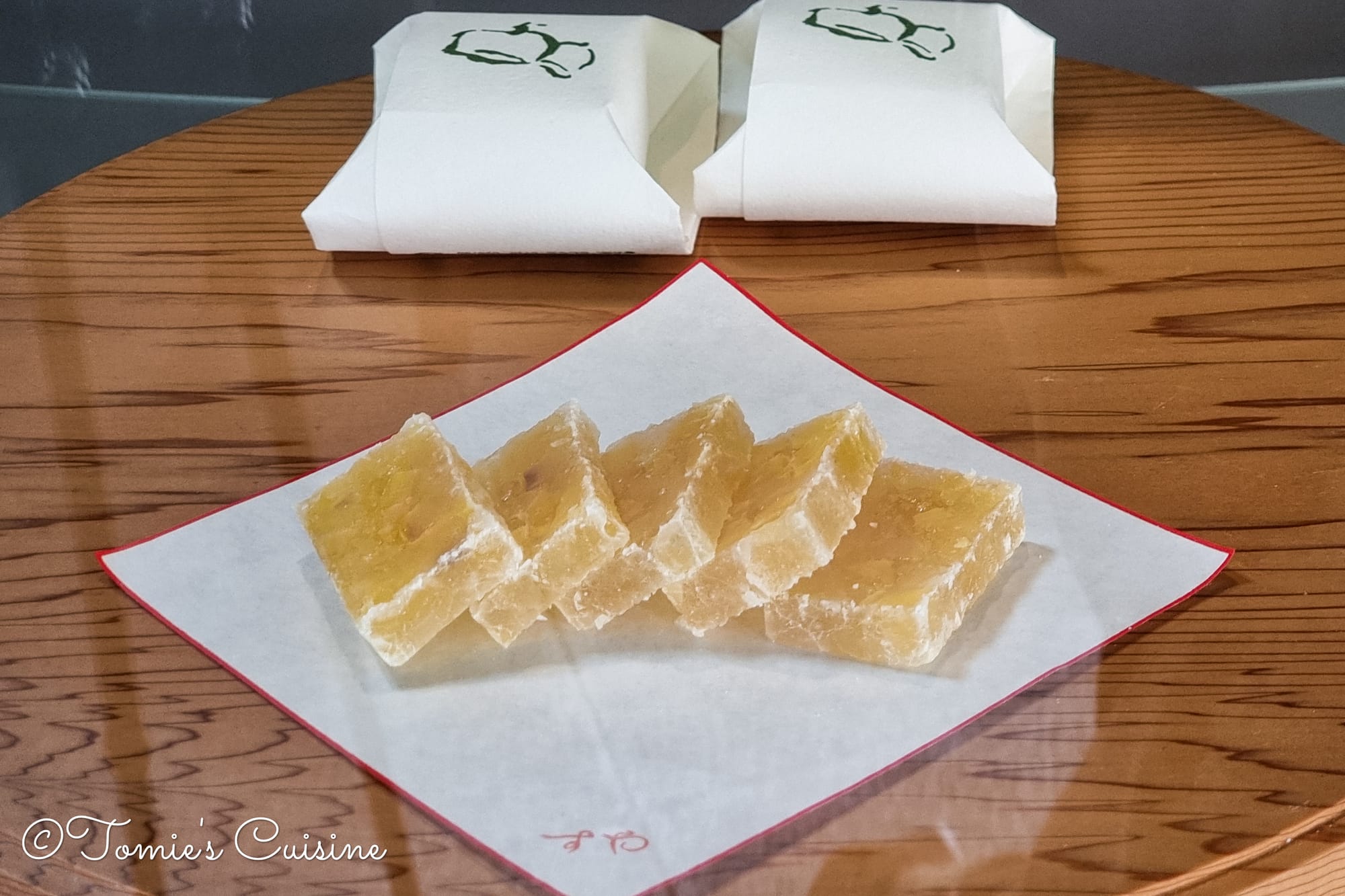
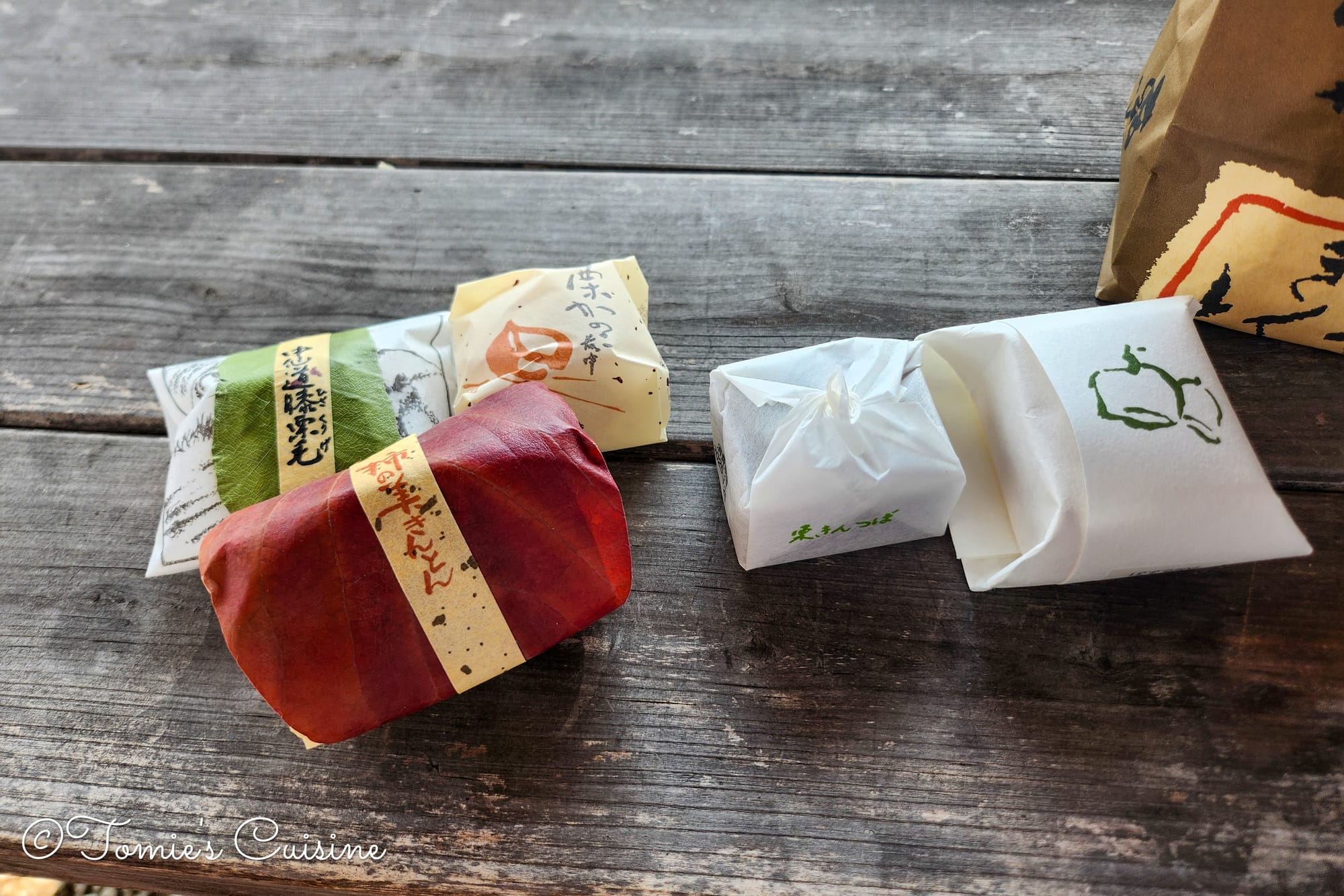
Our last stop before leaving Nakatsugawa was Suya, the shop I'd been most looking forward to. Like Kawakamiya, Suya is famous for its chestnut sweets, but the shop itself has a lovely, old-fashioned feel. These chestnuts look delicious, and I'm already looking forward to tasting them on our next break. Now that we'd packed away our chestnut sweets, it was time to leave town and head for Magome.
Closing words
By 1:15 pm we'd walked over half of what we had planned for Day 9. We'd passed through two post towns, six masugata, and some very surreal roadworks, with chestnut sweets from both Kawakamiya and Suya in our bags. The busy towns were almost behind us. Ahead lay Ochiai, the old stone path, and Magome, the Kiso Valley's first post town, plus the stretch of the Nakasendo we'd been looking forward to most.
If you have any questions or would like to see early photos of Nakasendo, feel free to visit our Instagram, Pinterest, or Facebook page. We’re happy to answer any inquiries!
This post is for subscribers only
Sign up now to read the post and get access to the full library of posts for subscribers only.