The most famous walk on the Nakasendo, done the hard way. From a night in a Magome classroom, we climbed over an icy Magome Pass into Nagano, rang the bear bell, found fresh footprints in the snow and reached Tsumago in time for oyaki and chestnut soft-serve.
As an Amazon Associate we earn from qualifying purchases. Hotel links to Booking.com are affiliate links: if you book, we may earn a small commission at no extra cost to you.
Day 10 took us over the most famous stretch of the whole Nakasendo: the path from Magome, over the Magome Pass, to Tsumago. Most people walk it as a half-day trip, with their luggage sent ahead. We did it with our full packs, as the first part of a 30 km day, on a morning when the pass was still under snow. Nobody had warned us to expect ice in late March. Not even the locals expected it.
It was Saturday, 22 March. We woke up in a classroom at Magome Furusato Gakko (Day 9, Part 2), walked through Magome before the shops opened, crossed from Gifu into Nagano, and reached Tsumago just in time for oyaki and a chestnut soft-serve. In Part 2, we continue along the Kiso River through Midono and Nojiri to a townhouse in Suhara that we had all to ourselves.
If you're planning it yourself: our GPS shows the trail from Magome Furusato Gakko to Tsumago-juku is 9.2 km (or 8.4km from Magome-juku). It climbs about 286m to the Magome Pass (791 m), then it's mostly downhill into Tsumago. It took us 3h47, including stops, and that was on ice. You can walk it the other way too, from Tsumago to Magome, but then most of the climbing comes at the end.
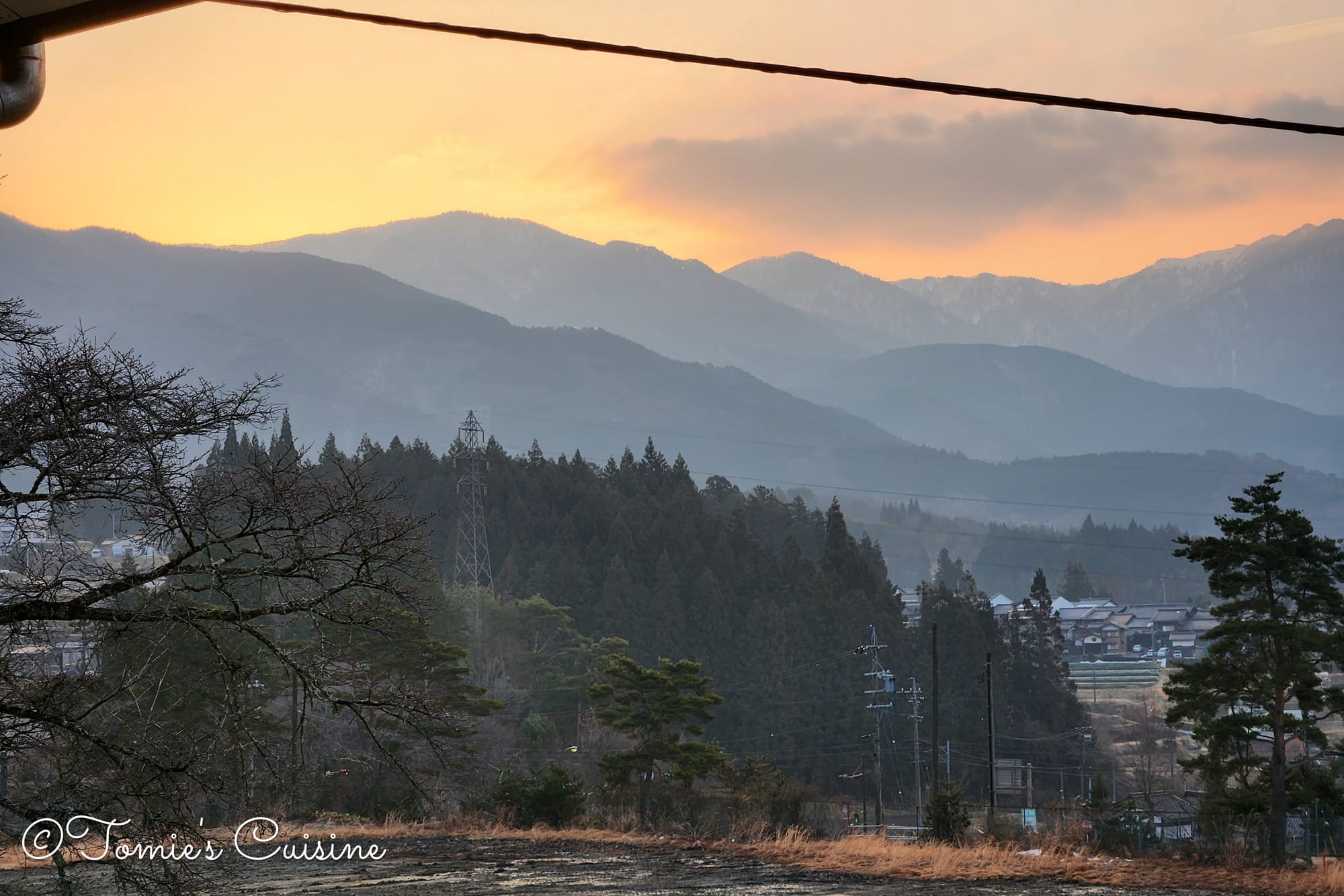
Sunrise behind the mountains from the Magome Furusato Gakko classroom.
Look at the stunning mountain view outside the classroom window in the morning.
The kitchen at Magome Furusato Gakko features a blackboard filled with messages from many guests.
We had a small breakfast in the school's kitchen. There is lots of dinnerware and cooking essentials. We had some daifuku mochi we bought from a supermarket in Mizunami City on day 7, plus tea and coffee, using the mugs in the kitchen.
Leaving the school and heading to Magome, 8:00 am
After washing up the mugs, we prepared ourselves to leave the school.
The school is a 10-minute walk below Magome, so the day started with a climb back up into town.
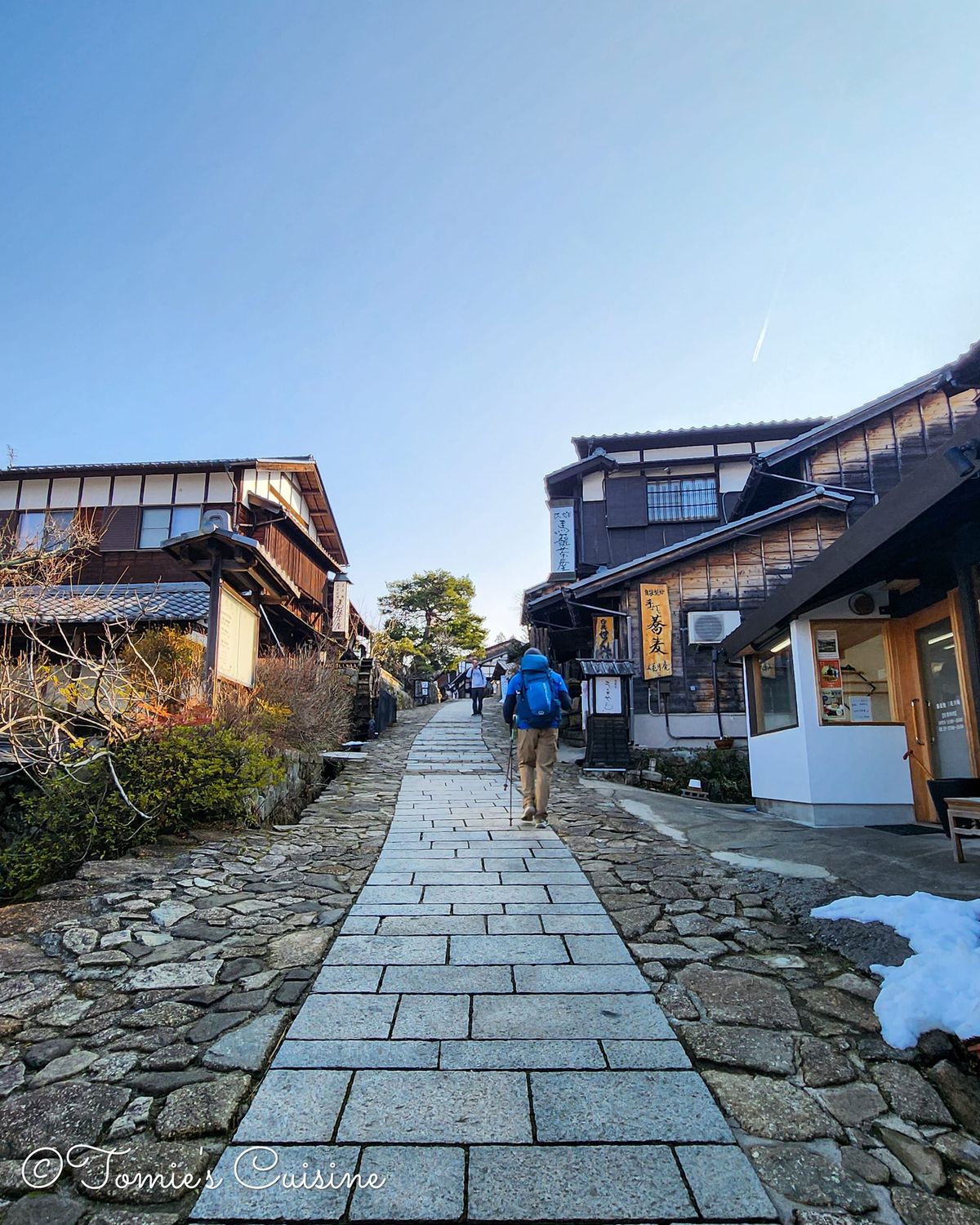
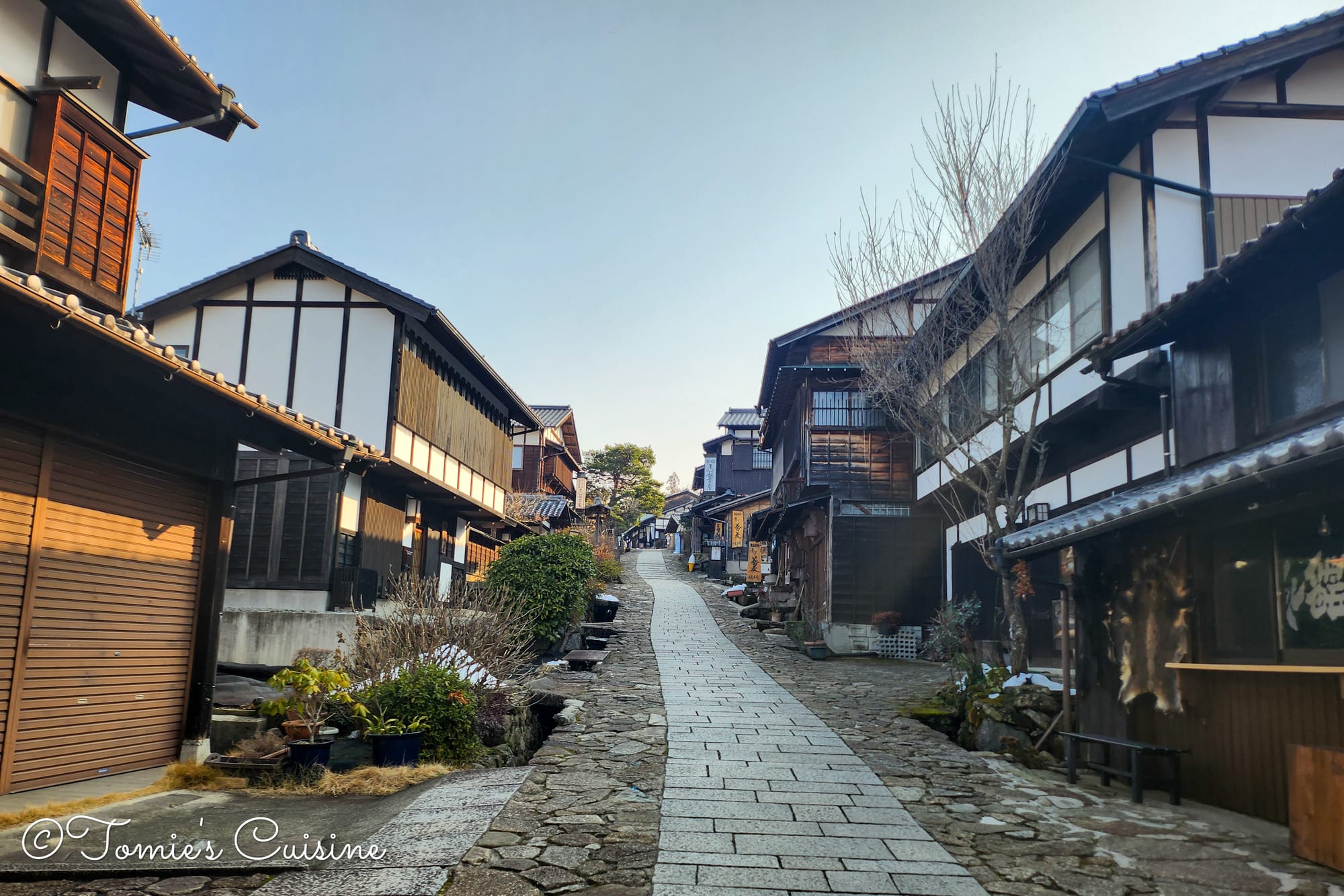
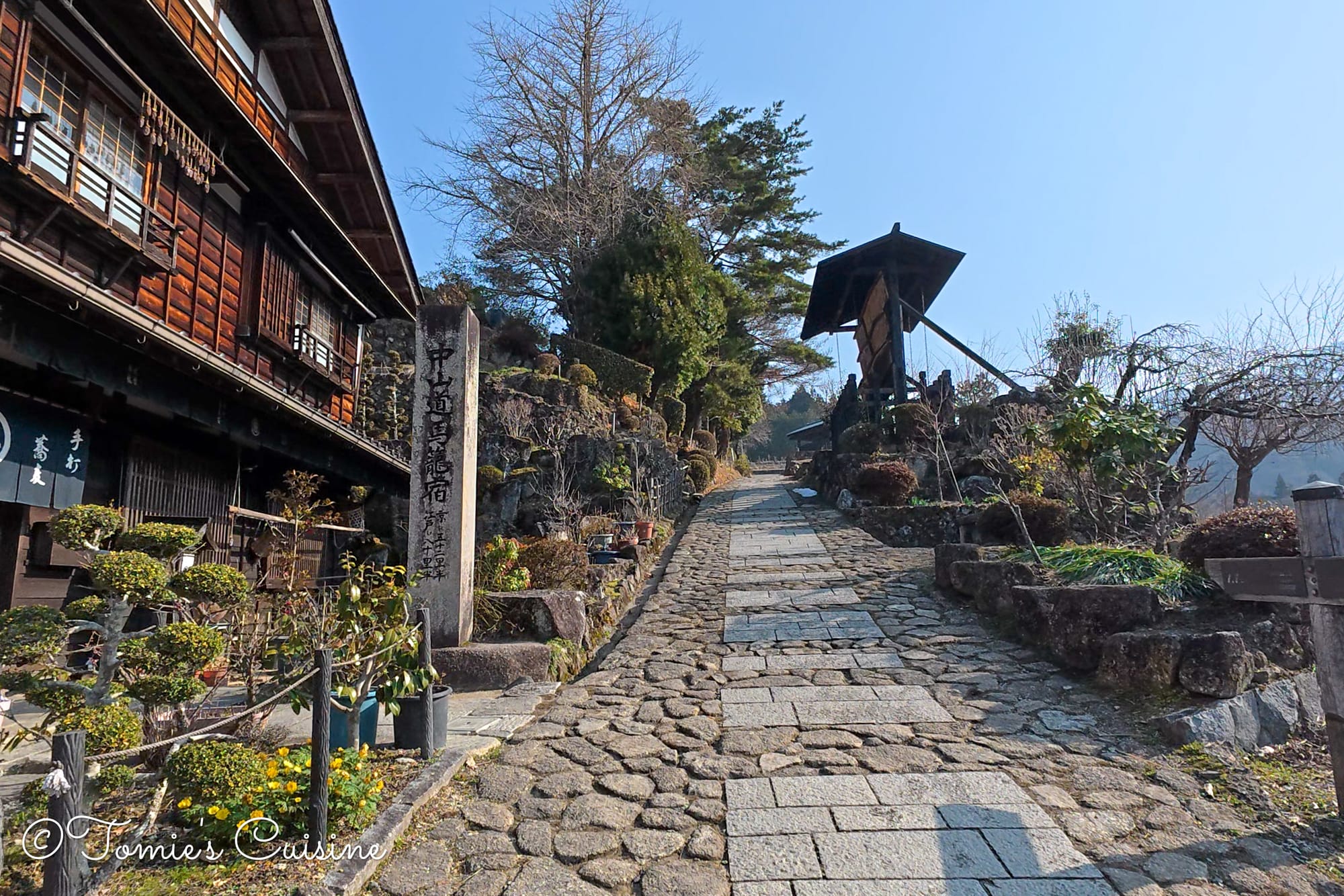
Stone-paved slope of Magome post town in the early Saturday morning, Kiso Valley
At a quarter past eight, Magome was almost empty. Most shops were still shuttered, and the only sounds were water running in the channels beside the stone slope and birds chirping. If you've seen photos of Magome packed with day-trippers, this is the other Magome, and it's worth getting up early for.
The town isn't quite as old as it looks. Magome burned down in 1895 and again in 1915, and was rebuilt both times along the same steep, stone-paved slope.
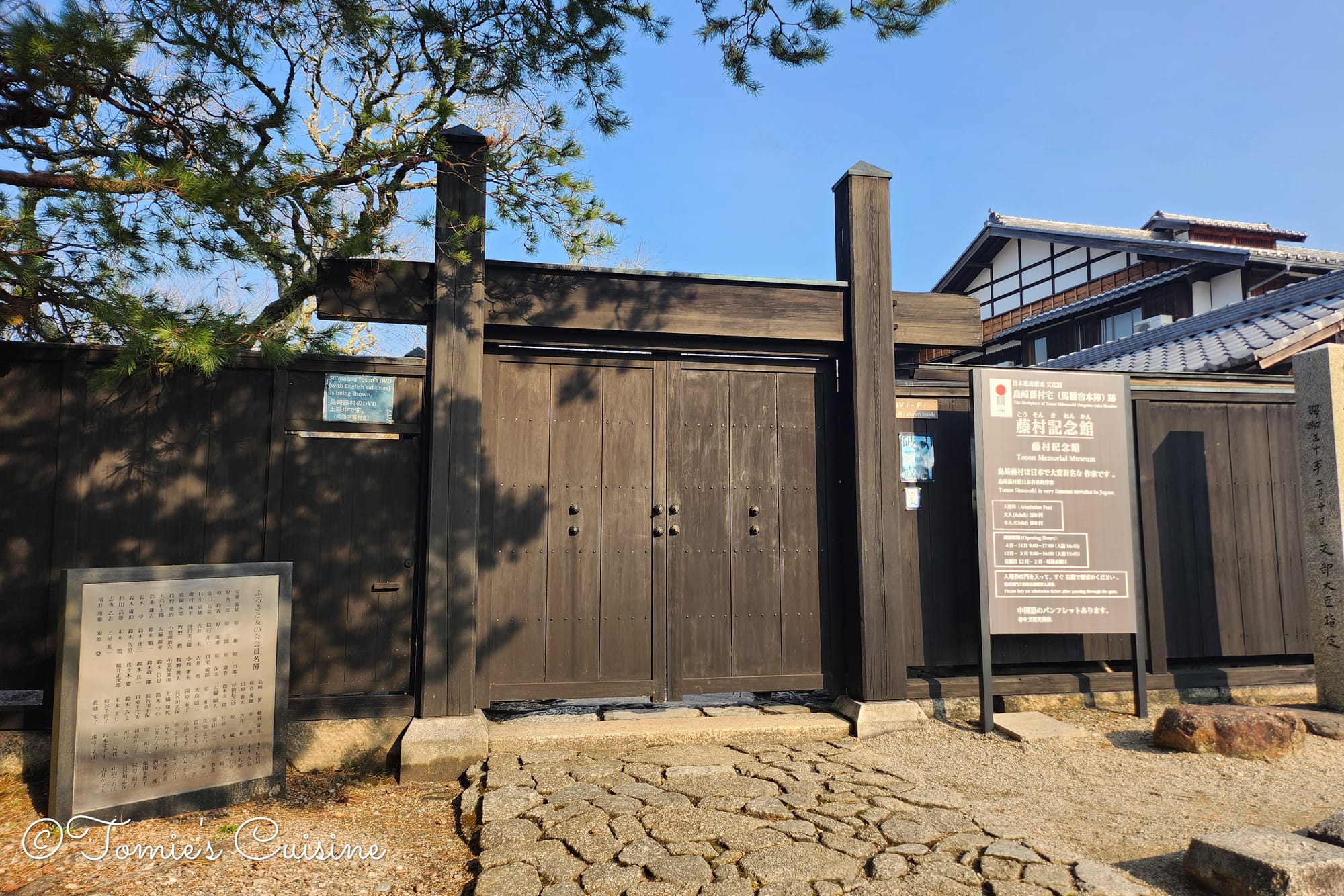
The museum opens at 9 am, so we were a little too early. We will visit there next time!
📖
Who was Shimazaki Tōson (島崎藤村)? Tōson (1872–1943) is one of modern Japan's great writers, first as a poet and later as a novelist. He was born right here, into the Shimazaki family who ran Magome's honjin, the inn where daimyo stayed. His most famous novel, Yoake-mae (夜明け前, Before the Dawn), is set in Magome. Its hero, a honjin keeper caught up in the end of the samurai age, is modelled on Tōson's own father. The novel's opening line, about the Kiso road lying deep in the mountains, is one of the best-known first lines in Japanese literature.
The Tōson Memorial Museum (藤村記念館, toson.jp) stands on the site of the honjin and houses around 6,000 items, including his manuscripts and everyday objects. We passed it at 8:15, before it opened, so we'll have to come back.
Entry: adults ¥500, students ¥400, primary and junior-high pupils ¥100.
Open: 9:00–17:00 (April–November), 9:00–16:00 (December–March). Closed on Wednesdays from December to February.
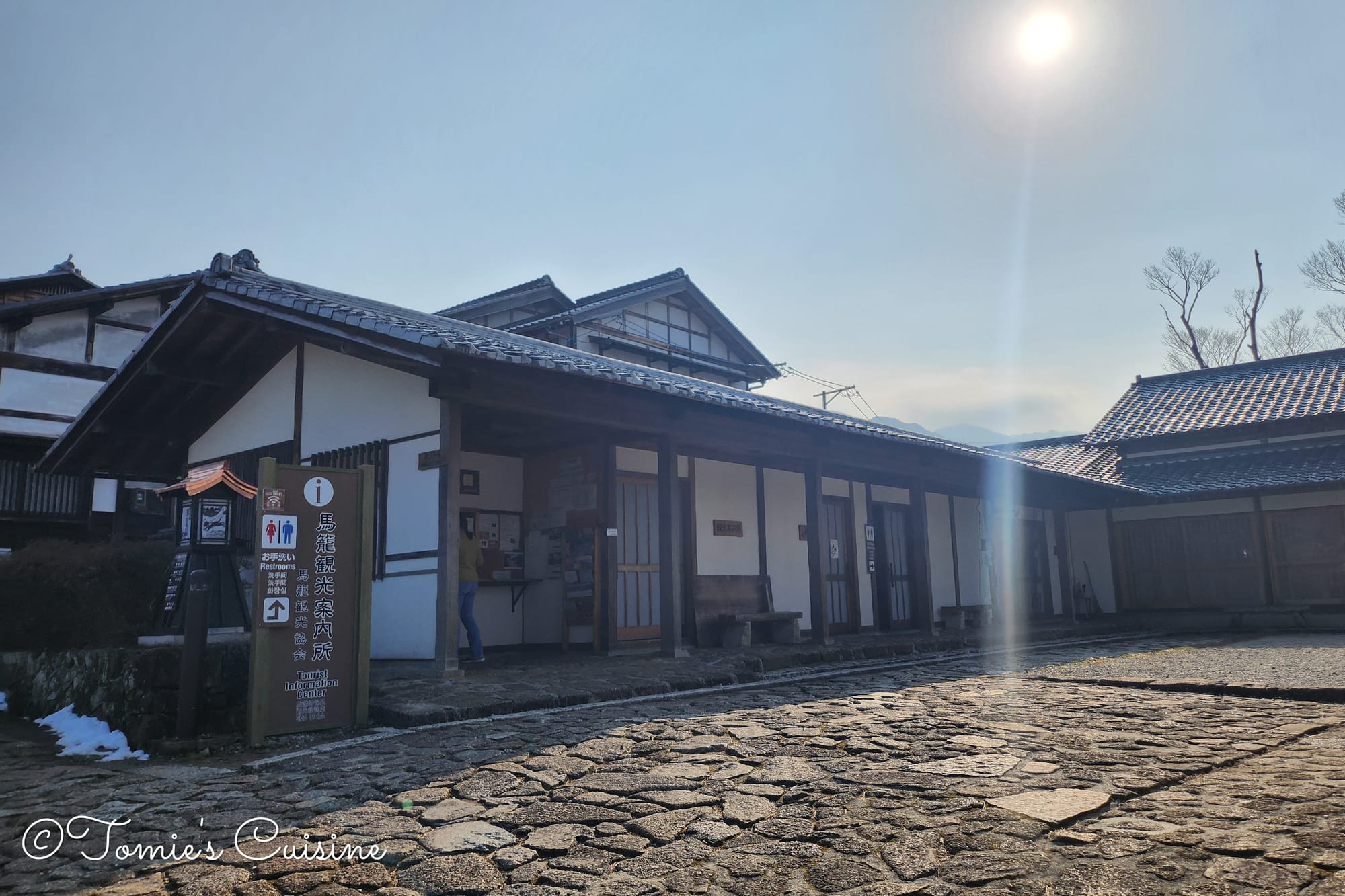
There are toilets here, and you can leave your luggage while you explore Magome.
🧳
Walking to Tsumago with just a daypack The tourist information centres in Magome and Tsumago run a luggage service between the two towns. Drop your bags at Magome between 8:30 AM and 11:30 AM, then collect them at Tsumago's information centre between 1:00 PM and 5:00 PM. It costs ¥1,000 per bag, works both ways, and runs from 20 March to 30 November in 2026.
We didn't use it because we were walking on to Suhara, but if you're only walking from Magome to Tsumago, it's the easiest option. For the longer luggage transfers from Nakatsugawa, see Day 9, Part 2. If you want to use the service between the 1st December and 19th March 2027, special service is available under the conditions below.
💡
Special Service during the winter months (1st December to 19th March 2027) Business Hours Tsumago Tourist Information Centre: 8:30 AM to 3:00 PM Magome BASE, Magome Tourist Information Centre: 9:00 AM to 3:00 PM Final pick-up time: 4:30 PM Price: ¥2,500 per bag
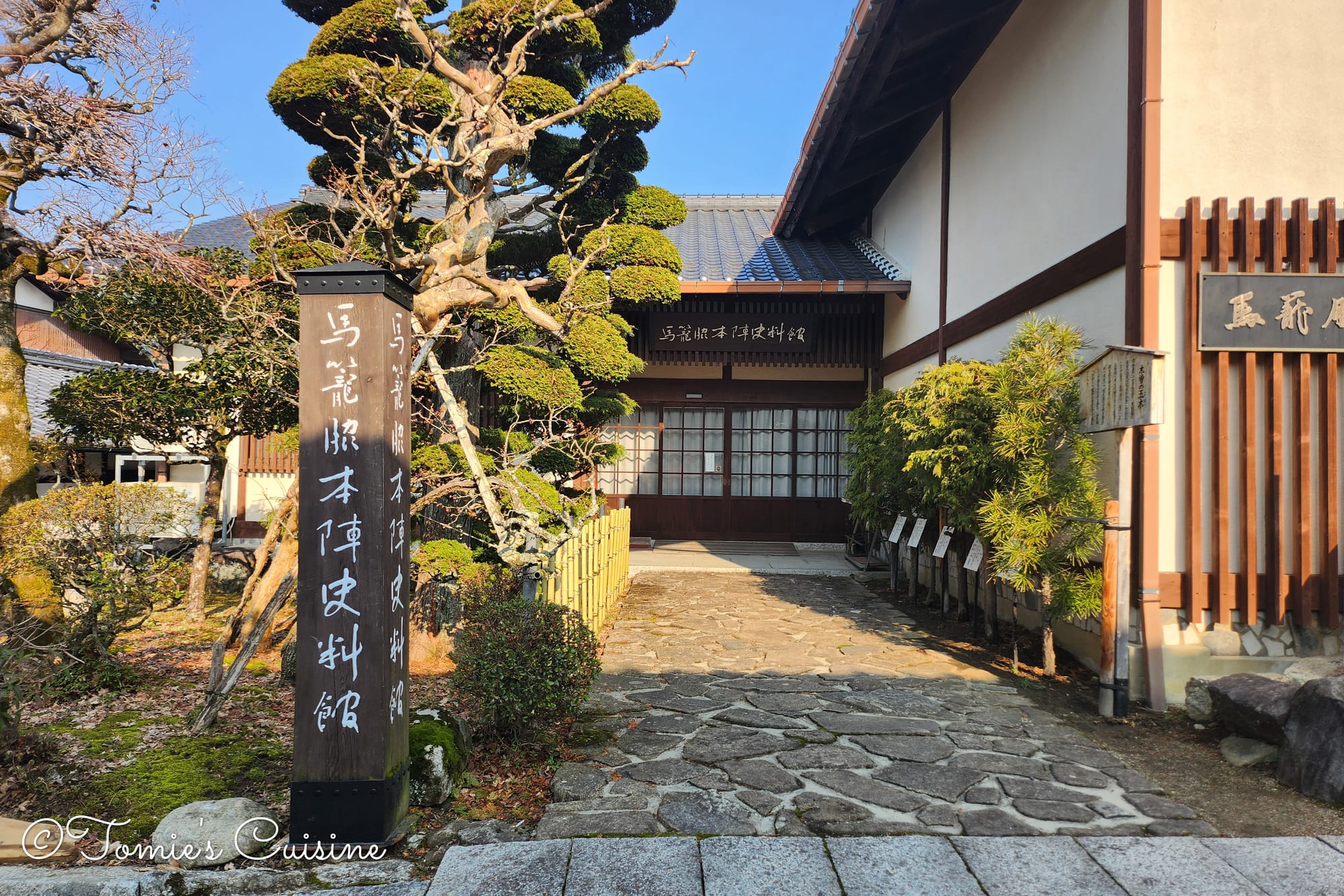
The Magome Wakihonjin Museum (馬籠脇本陣史料館) has a reconstruction of the jōdan-no-ma (上段の間), the raised guest room kept for high-ranking officials, from the Hachiya family's secondary inn, Yawataya (八幡屋). It also displays household goods and documents from the post-town days, including a memorandum the family kept that Tōson is said to have borrowed while writing Before the Dawn.
It only opens at weekends and public holidays, from 10:00, so at 8:20 am on a Saturday we were too early. Next time!
Entry: adults ¥300, primary and junior-high pupils ¥100. Closed in winter.
If we did it again: a whole day in Magome
We arrived in Magome late in the afternoon and left first thing the next morning, so we missed nearly everything: the Tōson museum, the Wakihonjin, the cafés and the shops. Researching this article, I was surprised by how much there is in such a small town. It's not just the atmosphere that makes it so popular.
If you're planning your own trip, I'd arrive by lunchtime, or stay two nights. Spend the afternoon in Magome, then walk to Tsumago the next morning with your bags sent ahead. We'll definitely go back and do it properly.
Walking the Magome to Tsumago trail
We can see the Nakasendo Magome juku stone sign and the Kosatsuba notice board.
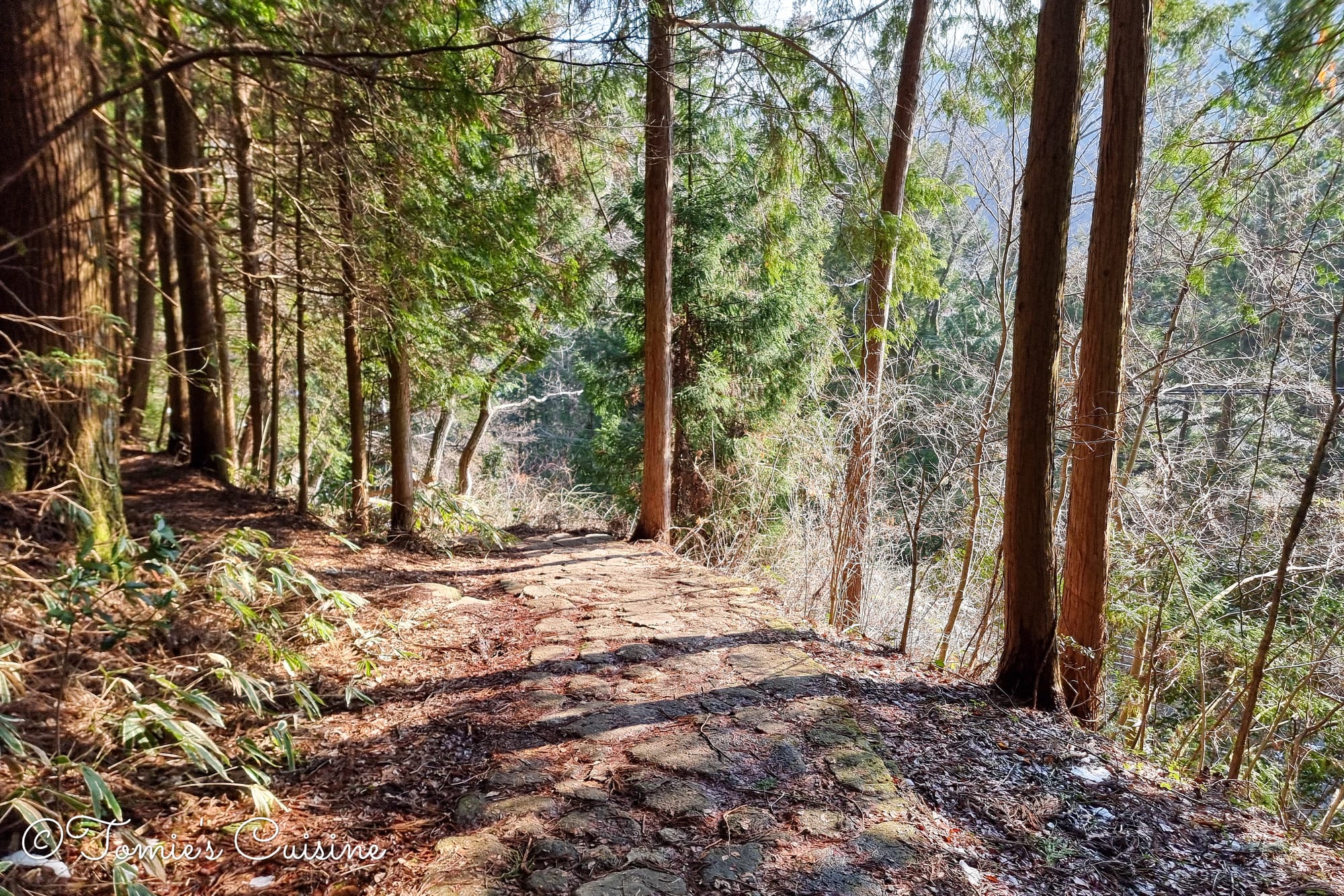
At the top of Magome, the houses end, and the old Nakasendo carries on into the forest. This is the stretch most visitors to the Kiso Valley come for: 8 to 9km of paths, cedar woods, little hamlets and waterfalls, over the Magome Pass and down into Tsumago.
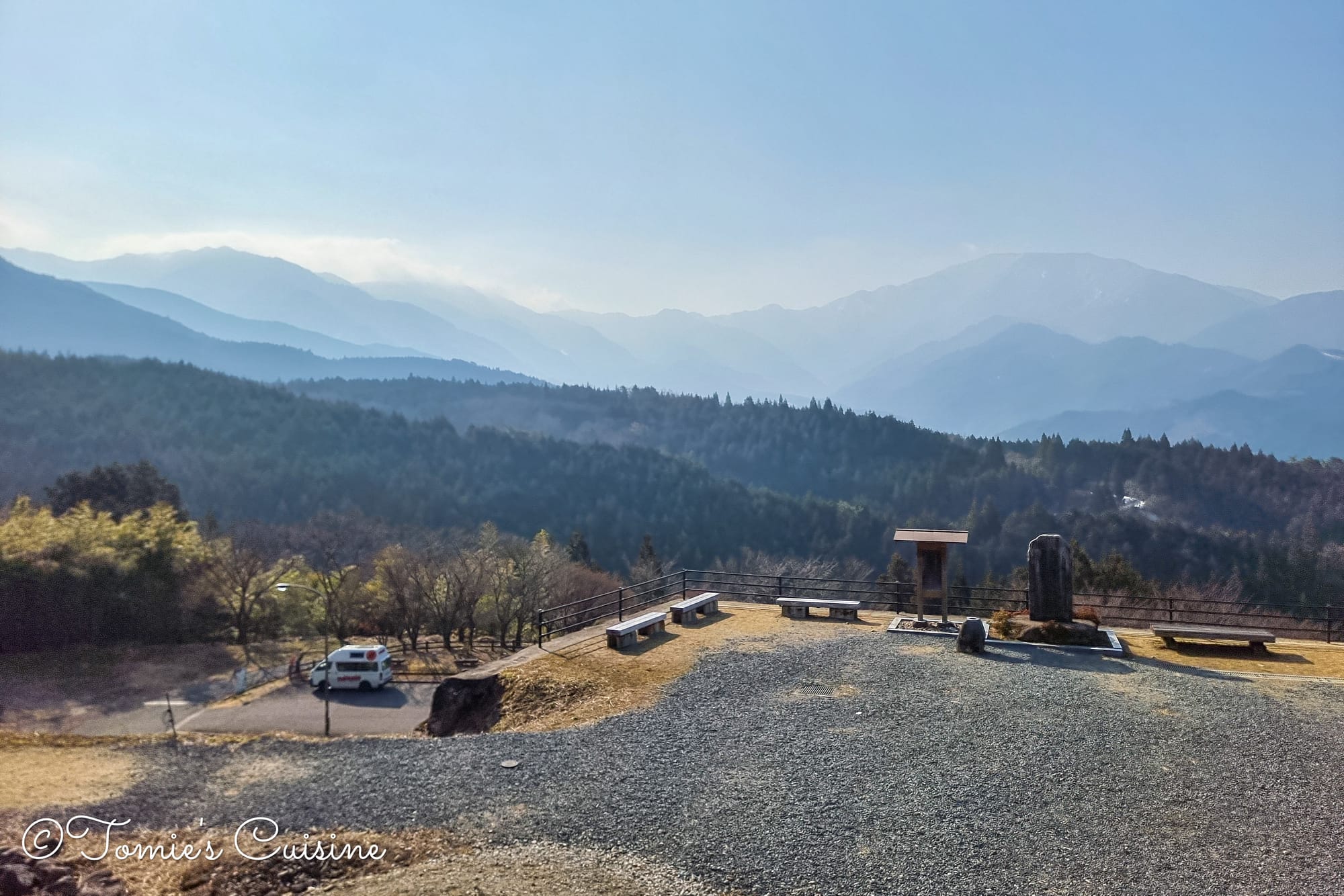
The viewpoint offers a stunning view of Mount Ena.
This viewpoint is called “Magome Jinbagami Miharashidai (馬籠陣場上見晴台)”, and you can see beautiful views of Mount Ena (2191m). A few benches let you rest and enjoy the view.
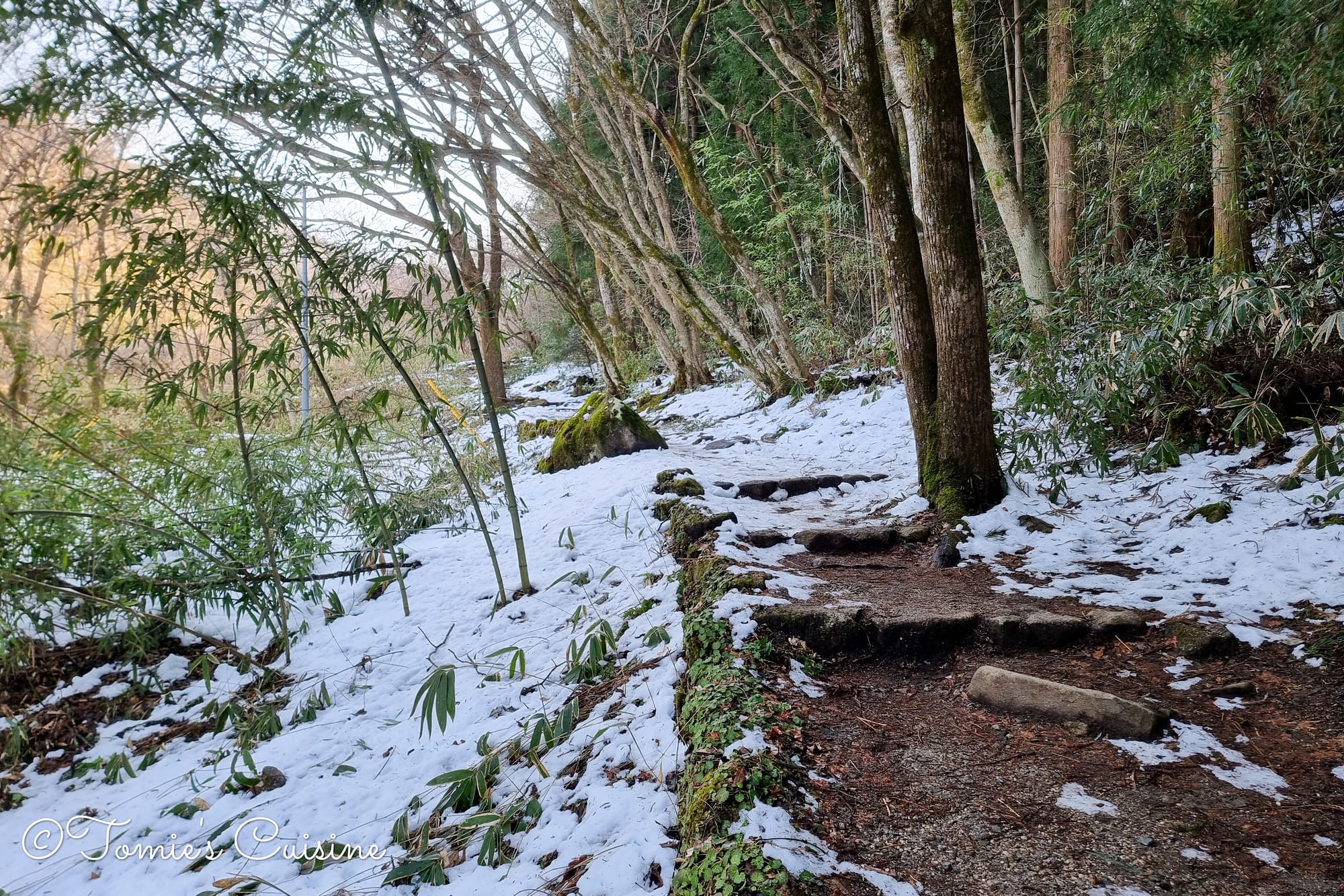
Back onto the stone path, now with snow, 8:40 am
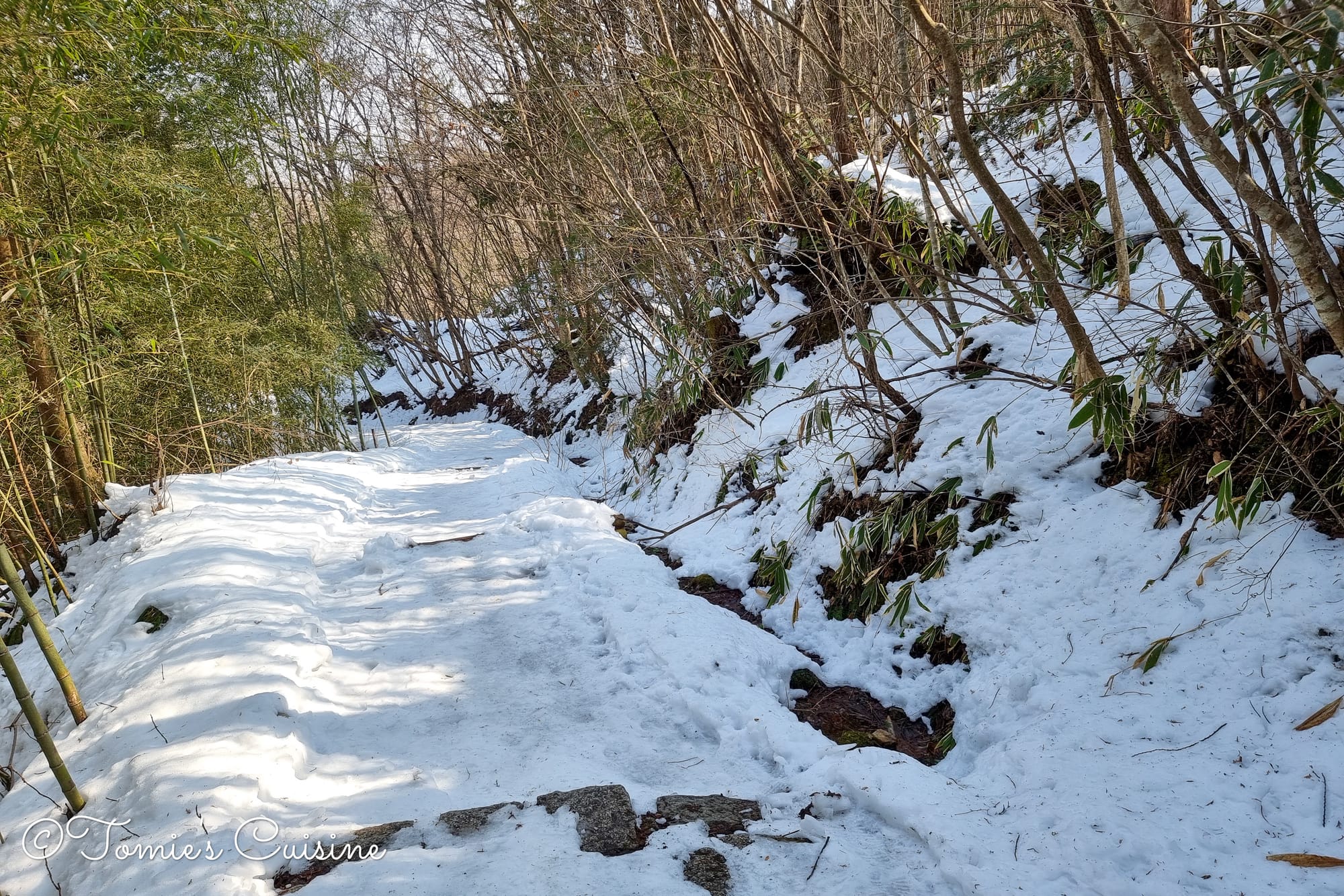
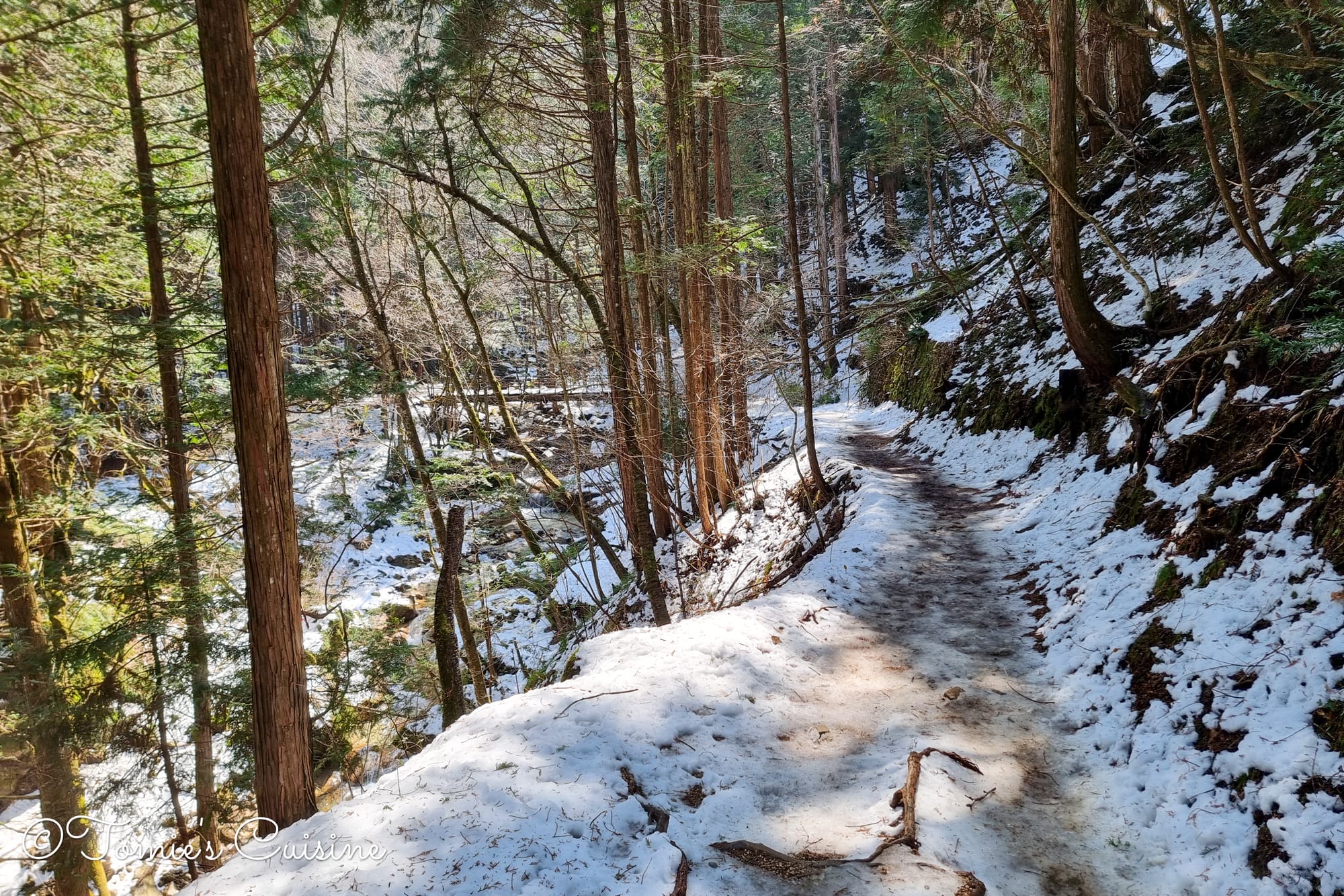
At first, there wasn't much snow, but as we ventured deeper into the woods, we found more snow.
On day 9, we walked on the historical stone path in Ochiai. Today, we are on the stone path with more snow!
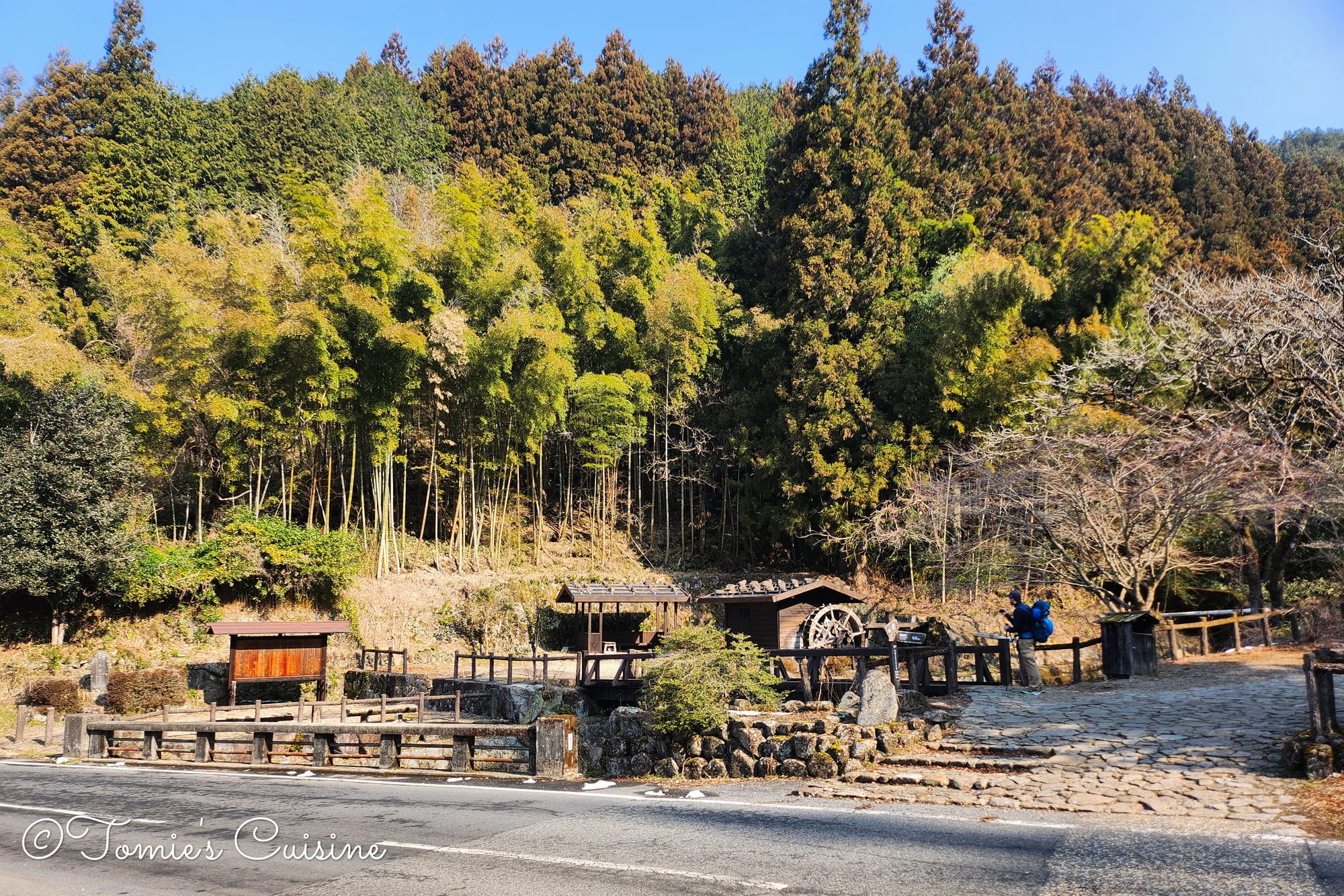
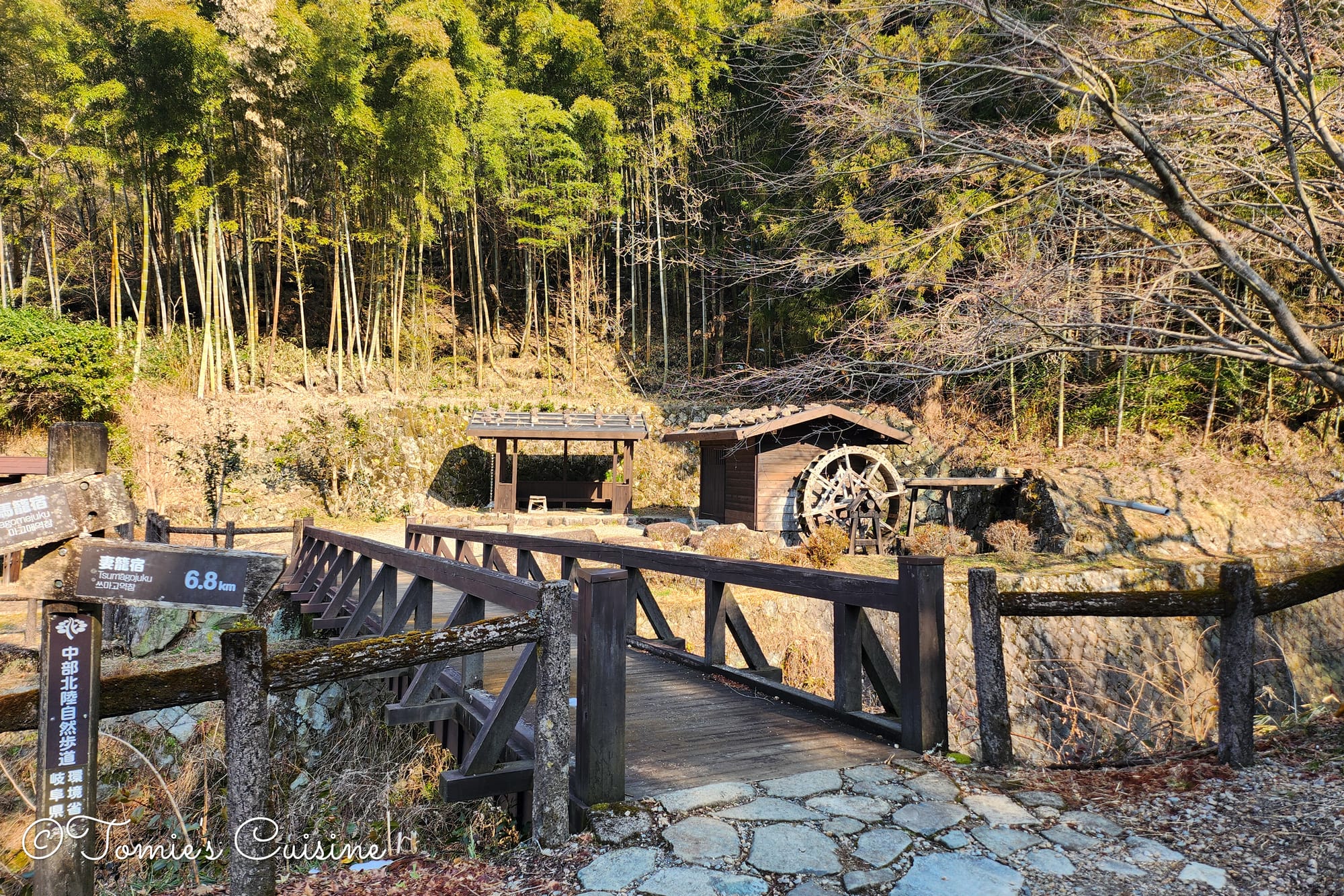
The memorial water-wheel hut now serves as a resting area for hikers.
This original water-wheel hut stood there until the debris flow triggered by heavy rains in July 1904 (Meiji 37). It was swept away along with the family home, tragically claiming the lives of four family members. The small watermill standing there today was later restored and maintained as a rest shelter and monument beside the Suishazuka (Watermill Mound), a memorial stone erected by the surviving family.
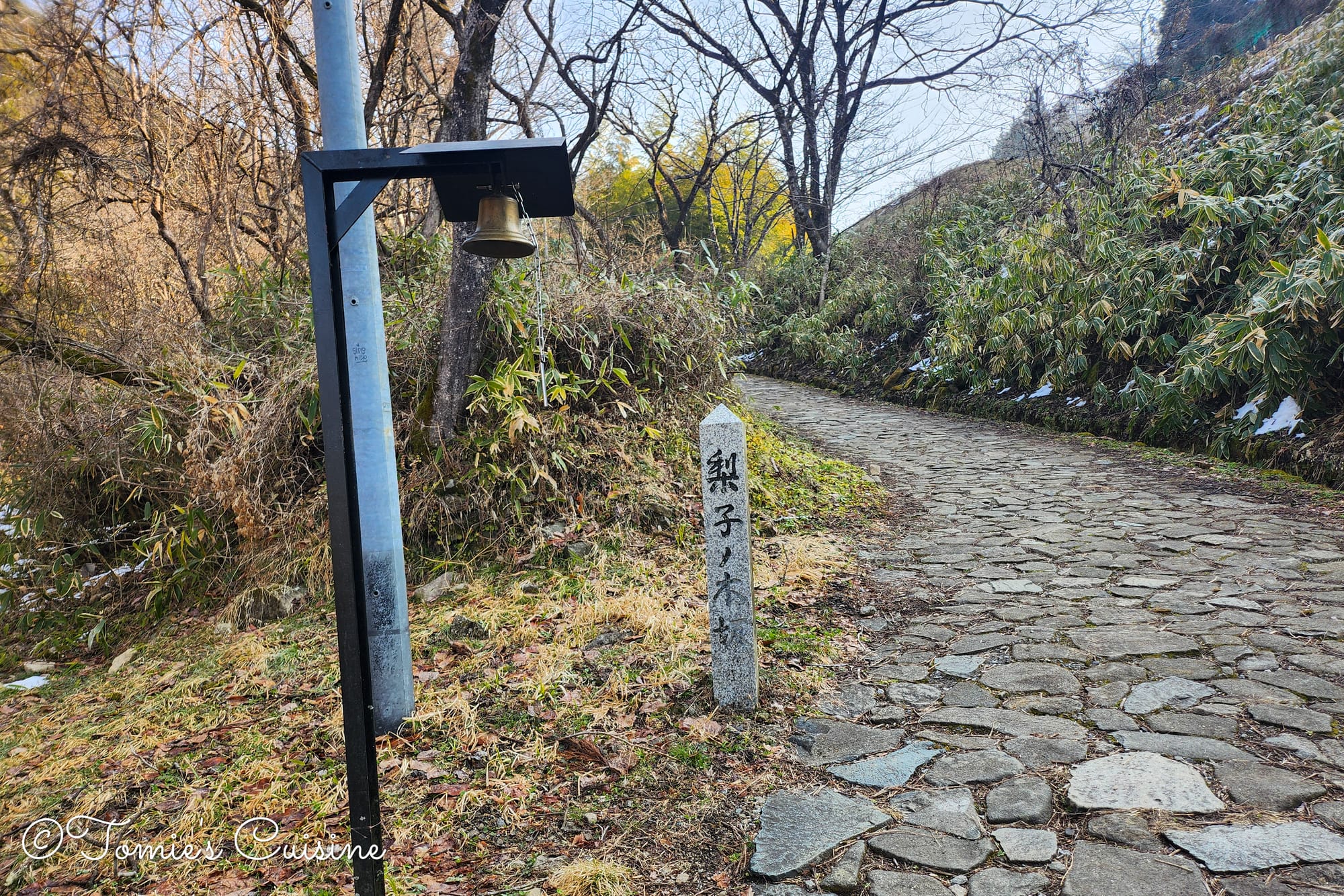
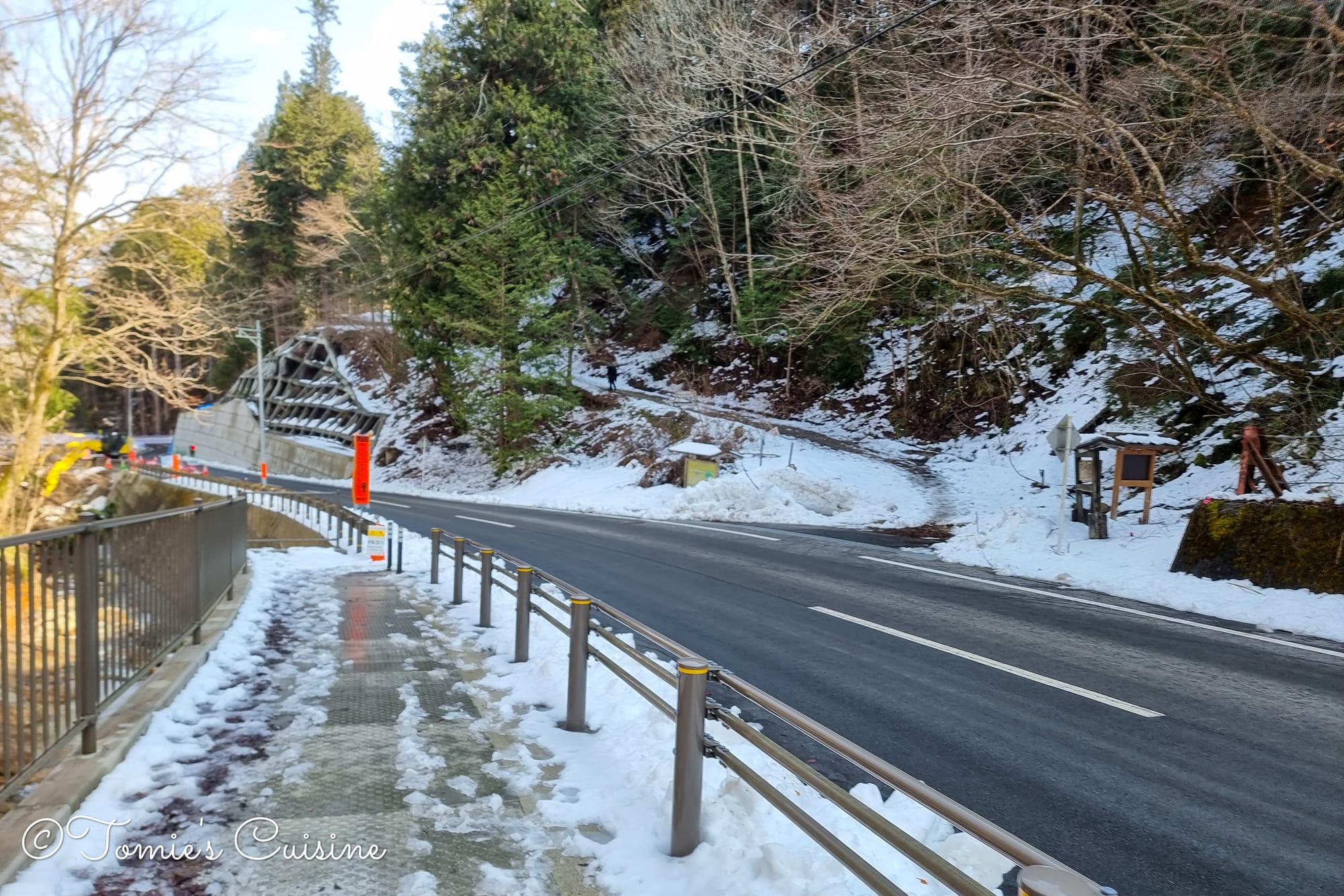
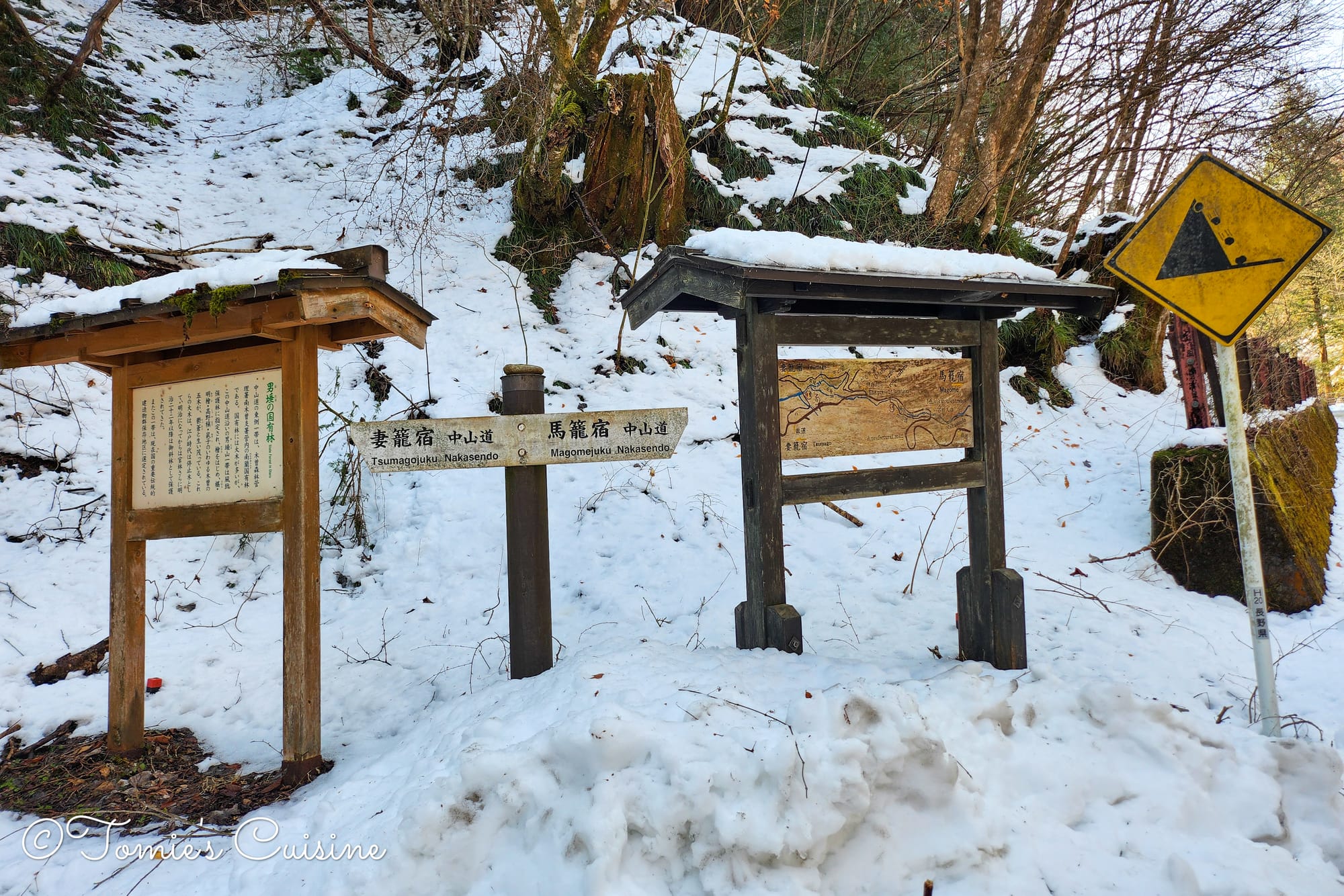
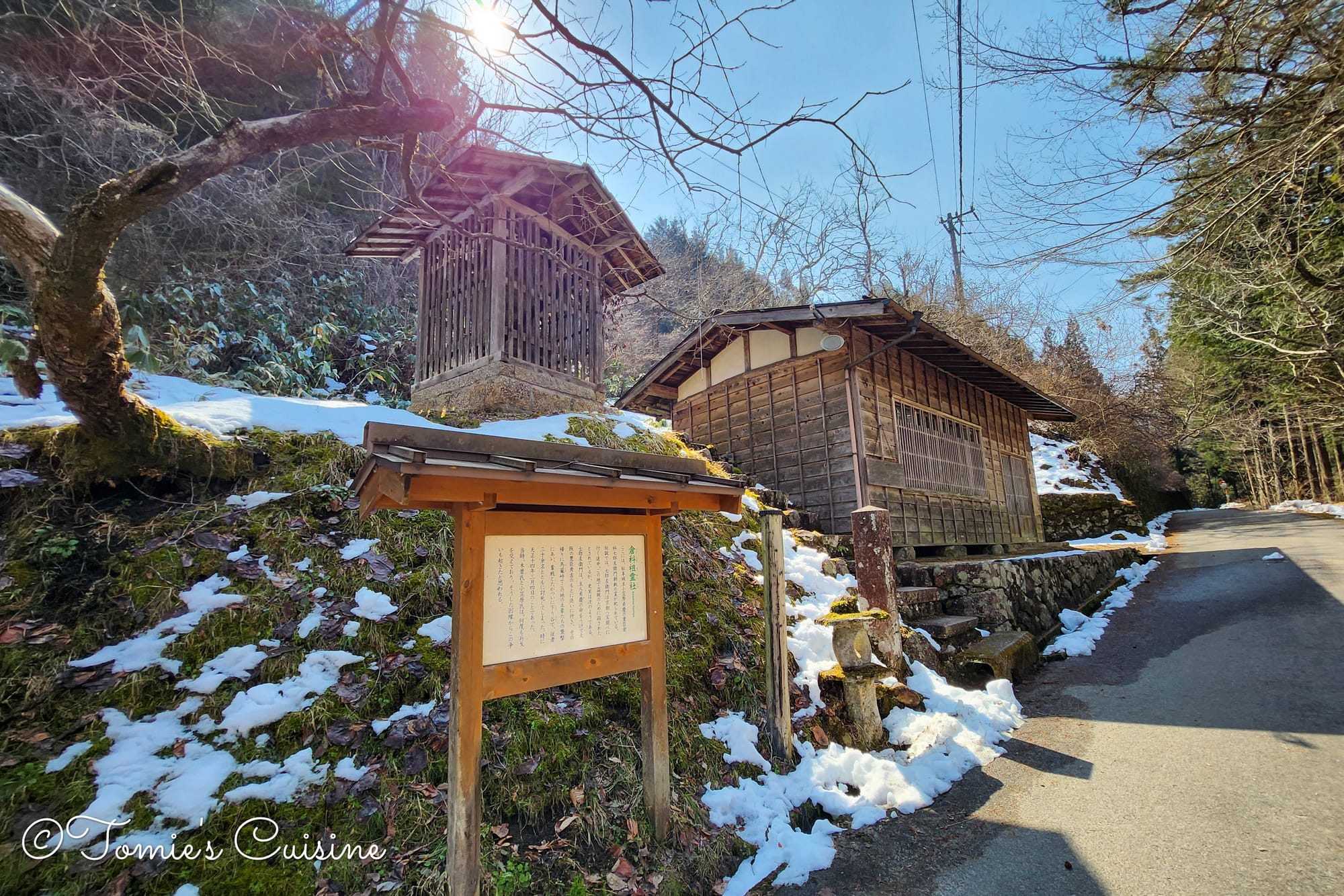
A "bear bell" sits at the start of the Nashinoki slope.
Along the slope, a bell hangs by the path for walkers to ring so the bears know people are coming. We had our own bear bells (we bought them on day 7) jingling on our bags the whole way, but of course we rang this one too, as loudly as we could.
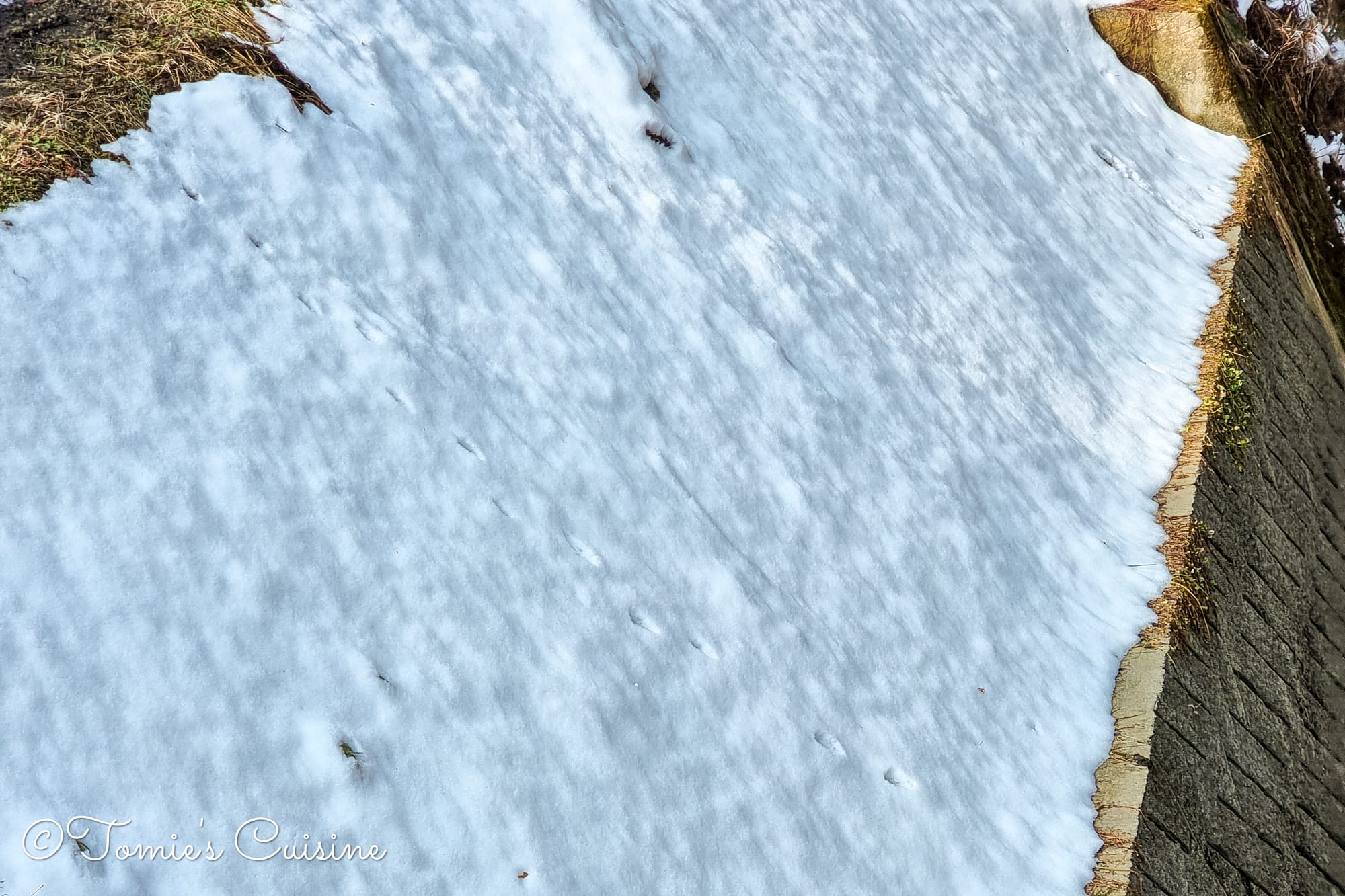
Some animal footprints on the snow.
A few minutes later, Kevin stopped and pointed at the snow. Fresh animal footprints crossed the path. We thought it was from either deer or Kamoshika (カモシカ), the Japanese serow. But we tried to walk a little faster after that.
🔔
If you don’t have a bell Nagiso Tourism Association mentions on their website that there are bears in the area. If you don’t have a bell, you can rent one (and return it) from Tsumago Tourist Information Centre, the Magome Tourist Information Centre, and Magome BASE. You pay ¥2,100 and get ¥2,000 back when you return it, so it costs ¥100.
A public toilet is located about an 11-minute walk from the water-wheel hut.
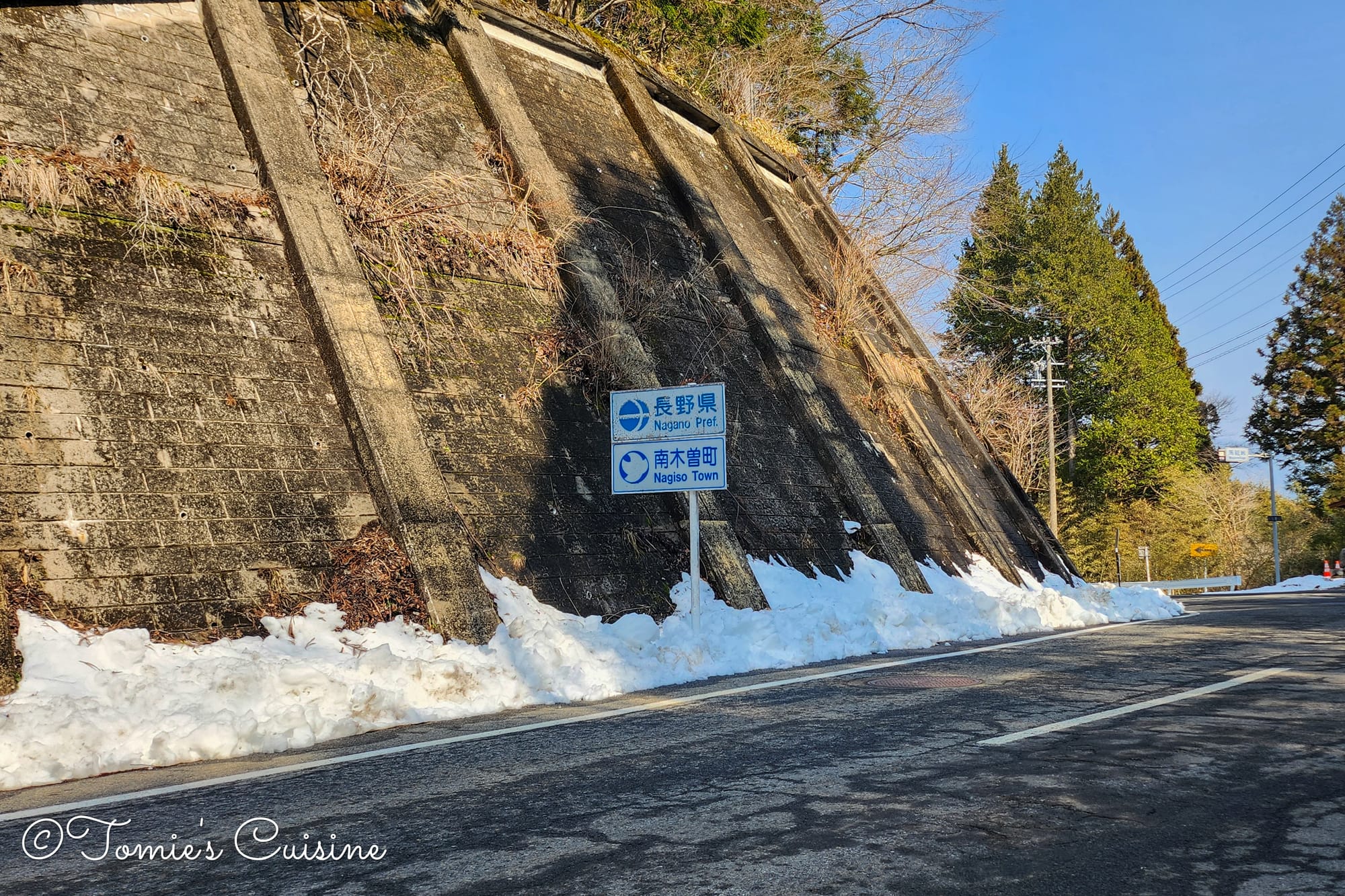
9:13 am, here's the border between Gifu and Nagano.
Fun fact: until 2005, Magome was in Nagano too. It belonged to Yamaguchi village, which crossed the prefecture line that year to merge with Nakatsugawa in Gifu. That's why Magome is in Gifu today but is still counted as the first of the eleven post towns of the Kiso road, the Kisoji. From here, every post town until Karuizawa is in Nagano.
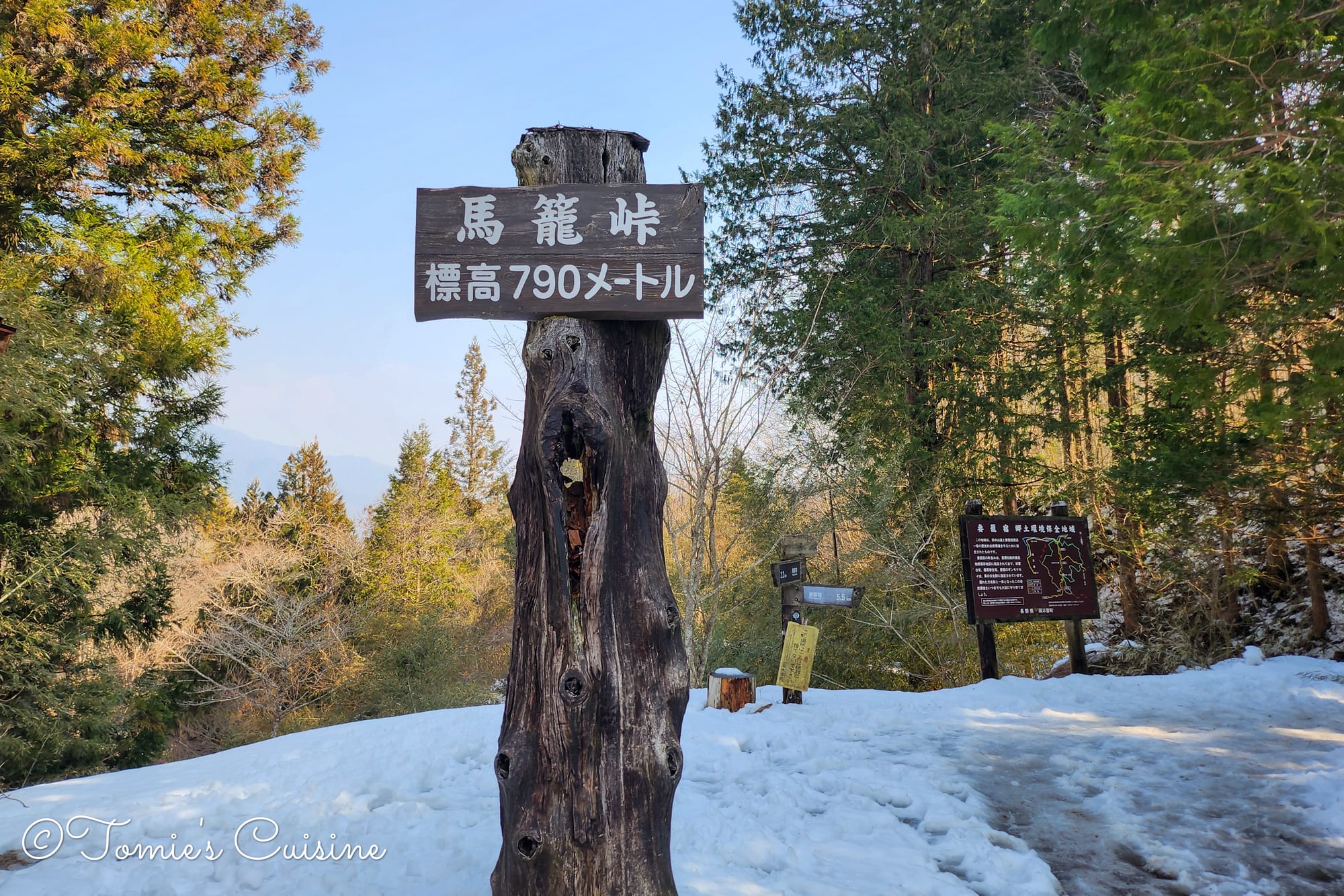
Magome Pass used to be 801m high, but it's now lower because they built a road.
The Magome Mountain Pass was entirely covered in snow from this point onward!
From the top of the pass onwards, the snow had turned to ice. So many people walk this path that the snow gets packed down hard, and it was very hard to stay upright without crampons. We hadn't brought any. We hadn't expected this much snow, and neither had the locals when we chatted later. Luckily, we had our walking poles and got down without falling, but it was very slippery and slow going.
If you're walking here in early spring (or late autumn), I'd really recommend packing a pair of light chain spikes (kei-aizen, 軽アイゼン). They weigh almost nothing, slip over your walking shoes, and would have made this stretch so much easier.
Ichikokutochi tea house on the Nakasendo between Magome and Tsumago (again, we arrived too early).
Halfway between Magome and Tsumago is a wooden tea house, about 200 years old, where travellers on the Nakasendo have stopped to rest for centuries. Today, Tsumago's preservation society looks after it, and walkers are welcome to come in for free tea. Leaving a donation helps keep it going. Between December and March, the tea house is open from 10 am to 3 pm, so it wasn't open when we were there.
Right next door is the site of an old guard post with a darker history. In the Edo period, the Kiso Valley's cypress forests were so valuable that ordinary people were forbidden to cut down five kinds of trees to protect forest resources, and the guards here checked every log that came down the road. The punishment was summed up in a grim saying: ki ippon, kubi hitotsu (木一本首一つ), "one tree, one head”.
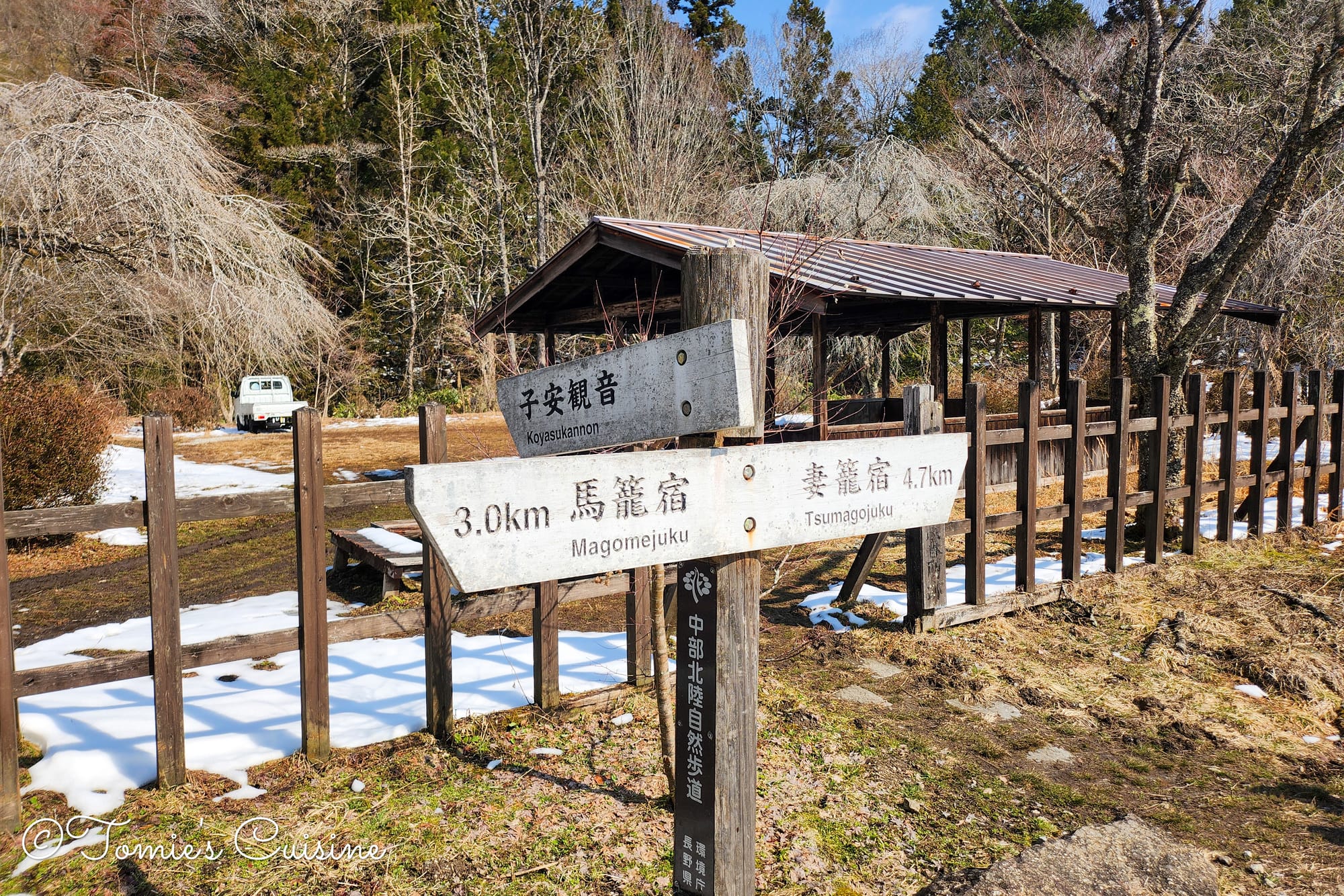
A sign indicating the directions and distance to Magome and Tsumago reads: "4.7 km to go!"
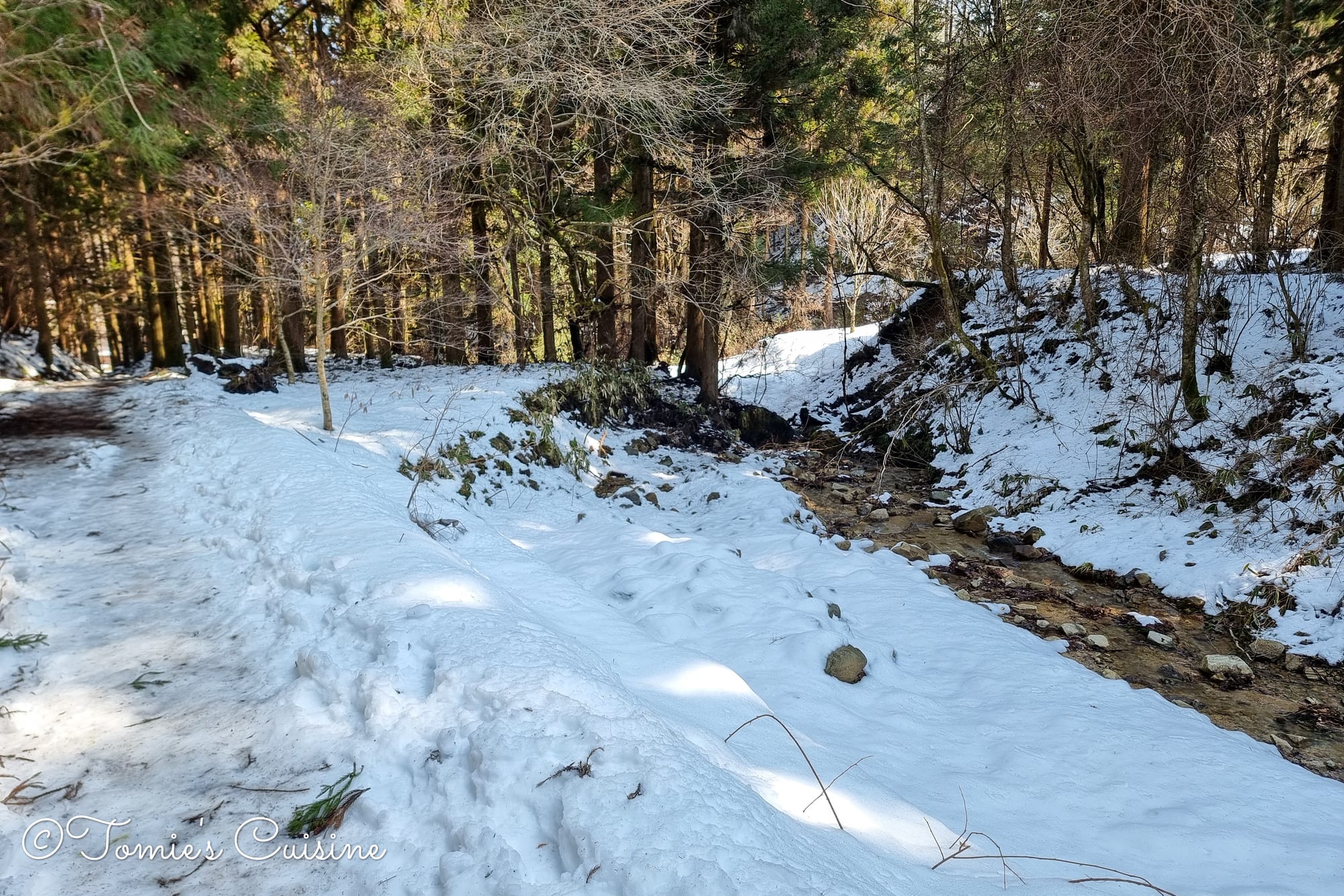
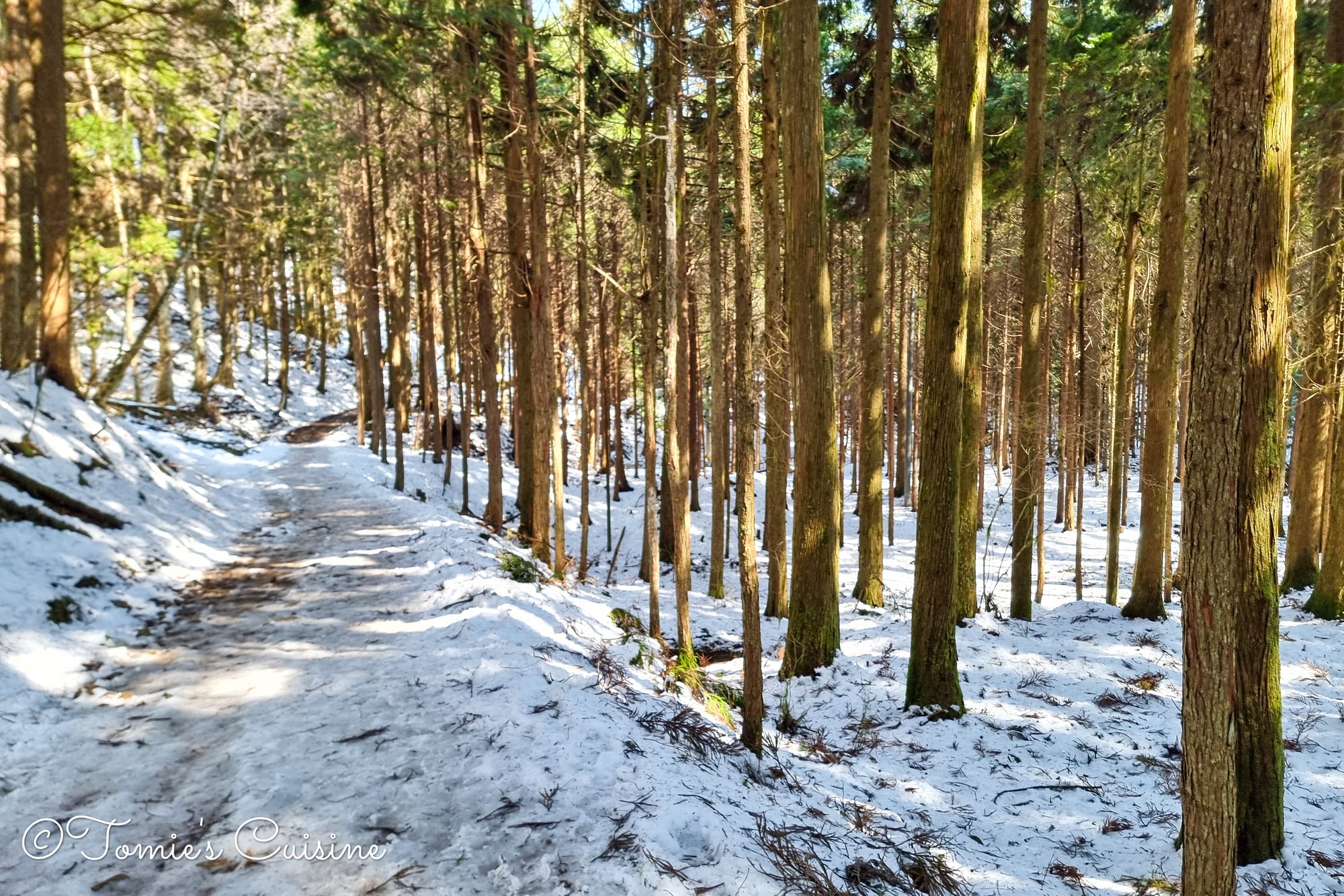
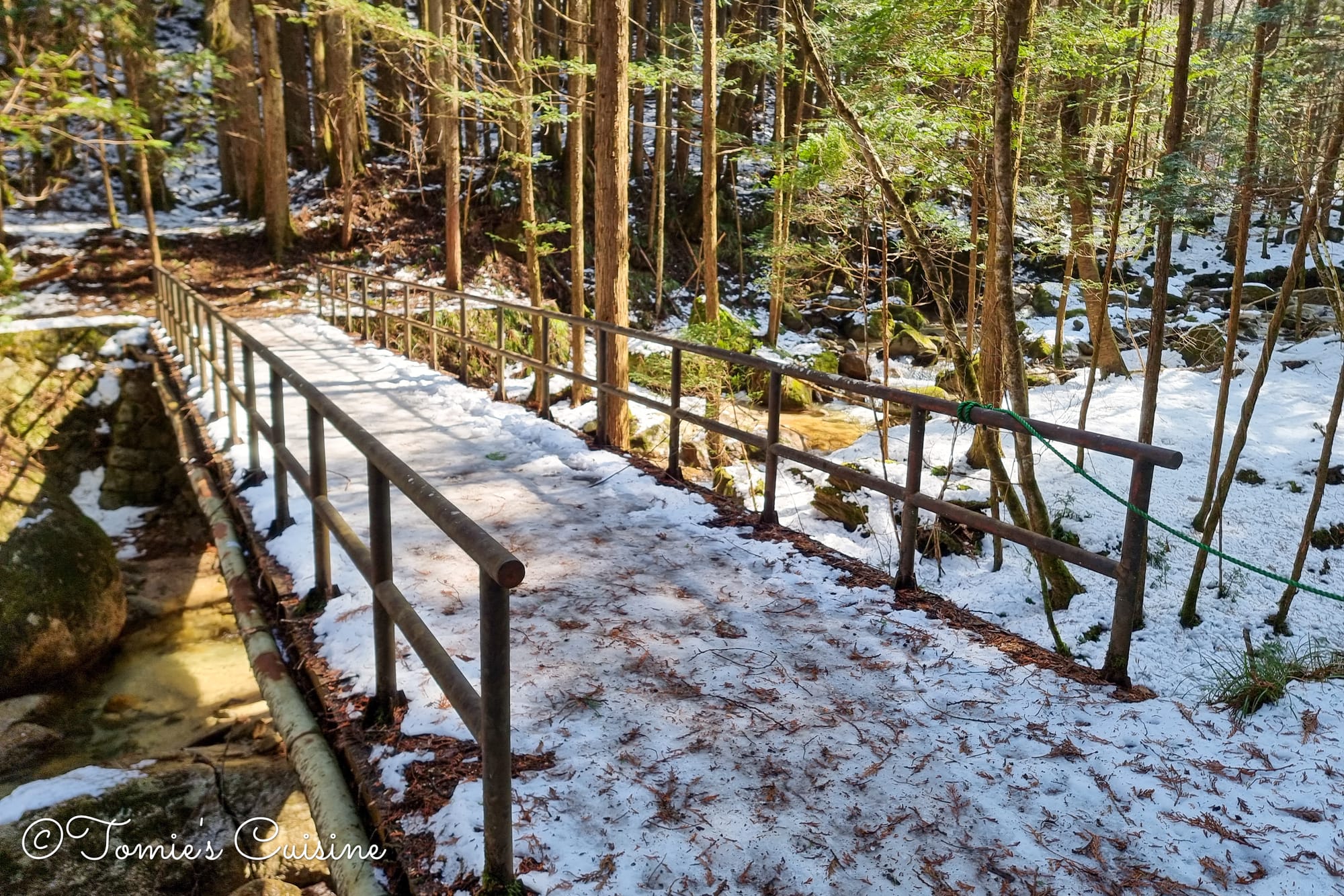
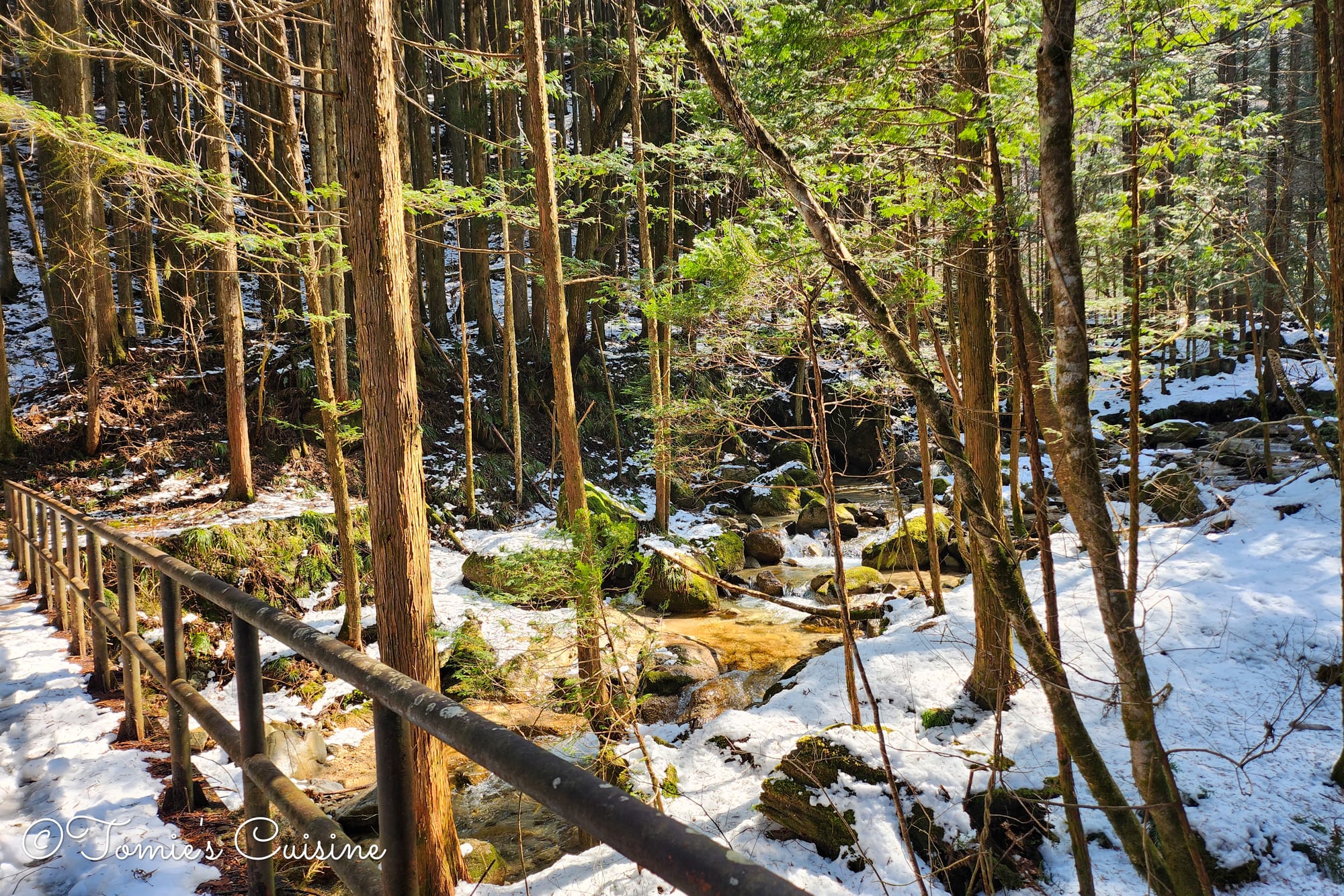
Walking in the woods along the road and a small river covered in snow that had turned to ice. It was very difficult to walk without crampons. Thankfully, we had our walking sticks!
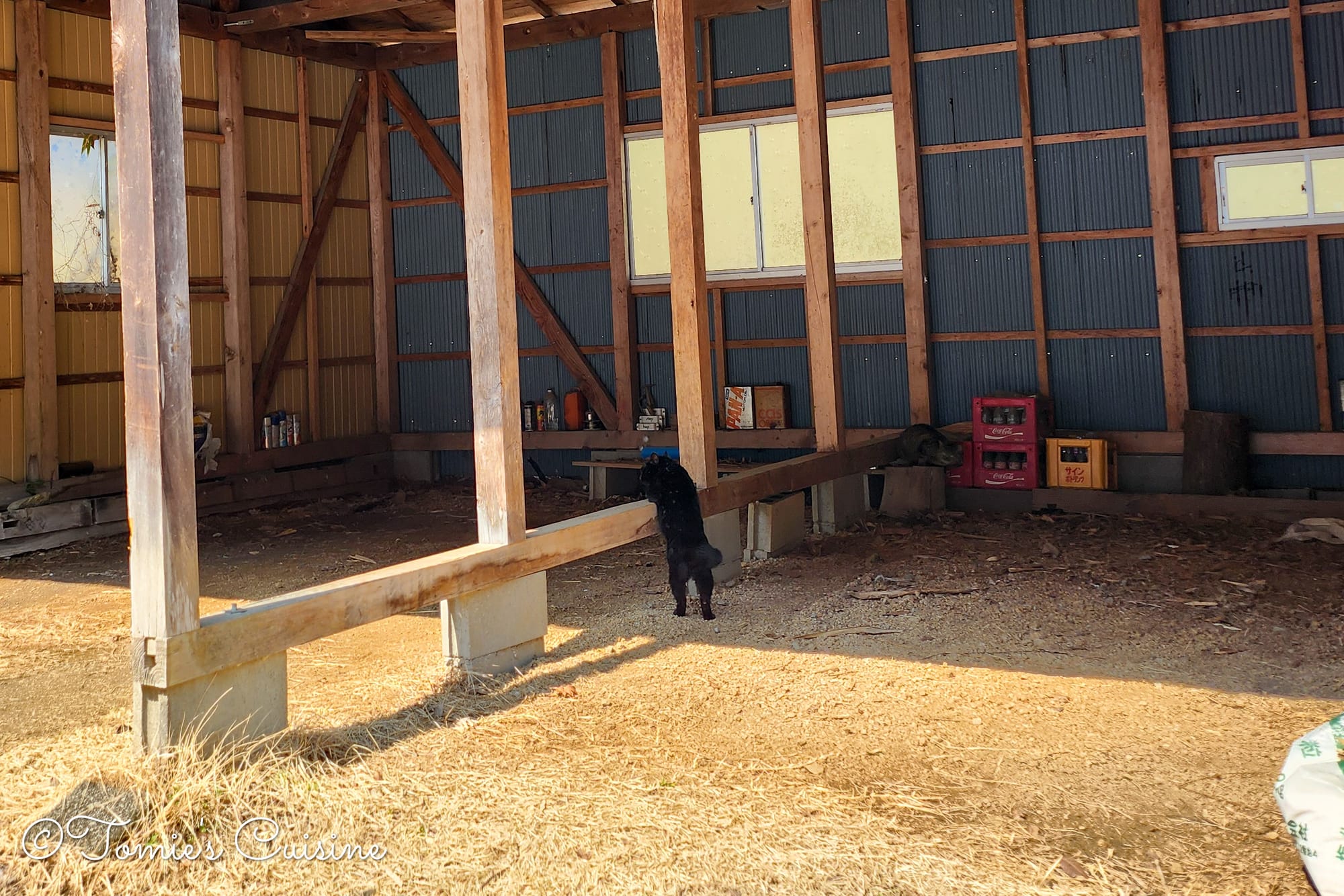
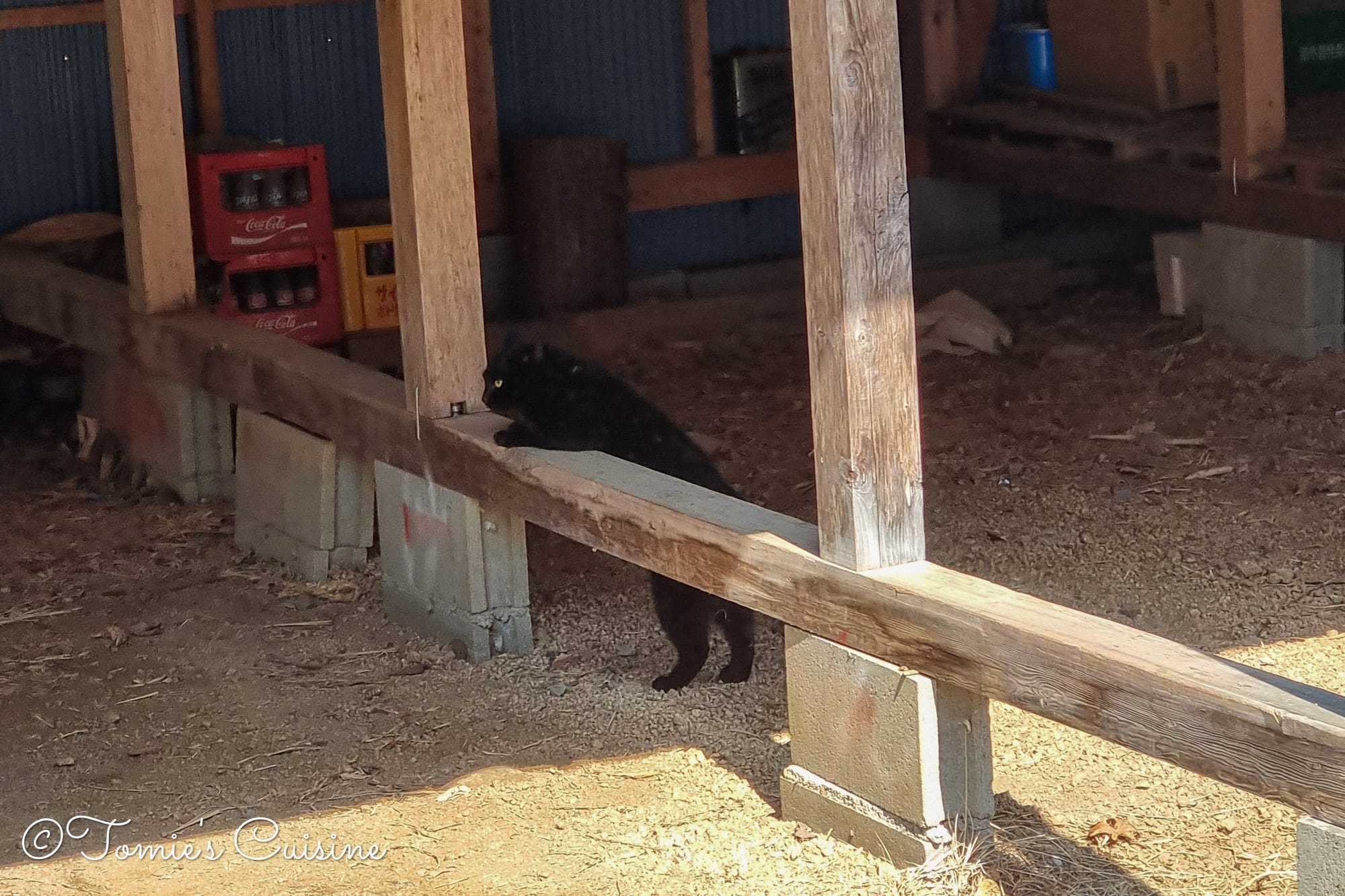
Along the path, we saw a black cat leaning against the beam. The cat stayed there for a minute or two. Doesn't it look like the cat is waiting for its drink at the bar?
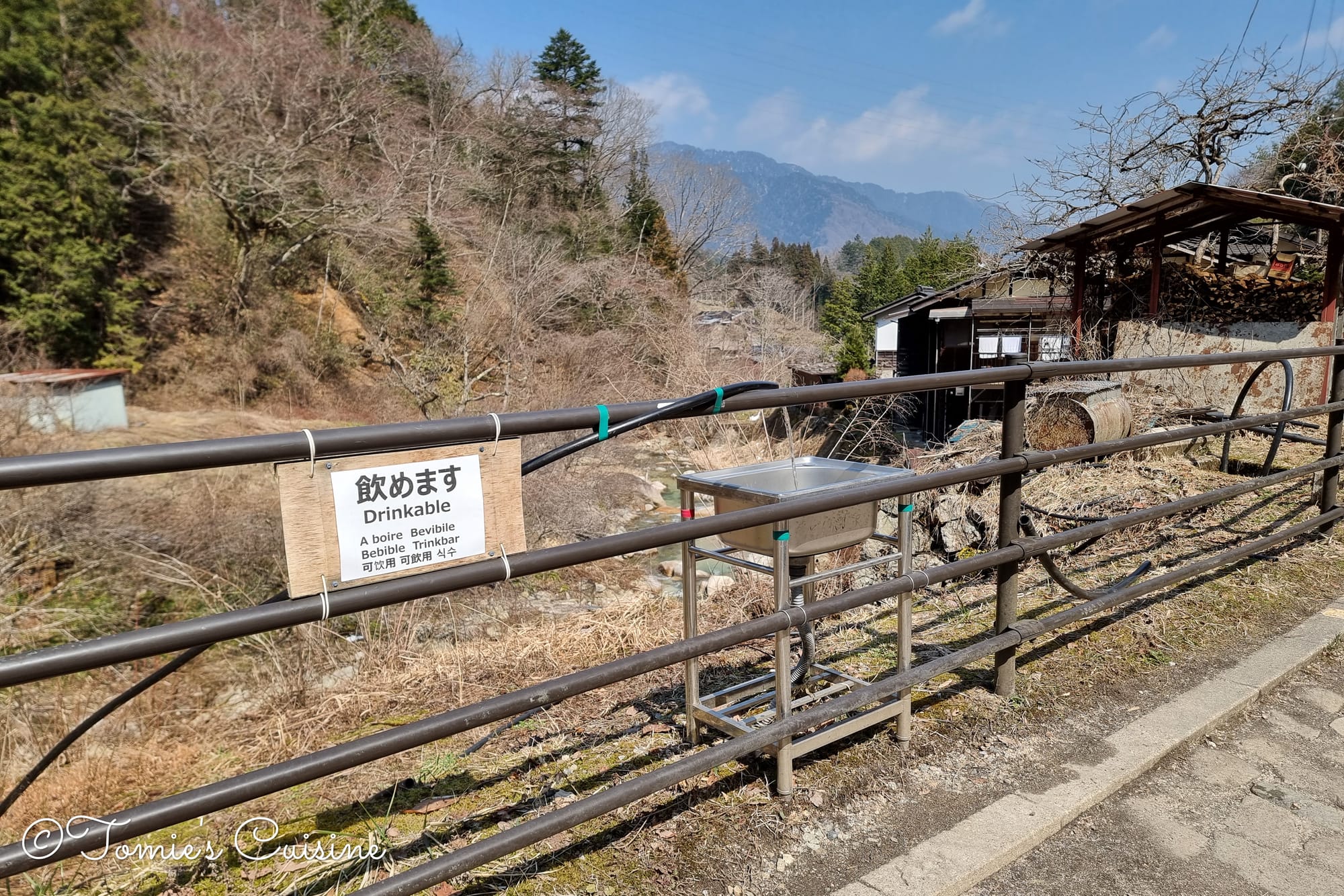
This is very helpful, especially during the summer! We had enough water with us, so didn’t taste it.
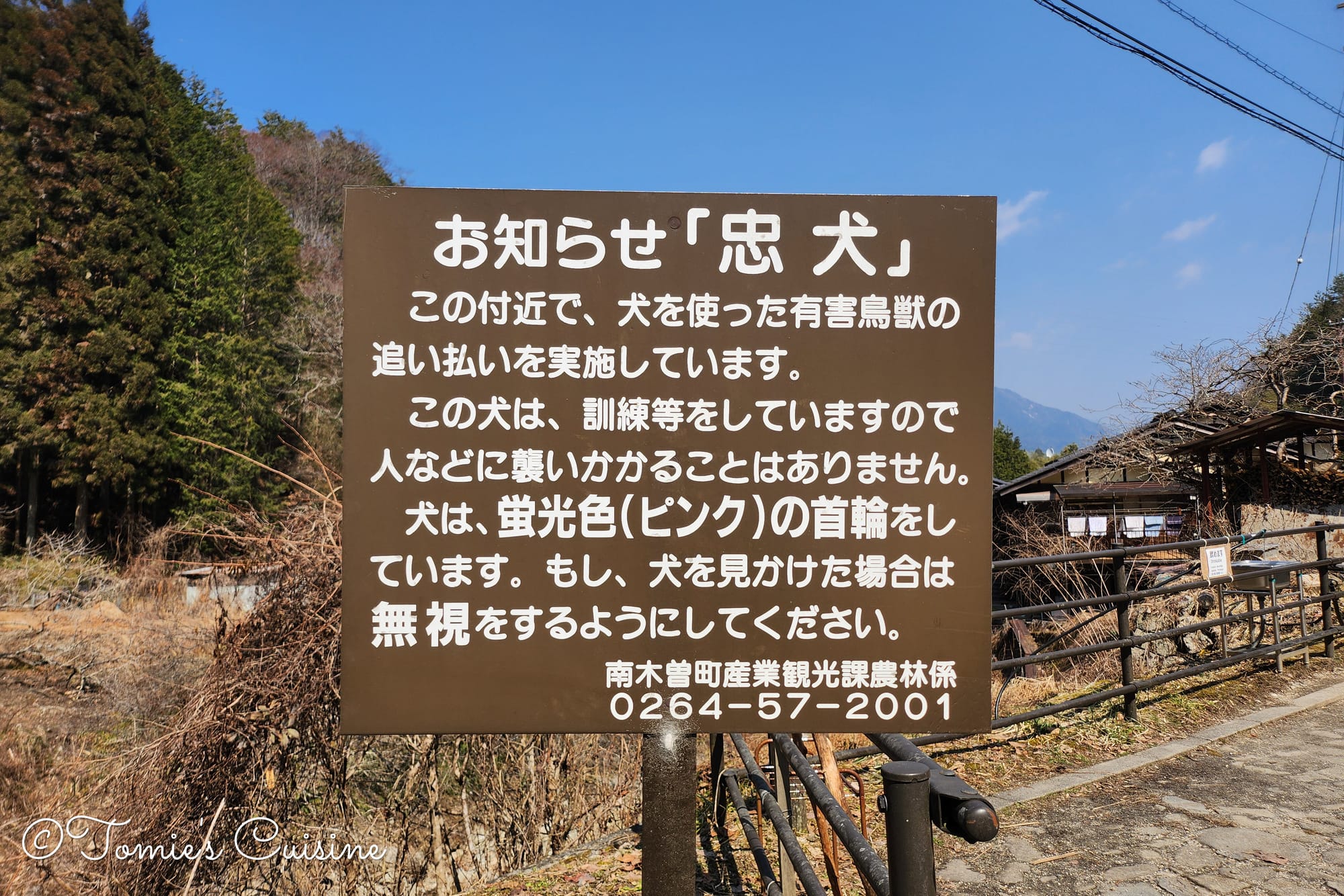
Notice board of “Loyal Dog”
What an unusual notice about a working dog.
Here is what is written: Around this area, we are chasing away harmful birds and animals using a dog. Because the dog is trained, it will not attack people. The dog wears a fluorescent pink collar. If you spot the dog, please ignore it.
We didn’t see the dog, but it seems like the dog breed is usually a Shiba Inu.
Dry socks at last, 10:40 am
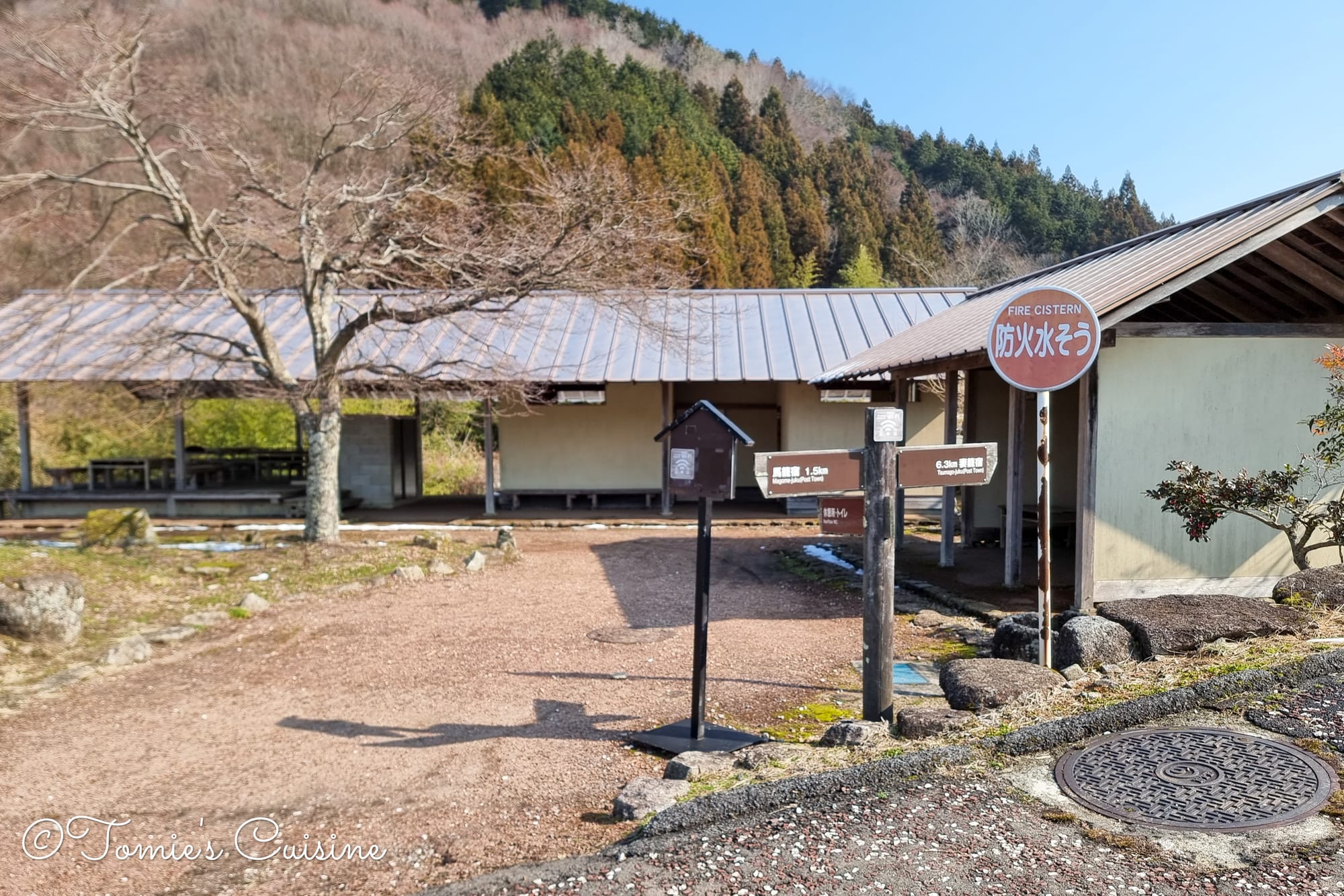
By the time we reached the rest area on the edge of Tsumago, our feet were soaked from the snow. The sun had come out, and it was suddenly warm, so we sat on a bench and changed into dry socks. It's a small thing, but it felt wonderful. If you're walking in early spring, always keep a spare pair at the top of your bag.
Our shoes weren't Gore-Tex, so the snow soaked through, but breathable shoes with waterproof socks still worked well. Once we swapped to dry socks, our shoes dried as we walked.
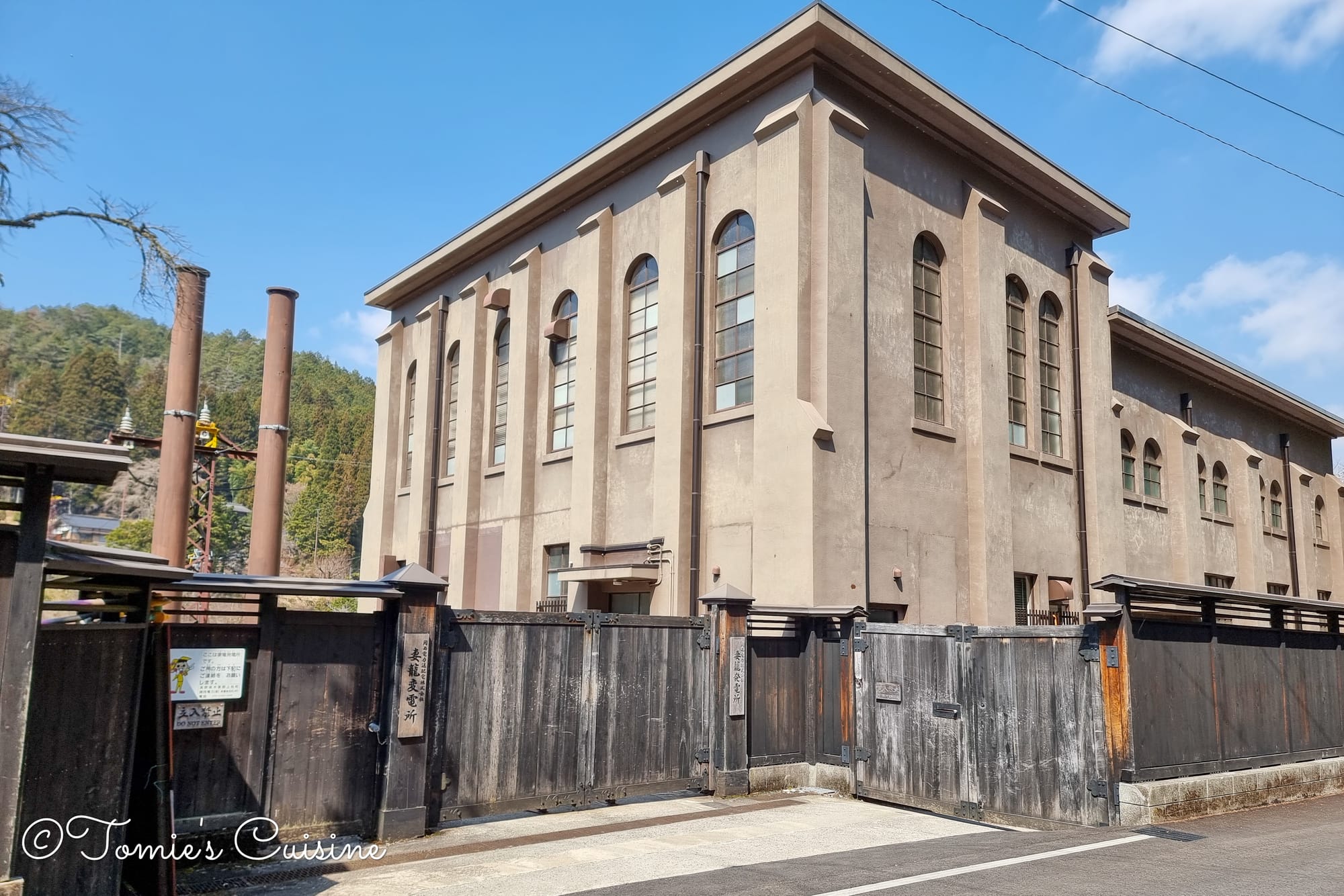
This Art Deco-style reinforced concrete building is the Tsumago Substation, constructed in 1934.
At this substation, electricity generated by the adjacent hydroelectric power plant (Tsumago Power Station) is stepped up to a high voltage (such as 66 kV) to minimise transmission loss (energy loss due to heat) and sent out on the power lines.
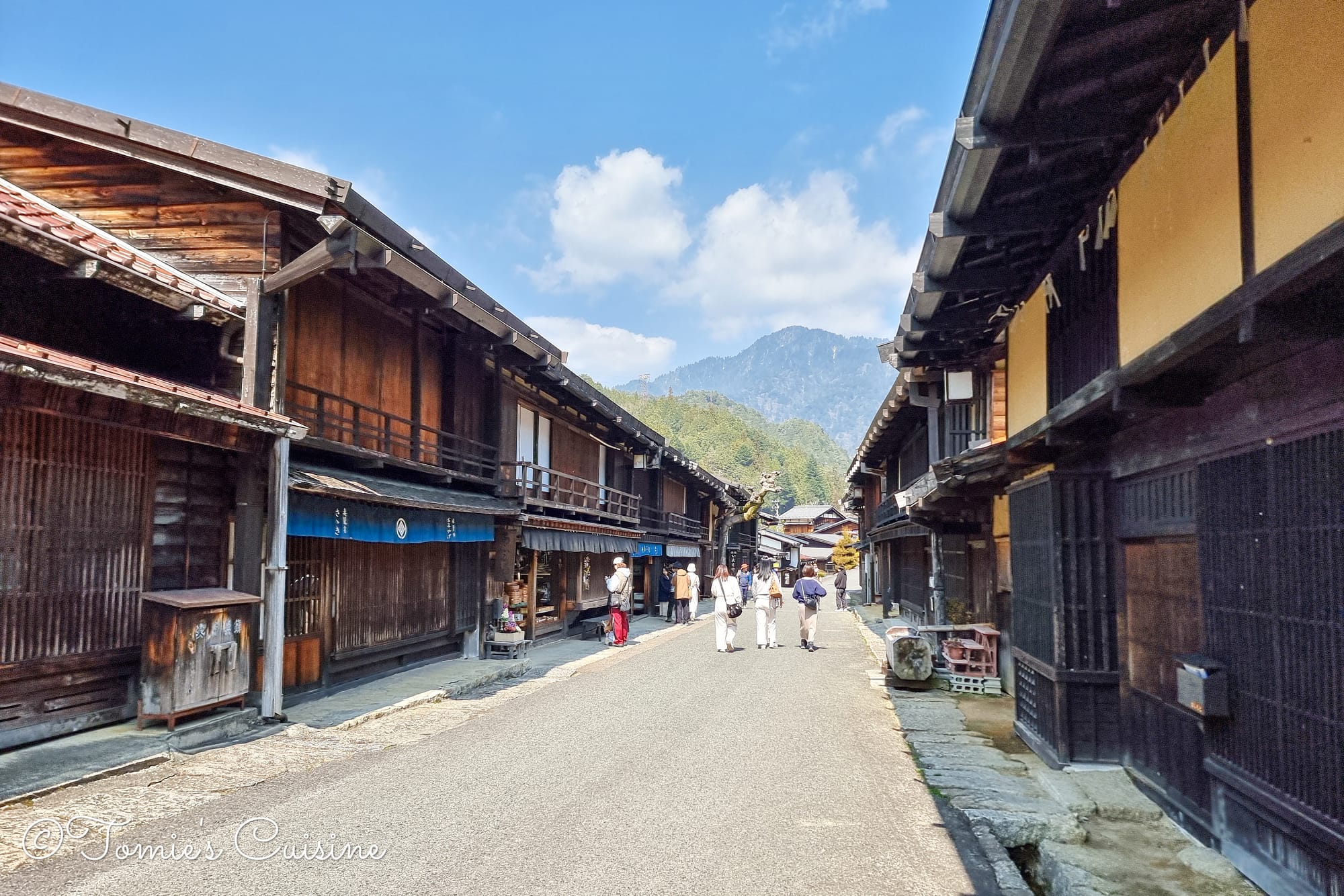
Tsumago is the first post town in Nagano as you walk towards Tokyo, and for many people it's the prettiest on the whole Nakasendo. Even though it was a Saturday, and we were there around midday, Tsumago was much quieter than Magome had been when we arrived the previous afternoon. Maybe it will be busier in the afternoon, with people walking from Magome starting around late morning.
When we arrived on the main street of Tsumago-juku, we felt like we were on a film set. As in Unuma and Magome, there aren’t power lines overhead, so we could enjoy the full view of the well-maintained old buildings and the mountains.
Tsumago-juku sits in a valley and benefited from effective fire-prevention measures, including maintaining waterways through the post town, installing udatsu (うだつ: fire-resistant walls), and supporting a local volunteer fire brigade. While some structures (such as the Honjin) are later reconstructions, many buildings, including “Okuya (奥谷)”, the Waki Honjinand the Kumagai Residence (熊谷家住宅), remain intact from their original era.
Don't sell, don't rent, don't destroy
When the railway and the new national road came through the Kiso Valley at the end of the 19th century, the post towns lost their reason to exist, and Tsumago slowly emptied. In 1968, the people who still lived here began restoring their own houses. In 1971, they agreed on a residents' charter with three simple rules: uranai, kasanai, kowasanai (売らない・貸さない・壊さない), don't sell, don't rent, don't destroy. Tsumago was the first town in Japan to commit to protecting its historic townscape in this way.
In 1976, it became one of the country's first Important Preservation Districts for Groups of Traditional Buildings (重要伝統的建造物群保存地区). The protected area covers about 1,245 hectares, including the mountains you can see from the street, not just the town. That's why there are no power lines along the main street, and why nothing modern is allowed to show.
Oyaki for a small lunch at 11:20 am
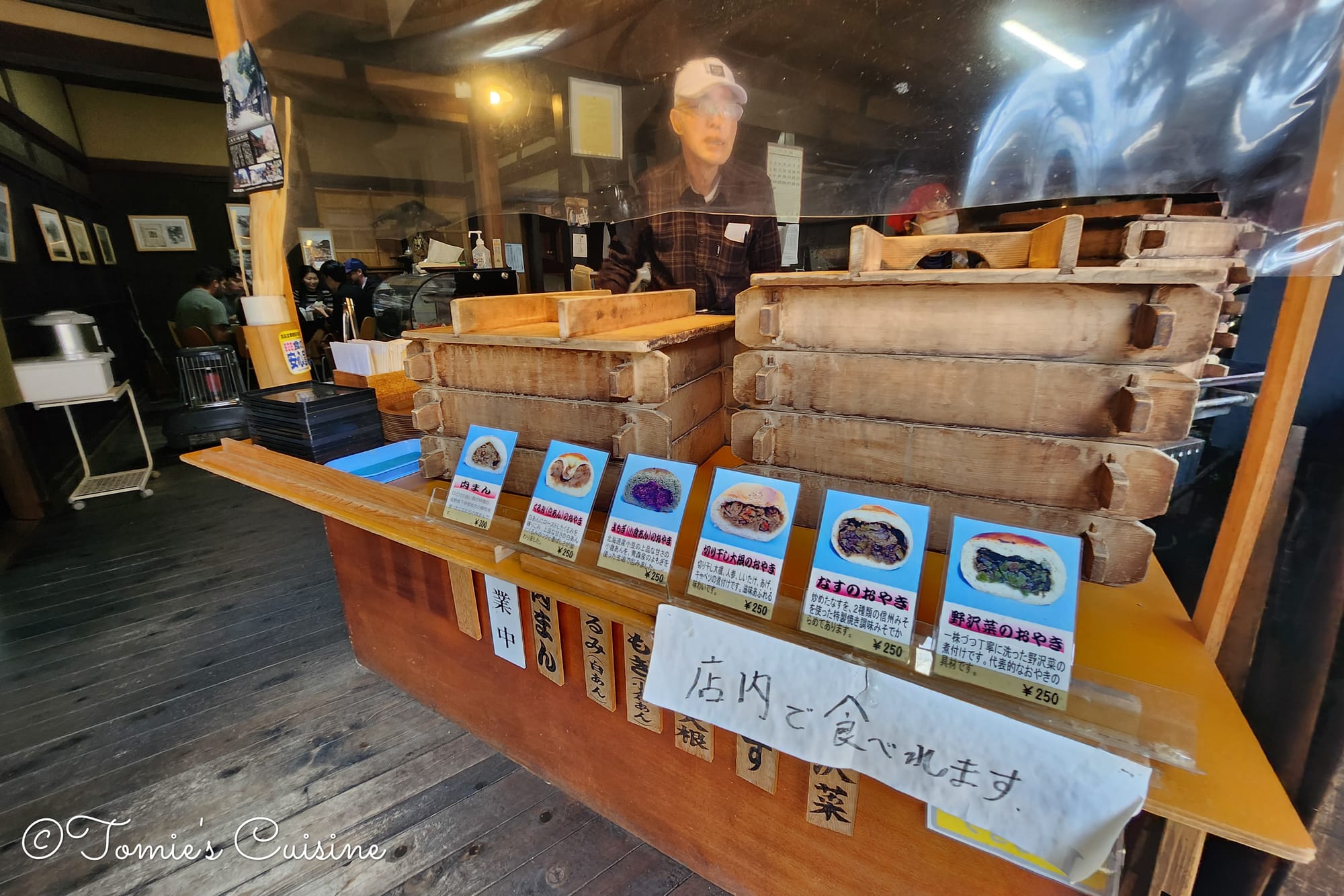
The steam invited us to buy the delicious Oyaki dumplings from Wachinoya.
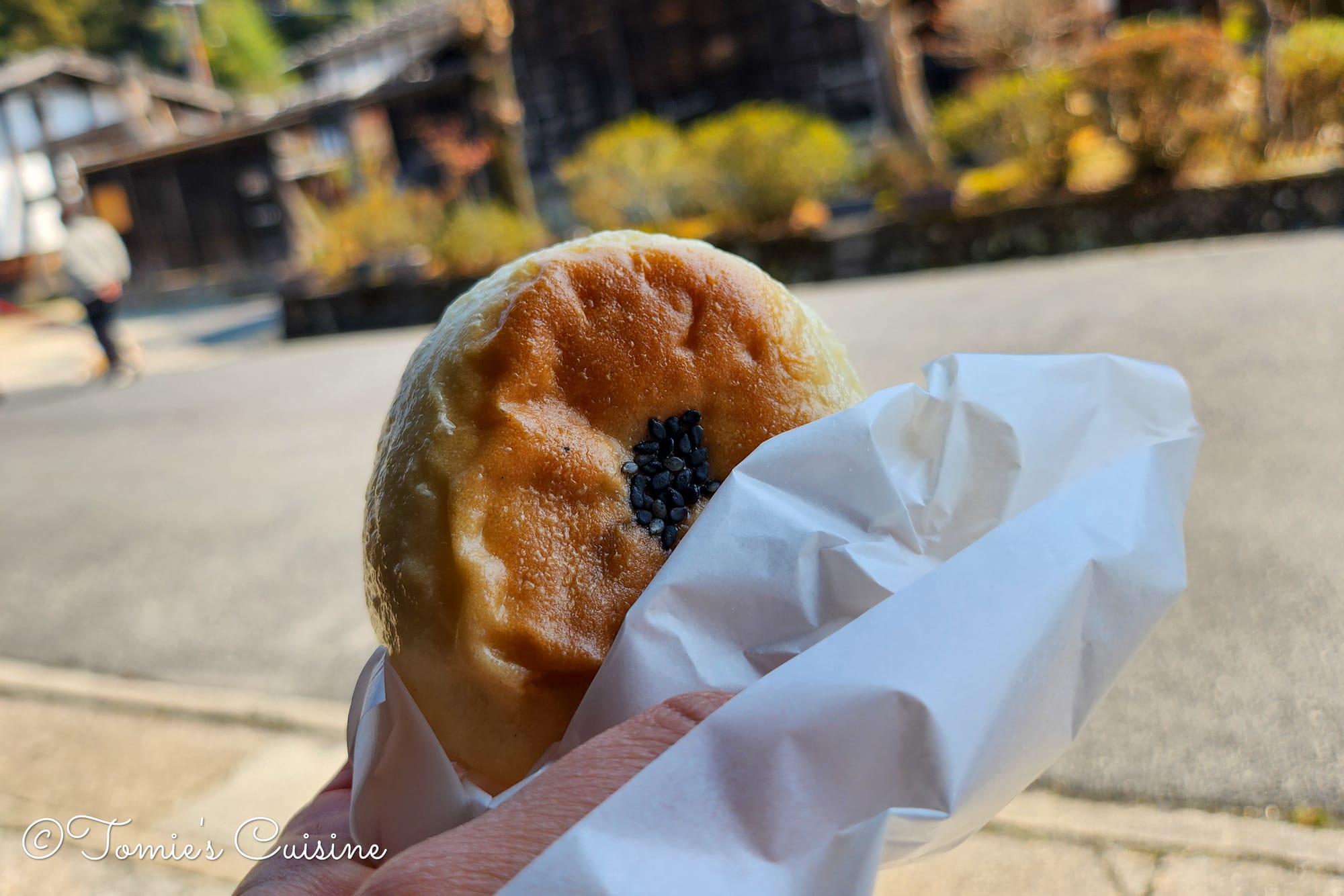
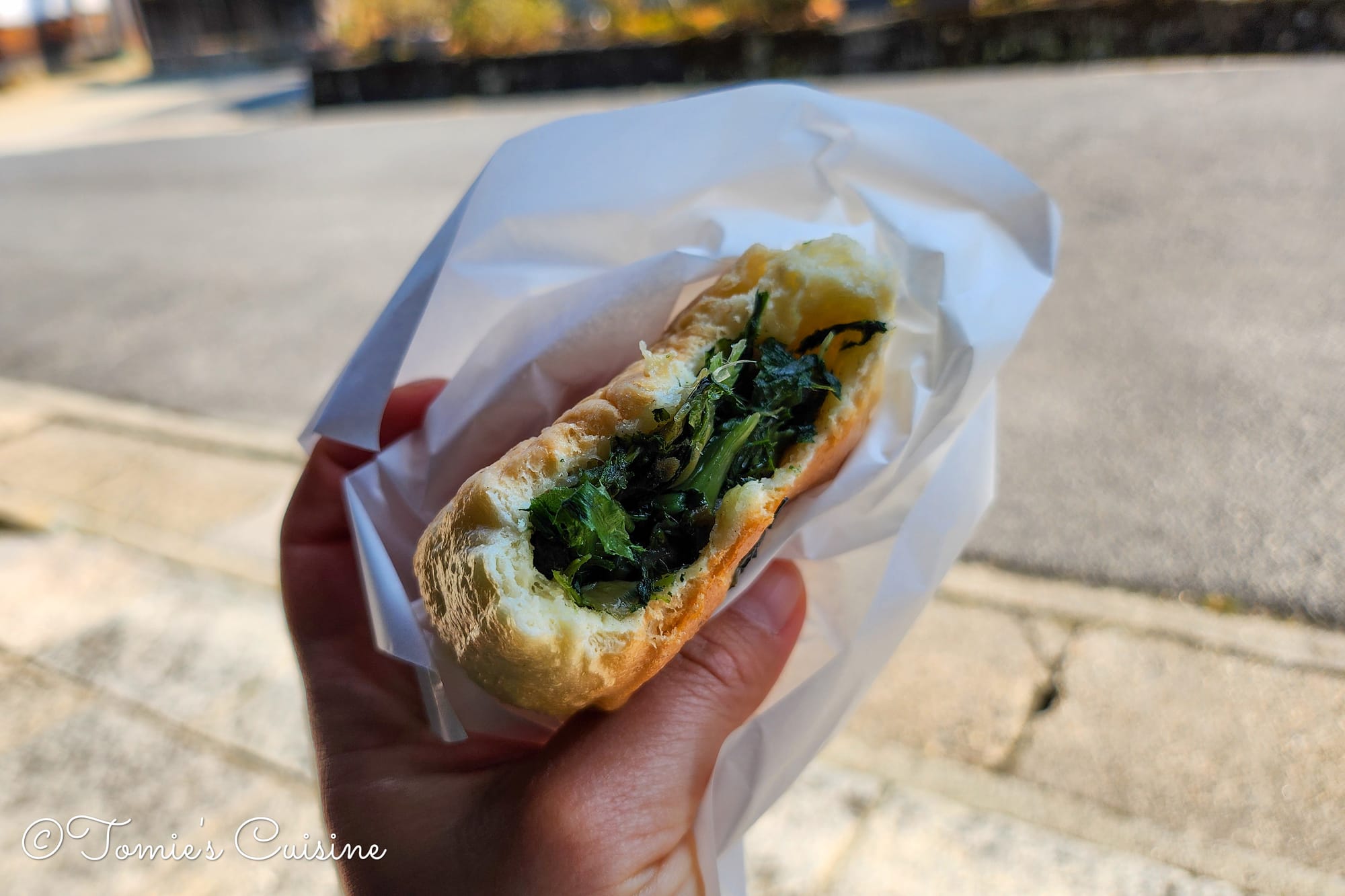
We still had a long way to go, so lunch was quick: oyaki from “Wachinoya (わちのや)”. Oyaki (おやき) are Nagano's famous stuffed dumplings: a soft wheat-flour dough wrapped around a savoury (or sweet) filling, then steamed or grilled. We tried three: nikuman-style pork (肉まん), aubergine (茄子) and nozawana (野沢菜), Nagano's pickled mustard greens.
Oyaki dumplings from Wachinoya
The priceof the Oyaki:
Pork bun ¥300
Aubergine ¥250
Nozawana ¥250
The bun was filled with pickled nozawana, and it was delicious!
Kevin really liked the pork one, and my favourite was aubergine! Nozawana was really good too, and it is also a local vegetable from Nagano prefecture; if I see it, I buy it. I think I learned about it from my parents; whenever we go camping in Nagano, they buy pickled Nozawana or Oyaki with Nozawana.
🥟
What is oyaki (おやき)? Oyaki are a traditional food from Nagano: round dumplings of wheat or buckwheat dough with a filling inside, usually vegetables such as nozawana, aubergine, or pumpkin, or sweet red bean paste. Rice was hard to grow in Nagano's mountains, so oyaki became an everyday meal. Today you'll find them in almost every post town in the Kiso Valley, and they make perfect walking food.
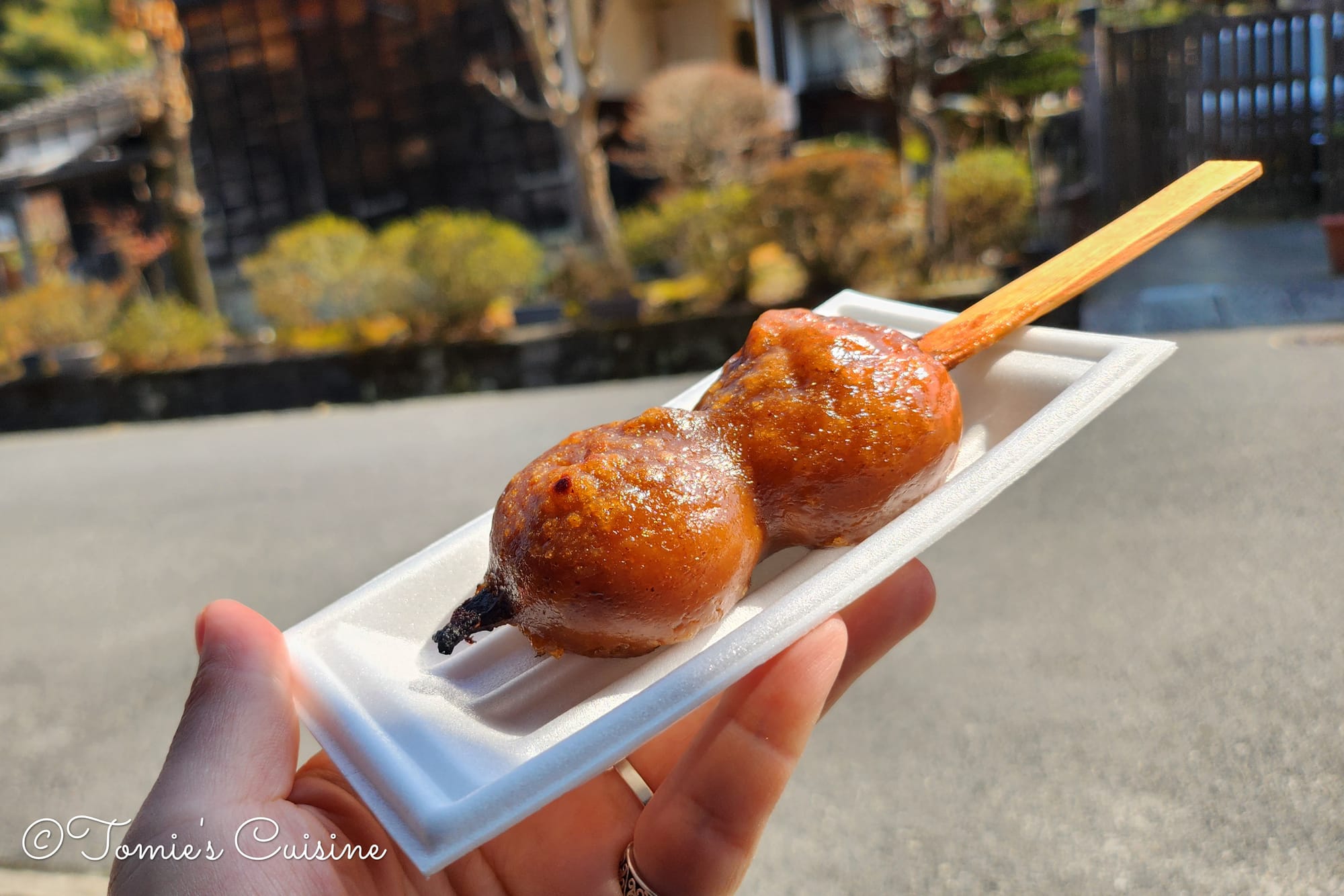
Gohei mochi from Omote
We also couldn't walk past the gohei-mochi (五平餅), the grilled rice cakes we first tried on Day 9, Part 2. This gohei mochi from the shop called “Omote (おもて)” also had sweet miso and walnuts, as it’s a local delicacy in the area. We absolutely fell in love with this mochi! We even made it at home, and it went great, so we will share the recipe soon!
The price of Gohei mochi: ¥250
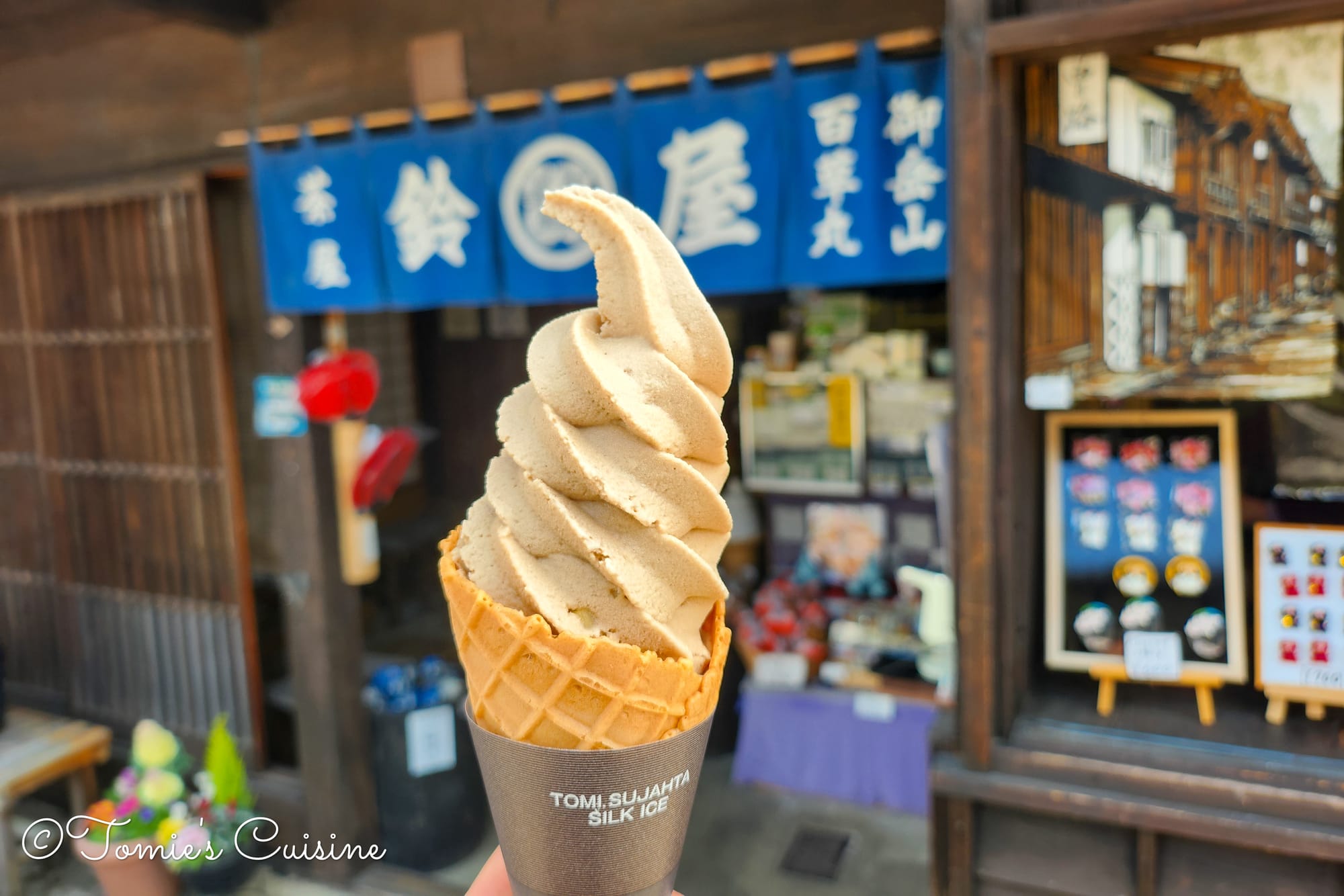
Kurikinton soft serve from Suzuya
For dessert, we chose a kuri-kinton soft-serve (栗きんとんソフトクリーム) from a shop called “Suzuya (鈴屋)”. After all the chestnut sweets in Nakatsugawa, I had to try it. It had small pieces of chestnut, and the taste was refreshing rather than rich. It was a perfect dessert for the sunny weather.
The price of the Kuri Kinton soft serve: ¥400
Closing words
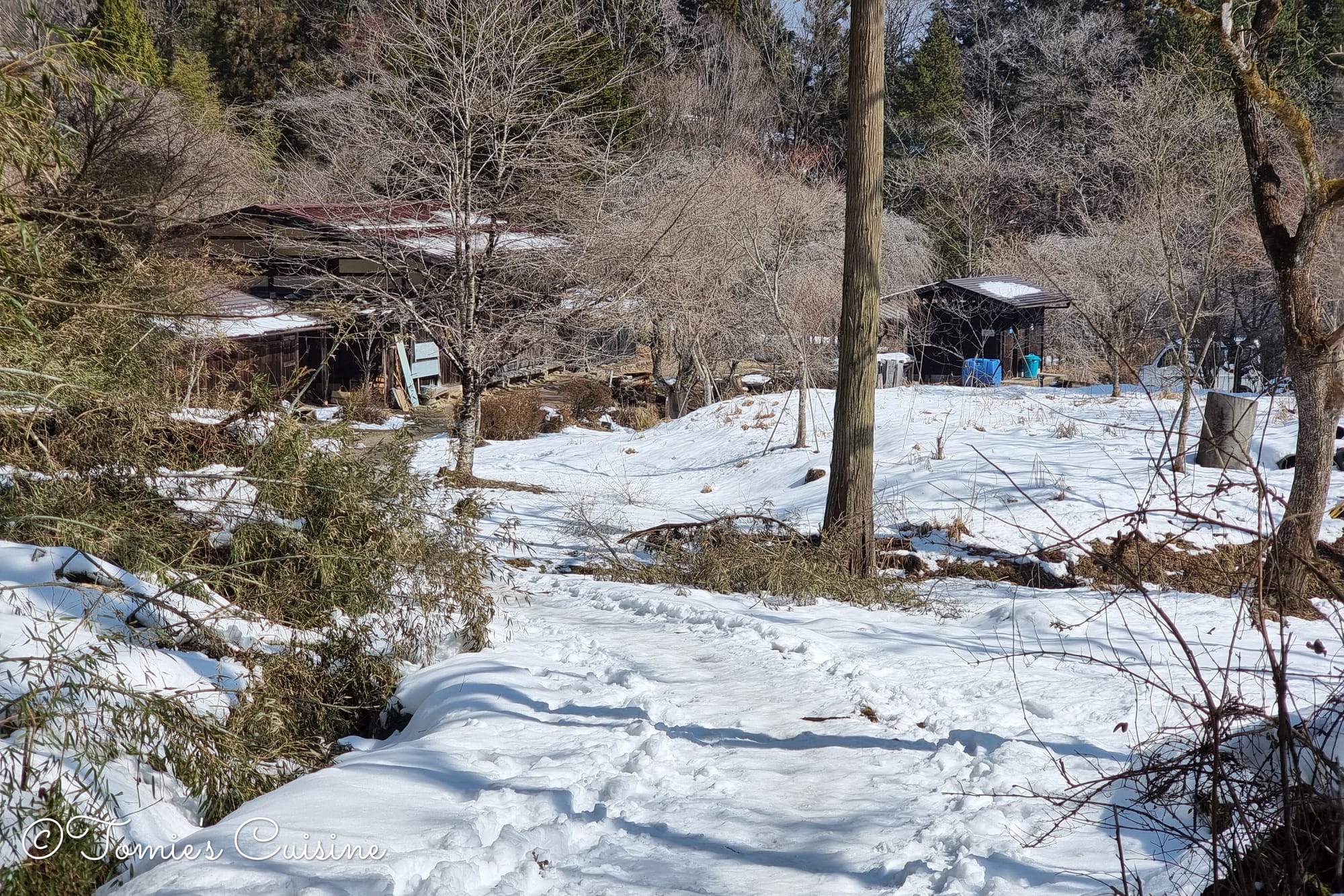
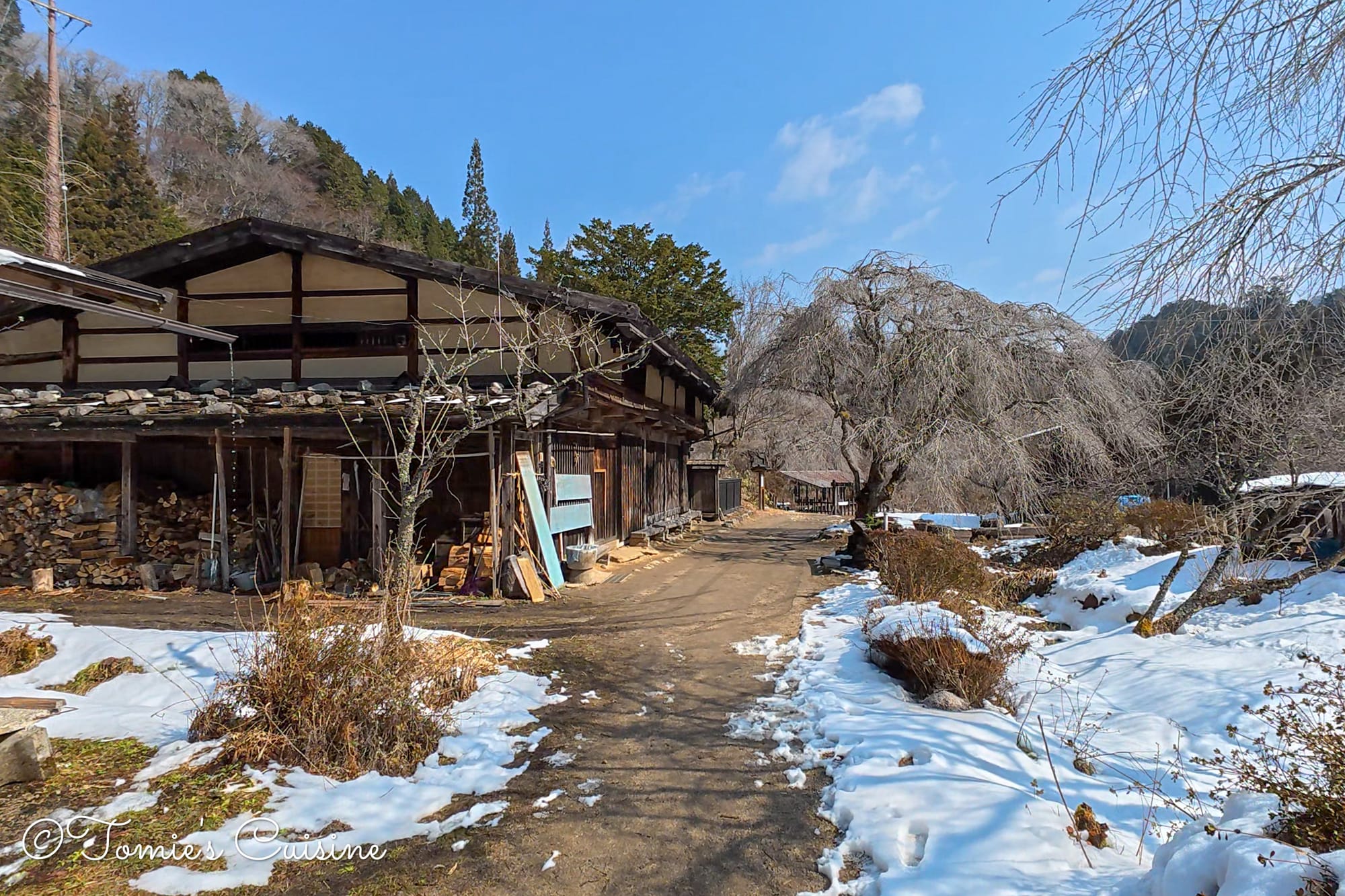
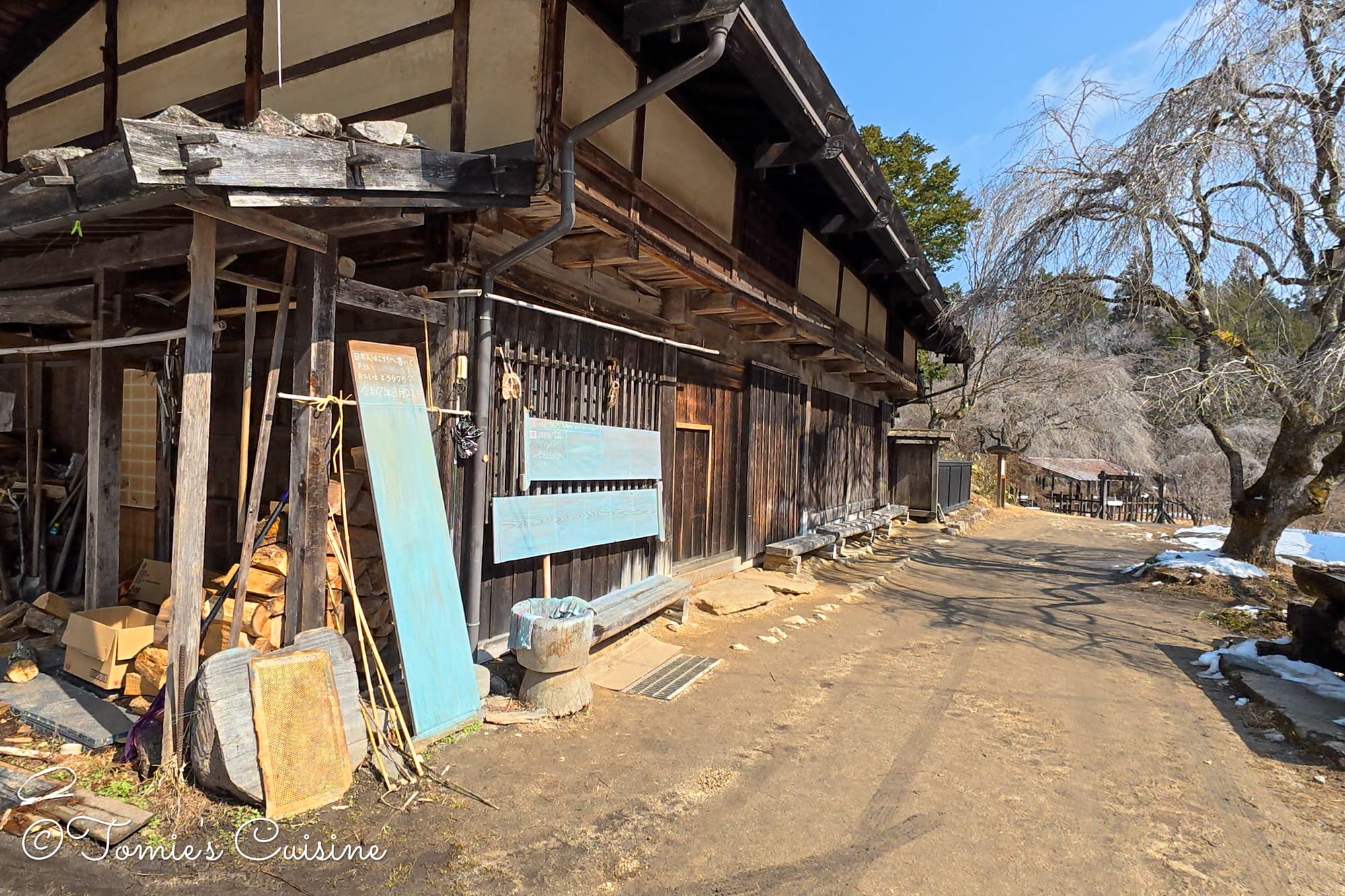
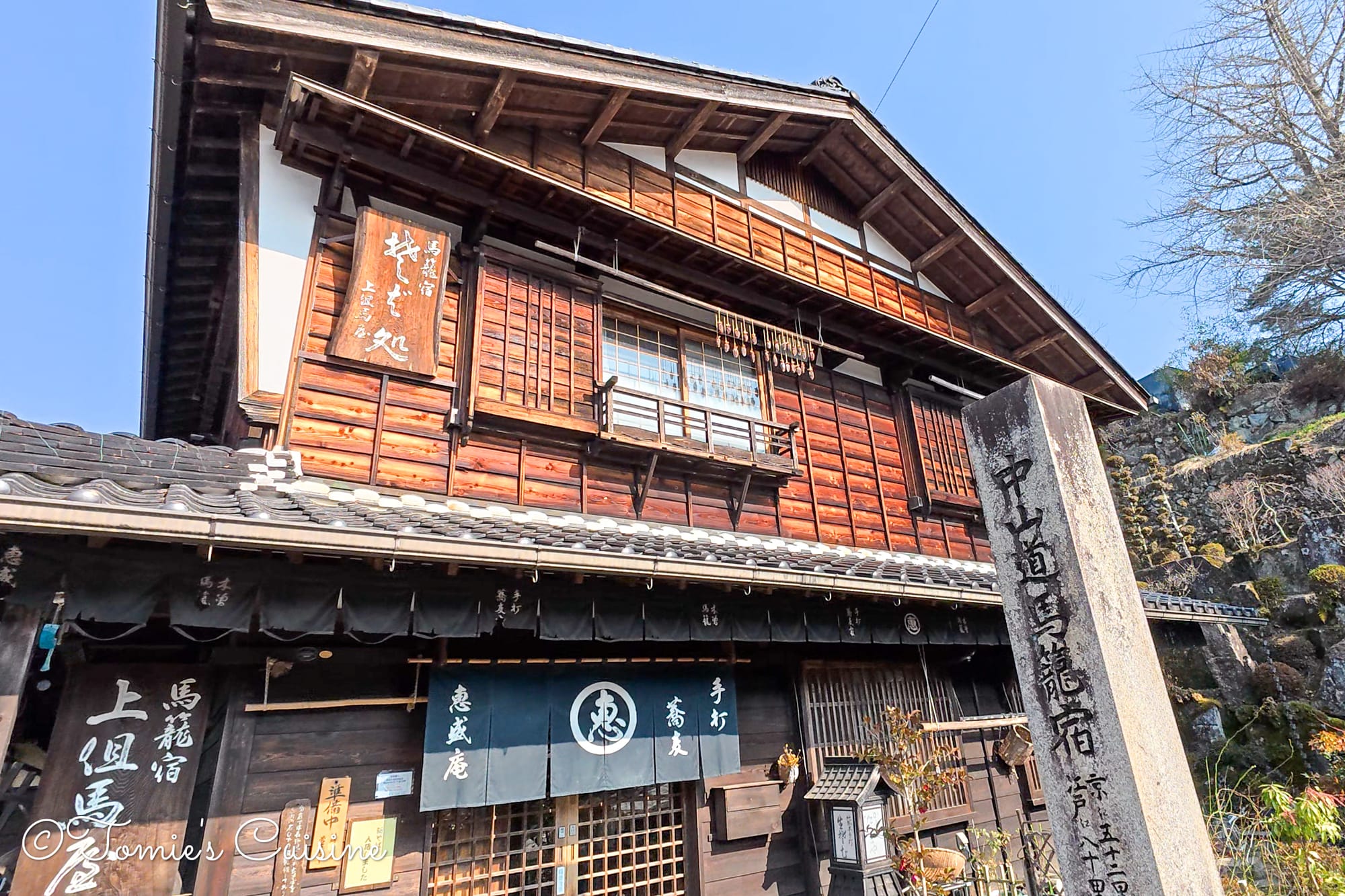
Between Magome and Tsumago, many traditional houses make the Nakasendo walk even more exciting.
By lunchtime, we'd walked 9.2 km from Magome, over an icy Magome Pass, from Gifu into Nagano, and into what many people say is the prettiest post town on the whole Nakasendo. For most visitors, the walk ends here: a bus to Nagiso Station and the train home. For us, it was barely a third of the day.
In Part 2, we start at Tsumago's honjin, which has one more link to Tōson, then follow the Kiso River and the busy Route 19 through Midono and Nojiri to our own townhouse in Suhara.